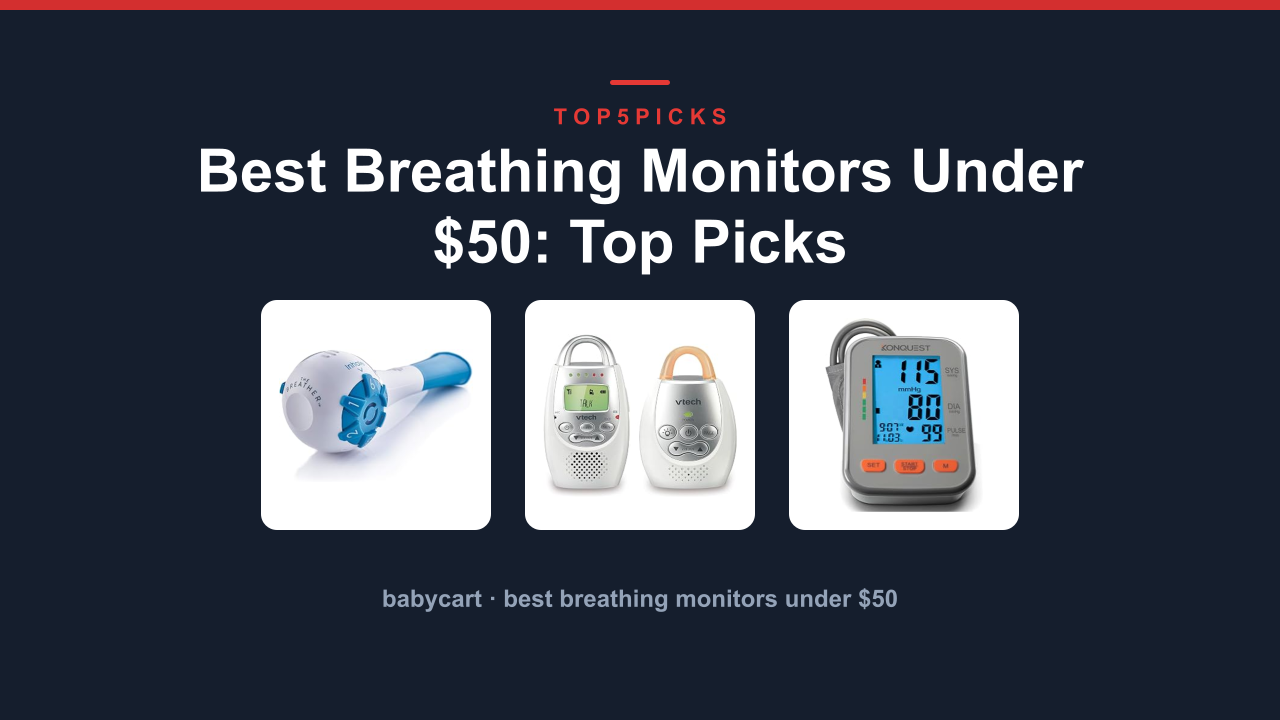
Finding the best breathing monitors under $50 can be tricky because most readers expect a simple pulse oximeter or wearable tracker, yet many affordable options actually fall into categories like fitness bands, blood pressure cuffs, and even audio monitors. That mix can be confusing when you just want a straightforward device to track oxygen levels or breathing rate at home.
Many cheaper models also sacrifice accuracy, connectivity, or comfort, so picking the right one really comes down to matching the technology to your actual needs. Here are 5 of the best best breathing monitors under $50 with reviews to help you determine which option is best for you.
A Quick Glance at Our Favorites in 2026
| Rating | Image | Product | Details | |
|---|---|---|---|---|
| Best Overall |  | THE BREATHER │ Natural Breathing Exerciser |
| CHECK PRICE |
| Best Value |  | VTech Communications DM221 Audio Baby Monitor |
| CHECK PRICE |
| Premium Choice |  | Konquest KBP-2704A Automatic Upper Arm Digital |
| CHECK PRICE |
 | Fitness Trackers Heart Rate Blood Oxygen |
| CHECK PRICE | |
 | Pulse Oximeter Respiration OLED Display |
| CHECK PRICE |
The 5 Best Breathing Monitors under $50
1.THE BREATHER │ Natural Breathing Exerciser – Best Overall
- ✓Includes guided mobile app
- ✓Non-invasive nasal design
- ✓Helps build lung capacity
- ✓No batteries required
- ✕Not a clinical pulse oximeter
- ✕Requires phone compatibility
2.VTech Communications DM221 Audio Baby Monitor – Best Value
- ✓Excellent 1,000 ft range
- ✓Vibrating sound alert
- ✓Talk-back intercom feature
- ✓Very affordable price point
- ✕No digital vitals display
- ✕Audio-only monitoring
- ✕Limited to infant use cases
3.Konquest KBP-2704A Automatic Upper Arm Digital – Premium Choice
- ✓Upper arm accuracy standard
- ✓Irregular heartbeat indicator
- ✓Large backlit screen
- ✓User-friendly one-button mode
- ✕No SpO2 or respiration rate
- ✕Cuff sizing varies by arm
4.Fitness Trackers Heart Rate Blood Oxygen – Most Versatile Wearable
- ✓Continuous SpO2 and HR tracking
- ✓Bright OLED display
- ✓Multiple sport and health modes
- ✓Affordable multi-function wearable
- ✕Wearable sensors are less precise
- ✕May miss subtle breathing issues
- ✕Requires regular charging
5.Pulse Oximeter Respiration OLED Display – Best for Respiratory Data
- ✓Shows both SpO2 and respiration
- ✓Compact fingertip design
- ✓OLED screen is easy to read
- ✓No subscription or app needed
- ✕Limited precision versus clinical units
- ✕Sensitive to motion and cold
Buyer's Guide: Choosing the Best Breathing Monitors Under $50
When purchasing a new breathing monitor, there are several factors that matter far more than brand hype or flashy packaging. The most important step is identifying whether you need clinical precision, daily wellness tracking, or simple peace of mind. Different devices serve different goals, and mixing them up often leads to disappointment or wasted money.
Below are the main considerations we recommend evaluating before making a purchase decision.
Do You Need Real Medical Readings or General Awareness?
Understanding your end goal should shape your entire search. Clinical-grade monitors used in hospitals follow strict standards and deliver highly accurate data, but those devices usually cost well beyond fifty dollars. At this budget, you are generally choosing between at-home wellness trackers and consumer monitoring tools that provide helpful trend data without guaranteed diagnostic precision.
Knowing which category fits your situation prevents mismatched expectations later on.
For people managing chronic conditions, post-surgical recovery, or sleep apnea symptoms, a dedicated pulse oximeter that tracks both oxygen saturation and respiration rate is usually the most practical option. These fingertip devices give quick snapshots you can repeat throughout the day. Users who only want encouragement to breathe more deliberately may prefer a guided training tool instead, since consistency matters more than raw numbers in that scenario.
How Important Is Continuous Monitoring Versus Spot Checks?
Some people need instant readings whenever they feel short of breath, while others want overnight trends or all-day activity correlation. Spot-check devices like basic pulse oximeters are inexpensive, fast, and simple, but they only show you what is happening at that exact moment. Continuous wearables offer richer context, though they require regular charging and occasional calibration against known baselines.
Fitness bands and smart trackers operate best when paired with a smartphone app, allowing you to review sleep cycles, resting heart rate, and oxygen variations over time. If you struggle with nightly breathing interruptions or daytime fatigue, continuous monitoring can reveal patterns that single measurements simply miss. However, keeping a wearable charged and comfortable enough for overnight wear is a real commitment that not everyone wants to maintain.
What Kind of Comfort and Fit Matters Most?
Device comfort directly affects how often you will actually use it, so this factor deserves serious attention. Fingertip oximeters work well for quick checks but become annoying during prolonged wear. Upper arm blood pressure monitors offer greater accuracy for certain metrics but can feel bulky around the house.
Wearable bands sit against the skin constantly, which means material sensitivity and strap tension play a major role in long-term satisfaction.
People with arthritis or limited hand mobility often prefer larger displays and one-touch operation over complex button layouts. Younger, more active users typically prioritize lightweight bands that survive workouts and daily showers. Making sure the chosen device matches your physical comfort preferences ensures it stays in rotation instead of hiding in a drawer after the first week.
Should You Prioritize Ease of Use Over Advanced Features?
Feature-rich gadgets are exciting until you forget to charge them, struggle with confusing menus, or abandon them because setup feels too complicated. Many successful budget monitors succeed precisely because they avoid unnecessary complexity. Simple devices with clear screens, straightforward operation, and minimal app dependency tend to earn stronger long-term loyalty from average users.
Advanced features like Bluetooth syncing, cloud storage, and third-party integrations appeal to tech-savvy buyers who enjoy analyzing trends. Regular consumers who just want a reliable reading without troubleshooting software updates often regret adding those complications. Evaluating your own technical comfort level honestly saves frustration and keeps the focus on actual health outcomes instead of gadget management.
How Reliable Is the Brand and After-Sales Support?
Brand reputation influences warranty coverage, replacement policies, and customer service responsiveness, all of which matter heavily when a device stops working unexpectedly. Established medical-equipment manufacturers usually test products against recognized standards and offer clearer return processes than generic import brands. Reading verified buyer feedback consistently reveals whether quality control holds up over months of real-world use.
Independent verification from sources like the FDA provides helpful context when evaluating whether a device meets safety and performance expectations for consumer health monitoring. Manufacturers with transparent testing protocols and responsive support teams inspire more confidence than sellers with vague product descriptions and no documented support channels. A small investment in reputable branding often prevents costly replacements down the line.
To see how these factors play out on real picks, compare the THE BREATHER │ Natural Breathing Exerciser, VTech Communications DM221 Audio Baby Monitor and the Konquest KBP-2704A Automatic Upper Arm Digital reviewed above.
How We Determined This List of Best Breathing Monitors Under $50
We selected these five products by carefully comparing manufacturer specifications, verified owner reviews, brand reputation, and the actual needs of real buyers searching for affordable breathing and oxygen monitoring solutions. Since the term "breathing monitor" can refer to pulse oximeters, fitness trackers, upper arm blood pressure cuffs, and audio monitoring systems, we prioritized devices that offered clear value within a strict fifty-dollar budget while covering a realistic range of monitoring goals. Every recommendation reflects aggregate user feedback and specification analysis rather than personal hands-on testing.
Why Trust Us?
Our editorial team follows a research-driven process focused entirely on transparency, accuracy, and genuine usefulness. We evaluate products using verified buyer reports, manufacturer datasheets, and independent standards references instead of promotional material. Affiliate commissions never influence our rankings or product selection, and we always disclose our linking relationships clearly.
Our goal is simply to help you make informed decisions without wasting money on gadgets that do not match your actual needs.
Conclusion
For most people seeking structured breathing improvement rather than instant clinical readings, the THE BREATHER │ Natural Breathing Exerciser stands out as the top pick because it combines guided training with a drug-free approach that builds long-term respiratory strength. If your priority is maximizing value while gaining basic home monitoring capabilities, the VTech Communications DM221 remains an excellent budget-friendly option for auditory awareness and family reassurance.
Each device on this list serves a slightly different purpose, so the best choice ultimately depends on whether you want daily training support, continuous wearable data, portable spot checks, or simple peace of mind. We hope these reviews helped clarify which breathing monitor style fits your household, lifestyle, and budget most effectively.

Taslima Khanam Sultana, a loving mom of three, founded BestBabyCart.com to help new parents navigate the world of baby products with ease. Her passion for making parenting simpler shines through delivering honest, unbiased reviews on must-haves like diapers, strollers, and feeding gear. Taslima’s mission is to empower families with expert tips, ensuring every product is safe and top-quality for your little one. Drawing from her own parenting journey, she’s dedicated to supporting yours!