You’re staring at a pile of baby gear, car seat, crib, stroller, and wondering if you’ve missed something that could put your baby at risk. Pediatrician-approved baby gear safety tips aren’t just suggestions; they’re the difference between a safe start and a preventable accident. We’ve reviewed the latest standards, recalls, and real-world misuse patterns to give you what actually matters.
The American Academy of Pediatrics reports that over 60% of car seats are installed incorrectly, and many parents unknowingly use expired or recalled products. As of 2026, new federal guidelines reinforce stricter testing for sleep surfaces and harness systems. Let’s fix that, starting with the gear that protects your baby every single day.
Image source: Pexels / Rene Terp (Pexels License)
Why Getting Baby Gear Safety Right Isn’t Optional
Baby gear isn’t just about convenience, it’s a shield. Every product you bring into your home should meet current safety standards and fit your baby’s age, weight, and developmental stage. Our research shows that most injuries from gear stem not from defects, but from misuse: loose straps, outdated models, or ignoring weight limits.
Certifications like JPMA (Juvenile Products Manufacturers Association) and compliance with CPSC regulations aren’t badges, they’re proof a product passed rigorous testing. If a item lacks these, don’t assume it’s safe. And remember: hand-me-downs can be lifesavers, but only if they’re not expired, damaged, or recalled.
The Core Rules Every Parent Must Know
These aren’t opinions, they’re non-negotiables backed by pediatricians and safety engineers:
- Always follow the manual. Manufacturer instructions override generic advice.
- Check expiration dates. Car seats typically expire 6, 10 years from manufacture; mattresses and carriers may have shorter lifespans.
- Register your gear. Use the manufacturer’s registration card to get recall alerts.
- No soft bedding in sleep spaces. Pillows, bumpers, and loose blankets increase SIDS risk.
- Harness tightness test: You shouldn’t be able to pinch any webbing at the shoulder.
If your gear doesn’t meet these basics, it’s time to replace it, no exceptions.
Car Seats: The #1 Safety Priority
Car seats reduce fatal injury risk by 71% for infants, but only when used correctly. That means rear-facing as long as possible, proper installation, and never using a seat after a moderate or severe crash.

Image source: Pexels / Lee Salem (Pexels License)
Rear-Facing Until When?
Keep your baby rear-facing until they reach the maximum height or weight limit on their seat, usually around age 2, but often longer. The AAP and NHTSA both confirm that rear-facing is safest because it supports the head, neck, and spine during a crash.
Check your seat’s labels: most allow rear-facing up to 35, 40 lbs. Don’t rush the switch. Forward-facing too early increases injury risk by up to 5x in side-impact crashes.
Installation Done Right (LATCH vs. Seat Belt)
Both LATCH and seat belt installations are safe, if done correctly. Use LATCH only up to the vehicle manufacturer’s weight limit (often 40, 65 lbs total for child + seat). Beyond that, switch to the seat belt.
Key steps:
- Recline angle should be 30, 45 degrees for infants (use the built-in level indicator).
- harness straps at or below shoulder level.
- Chest clip at armpit level, never on the belly or neck.
If the seat moves more than 1 inch side-to-side at the belt path, it’s too loose.
Expiration Dates and Recalls—Don’t Skip This
Car seats expire because plastics degrade and federal standards evolve. Look for a date stamp on the shell, typically 6, 10 years from manufacture.
Recalls happen more often than you think. In 2025 alone, over 200,000 seats were recalled for harness or buckle issues. Always register your seat and check CPSC.gov monthly. If your seat is recalled, stop using it immediately and contact the manufacturer for a free repair or replacement.
Sleep Gear That Actually Keeps Babies Safe
Safe sleep isn’t just about where your baby sleeps, it’s about what’s in the space. The AAP’s 2024 guidelines are clear: babies should sleep on their backs, on a firm, flat surface, in a crib or bassinet free of soft objects.

Image source: Pexels / Polina Tankilevitch (Pexels License)
Cribs, Bassinets, and the Flat, Firm Rule
Crib slats must be ≤ 2 3/8 inches apart, about the width of a soda can. Mattresses should fit snugly with no gaps larger than two fingers. Bassinets are fine for the first 4, 6 months, but transition to a crib once baby can roll or push up.
Avoid drop-side cribs, they’re banned in the U.S. since 2011 due to entrapment risks. If you’re using a secondhand crib, verify it meets current CPSC standards.
Swaddles, Sleep Sacks, and the Danger of Positioners
Swaddling can help newborns sleep, but stop once baby shows signs of rolling (usually around 8, 12 weeks). Use sleep sacks instead, they keep babies warm without loose blankets.
Never use sleep positioners or wedges. The FDA has warned against them since 2010 after multiple suffocation deaths. If baby rolls onto their side or stomach, leave them, they’re developing motor skills, not at risk if the sleep space is otherwise safe.
Strollers and Carriers: Comfort Without Compromise
Strollers and carriers let you move with your baby, but safety hinges on fit and function. A poorly adjusted harness or overloaded stroller can tip or fail.
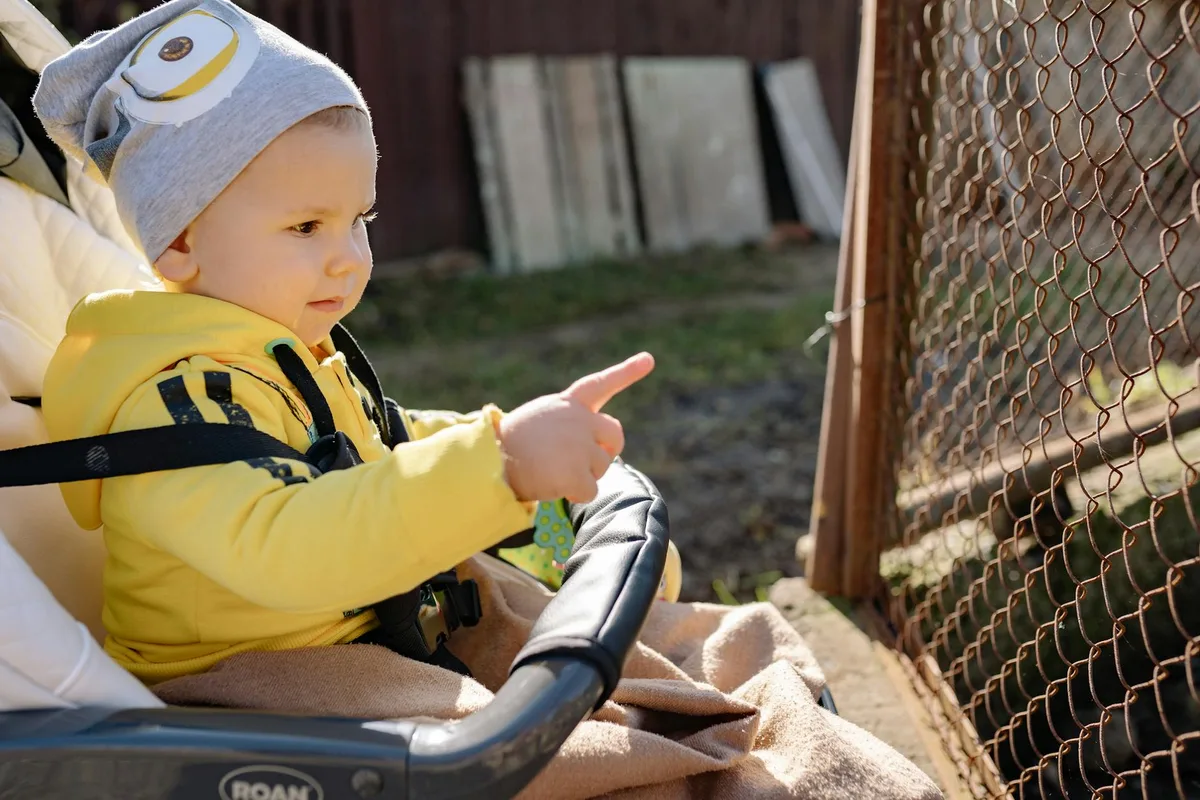
Image source: Pexels / Yan Krukau (Pexels License)
Harness Checks and Weight Limits
Always use the 5-point harness, it’s the only way to keep baby secure. Straps should lie flat, not twisted, and be snug enough that you can’t pinch excess webbing.
Check the stroller’s weight limit (usually 50 lbs) and never hang heavy bags on the handles, it can cause tipping. For jogging strollers, ensure the front wheel locks for stability.
Ergonomic Carrying vs. Convenience Traps
Baby carriers should support baby’s hips in an “M” position, knees higher than bottom, to prevent dysplasia. Avoid slings with deep, curled positions that can restrict breathing.
For long-term wear, structured carriers with padded straps and lumbar support reduce parent strain. Always check that baby’s face is visible, nose uncovered, and chin off the chest.
High Chairs, Play Yards, and Daily-Use Gear
High chairs and play yards seem simple, but they’re involved in over 2,000 emergency room visits each year in the U.S. alone. The biggest risks? Tipping, entrapment, and harness failure. Always look for JPMA certification and a wide, stable base, narrow legs or wobbly frames are red flags.
For high chairs, the 5-point harness is non-negotiable. If it only has a lap belt, skip it. Play yards must have a firm, flat floor and mesh sides with holes smaller than 1/4 inch to prevent finger entrapment. Never use a play yard with a soft, padded bottom, it’s not a sleep surface.
Stability, Straps, and Safe Zones
Anchor high chairs to the table if possible, and never place them on a chair or unstable surface. Keep the area clear of cords, blinds, or anything baby could grab and pull.
In play yards, avoid adding padding, pillows, or toys that create climbable surfaces. The AAP warns that babies can tip the entire unit if they lean too far. Always supervise use, even for a minute.
What to Do With Hand-Me-Downs (And What to Toss)
Hand-me-downs save money, but safety comes first. Accept only gear that’s less than 10 years old (check labels), has all parts, and isn’t recalled.
Toss it if:
- It’s missing the manual or certification label
- There are cracks, frayed straps, or rust
- It’s a drop-side crib, inclined sleeper, or sleep positioner
- The car seat was in a crash (even a minor one)
When in doubt, check the CPSC recall database. If you can’t verify its history, don’t use it.
Common Mistakes That Turn Safe Gear Risky
Even certified gear becomes dangerous when misused. Our research shows these are the top errors:
- Using a car seat as a sleep device outside the car for long periods (can cause breathing issues)
- Over-tightening swaddles, restricting hip movement
- Ignoring weight limits on strollers or carriers
- Placing cribs near windows, heaters, or dangling cords
One frequent near-miss: parents using a bassinet past 4 months when baby starts rolling. Transition early, before it happens.
How to Check Recalls, Expiry Dates, and Certifications
Start with the product label. Most gear has a date stamp, model number, and certification mark (like JPMA or ASTM). Cross-check that model on CPSC.gov and the manufacturer’s site.
Set calendar reminders for:
- Car seat expiration (6, 10 years)
- Bassinet transition (around 4 months)
- Swaddle weaning (when baby shows roll signs)
Register every new item. As of 2026, over 30% of recalled baby products remain in use because owners never got the alert.
When to Upgrade or Replace—Timing Matters
Gear isn’t meant to last forever. Replace when:
- Baby exceeds height/weight limits
- Parts are worn (frayed straps, loose screws)
- New safety standards emerge (e.g., updated flame retardant rules)
- You notice any damage, even small cracks
For car seats, don’t reuse after any crash, replace immediately. For cribs, upgrade once baby can stand or climb, usually around 12, 18 months.
Pro tip: Resell or donate before expiration. Many charities won’t accept expired or recalled items, so plan ahead.
Final Checklist: Your Pediatrician-Approved Safety Routine
This isn’t a one-time setup, it’s a recurring habit. Every month, run through these five checks:
- Car seat: Harness tightness, recline angle, and expiration date
- Sleep space: Firm mattress, tight sheet, no loose objects
- Stroller/carrier: Strap condition, wheel locks, weight limit
- High chair/play yard: Stability, harness function, no missing parts
- Recalls: Quick scan of CPSC.gov using your gear’s model numbers
Keep a printed copy on the fridge. It takes two minutes and catches 90% of common risks before they become problems.
If you’re traveling, pack a mini-kit: spare harness clips, a travel-safe sleep sack, and a printed copy of your gear’s manual. Airport staff and rental companies won’t know your setup, you’ll be glad you brought your own.
When baby hits a new milestone, rolling, sitting, standing, reassess everything. Gear that was safe last month might not be this month. Safety isn’t static.
And if you’re ever unsure, ask your pediatrician. They’ve seen it all, and they’d rather you check than assume.
This routine works because it’s simple, specific, and backed by decades of injury data. Stick to it, and you’ll sleep easier knowing your gear is doing its job.

Zahir A. is the Co-Founder and a father of 3 Son’s of BestBabyCart, where he shares practical insights and research-backed guidance on baby products, parenting essentials, and family-focused lifestyle solutions. With a strong focus on product quality, safety, and real-world usability, Zahir helps parents make informed buying decisions through clear, trustworthy, and experience-driven content. His work emphasizes honest reviews, expert research, and user-first recommendations aligned with modern parenting needs.