
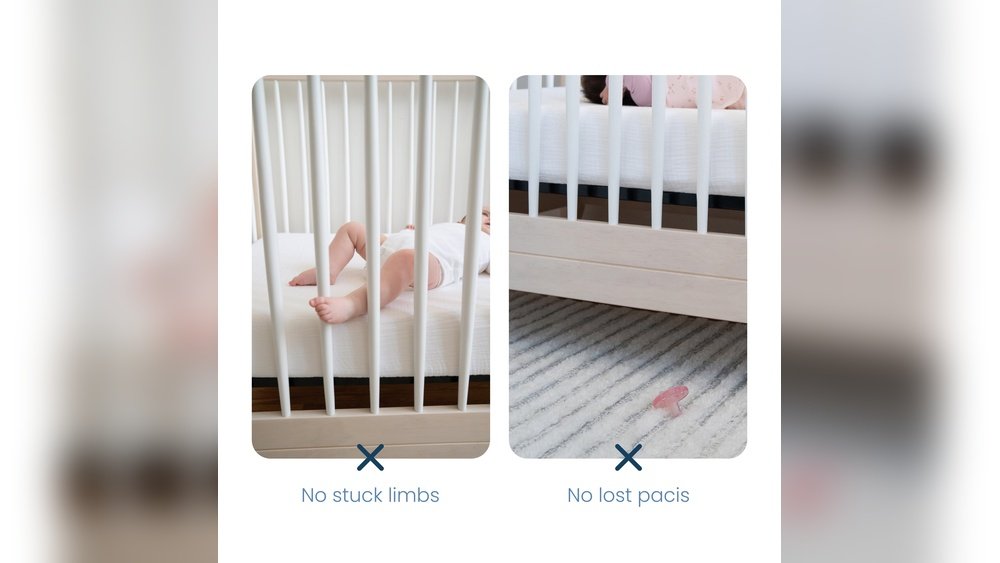
Setting up your baby’s crib is one of the most exciting parts of preparing for their arrival, but conflicting advice about crib accessories can make the process overwhelming. You’ve likely heard the terms “crib liner” and “crib bumper” thrown around, but many parents don’t realize these two products are fundamentally different in design, purpose, and safety — especially with updated 2026 regulations that have changed what’s allowed for infant sleep spaces.
This guide breaks down the key differences between crib liners and crib bumpers clearly, covering their intended use, safety profiles, legal status, and expert-backed recommendations to help you make the safest choice for your little one’s nursery.
What Are Crib Liners?
Crib liners are thin, flexible fabric barriers that attach to the interior sides of a crib, designed to sit flush against the rails with no loose fabric or bulk. Unlike the padded barriers parents used decades ago, modern crib liners are built with safety as the top priority, and meet strict 2026 regulatory standards for infant sleep spaces.
Material and Modern Design
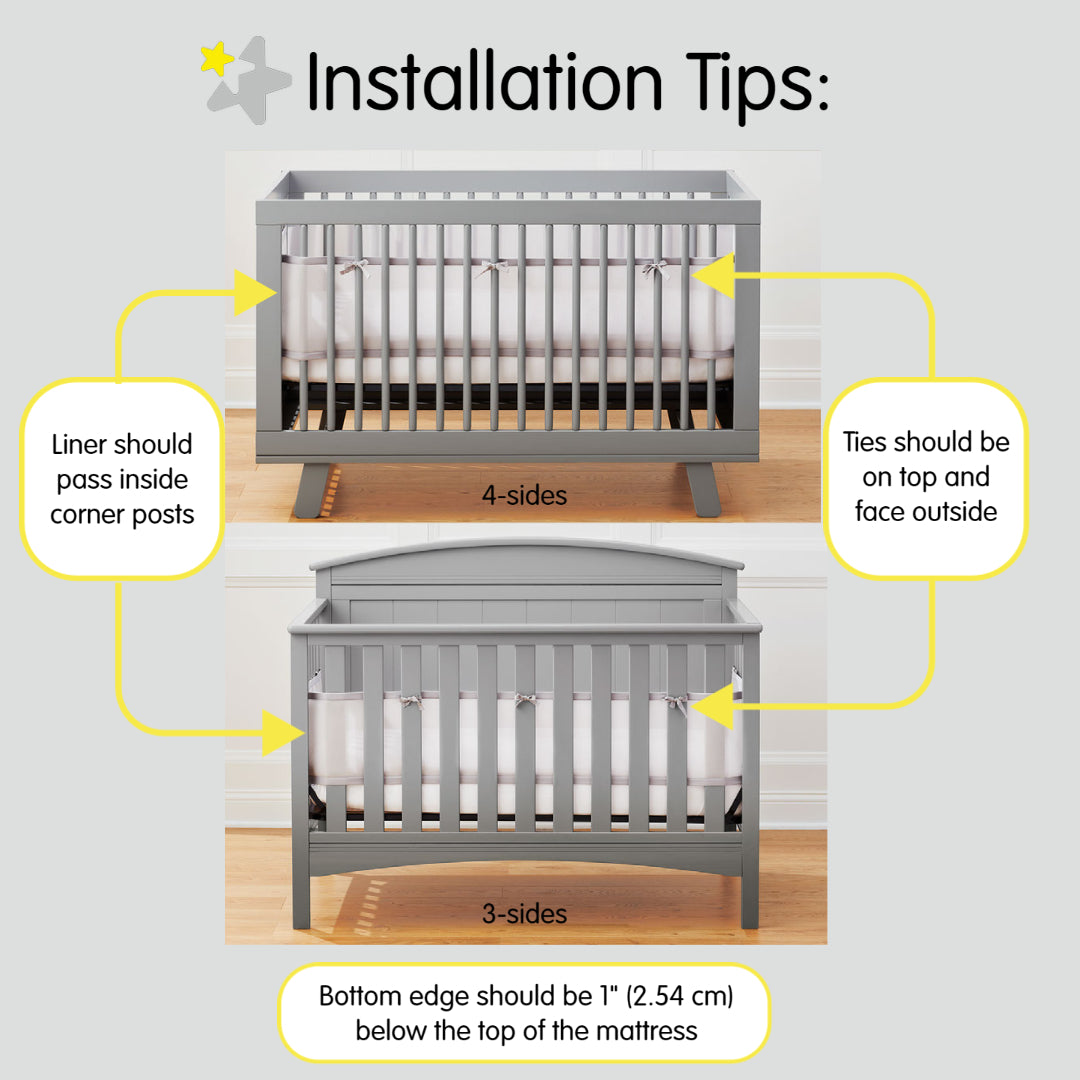
Most crib liners are made of tightly woven 100% cotton or polyester mesh, with mesh openings no larger than 1/4 inch to prevent finger or limb entrapment. They feature stretchy side panels that accommodate standard crib sizes, plus secure fasteners (usually snaps or Velcro) that attach to the outside of crib slats to eliminate choking or entanglement hazards. A common mistake parents make when installing liners is leaving gaps between the fabric and the rail, which can trap a baby’s head or arm — in practice, the liner should be pulled taut so no fabric can be bunched up, and all fasteners should be secured out of baby’s reach.
Core Purpose
The primary function of a crib liner is to protect the crib’s finish (wood, paint, laminate) from drool, teething marks, and clothing snags, rather than cushioning the baby itself. They also prevent tiny arms and legs from getting caught between widely spaced crib slats, a common issue for rolling infants aged 4–8 months. Unlike bumpers, liners do not add significant bulk to the crib interior, so they do not reduce the usable sleep space for your baby.
2026 Safety Standards for Crib Liners
As of 2026, all breathable crib liners sold in the US must meet CPSC requirements for flammability (16 CFR Part 1610) and have no small detachable parts that could pose a choking hazard. The AAP and CDC both approve breathable, properly installed crib liners as a low-risk addition to infant sleep spaces, as long as they do not block airflow. Liners should be removed entirely once your baby can pull themselves up to stand, to prevent climbing or falling out of the crib.
 Breathable mesh liners fit tightly to crib rails to eliminate gaps and allow consistent airflow.
Image source: breathablebaby.com
Breathable mesh liners fit tightly to crib rails to eliminate gaps and allow consistent airflow.
Image source: breathablebaby.com
What Are Crib Bumpers?
Crib bumpers are thick, padded barriers designed to surround the entire interior of a crib, creating a soft cushion between the baby and the hard crib rails. Once a common nursery staple, they are now heavily regulated and widely banned due to proven safety risks.
Material and Construction
Traditional padded crib bumpers feature a fabric cover filled with foam, polyester batting, or microbeads, and are 2–4 inches thick. They are secured to the outside of crib slats with ties, Velcro, or snaps, and are designed to fill the gap between the mattress and the top of the crib rails. In practice, many parents who used bumpers in the 2010s report that they created more hassle than they were worth: they collected dust, drool, and crumbs that were difficult to clean, and often came loose as babies kicked and pulled at them, creating additional entanglement hazards.
Stated Intended Use
Bumpers were originally marketed to prevent bumps and bruises if a baby rolls or flails against the crib sides, and to reduce limb entrapment between slats. Some parents also used them for warmth or to block drafts, though these uses were never recommended by safety experts.
Current 2026 Safety and Legal Status
The Safe Sleep for Babies Act, signed into federal law in 2021, banned the manufacture, sale, and import of padded crib bumpers in the United States effective 2023. As of 2026, selling these products carries civil penalties of up to $10,000 per unit. The AAP, CDC, and CPSC have long advised against their use due to documented risks: padded bumpers block airflow, can trap a baby’s face against the fabric, and have been linked to 121 infant suffocation deaths between 1990 and 2020 per CPSC data. Secondhand bumpers are still widely available at yard sales and online, but safety experts strongly advise against using them in any infant sleep space.
 Padded crib bumpers like this model are now illegal to manufacture or sell in the US under federal law.
Image source: www.newtonbaby.com
Padded crib bumpers like this model are now illegal to manufacture or sell in the US under federal law.
Image source: www.newtonbaby.com
Key Differences Between Crib Liners and Crib Bumpers
While both products attach to crib rails, they differ drastically in function, safety, and legality. The comparison table below outlines the most important distinctions:
| Feature | Crib Liners | Crib Bumpers |
|---|---|---|
| Primary Function | Protects crib finish from drool, teething, and clothing snags; prevents minor limb entrapment between slats | Cushions baby from impact with crib rails; reduces limb entrapment |
| Thickness | 1/8 to 1/4 inch (thin, low-profile) | 2 to 4 inches (thick, padded) |
| Breathability | High (mesh or tightly woven fabric allows full airflow) | Low (thick padding blocks airflow, increases suffocation risk) |
| 2026 US Legal Status | Legal for sale, must meet CPSC safety standards | Illegal to manufacture or sell under federal law |
| Suffocation Risk | Minimal when properly installed | High; linked to dozens of infant deaths annually |
| Cleaning Ease | Machine washable, quick-drying | Bulky, often spot-clean only, takes 24+ hours to dry |
| Average Cost | $15–$40 | $30–$100 (most new sales are now illegal) |
Beyond the table, the most critical difference is safety: bumpers exist to cushion the baby, but that cushioning is exactly what creates fatal suffocation and entrapment risks. Crib liners, by contrast, exist to protect the crib itself, and have no inherent safety risk when installed correctly and used for age-appropriate infants.
2026 Safety Guidelines for Crib Accessories
The AAP, CDC, and CPSC all recommend a bare crib as the safest sleep space for infants, with no soft bedding, bumpers, pillows, or stuffed animals. If you choose to add a barrier to your crib, follow these current guidelines to minimize risk.
Expert and Regulatory Recommendations
Official CDC safe sleep guidance states that a safe infant sleep space includes only a firm, tight-fitting mattress, a fitted sheet, and a wearable sleep sack for warmth. If you use a crib liner, ensure it is breathable, fits tightly with no gaps, and has no loose ties or straps that could pose an entanglement hazard. Always check for CPSC certification on any liner you purchase, and remove it as soon as your baby can pull to stand.
Safe Alternatives to Crib Bumpers
If you are considering a bumper for warmth, draft protection, or to reduce limb entrapment, these 2026-approved alternatives are far safer:
- Wearable sleep sacks: These keep baby warm without loose fabric in the crib. For cozy, safe additions to your baby’s sleep space that meet all current guidelines, our guide to crib-safe soft items outlines exactly what is appropriate for use in an infant crib.
- Room temperature adjustment: Keep the nursery at 68–72°F (20–22°C) to avoid the need for extra bedding. Overheating is a known SIDS risk, so proper layering is critical — for step-by-step guidance on baby winter layering, follow our evidence-based tips.
- Crib placement: Move the crib away from windows, vents, and exterior walls to eliminate drafts instead of adding padded barriers.
- Mesh liners only for limb entrapment: If your baby frequently catches their arms or legs between slats, use a single breathable mesh liner only, never a padded bumper.
Crib liners should be washed at least once a week, or more often if your baby is teething and drooling heavily — for context on typical baby laundry volumes, our guide to common baby laundry needs breaks down how often to wash soft baby items.
How to Choose the Right Option for Your Nursery
Most parents will never need a crib bumper, but a breathable crib liner can be a practical, safe choice for some families. Use these factors to decide what works for your space:
When a Crib Liner Is the Right Choice
A CPSC-approved breathable crib liner is appropriate if:
- Your baby is under 12 months old and not yet pulling to stand
- Your crib has slat spacing wider than 2 3/8 inches (the standard safe width) to prevent limb entrapment
- You want to protect your crib’s finish from drool and teething damage
- You have a newborn who tends to flail their arms and legs against the rails
Liners are low-cost, easy to install, and machine washable, making them a practical pick for most families. Many modern liners also come in subtle, gender-neutral patterns like chevron that fit a variety of nursery aesthetics — for guidance on choosing safe, age-appropriate patterns for baby spaces, check out our guide to nursery pattern safety.
When to Skip Both Products Entirely
A bare crib with no added barriers is fully compliant with all 2026 safe sleep guidelines, and is the lowest-risk option for most families. This is a good choice if:
- Your crib has standard slat spacing (2 3/8 inches or narrower) that prevents limb entrapment
- Your baby does not tend to catch their limbs on the rails
- You prefer a completely uncluttered sleep space that is easy to clean
A safe, uncluttered crib also helps your baby fall asleep faster and stay asleep longer, giving you more flexibility to plan outings around nap schedules without disrupting their routine.
 Modern breathable liners like this HALO model meet 2026 CPSC safety standards for infant sleep spaces.
Image source: www.halosleep.com
Modern breathable liners like this HALO model meet 2026 CPSC safety standards for infant sleep spaces.
Image source: www.halosleep.com
Frequently Asked Questions
Can I use a crib liner and a bumper together?
No, this is not recommended. Using both creates unnecessary bulk in the crib, increases suffocation risk, and violates safe sleep guidelines. If you need a barrier for limb entrapment, use a single breathable liner only.
Are breathable crib liners really safe for newborns?
Yes, as long as they meet CPSC safety standards, fit tightly against the crib rails with no gaps, and have no loose ties or straps. They are the only crib barrier approved by the AAP and CDC for use in infant sleep spaces.
Do crib liners help with teething?
Yes, many parents use crib liners to protect the crib's wood or paint from drool and chewing damage from teething babies. They also provide a soft surface for babies to gnaw on, which can soothe sore gums. Just be sure to wash the liner regularly to keep it hygienic.
Can I use a secondhand crib bumper?
No, safety experts strongly advise against using any secondhand padded crib bumpers, even if they are in good condition. They may have worn-down padding, loose stitching, or missing parts that increase suffocation and entrapment risk, and they are illegal to sell in the US as of 2026.
Conclusion
Crib liners and crib bumpers may look similar at a glance, but they serve vastly different purposes with drastically different safety profiles. Breathable, CPSC-approved crib liners are a safe, low-risk option for protecting your crib’s finish and preventing minor limb snags for appropriately aged infants, while padded crib bumpers are illegal to sell in the US, carry proven suffocation and SIDS risks, and offer no benefit that can’t be achieved with safer alternatives.
For most families, a bare crib with a firm fitted mattress and a wearable sleep sack is the lowest-risk, easiest-to-maintain option. If you do choose to use a crib liner, always opt for a certified breathable model, install it tightly with no gaps, and remove it as soon as your baby can pull themselves up to stand. By following current 2026 expert guidelines, you can create a safe, comfortable sleep space that gives you peace of mind all night long.

Emma Grace is a devoted mother and passionate content writer at BestBabyCart.com. With firsthand parenting experience and a love for research, she creates helpful guides and honest reviews to support parents in choosing the best for their babies. Her goal is to make parenthood easier, one article at a time.