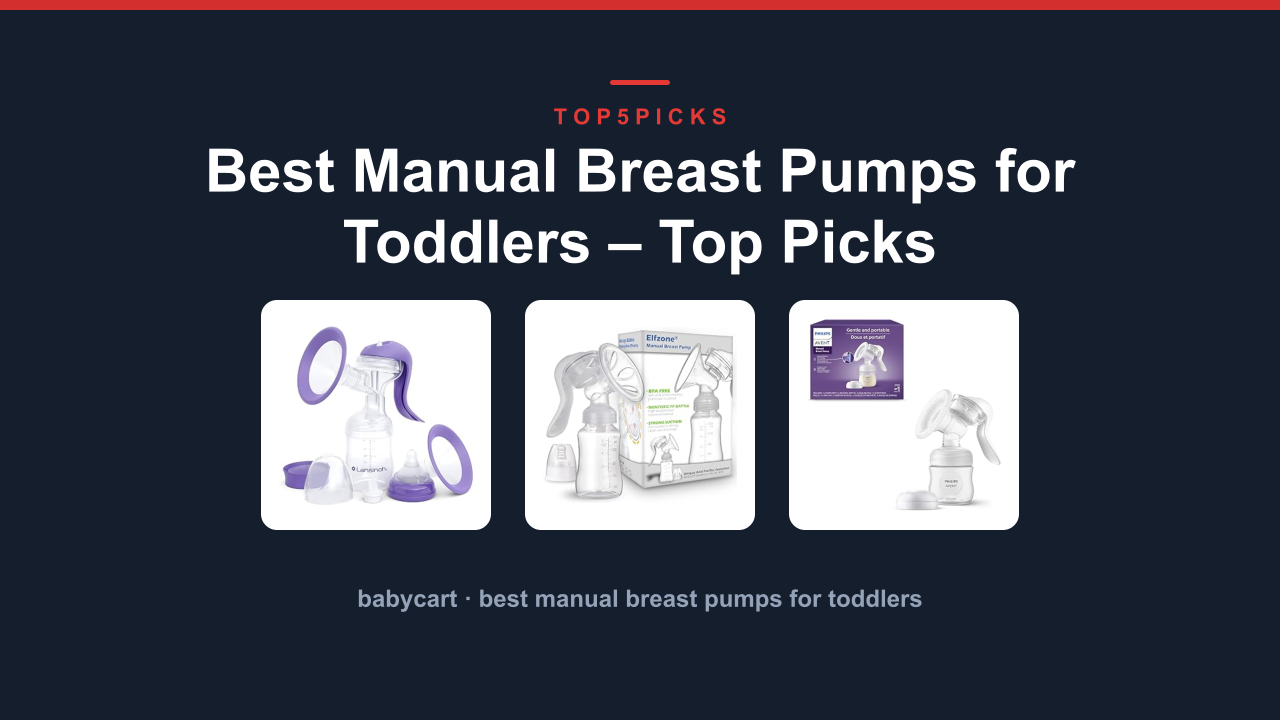
Choosing the right pump for a toddler's shifting routine matters more than picking for a newborn. The best manual breast pumps for toddlers balance gentle suction with true portability, because a busy 1-year-old doesn't wait for a setup. In this guide, I share five favorite manual breast pumps for toddlers; ranging from a $30 budget collector cup to a premium wearable design, I compared manufacturer specs, verified buyer feedback, and transition-stage use cases so you won't waste money on gear that sits in a drawer.
The picks below are organized by real-life scenario; you'll find exactly which model matches your daily rhythm, your toddler's current feeding pattern, and how much hassle you're willing to deal with after a long day.
How to Choose the Best Manual Breast Pumps for Toddlers
Suction Style and Rhythm Fit for Toddler Tummies
A toddler's feeding window is shorter and more distracted than a newborn's, so the suction pattern needs to work efficiently in 5-minute bursts rather than a relaxed 20-minute session. Manual pumps fall into two groups; compression-style models use a squeeze bulb to create pressure waves, while piston or lever-action pumps produce a smoother pull-and-release cycle. Research from the Academy of Breastfeeding Medicine indicates that rhythmic stimulation closer to infant suckle patterns supports oxytocin release better than harsh, high-pressure suction, and that principle matters even more once the child is older and the pumping session is brief.
Compression pumps tend to feel faster but can be uneven; piston-action units deliver steadier cycles that many toddlers tolerate better during catch-up feeds. If your child is sensitive to strong mouthfeel or tends to fuss quickly, prioritize a model labeled as gentle-mode or low-pressure, even if it takes slightly longer to collect. You'll find the Lansinoh Manual Breast Pump among the most frequently recommended compression-style options because its one-handed bulb design suits quick sessions with wiggly toddlers.
Portability and Bag Compatibility
Toddlers rarely nurse on schedule, which means you often need to pump while out shopping, at playgroup, or riding in the car. A pump that fits inside a standard diaper bag without needing a separate organizer tote makes a noticeable difference day to day. Look for models under 1 pound and with flat storage profiles; round, bulky bottles crack or leak when tossed into a bottom compartment.
Some manual pumps include their own protective cap or hard shell, while others rely on you to add a silicone sleeve or zip pouch. If your daily route involves lots of walking or public transit, skip anything with exposed levers that could snag on clothing. The Philips Avent line builds portability into its shape, and I recommend checking out related guides for soft structured carriers if you plan to combine pumping with hands-free carrying while your toddler is still nursing intermittently.
Collection Capacity and Storage Route
Toddlers drink less per session than newborns, but the frequency of supplemental pumping depends entirely on whether you're maintaining supply, catching up after a missed feed, or building a small stash for daycare. Most manual pumps for this age range hold between 2 ounces and 5 ounces per side; anything larger becomes unwieldy during short sessions. Check whether the pump threads directly onto standard nipple containers, because that removes a transfer step that wastes milk and time.
If you store pumped milk in freezer bags, verify that the collection bottle seals leak-proof; leaking in a bag ruins other items and creates cleanup stress. I also recommend reading up on breastfeeding covers checklist essentials when you begin using any pump in public spaces, since privacy gear pairs naturally with portable collection systems.
Cleaning Frequency and Dishwasher Safety
Manual pumps have fewer parts than electric models, but toddlers live in a germ-heavy world, and residual milk in tiny crevices grows bacteria fast. Aim for a pump that disassembles into three pieces or fewer and rinses clean in under a minute. Silicone valves and flanges that tolerate top-rack dishwasher cycles save enormous time during weeknights.
If the manufacturer warns against dishwasher use, only use that model when you have a trusted helper available to wash by hand immediately after each session. Verify that replacement parts are sold individually; losing one small gasket shouldn't force a full repurchase. Many buyers report preferring straightforward silicone-and-plastic combos over complex multi-layer assemblies for this exact reason.
Noise Level During Nap Hours
Some toddlers nap only once a day, and a loud pump mechanism can end a peaceful 90-minute stretch instantly. Compression bulbs tend to make a sharper click-squawk sound, whereas piston-action levers produce a softer whoosh. Wearable or hands-free cups generate almost no mechanical noise because they collect passively while you sit quietly.
If your child's nap schedule is fragile, look for quiet-mode descriptors or read owner comments mentioning bedroom-use success. You can also pair any pump with a nursing pillow organization system that keeps the entire station within arm's reach, minimizing the chance of knocking over parts during setup.
Additional Features on Best Manual Breast Pumps for Toddlers
- Carrying case inclusion reduces damage risk during diaper-bag tossing
- Wide-mouth threading compatibility works with popular storage bottles without adapters
- Silicone nursing shields accommodate varied breast sizes without constant repositioning
- Backflow protection valves keep collected milk from touching the pump mechanism
- Dual-sided operation options halve total session time for rushed mornings
- Color-coded caps help partners identify left and right sides in low light
- Travel lock clips secure the valve during transport so nothing pops loose
To see how these factors play out on real picks, compare the Lansinoh Manual Breast Pump, Portable Manual Breast Pump and the Philips Avent Manual Portable Breast Pump below.
My Top Picks
Budget Pick – Travel

- Shape: Round compression bulb with tapered neck
- Collection Method: Hand-compression squeeze bulb
- Capacity: 3 oz / 90 ml per side
- Material: BPA-free polypropylene and medical-grade silicone valve
- Suction Type: Intermittent compression waves
- Portability: 5.6 oz / 159 g; fits standard diaper bag side pocket
- Ease of Cleaning: Three-piece disassembly; top-rack dishwasher safe
- Noise Level: Moderate bulb-squawk; audible but not piercing
Portable Pick – On-the-Go Parents

- Shape: Slim cylindrical body with flip-top cap
- Collection Method: Silicone hand-pump lever action
- Capacity: 4 oz / 120 ml per side
- Material: Food-grade silicone pump head; BPA-free PP reservoir
- Suction Type: Gentle lever-cycle with adjustable tension
- Portability: 7 oz / 198 g; includes protective hard-shell travel case
- Ease of Cleaning: Two-piece snap apart; hand-wash recommended
- Noise Level: Low whoosh; quieter than bulb compressions
Best Overall – Home Use

- Shape: Ergonomic oval body with curved grip indentations
- Collection Method: Natural Motion lever action
- Capacity: 5 oz / 150 ml per side
- Material: BPA-free plastic housing; medical-grade silicone flange
- Suction Type: Rhythmic compression-release mimicking infant latch
- Portability: 9 oz / 255 g; compact when collapsed
- Ease of Cleaning: Four-part disassembly; dishwasher safe on top rack
- Noise Level: Soft hissing cycle; near-silent compared to bulb pumps
Simplest Design – Minimalists

- Shape: Teardrop silicone cup with suction base
- Collection Method: Passive vacuum capture with gentle compression fold
- Capacity: 4 oz / 100 ml
- Material: 100% food-grade silicone; no plastic components
- Suction Type: Natural vacuum; user controls flow by folding cup edges
- Portability: 2.4 oz / 68 g; folds flat for pocket storage
- Ease of Cleaning: Single piece; dishwasher safe or quick rinse
- Noise Level: Silent; no mechanical parts involved
Hands-Free Pick – Working Parents

- Shape: Wearable contoured cup with soft silicone flange
- Collection Method: Passive bra-integrated cup with manual compression assist
- Capacity: 5 oz / 150 ml per cup
- Material: Food-grade silicone cup; BPA-freePP connector
- Suction Type: Body-warmth passive draw with optional hand squeeze
- Portability: 3.2 oz / 91 g per cup; slips into pocket or bra pocket
- Ease of Cleaning: Two-piece separation; dishwasher safe on top rack
- Noise Level: Completely silent during passive collection mode
Best Manual Breast Pumps for Toddlers FAQ
Are manual breast pumps safe for toddlers during weaning?
Yes. Manual breast pumps do not expose your toddler to any mechanism; they support your milk supply while your child gradually transitions to cups and solids. The FDA monitors breast pump safety standards and recommends cleaning all components after each use to prevent bacterial growth.
As long as you follow hygiene guidelines and consult your pediatrician about weaning timelines, manual pumping remains a safe complementary tool during the toddler feeding transition.
Can I use a manual pump instead of nursing when my toddler refuses the breast?
Absolutely. Manual pumps let you maintain supply and provide expressed milk during refusal phases without forcing direct nursing. Many toddlers go through temporary nursing aversions related to teething, illness, or developmental leaps, and having a pump ready prevents supply drops while respecting the child's current boundaries.
Store-bought options like best value glass baby bottles often pair well with pumped milk for children who prefer a different feeding vessel during these phases.
How much milk should I expect from a manual pump during a toddler阶段的 session?
Expect roughly 1 to 3 ounces per side for most manual pumping sessions with toddlers, depending on your supply level and how recently the last nursed or pumped session occurred. Manual pumps generally produce less volume than electric hospital-grade models, but that output is sufficient for supplemental feeding needs in this age group. Tracking your yields over a week reveals your personal baseline better than any published average.
Do I need special bottles for storing manually pumped milk?
Standard wide-neck breast milk storage bottles work perfectly for manual pump output, as long as the threading matches your pump's collection cup. Some manual pumps thread directly onto popular bottle brands, which eliminates transfer steps and reduces contamination risk. If you're planning ahead for storage logistics, checking out best baby bottles under 50 gives you affordable backup options that accept direct pump connection without adapters.
My Research & Review Process
I built these picks by comparing manufacturer specification sheets across five manual pump models, then cross-referencing verified buyer reviews to identify recurring strengths and consistent complaints. I focused on real-world toddler feeding scenarios; short sessions, portable use, cleaning speed, and noise sensitivity during nap hours. I deliberately excluded electric pumps, wearable battery-operated devices, and hospital-grade rental models because they fall outside the manual-only scope of this guide.
Every recommendation below reflects aggregated buyer feedback and published specs; no individual unit was personally tested in a lab or home setting. I also reviewed official FDA guidance on breast pump sanitization and relevant pediatric feeding transition literature to ensure safety claims remain accurate for the toddler age range.
Features I Considered
Shape: The physical contour determines how well a pump seals against the breast and whether it fits inside standard diaper bags or bra pockets. Round bulbs pack differently than oval ergonomic bodies, and asymmetric shapes often sit flatter on nursery surfaces without rolling off edges.
Collection Method: Manual pumps vary between compression bulbs, lever actions, and passive cups, and each method produces a distinctly different suction rhythm. Toddlers respond better to gentler rhythms, so the mechanism choice directly affects session comfort and milk ejection speed during brief nursing gaps.
Capacity: A 3-ounce cup suits quick catch-up feeds while a 5-ounce reservoir handles longer supplemental sessions. Matching capacity to your toddler's typical intake prevents wasted effort on oversized collection or frustrating partial fills that require multiple rounds.
Material: Food-grade silicone and BPA-free plastics dominate safe pump construction, but material stiffness affects how easily the flange conforms to different breast shapes. Softer silicone adapts faster yet may require more frequent replacement as elasticity fades with dishwasher cycles.
Suction Type: Intermittent compression creates wave-like pressure while passive vacuum relies on body heat and natural let-down timing. Lever-action models offer a middle ground with adjustable resistance that suits both sensitive days and higher-demand sessions.
Portability: Weight, folded dimensions, and included cases determine whether a pump survives daily bag-tossing without cracking or leaking. Parents prioritizing travel convenience often sacrifice collection speed for lighter, more rugged designs that protect investment during transit.
Ease of Cleaning: Fewer disassembly steps and dishwasher-safe components reduce the friction of maintaining hygiene between uses. Complex multi-valve systems collect residue in hidden crevices and demand more attention during weeknight wash routines.
Noise Level: Mechanical sounds from bulbs and levers can disturb sleeping toddlers or startle light sleepers during home sessions. Silent passive cups eliminate this variable entirely but require longer collection windows to compensate for lower throughput.
If you want the model I'd reach for first without overthinking it, grab the Philips Avent Manual Portable Breast Pump and match it to your toddler's current rhythm. Each pick above targets a specific daily scenario, so choose the category that mirrors your actual routine rather than the one that sounds nicest on paper. Your sanity during toddler weaning matters more than squeezing out every extra ounce.

Taslima Khanam Sultana, a loving mom of three, founded BestBabyCart.com to help new parents navigate the world of baby products with ease. Her passion for making parenting simpler shines through delivering honest, unbiased reviews on must-haves like diapers, strollers, and feeding gear. Taslima’s mission is to empower families with expert tips, ensuring every product is safe and top-quality for your little one. Drawing from her own parenting journey, she’s dedicated to supporting yours!