

Banana bread is a beloved, naturally sweet baked good that checks every box for baby snacks: it’s soft, easy to chew, packed with nutrients, and simple to make at home with full control over ingredients. Unlike store-bought baby snacks that often contain excess added sugar, preservatives, and hidden additives, homemade banana bread lets you avoid unnecessary ingredients while delivering a treat most babies love. Whether your little one is just starting solids or is a seasoned self-feeder, this guide covers age-appropriate prep, safe serving methods, allergen swaps, and critical safety rules to make snack time stress-free and nutritious.
When Is Banana Bread Safe for Babies?
Most babies can try banana bread between 6 and 9 months of age, once they’ve mastered smooth purees and show clear developmental readiness for soft finger foods. Key readiness signs include sitting up with minimal support, grasping objects with their whole hand, and moving food from the front of their tongue to the back to swallow safely. Babies under 6 months lack the oral motor skills to handle even soft baked goods, so wait until they meet these milestones before introducing banana bread. You can also read our guide on contact bestbabycart parenting support.
If your baby has a diagnosed wheat, egg, or dairy allergy, consult your pediatrician before offering traditional banana bread, and use the allergen swaps outlined below to create a safe version. The American Academy of Pediatrics (AAP) recommends introducing common allergens early and often, between 4 and 6 months (once readiness signs are present), to reduce the risk of developing food allergies later in life.
Baby-Friendly Banana Bread Ingredients
The biggest advantage of making banana bread at home for your baby is full control over every component, so you can avoid added salt, refined sugar, and ingredients your baby hasn’t been introduced to yet.
Core Safe Ingredients
Stick to these simple, nutrient-dense base ingredients for a baby-safe loaf:
- Very ripe bananas (with lots of brown spots): They mash easily, require no added sweetener, and are rich in potassium for healthy heart and muscle function.
- Whole-grain flour: Oat flour, whole wheat flour, or a certified gluten-free blend works for sensitive tummies, and adds fiber to support healthy digestion.
- Eggs (or substitute): Eggs bind the batter and add protein for growth. For egg-free diets, use ¼ cup of unsweetened applesauce or mashed banana per egg.
- Unsweetened applesauce or plain whole-milk yogurt: Adds moisture without added sugar, and keeps the bread soft.
- A pinch of cinnamon: Adds warm flavor without added sugar or salt. Skip vanilla extract with alcohol for babies under 12 months.
In practice, over-ripe bananas that are too soft to eat plain work best for banana bread, as they mash with zero effort and need no extra sweetener to taste delicious to babies.
Ingredients to Avoid
Steer clear of these common additions that pose choking or health risks for babies:
- Added white sugar, honey (risk of infant botulism for babies under 12 months), or salt: Babies under 24 months should have no added sugar or salt in their diet, per current USDA guidelines.
- Whole nuts, large seeds, or chunks of dried fruit: These are serious choking hazards for babies and toddlers.
- Chocolate chips, sugary sprinkles, or flavored yogurt toppings: These add empty calories and can train your baby to prefer overly sweet, processed foods.
If you opt for store-bought banana bread instead of homemade, always check the ingredient label for hidden additives like palm oil, excess sodium, and added sugars. For guidance on identifying unnecessary additives in baby foods, review our guide to hidden additives in baby foods.
Optional Nutritious Add-Ins
Boost the nutritional profile of your banana bread with these baby-safe add-ins, introduced one at a time to monitor for allergic reactions:
- 1 tablespoon of ground flaxseed: Adds omega-3 fatty acids for brain development, mix into dry ingredients to avoid clumping.
- ¼ cup mashed cooked sweet potato: Adds vitamin A and extra moisture, no change to flavor.
- 2 tablespoons of soft-cooked rolled oats: Adds extra fiber for digestion, ideal for babies 8 months and older.
Step-by-Step: Making Banana Bread for Babies
Standard banana bread recipes are often too dry, dense, or sweet for babies, so follow this adjusted method for a safe, baby-friendly loaf:
- Preheat your oven to 325°F (160°C) — 25°F lower than standard recipes — to bake the bread evenly without drying out the crumb, a common mistake that increases choking risk.
- Mash 3–4 very ripe bananas in a large bowl until mostly smooth (small lumps are fine and add texture for older babies).
- Stir in 1 egg (or ¼ cup applesauce substitute), ¼ cup unsweetened applesauce, and ¼ cup plain yogurt.
- In a separate bowl, mix 1 ½ cups of your chosen flour, 1 teaspoon baking powder, 1 teaspoon cinnamon, and any optional add-ins.
- Combine wet and dry ingredients, stirring just until no dry flour remains — over-mixing creates a dense, crumbly texture that is unsafe for babies.
- Pour batter into a greased 4×4 inch mini loaf pan (smaller pans bake more evenly for consistent baby-sized portions) or mini muffin tin for individual servings.
- Bake for 35–40 minutes. Test doneness by inserting a toothpick into the center: it should come out with just a few moist crumbs attached, not completely clean, to keep the texture soft.
- Let cool completely in the pan on a wire rack before serving or storing. Warm bread is a mushy choking hazard, and cooling sets the crumb for safe handling.
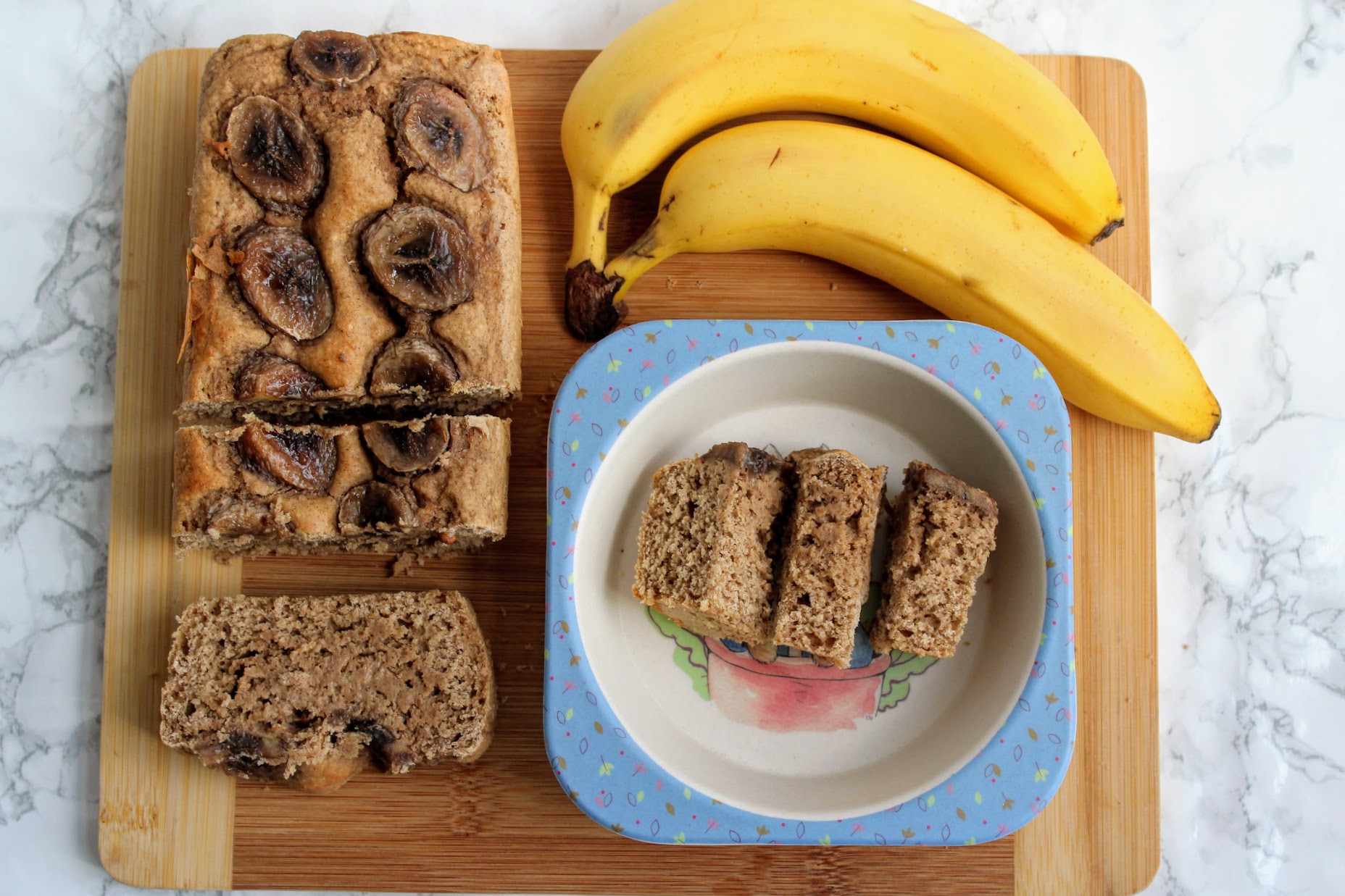 A freshly baked, low-sugar banana bread loaf, perfect for homemade baby snacks.
Beyond being nutrient-dense, homemade banana bread is a low-waste, budget-friendly alternative to pre-packaged baby snacks, aligning with sustainable, low-waste baby care choices that reduce single-use plastic waste. For context on long-term sustainable baby product use, review our guide to low-waste baby care choices.
Age-Appropriate Serving Methods
Texture and portion size are the two most important factors when serving banana bread to babies, and they vary based on your child’s developmental stage.
6–8 Months (New to Solids)
For babies who are just starting soft finger foods, offer pea-sized pieces of soft, moist banana bread, or a smooth puree: blend 1–2 small pieces of banana bread with 2–3 tablespoons of breast milk, formula, or water until it reaches a yogurt-like consistency. Serve with a soft-tipped spoon, or let them explore the puree with their hands for sensory play. Always supervise meals closely, and serve when your baby is rested and alert to reduce choking risk — overtired babies are more likely to gag on new textures. For tips on establishing calm, consistent feeding routines, check our guide to calm feeding routines.
9–12 Months (Baby-Led Weaning)
For babies who have developed their pincer grasp, offer 1-inch cubes of banana bread, or spread a thin layer of plain yogurt on a small piece and let them pick it up independently. You can also bake the batter in a mini muffin tin for 20–22 minutes to create individual, hand-held portions perfect for tiny hands. Serve portions on age-appropriate dishware to minimize mess and support self-feeding practice.
12+ Months (Toddlers)
For older toddlers, you can offer slightly larger pieces (no bigger than 1 inch) or use banana bread as a base for fun, nutrient-dense toppings: a thin spread of sunflower seed butter (if no allergy risk), sliced fresh bananas, or a sprinkle of chia seeds. You can also use cookie cutters to cut the bread into fun shapes to make snack time more engaging for picky eaters.
Allergen Safety and Substitutions
Traditional banana bread contains three of the top 9 common food allergens: wheat (gluten), eggs, and dairy. The AAP recommends introducing these allergens early and often, but always introduce new ingredients one at a time, waiting 3–5 days between new foods to monitor for reactions.
| Allergen | Baby-Safe Swap | Notes |
|---|---|---|
| Eggs | ¼ cup unsweetened applesauce, mashed banana, or commercial egg replacer per egg | Works as a 1:1 binder with no change to texture |
| Dairy | Unsweetened almond milk, oat milk, or coconut milk; dairy-free margarine for butter | Choose unflavored, unsweetened milk alternatives to avoid added sugar |
| Gluten | 1:1 certified gluten-free flour blend (rice, oat, tapioca) | Required for babies with celiac disease or diagnosed gluten sensitivity |
| Nuts (if included in a recipe) | Omit entirely, or use sunflower seed butter for healthy fats | Only introduce seed butters after 6 months, and one at a time to monitor for reactions |
If your baby shows signs of an allergic reaction after eating banana bread (rash, hives, vomiting, diarrhea, swelling of the face or mouth), stop serving it immediately and contact your pediatrician. Babies with a family history of food allergies may benefit from allergy testing before introducing common allergens, per AAP guidance.
Storage and Reheating Tips
Proper storage keeps banana bread fresh and safe for your baby for weeks:
- Room temperature: Store wrapped tightly in plastic wrap or aluminum foil, in an airtight container, for up to 3 days.
- Refrigerator: Store for up to 1 week, wrapped tightly to prevent drying out.
- Freezer: Slice the bread into individual baby-sized portions before freezing, to thaw only what you need. Wrap each portion in plastic wrap, place in a freezer-safe bag, and label with the date. Frozen banana bread stays fresh for up to 3 months.
When reheating frozen portions, avoid microwaving, as it creates hot spots that can burn your baby’s mouth and makes the bread rubbery. Instead, thaw portions in the refrigerator overnight, then let come to room temperature before serving, or warm gently in a 300°F (150°C) oven for 2–3 minutes, then let cool completely before offering to your baby.
Creative, Nutritious Serving Ideas
Banana bread counts as one fruit and one grain serving for babies, so pair it with a protein or veggie for a balanced snack that keeps your baby full longer:
- For 6–8 month olds: Mix 1 tablespoon of banana bread puree with 1 tablespoon of plain yogurt and 1 teaspoon of mashed avocado, for a snack rich in healthy fats and protein.
- For 9–12 month olds: Top a 1-inch cube of banana bread with a thin spread of sunflower seed butter and a few finely chopped blueberries, for a snack with fiber, vitamins, and healthy fats.
- For toddlers: Cut banana bread into fun shapes with cookie cutters, and serve with a side of steamed broccoli florets or apple slices for a veggie and fruit boost.
Avoid added toppings like honey, chocolate syrup, or sugary sprinkles, as they add empty calories and can encourage a preference for overly sweet foods. Stick to portion sizes no larger than your baby’s fist to avoid overfeeding and choking risk.
Critical Safety Rules to Follow
Banana bread is low-risk when prepared and served correctly, but follow these rules to keep mealtime safe:
- Test the texture before serving: Press a piece of banana bread between your fingers — if it mushes easily with minimal pressure, it’s safe; if it’s crumbly or holds its shape firmly, it’s a choking hazard. Over-baking is the most common cause of unsafe texture, so stick to the lower 325°F (160°C) baking temperature and test for moist crumbs, not a clean toothpick.
- Always supervise meals: Never leave your baby unattended while eating, and avoid serving banana bread while they are in a stroller, car seat, or lying down, as these positions increase choking risk.
- No added salt, sugar, or honey for babies under 24 months: Excess sodium can strain a baby’s developing kidneys, and added sugar encourages a preference for sweet processed foods. Honey is strictly off-limits for babies under 12 months due to the risk of infant botulism.
- Introduce new ingredients slowly: If you’re adding new ingredients like flaxseed or sweet potato to your banana bread, introduce them one at a time, 3–5 days apart, to monitor for allergic reactions.
For on-the-go snacks, pack pre-cut, cooled banana bread portions in a small sealed container: they don’t require refrigeration for up to 4 hours, making them perfect for outings. For tips on planning outings around your baby’s schedule, check our guide to outing-friendly baby scheduling.
Frequently Asked Questions
When Can My Baby Start Eating Banana Bread?
Most babies can try banana bread between 6 and 9 months, once they’ve mastered smooth purees and show developmental readiness for soft finger foods: sitting up with minimal support, grasping objects with their whole hand, and moving food from the front of their tongue to the back to swallow safely. Always consult your pediatrician before introducing new foods, especially if your baby has a history of food allergies. For more guidance on solid food milestones, review the AAP’s starting solids guidelines.
Is Banana Bread Safe for Babies?
Yes, homemade banana bread made without added salt, sugar, or honey is safe for babies 6 months and older, as long as it’s served in age-appropriate portions and texture. Store-bought banana bread often contains excess added sugar, salt, and preservatives, so always check the ingredient label carefully, or opt for homemade to control every component.
How Do I Prepare Banana Bread for My Baby?
Use a low-heat, low-sugar recipe: mash very ripe bananas, mix with whole-grain flour, an egg (or applesauce substitute), unsweetened applesauce, and a pinch of cinnamon. Bake at 325°F (160°C) for 35–40 minutes, until a toothpick inserted into the center comes out with a few moist crumbs attached. Let cool completely before serving, to avoid burn risks and ensure a safe texture.
Can Banana Bread Help with Baby Nutrition?
Yes, banana bread made with whole-grain flour and ripe bananas provides key nutrients for growing babies: potassium from bananas supports healthy heart and muscle function, fiber from whole-grain flour aids digestion, and eggs (if used) provide protein for growth. Pair it with a protein or healthy fat (like yogurt or seed butter) for a balanced snack that keeps your baby full longer.
What If My Baby Doesn’t Like Banana Bread?
It’s common for babies to reject new foods multiple times before accepting them — research shows it can take 10–15 exposures to a new food for a baby to develop a taste for it. Try adjusting the texture: offer puree for younger babies, or small soft pieces for older babies, or mix a small amount of banana bread puree with a familiar favorite puree (like applesauce or sweet potato) to ease the transition. If your baby consistently refuses it, don’t pressure them: offer it again in a few weeks, and focus on offering a variety of other nutrient-dense foods in the meantime.
How Often Can I Serve Banana Bread to My Baby?
Banana bread is a nutritious treat, but it should not replace whole fruits, vegetables, proteins, and whole grains in your baby’s diet. Offer it 1–2 times per week as a snack, to avoid overconsuming natural sugars and ensure your baby gets a wide variety of nutrients. Current USDA infant nutrition guidelines recommend limiting added sugars entirely for babies under 24 months, so stick to unsweetened homemade versions for the healthiest option.
Are There Any Allergies to Watch For?
Traditional banana bread contains common allergens including wheat (gluten) and eggs, so monitor your baby for signs of an allergic reaction (rash, hives, vomiting, diarrhea, swelling of the face or mouth) for 3–5 days after first introducing it. If you notice any concerning symptoms, stop serving it and contact your pediatrician immediately. For babies with diagnosed wheat or egg allergies, use the substitution swaps listed above to make a safe version.
For more answers to common baby feeding and care questions, visit our common baby feeding questions resource hub.
Final Tips for Happy, Safe Feeding
Serving banana bread to your baby is a simple, rewarding way to introduce a new, nutrient-dense food that most babies love. By using homemade recipes with whole, unprocessed ingredients, adjusting texture and portion size to match your baby’s developmental stage, and following basic safety rules to avoid choking and allergen risks, you can make banana bread a regular, stress-free part of your baby’s snack rotation. Remember that every baby’s feeding journey is unique: don’t stress if your baby takes time to warm up to new foods, and focus on making mealtime a positive, pressure-free experience for both of you.
For more age-appropriate snack recipes, solid food safety guides, and answers to common parenting questions, browse our full library of baby care resources.

Taslima Khanam Sultana, a loving mom of three, founded BestBabyCart.com to help new parents navigate the world of baby products with ease. Her passion for making parenting simpler shines through delivering honest, unbiased reviews on must-haves like diapers, strollers, and feeding gear. Taslima’s mission is to empower families with expert tips, ensuring every product is safe and top-quality for your little one. Drawing from her own parenting journey, she’s dedicated to supporting yours!