
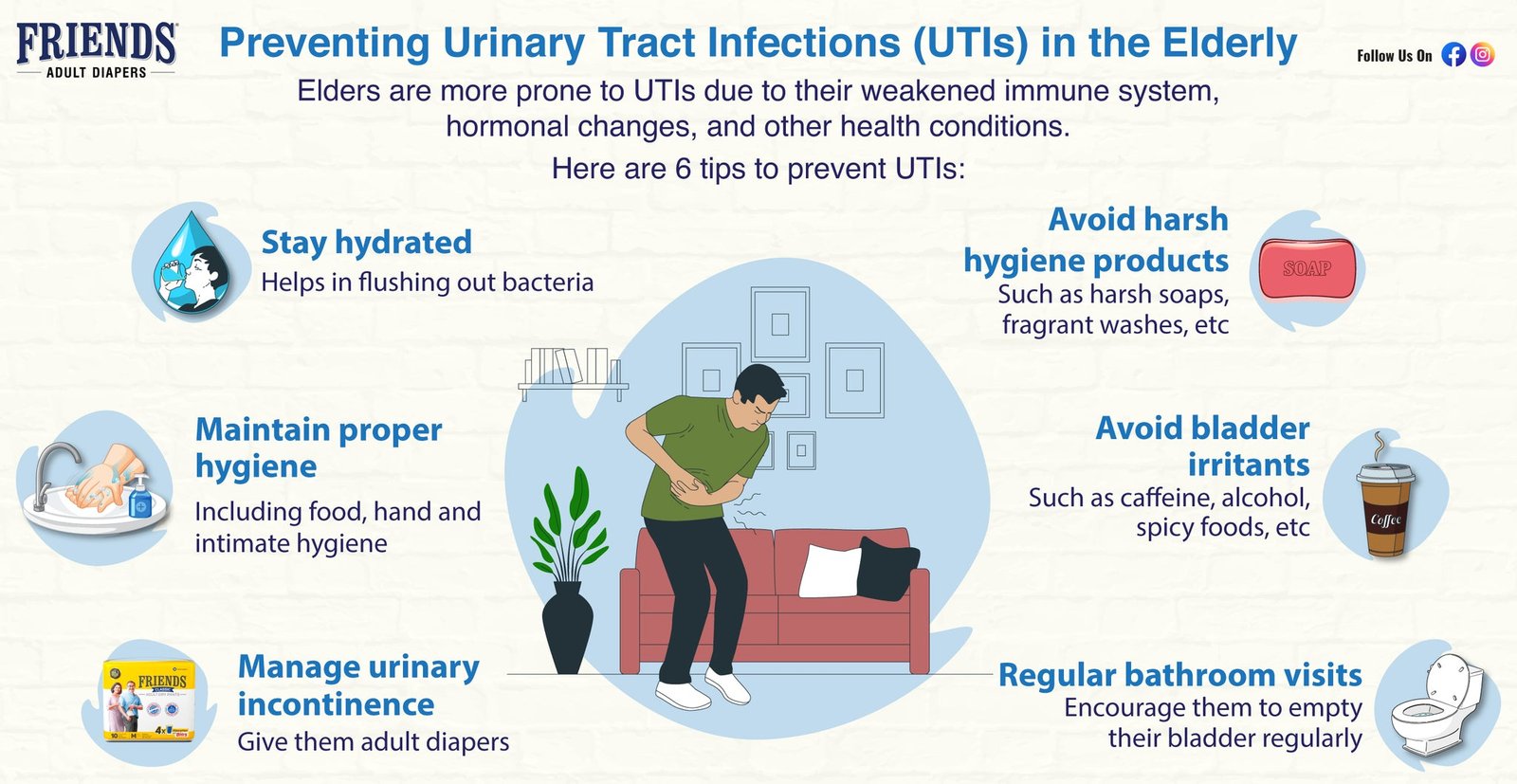
Urinary incontinence affects 1 in 3 adults in the U.S. at some point in their lives, per the Centers for Disease Control and Prevention (CDC), with many relying on adult diapers, briefs, or absorbent pads to manage daily leakage. For this group, a top concern is whether these essential products increase the risk of urinary tract infections (UTIs) — a painful, common complication that can lead to serious health issues if left untreated. The short answer is that diapers do not directly cause UTIs, but improper use, poor hygiene, and low-quality materials can create conditions that make infections far more likely. In this guide, we’ll unpack the science behind diaper-related UTI risk, highlight warning signs to watch for, and share evidence-based prevention strategies recommended by urology experts to help you stay comfortable and protected.
Understanding Adult UTIs: Core Causes and Risk Factors
UTIs occur when bacteria (most commonly E. coli from the gastrointestinal tract) enter the urinary tract and multiply, causing inflammation and infection. While diaper use can exacerbate UTI risk, it is rarely the primary cause. Common underlying risk factors for adult UTIs include:
- Urinary retention from neurogenic bladder, enlarged prostate, or severe constipation
- Weakened immune system from diabetes, long-term steroid use, or chemotherapy
- History of recurrent UTIs
- Post-menopausal atrophic vaginosis (thinning of vaginal tissue that reduces natural protection against bacteria)
- Use of indwelling urinary catheters
- Limited mobility that makes it difficult to empty the bladder fully
For adults who use diapers, these pre-existing risk factors interact with diaper-related habits to increase overall infection likelihood. For more on this, see our guide on can dog diapers cause uti.
Do Adult Diapers Directly Cause UTIs? The Science Explained
Adult diapers are not a direct cause of UTIs, but they can create an environment that supports bacterial growth and migration into the urinary tract when used incorrectly. Understanding the specific mechanisms behind this risk is key to preventing infection.
Moisture Trapping and Bacterial Colonization
Prolonged exposure to wet diaper material raises the temperature and pH of the perineal area, breaking down the skin’s natural protective barrier. This allows bacteria to colonize the skin around the urethra and migrate into the urinary tract, leading to infection. Stool exposure is an even higher risk factor, as fecal bacteria are far more likely to cause UTIs than urine alone. In practice, home health care providers note that adults who wear wet diapers for 8+ hours at a time have a measurably higher rate of UTI diagnosis than those who change every 4–6 hours. For more on this, see our guide on best overnight pull up diapers for adults.
Material and Design Factors
Not all adult diapers are created equal. Many low-cost options use plastic back sheets that trap heat and moisture against the skin, creating an ideal environment for bacterial growth. Others contain added fragrances, lotions, or dyes that can cause micro-abrasions or contact dermatitis, further weakening the skin barrier. Opt for fragrance-free, hypoallergenic diapers free of harsh synthetic additives and unnecessary moisturizers, a guideline that also applies when selecting gentle, safe ingredients for infant care products gentle infant care product guidelines. Breathable, cellulose-based or plant-based diapers with moisture-wicking top layers allow air to circulate, reducing moisture retention and skin irritation.
The Role of Improper Hygiene
Poor hygiene is the most common modifiable risk factor for diaper-related UTIs. Common mistakes that increase infection risk include:
- Not washing hands with soap and water before and after changing a diaper
- Wiping from back to front after using the bathroom, which transfers gastrointestinal bacteria to the urethra
- Not fully drying the perineal area before putting on a new diaper, leaving residual moisture
- Reusing wipes or failing to use a clean wipe for each pass
- Failing to clean the area thoroughly after a bowel movement
These habits allow bacteria to build up on the skin and eventually enter the urinary tract, regardless of the quality of the diaper used.
 Incontinence briefs are a common management tool for urinary or fecal leakage, but proper fit and change schedules are critical to reducing infection risk.
Credit: aareurology.sg
Incontinence briefs are a common management tool for urinary or fecal leakage, but proper fit and change schedules are critical to reducing infection risk.
Credit: aareurology.sg
Warning Signs of a UTI in Diaper Users
Recognizing UTI symptoms early is critical to preventing complications, especially for adults with limited mobility or cognitive impairments who may not be able to report discomfort clearly.
Classic UTI Symptoms
Watch for these common signs of infection:
- A burning or stinging sensation during urination
- Increased urgency or frequency of urination (feeling the need to go more often than usual, even if little comes out)
- Cloudy, dark, or foul-smelling urine
- Pelvic pain, pressure, or cramping
- Pain in the lower back or sides (a sign the infection may have spread to the kidneys)
- Fever, chills, or nausea (indicates a more severe infection that requires immediate medical care)
- Blood in the urine (may be visible or detected only via lab test)
Subtle Signs for Non-Verbal Adults or Those with Dementia
Adults with Alzheimer’s disease, dementia, or severe mobility impairments may not be able to verbalize discomfort. Watch for these less obvious warning signs:
- Sudden increases in confusion, agitation, or aggression
- New or worsening falls
- Decreased appetite or refusal to eat
- Changes in sleep patterns, such as increased napping or restlessness at night
- New onset of incontinence (if the person was previously continent)
If you notice any of these symptoms, especially combined with fever or changes in urine smell, contact a healthcare provider immediately for a urine test.
Evidence-Based Prevention Strategies to Reduce UTI Risk
Preventing UTIs for diaper users relies on consistent, simple habits that reduce moisture exposure and bacterial growth. These strategies are recommended by the Urology Care Foundation, the official foundation of the American Urological Association.
Optimize Your Diaper Routine
- Change diapers every 4 to 6 hours when wet, or immediately if soiled with stool. Overnight, use a high-absorbency diaper if you cannot change it, but change it as soon as you wake up to reduce moisture exposure. While individual change frequency may vary based on output, most urology guidelines recommend changing adult diapers every 4 to 6 hours when wet, or immediately if soiled — a schedule aligned with standard infant diaper change guidelines to minimize prolonged skin exposure to moisture standard infant diaper change schedules.
- Choose a diaper size that fits snugly around the waist and legs without being tight enough to cause chafing or restrict airflow. A poor fit can cause leaks and trap moisture against the skin.
- Avoid doubling up on diapers or wearing regular underwear over a diaper, as this traps heat and moisture.
Master Proper Hygiene Practices
- Always wash your hands with soap and warm water before and after changing a diaper, even if you are using gloves.
- Clean the perineal area with warm water and a soft, fragrance-free wipe or washcloth. For people with heavy stool output, use a separate wipe for the genital area and the anal area to avoid cross-contamination.
- Wipe from front to back (for people with a vagina) to avoid transferring gastrointestinal bacteria to the urethra.
- Pat the area completely dry with a soft towel before putting on a new diaper. Do not rub, as this can irritate the skin.
- Apply a thin layer of barrier cream (such as zinc oxide or petroleum jelly) if you experience frequent skin irritation, as this protects the skin from moisture and bacteria.
- Avoid using harsh soaps, feminine hygiene sprays, or scented wipes, as these can disrupt the skin’s natural pH and increase irritation.
Support Overall Urinary Tract Health
- Drink 6–8 8-ounce glasses of water daily, unless your doctor has told you to restrict fluids. Staying hydrated helps flush bacteria out of the urinary tract before an infection can take hold.
- Avoid holding urine for long periods. If you can, empty your bladder every 3–4 hours, even if you don’t feel the urge. Scheduled voiding helps prevent urine from sitting in the bladder, where bacteria can multiply.
- Avoid bladder irritants such as caffeine, alcohol, and acidic fruit juices, as these can irritate the bladder lining and make UTI symptoms worse.
- Wear loose-fitting, breathable cotton underwear and avoid tight synthetic clothing that traps heat and moisture against the perineum, a principle that also applies when choosing non-restrictive, comfortable clothing for infants non-restrictive infant clothing.
- If you have diabetes, keep your blood sugar levels well-controlled, as high blood sugar weakens the immune system and makes it harder for your body to fight off bacterial infections.
When to Consider Alternative Products
For some adults, diapers may not be the best option for UTI prevention. Alternatives include:
- Absorbent pads that can be changed more frequently without removing all clothing
- Pull-up style protective underwear that is more breathable than traditional tape-on diapers
- Bed pads for overnight use to reduce the need to wear a heavy, high-absorbency diaper all night
- For people with overflow incontinence (incomplete bladder emptying), a scheduled voiding plan or intermittent catheterization (under medical supervision) may reduce the need for absorbent products altogether. Consult your doctor to find the right solution for your needs.
 Breathable, skin-friendly incontinence products reduce moisture retention and lower UTI risk compared to plastic-backed options.
Credit: mymedsupplies.com
Breathable, skin-friendly incontinence products reduce moisture retention and lower UTI risk compared to plastic-backed options.
Credit: mymedsupplies.com
Medical Guidance and When to See a Doctor
If you experience UTI symptoms that last longer than 24 hours, have a fever over 101°F (38.3°C), chills, or back pain, or have 3 or more UTIs in a year, schedule an appointment with a urologist or primary care provider immediately. Doctors will typically perform a urine culture to confirm a UTI and prescribe antibiotics to clear the infection. For people with recurrent UTIs, providers may recommend low-dose preventive antibiotics or vaginal estrogen (for post-menopausal patients) to reduce future risk. Never self-treat a suspected UTI with over-the-counter products, as untreated infections can spread to the kidneys and cause life-threatening complications.
 Simple, consistent hygiene habits are the most effective way to reduce UTI risk for people using adult diapers.
Credit: carthealth.com
Simple, consistent hygiene habits are the most effective way to reduce UTI risk for people using adult diapers.
Credit: carthealth.com
Frequently Asked Questions
Do adult diapers directly cause UTIs?
No, adult diapers do not directly cause UTIs. UTIs occur when bacteria enter the urinary tract, and diapers only increase risk when they are worn for prolonged periods, create a moist environment, or are paired with poor hygiene practices. Proper use of high-quality, breathable diapers combined with consistent hygiene and change schedules eliminates nearly all diaper-related UTI risk.
How often should I change my adult diaper to prevent UTIs?
Most urology experts recommend changing adult diapers every 4 to 6 hours when wet, or immediately if soiled with stool. Overnight, if you cannot change your diaper, use a high-absorbency option and change it as soon as you wake up to reduce moisture exposure.
Can UTI symptoms be different for people with dementia or mobility impairments?
Yes. Adults with cognitive or mobility impairments may not be able to report classic UTI symptoms like burning with urination. Instead, watch for sudden increases in confusion, agitation, falls, decreased appetite, or new incontinence. These subtle signs often indicate a UTI and require prompt medical evaluation.
Are cloth or disposable diapers better for UTI prevention?
Both options can be safe if used properly. Cloth diapers may be more breathable but require more frequent changing and thorough washing to eliminate bacteria. Disposable diapers with breathable back sheets and moisture-wicking layers are often more convenient for people with heavy output, as long as they are changed regularly.
Can men get UTIs from wearing adult diapers?
Yes. While UTIs are more common in women due to a shorter urethra, men who wear adult diapers (often for incontinence related to prostate issues or post-surgical recovery) are also at risk if they practice poor hygiene or wear diapers for prolonged periods without changing.
Conclusion
Diapers do not directly cause UTIs in adults, but improper use, poor hygiene, and low-quality materials can create conditions that significantly increase infection risk. The most effective prevention steps are simple and consistent: change diapers every 4–6 hours, practice proper front-to-back hygiene, stay hydrated, and choose breathable, hypoallergenic products tailored to your needs. If you experience recurrent UTIs or have questions about the right incontinence management plan for your health status, schedule a consultation with a urologist or primary care provider to create a personalized care strategy that prioritizes your comfort and long-term urinary health.

Emma Grace is a devoted mother and passionate content writer at BestBabyCart.com. With firsthand parenting experience and a love for research, she creates helpful guides and honest reviews to support parents in choosing the best for their babies. Her goal is to make parenthood easier, one article at a time.