
The fear of Sudden Infant Death Syndrome (SIDS) is one of the most common, unspoken anxieties for new parents and caregivers. You may find yourself hovering over your sleeping baby, checking for breathing, or researching every possible step to reduce risk — and the first question on your mind is almost always: At what age is SIDS no longer a risk? The answer is nuanced, but understanding the risk timeline, evidence-based safety practices, and developmental milestones can help you feel more confident and reduce unnecessary stress while keeping your little one safe.
This guide breaks down current, pediatrician-approved insights on SIDS risk by age, actionable safety steps to reduce danger, and clear guidance on when and how to adjust your routine as your baby grows. For more on this, see our guide on best head support for infant car seat top.
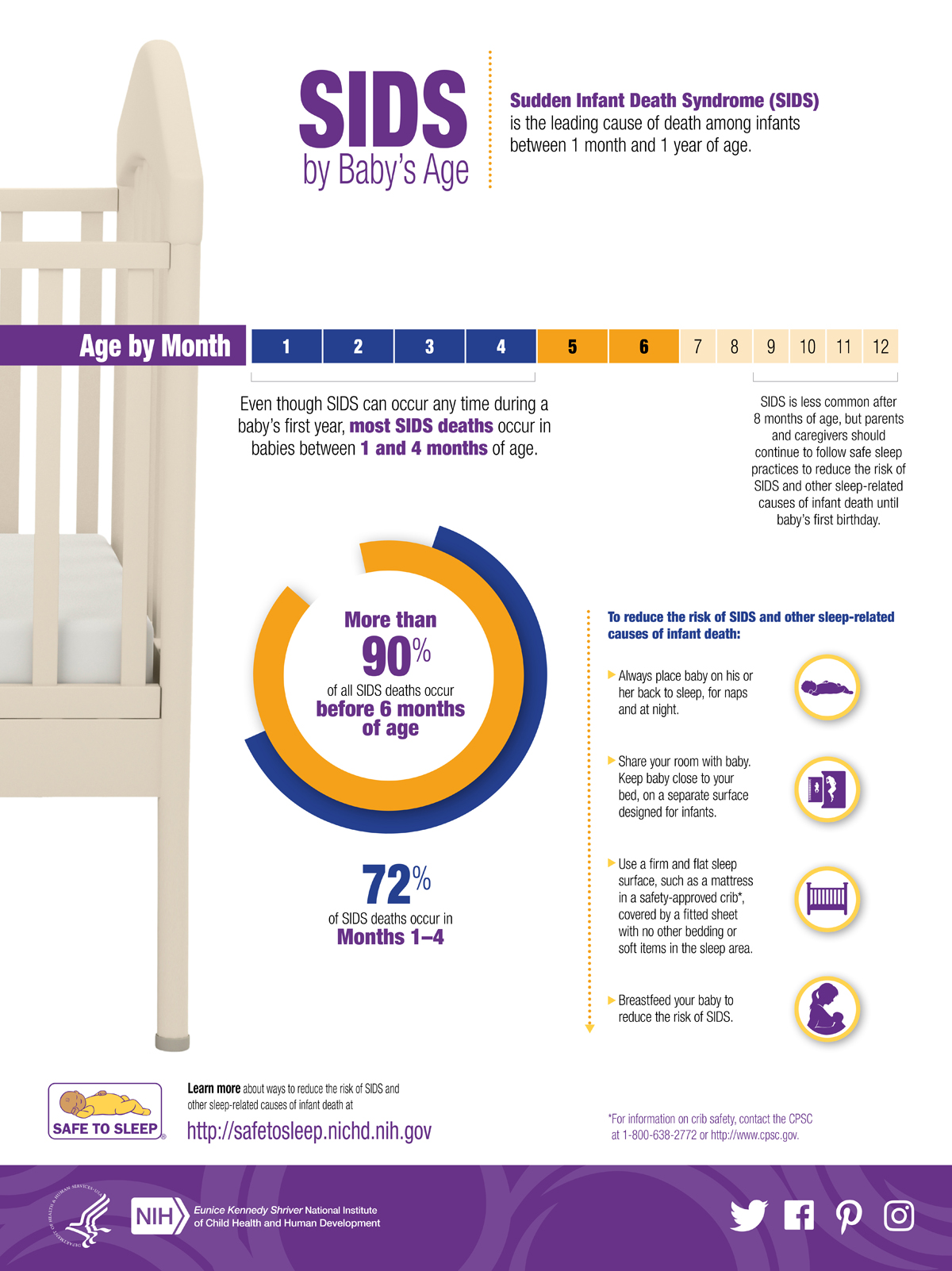 A safe sleep environment per NIH Safe to Sleep guidelines eliminates common SIDS risk factors.
Credit: safetosleep.nichd.nih.gov
A safe sleep environment per NIH Safe to Sleep guidelines eliminates common SIDS risk factors.
Credit: safetosleep.nichd.nih.gov
SIDS Risk Timeline: What the Data Shows
SIDS risk is not static — it shifts dramatically as your baby’s respiratory, cardiovascular, and arousal systems mature. Understanding this timeline helps you prioritize vigilance during high-risk periods and adjust your routine as risk declines.
Peak Risk Period (1–4 Months)
Per official SIDS surveillance data from the CDC, 90% of all SIDS cases occur in infants under 6 months old, with the highest concentration between 1 and 4 months of age. During this window, babies have underdeveloped brainstems that regulate breathing and arousal during sleep, making them more likely to enter a deep sleep state where they cannot wake up if their airway is blocked or breathing is disrupted. Most SIDS deaths in this age group occur during sleep, with a slight majority happening in the winter months, when overheating and over-bundling are more common.
Risk Decline After 6 Months
SIDS risk drops sharply after 6 months of age. By this point, most babies have matured enough to roll over both ways, lift their head and chest when on their stomach, and arouse more easily from deep sleep if their breathing is compromised. The risk at 6 months is less than 10% of the peak risk level seen at 2 months, per AAP data. This is the ideal time to start adjusting your routine slightly, though safe sleep practices should remain consistent.
Near-Zero Risk After 12 Months
By the time a baby reaches 12 months old, SIDS is extremely rare. The vast majority of SIDS cases occur before 6 months, and cases after the first birthday are exceptionally uncommon, usually linked to underlying medical conditions or unsafe sleep environments rather than developmental vulnerability. At this stage, most infants can move freely, sit, stand, and navigate their sleep space independently, eliminating the suffocation risk that drives most SIDS cases in younger infants.
Evidence-Based Safe Sleep Practices to Reduce Risk
Following safe sleep guidelines consistently is the single most effective way to reduce SIDS risk, regardless of your baby’s age. These practices are aligned with evidence-based safe sleep recommendations from the NIH Safe to Sleep campaign, which have been shown to reduce SIDS risk by up to 50% when followed correctly.
Optimize the Sleep Environment
The foundation of SIDS prevention is a bare, hazard-free sleep space. Always use a firm, flat crib mattress with a tight-fitting fitted sheet — no extra padding, mattress toppers, or crib liners. Avoid cozy crib extras like stuffed animals, pillows, bumper pads, or loose blankets, as these can block your baby’s airway or cause accidental suffocation. Keep the room temperature between 68–72°F (20–22°C) to prevent overheating: avoid excess layers, and skip extra baby socks if the room is warm. A simple rule of thumb is to feel your baby’s chest or back: if it’s sweaty to the touch, they are over-bundled and at higher risk of overheating.
Prioritize Correct Sleep Positioning
Always place your baby on their back to sleep for every nap and nighttime sleep, even if they seem more comfortable on their side or stomach. Side sleeping is not safe, as infants can easily roll onto their stomachs, which increases SIDS risk by up to 18 times compared to back sleeping, per CDC data. Once your baby can roll both ways consistently (usually around 4–6 months), you don’t need to reposition them if they roll onto their stomach during sleep, but always start them on their back. Never use wedges, positioners, or rolled towels to keep your baby in place — these are suffocation hazards and have been linked to dozens of infant deaths.
Leverage Room Sharing Safely
The American Academy of Pediatrics (AAP) recommends keeping your baby’s bassinet, crib, or play yard in your bedroom for at least the first 6 months, ideally 12 months. Room sharing reduces SIDS risk by as much as 50% by making it easier to monitor your baby, feed them when hungry, and respond quickly if they show signs of distress. Never bed share, especially if you are extremely tired, have been drinking alcohol, or your baby was born prematurely or with low birth weight — bed sharing increases the risk of suffocation and SIDS significantly, even on a firm mattress.
Modifiable and Non-Modifiable SIDS Risk Factors
SIDS is rarely caused by a single factor — it usually occurs when a vulnerable baby is exposed to external stressors during a critical window of development. Understanding these factors helps you mitigate controllable risks while accessing extra support for non-modifiable ones.
Genetic and Health-Related Factors
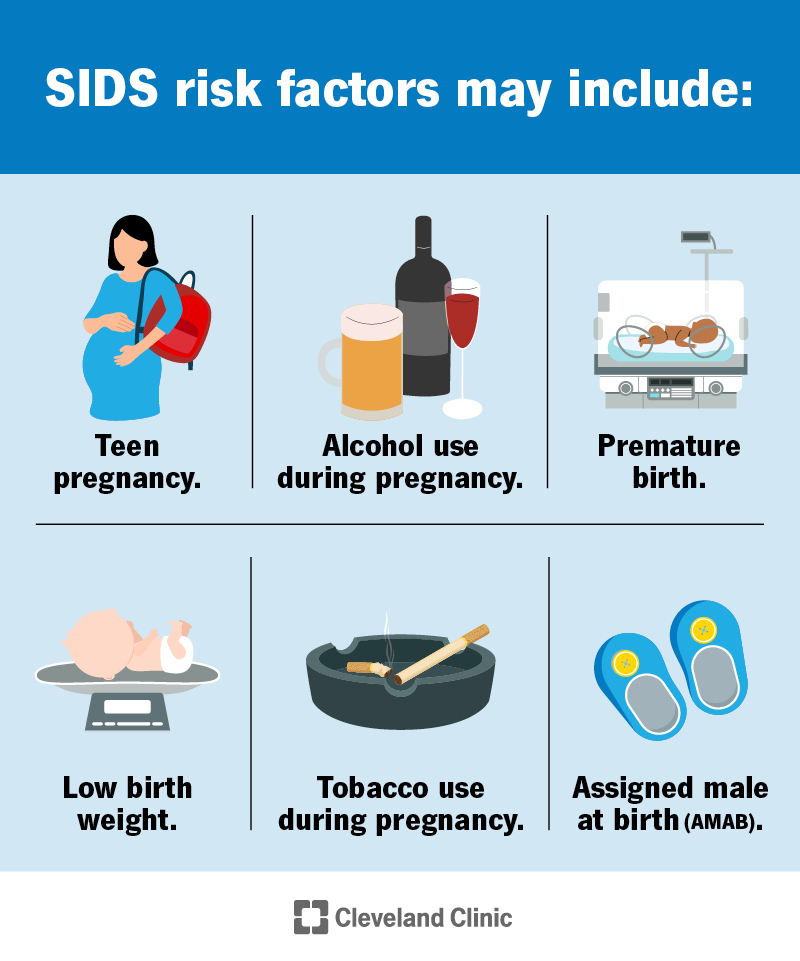
Some infants have a higher inherent risk due to factors outside parental control. Premature birth (before 37 weeks gestation) and low birth weight (under 5.5 pounds) are two of the biggest non-modifiable risk factors, as these babies have less mature respiratory and arousal systems, making it harder for them to wake up if their breathing is compromised. Recent upper respiratory infections, including colds and flu, can also increase short-term SIDS risk, as congestion and inflammation can restrict breathing. If your baby was born premature or has underlying health conditions, work closely with your pediatrician to follow tailored safe sleep guidelines.
Environmental Risks
The sleep environment is one of the most modifiable SIDS risk areas. Soft bedding, including pillows, blankets, bumper pads, and stuffed animals, can block an infant’s airway or cause accidental suffocation. Overheating, from too many layers or a room that’s too warm, increases SIDS risk by leading to deeper, less arousable sleep. Exposure to secondhand smoke — even from smoke on a caregiver’s clothing — increases SIDS risk by 2–3 times, per CDC data. Other environmental risks include sleeping on soft surfaces like couches, armchairs, or adult beds, and using products that claim to "prevent SIDS" like wedges, positioners, or special mattresses, none of which are proven safe or effective.
Parental Behaviors That Impact Risk
Parental habits during pregnancy and postpartum have a major impact on SIDS risk. Smoking during pregnancy or exposing your baby to secondhand smoke after birth is one of the most significant modifiable risk factors, doubling or even tripling the likelihood of SIDS. Alcohol, tobacco, and illicit drug use during pregnancy or while caring for an infant also increase risk, as these substances impair parental alertness and can affect fetal development. Avoid relying on flexible outing schedules that require your baby to sleep in unsafe spaces like car seats or strollers for extended periods — always transfer them to a firm, flat sleep surface as soon as you arrive at your destination.
Monitoring, Prevention, and Misconceptions
Many parents rely on extra tools or unproven advice to reduce SIDS risk, but not all common practices are effective or safe. Clearing up misinformation is just as important as following core safety guidelines.
Smart Use of Baby Monitors
Baby monitors can provide peace of mind, but they are not a substitute for safe sleep practices. Audio monitors are useful for hearing your baby’s cries from another room, but movement monitors that alert if your baby hasn’t moved for a set period are not recommended by the AAP. These devices often produce false alarms, cause unnecessary parental anxiety, and have not been shown to reduce SIDS risk.
The Role of Vaccinations and Well-Baby Visits
A persistent myth claims that vaccines increase SIDS risk, but multiple peer-reviewed studies and CDC data confirm the opposite: following the recommended vaccination schedule is associated with a reduced risk of SIDS. Vaccines protect against serious infections that can contribute to breathing difficulties and other factors that increase SIDS risk, so staying up to date on shots is a key part of infant safety. Regular well-baby visits also give your pediatrician the chance to monitor your baby’s developmental milestones, including the ability to roll over and move freely, which are key signs of reduced SIDS risk.
Common SIDS Myths Debunked
Misinformation about SIDS is widespread, so it’s important to rely on evidence-based guidance from trusted sources like the AAP, CDC, and your pediatrician:
- Myth 1: SIDS only happens to negligent parents. SIDS can occur even when parents follow every safe sleep guideline perfectly. It is often linked to underlying brain abnormalities that affect an infant’s ability to regulate breathing and arousal during sleep, not parental failure.
- Myth 2: Bed sharing is safe if you’re a light sleeper or don’t use alcohol. The AAP recommends against bed sharing for all infants, regardless of parental sleep habits. Bed sharing increases the risk of suffocation, strangulation, and SIDS, even on a firm mattress, especially for babies under 4 months old.
- Myth 3: SIDS risk disappears completely at 6 months. While SIDS risk drops sharply after 6 months, cases still occur in infants up to 12 months old. Safe sleep practices should be followed consistently for the entire first year to minimize risk.
- Myth 4: Special products prevent SIDS. There are no FDA-approved products, including wedges, positioners, or special mattresses, that have been proven to prevent SIDS. In fact, many of these products increase suffocation risk and have been recalled by the Consumer Product Safety Commission.
When and How to Adjust Safety Measures as Your Baby Grows
As your baby hits developmental milestones, you can gradually adjust your safety routine, but core safe sleep practices should remain consistent for the first 12 months.
Developmental Milestones That Signal Lower Risk
The key milestones that signal reduced SIDS risk are rolling both ways (front to back and back to front), sitting unassisted, and being able to lift their head and chest when on their stomach. These milestones usually occur between 4–6 months, which is when SIDS risk drops sharply. By the time a baby is 12 months old, SIDS is extremely rare, as their respiratory and arousal systems are fully mature, and they can move freely to avoid suffocation hazards.
Adapting to Changing Sleep Patterns
As babies grow, their sleep patterns change: they nap less during the day, sleep longer stretches at night, and may start resisting naps or bedtime routines. These changes are normal, and you can adjust your routine accordingly, but continue following safe sleep practices (back sleeping, bare crib, room sharing) until at least 12 months. Once your baby is older, you can introduce a small, lightweight lovey (soft toy) to the crib, but only after 12 months, to avoid suffocation risk.
Transitioning to Toddler Sleep Spaces
Most children transition from a crib to a toddler bed between 18 months and 3 years old. When making this switch, choose a low-to-the-ground bed with guardrails to prevent falls, and keep the sleep space free of soft bedding, pillows, and stuffed animals until at least age 2. Continue supervising your toddler during sleep until they are comfortable navigating their new bed independently.
 This infographic breaks down common risk factors parents can and cannot control to reduce SIDS risk.
Credit: www.medicalnewstoday.com
This infographic breaks down common risk factors parents can and cannot control to reduce SIDS risk.
Credit: www.medicalnewstoday.com
Frequently Asked Questions
At what age does SIDS risk significantly decrease?
SIDS risk drops sharply after 6 months of age. Per official SIDS surveillance data from the CDC, 90% of SIDS cases occur in infants under 6 months old, with the highest risk between 1 and 4 months. By 6 months, the risk is less than 10% of the peak risk level seen at 2 months.
When is SIDS no longer a concern for babies?
SIDS is extremely rare after a baby turns 12 months old. The vast majority of SIDS cases occur before 6 months, and cases after 12 months are exceptionally uncommon. However, safe sleep practices should still be followed to reduce the risk of other sleep-related injuries, like suffocation and falls.
How long should safe sleep practices be followed?
The AAP recommends following all safe sleep guidelines for at least the first 12 months of your baby’s life. After 12 months, you can gradually introduce soft bedding and stuffed animals to the crib, but avoid loose blankets and pillows until at least age 2 to reduce suffocation risk.
Can SIDS occur after the first year?
SIDS after the first year is very rare, but not impossible. Cases that occur after 12 months are usually linked to underlying medical conditions or unsafe sleep environments, so continuing to follow basic sleep safety guidelines is always recommended.
Do SIDS risks apply to babies sleeping in car seats or swings?
Yes. Infants should not be left to sleep unsupervised in car seats, swings, bouncers, or other inclined sleep surfaces for extended periods, as these positions can restrict breathing and increase the risk of suffocation and SIDS. Always transfer your baby to a firm, flat crib or bassinet as soon as you arrive at your destination, even for naps.
Final Takeaways for Parents and Caregivers
While the fear of SIDS is a normal part of new parenthood, understanding the risk timeline and following evidence-based safe sleep practices can drastically reduce your baby’s risk. SIDS risk drops sharply after 6 months, is extremely rare after 12 months, and is almost always linked to modifiable risk factors that can be addressed with simple, consistent steps. Prioritize a bare, safe sleep space, back sleeping, and room sharing for the first year, and work with your pediatrician to address any unique risk factors for your baby.
For more evidence-based guidance on newborn care, safe sleep, and baby safety, explore our full library of trusted resources.

Emma Grace is a devoted mother and passionate content writer at BestBabyCart.com. With firsthand parenting experience and a love for research, she creates helpful guides and honest reviews to support parents in choosing the best for their babies. Her goal is to make parenthood easier, one article at a time.