
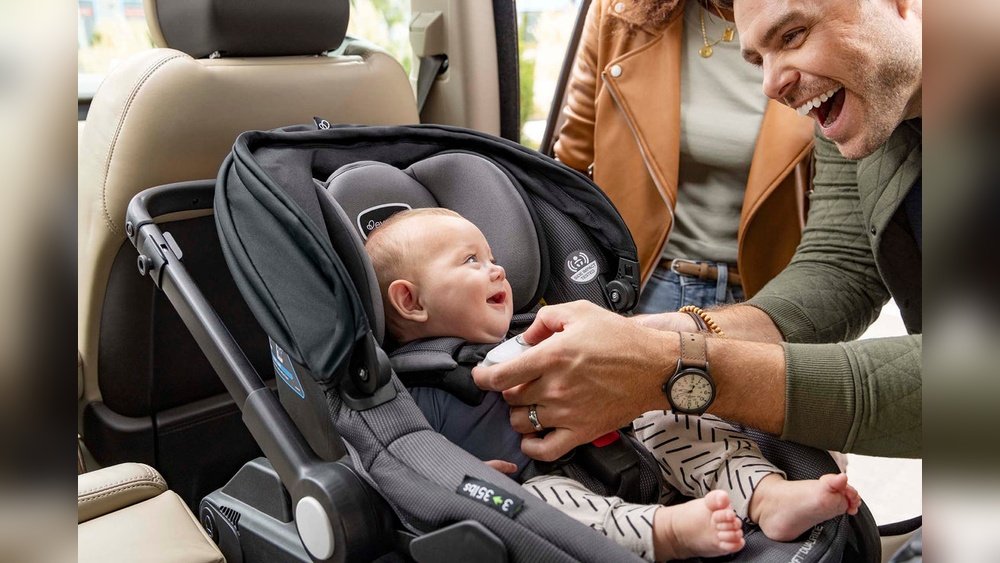
You’re on a 3-hour road trip to visit family, and your 4-month-old has been sleeping peacefully in their rear-facing car seat for the past hour and 45 minutes. Do you wake them up to stick to the infamous 2-hour car seat rule, or let them sleep through the rest of the drive? If you’ve ever asked yourself this question, you’re not alone. The 2-hour car seat rule is one of the most widely shared — and widely misunderstood — child safety guidelines for parents. While some call it an arbitrary myth, others treat it as an unbreakable law. The shocking truth? It’s neither: it’s a conservative, evidence-based recommendation designed to reduce preventable risks, but it’s far more flexible than most parenting advice leads you to believe. In this guide, we’ll break down where the rule came from, what the actual research says, common misconceptions that cause unnecessary stress, and practical, up-to-date tips for safe travel with your little one.
What Is the 2-Hour Car Seat Rule, Actually?
First, a critical clarification: the 2-hour car seat rule is a safety guideline, not a legal requirement. No U.S. state or most countries enforce it as a law, so you won’t get a ticket for exceeding the time limit. The rule originated in the early 2000s, when pediatricians and child safety organizations began studying infant respiratory function in semi-reclined car seat positions. Initial observational studies found that young infants with underdeveloped neck muscles were at risk of airway obstruction when left in car seats for extended periods, so the 2-hour window was formalized as a simple, easy-to-remember benchmark for caregivers.
A common initial misconception is that the rule only applies while the car is moving. This is false: the guideline refers to total time spent in the car seat, regardless of whether the vehicle is parked, idling, or in motion. Using a car seat as a portable bassinet at a restaurant, park, or daycare counts toward the total time limit, a detail many parents miss.
The Science Behind Prolonged Car Seat Use
The 2-hour guideline isn’t based on guesswork — it’s rooted in documented safety risks that increase the longer a child stays in a semi-reclined, fixed position. The CDC's child passenger safety guidelines note that infants under 1 year old are at highest risk of complications from prolonged car seat use, with risk levels varying significantly based on age, health, and position.
Respiratory and Airway Risks
Infants under 6 months old have weak neck muscles and large heads relative to their bodies, making it easy for their chin to tuck to their chest when semi-reclined. This position can partially or fully block the airway, leading to reduced oxygen saturation and, in extreme cases, positional asphyxia. Observational studies have found measurable drops in oxygen levels for infants under 4 months after 90 minutes of uninterrupted car seat use, which is why the 2-hour guideline is set as a conservative upper limit for this age group.
Circulation and Pressure Injury Risks
Sitting in a fixed position for hours squeezes blood vessels and puts constant pressure on soft, developing tissue. For young infants, this can lead to pressure sores, skin irritation, and even reduced circulation to extremities. Prolonged time in the same position also contributes to positional plagiocephaly (flat head syndrome), as constant pressure on the back of the skull prevents even shaping.
Risk Varies by Age and Health
The risks outlined above are far lower for healthy toddlers and older children with full head and neck control, who can adjust their position easily if they feel uncomfortable. For this group, the 2-hour rule is a general comfort guideline rather than a critical safety measure. For premature infants, children with low muscle tone, or kids with respiratory or musculoskeletal conditions, however, the risk of complications is significantly higher, and caregivers should follow their pediatrician’s personalized guidance rather than the generic 2-hour limit.
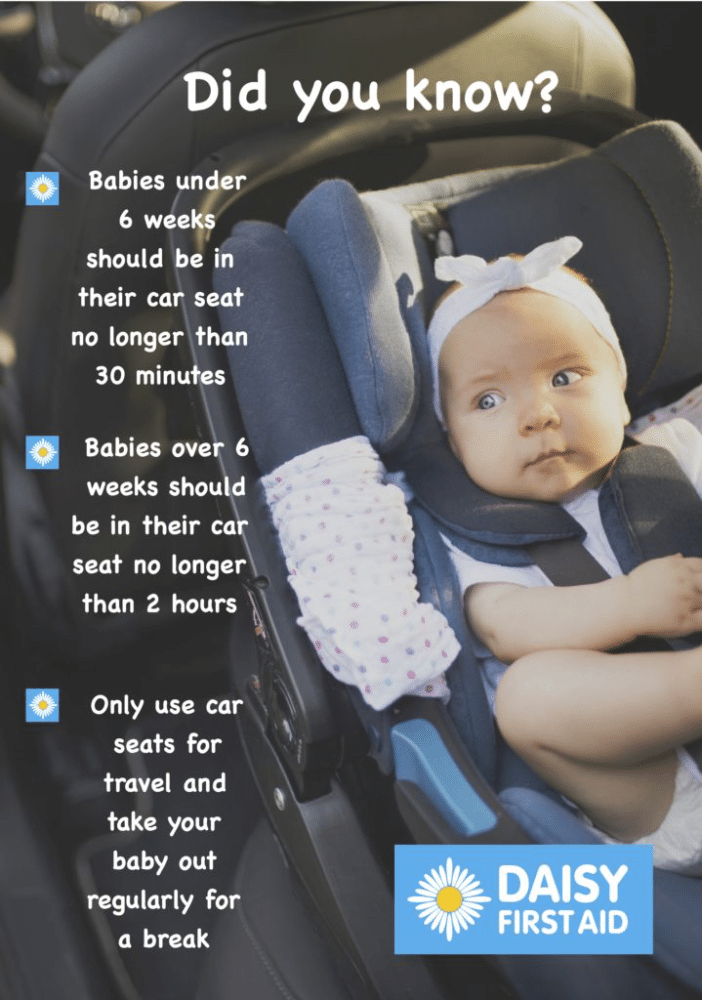 Car seats are designed for travel, not extended stationary use.
Credit: acquetech.com
Car seats are designed for travel, not extended stationary use.
Credit: acquetech.com
Common Misconceptions That Cause Unnecessary Stress
The 2-hour rule is often misinterpreted, leading to either unnecessary anxiety or dangerous complacency. These are the most pervasive myths:
- It’s a legal requirement: As noted earlier, no region enforces this as law, though you are legally required to use a properly installed, age-appropriate car seat for all travel.
- You must wake a sleeping baby exactly at 2 hours: If your child is sleeping peacefully on a short trip (less than 2.5 hours total), it’s safe to let them rest. Just plan to take them out of the seat as soon as you reach your destination.
- It only applies while the car is moving: Total time in the seat counts, even if the car is parked. Using a car seat as a stationary seat for errands or meals can add hours of uninterrupted semi-reclined time.
- It applies equally to all children: High-risk groups (preemies, medically complex kids) need stricter limits, while healthy older kids have far more flexibility with the guideline.
- Ignoring it once is dangerous: The rule is a general recommendation, not a hard rule. Occasional longer stretches (like being stuck in traffic or taking an emergency trip) are low-risk as long as you take a break as soon as it’s safe to do so.
When the 2-Hour Guideline Needs Adjustment
While the 2-hour rule works for most healthy, full-term infants, there are scenarios where flexibility is not just allowed — it’s necessary.
Premature Infants and Medically Complex Children
Babies born before 37 weeks often have underdeveloped respiratory systems and weaker neck muscles than full-term infants, making them far more susceptible to airway obstruction. Many pediatricians recommend a 60-90 minute limit for continuous car seat use for preemies, and advise only using the car seat for actual travel, not as a stationary seat. Children with conditions like severe reflux, Down syndrome, or cerebral palsy also have higher risk of breathing difficulties in semi-reclined positions, so their caregivers should follow their doctor’s personalized guidance over the generic 2-hour recommendation.
Emergency Situations
If you’re evacuating for a natural disaster, driving to an urgent medical appointment, or stuck in unavoidable traffic, the risk of staying in the car seat longer than 2 hours is far lower than the risk of delaying travel or refusing to seek care. In these scenarios, prioritize the immediate need, and take a break to stretch and move as soon as it is safe to do so. Monitor your child closely for signs of distress during extended travel.
Evidence-Based Tips for Safe Travel with Kids
The 2-hour rule is far easier to follow with a little advance planning. These practical, research-backed tips will help you keep your child safe and comfortable on every trip:
- Schedule breaks before you leave: For trips longer than 2 hours, plan 15-20 minute breaks every 90 minutes to 2 hours. Use these stops to take your child out of the seat, let them stretch, do tummy time on a blanket, or feed. If you’re traveling with a toddler, let them run around a safe, enclosed area to burn off energy.
- Only use the car seat for travel: A common oversight for many caregivers is using the car seat as a portable bassinet, high chair, or stationary seat for hours at a time. Once you arrive at your destination, transfer your baby to a safe, flat sleep surface rather than leaving them in the car seat — our guide to safe sleep setups outlines exactly what is and isn’t appropriate for infant rest.
- Pack a easy-to-use stroller for breaks: A compact, easy-to-fold stroller makes quick stops simple, even on long road trips. Our easy stroller breakdown guide walks you through folding popular models like the Uppababy Vista in seconds, so you don’t waste time fumbling with complicated mechanisms during stops.
- Plan travel around your child’s schedule: The easiest way to minimize car seat time is to hit the road during your baby’s usual nap window, so they rest comfortably for the first leg of the trip. Our tips for planning outings around naps help you avoid disrupting sleep schedules while still getting out of the house.
- Dress your child appropriately for the car: Avoid bulky snowsuits or puffer coats in the car seat, as they can compress in a crash and leave dangerous gaps in the harness. Use thin, layered clothing instead, and add a blanket over the harness if it’s cold — our guide to layering for travel helps you pick cold-weather outfits that don’t compromise safety.
- Double-check car seat installation: An improperly installed seat may recline at an unsafe angle, increasing airway obstruction risk. Make sure it’s installed at the correct angle for your child’s age and weight, and the harness is snug against their chest with no slack.
 Improper recline angles can increase airway obstruction risk for young infants.
Credit: www.madeformums.com
Improper recline angles can increase airway obstruction risk for young infants.
Credit: www.madeformums.com
Signs Your Child Needs an Immediate Break
Knowing when to pull over is just as important as planning breaks in advance. Watch for these clear signs that your child is uncomfortable or at risk:
Behavioral Warning Signs
- Persistent, unsoothable fussing or crying
- Trying to unclip the harness or climb out of the seat
- Unusual lethargy or quietness (a potential sign of low oxygen, not just tiredness)
- Repeatedly rubbing their head, neck, or back
Physical Warning Signs
- Flushed, sweaty, or pale skin
- Rapid or grunting breathing
- Blue tint around the lips or fingertips (a medical emergency — pull over immediately)
- Stiff or cramped limbs
- Red pressure marks on the skin after removing the harness
If you notice any signs of breathing difficulty, pull over immediately, take your child out of the seat, and check on them. If symptoms don’t improve within a few minutes, seek medical attention right away.
 Regular breaks let babies stretch and move outside their car seat.
Credit: orbitbaby.com
Regular breaks let babies stretch and move outside their car seat.
Credit: orbitbaby.com
Frequently Asked Questions
Is the 2-hour car seat rule a legal requirement?
No. The 2-hour guideline is a safety recommendation from child health and passenger safety organizations, not a law enforced in any U.S. state or most countries. However, failing to follow your region’s car seat laws for proper installation and use can lead to serious injury in a crash.
Does the 2-hour rule apply if the car is parked?
Yes. The guideline refers to total time spent in the car seat, regardless of whether the vehicle is moving. Using a car seat as a stationary seat at a restaurant, park, or daycare adds to the total time your child spends in the semi-reclined position, which increases risk of discomfort and breathing issues.
Can I let my baby sleep through the 2-hour mark?
If your baby is sleeping peacefully and you’re on a short trip (less than 2.5 hours total), it’s generally safe to let them sleep, but plan to take them out of the seat as soon as you reach your destination. For longer trips, it’s best to gently wake them for a break at the 2-hour mark to stretch and move.
Is the 2-hour rule the same for all children?
No. Infants under 6 months, premature babies, and children with respiratory or musculoskeletal conditions have higher risk of airway obstruction and pressure injuries, so many pediatricians recommend stricter limits (often 60-90 minutes of continuous use) for these groups. Healthy toddlers and older children have stronger neck muscles and lower risk, so the guideline is more flexible for them.
What should I do if I’m stuck in traffic for longer than 2 hours?
If you’re stopped in traffic, try to do gentle neck and limb stretches with your child if possible, and keep them hydrated. Once traffic clears or you can pull over safely, take a break to let them move around. The 2-hour rule is a guideline, not a hard rule, so occasional longer stretches are fine as long as you take a break as soon as possible.
Conclusion
The 2-hour car seat rule is not a myth, nor is it an unbreakable law. It’s a conservative, evidence-based recommendation designed to reduce preventable risks for young children, especially infants under 6 months who are most vulnerable to airway obstruction and pressure injuries. The rule is intentionally flexible for emergencies, medical needs, and older kids, and the most important priority is always your child’s comfort and safety over rigid timing. For more practical tips on stress-free travel with young kids, check out our guide to planning outings around naps to avoid disrupted sleep and fussy rides.

Emma Grace is a devoted mother and passionate content writer at BestBabyCart.com. With firsthand parenting experience and a love for research, she creates helpful guides and honest reviews to support parents in choosing the best for their babies. Her goal is to make parenthood easier, one article at a time.