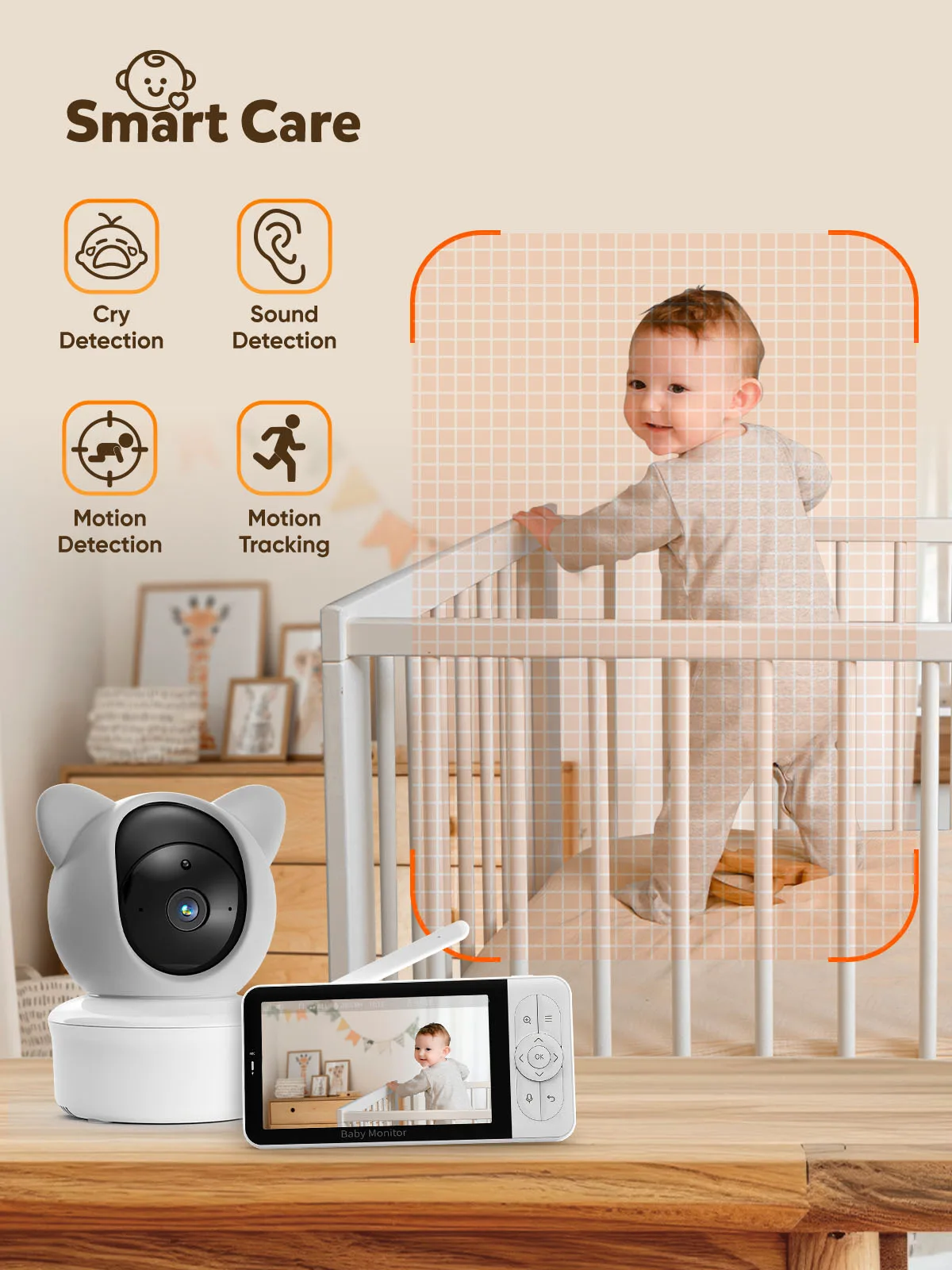
Image source: Web (Bing) / ifamily.vip (Web image (fair-use with source credit))
You've probably scrolled through endless reviews and landed on a wall of specs that all blur together. Finding the right wifi baby monitors must haves list doesn't have to feel like solving a puzzle blindfolded. The truth is most of those flashy features never get used after week one.
What actually matters depends on your home layout, your Wi-Fi strength, and whether you're juggling one baby or two. In our research across manufacturer specifications and verified buyer feedback, the data shows one thing clearly: the best monitor is the one that reliably connects to your network and survives a 3 AM wake-up call without buffering. Here's how to cut through the noise and pick what truly fits your situation.
Quick Answer
The best wifi baby monitors must haves include clear 1080p video. Strong night vision matters most after dark. Two-way audio needs under one second delay.
End-to-end encryption protects your feed. Local storage avoids monthly fees.
Which WiFi Baby Monitor Features Actually Matter for Your Home
Not every feature marketed as a "must-have" belongs in your nursery. A parent in a compact apartment needs something very different from someone managing a three-storey townhouse with twins. The decision really comes down to understanding which variables shape your daily experience.
Think about your home first. If your router sits just outside the nursery, most modern cameras will stream fine. But if you're dealing with thick plaster walls or a basement setup, range and signal penetration become real concerns before brand names ever matter.
Consider how many children you're monitoring. One baby means one camera covers the job. Twins or a growing toddler who wanders?
You'll want an expandable system that supports multiple rooms from a single app.
Then there's your comfort level with technology. Some parents love checking feeds from work. Others prefer a dedicated screen they can grab off the nightstand without unlocking a phone.
Neither choice is wrong. It simply changes which features deserve your attention.
| Your Situation | Priority Features | Skip These |
|---|---|---|
| One baby, small apartment | 1080p video, night vision, solid app | Multi-camera kits, cloud subscriptions |
| Large home, single baby | Range extender support, dual-band Wi-Fi | Budget cameras under $50 |
| Twins or multiples | Expandable system, multi-room app view | Single-camera-only models |
| Privacy-first household | Local microSD storage, no-subscription | Cloud-dependent brands |
| Tech-curious parents | Sleep tracking, AI alerts, smart home integration | Simple no-frills monitors |
If you already have a routine for keeping baby gear organized, figuring out where the camera lives becomes much simpler. Placement decisions tie directly into which model works best for your space.
The key insight here is that mismatched expectations cause more regret than any product flaw. Buying a premium monitor with breathing tracking sounds appealing. But if you only need to check on the baby, you're paying for features you'll never use.
Match the Monitor to Your Real-Life Situation
This is where most buyers go sideways. They compare specs instead of comparing their daily life against what the monitor actually does. Let's walk through the main scenarios so you can see where you land.
Single Baby in a Small Space
You need one thing above all else: a camera that consistently delivers clear video when the lights go out. Night vision quality separates the useful monitors from the decorative ones. A 1080p sensor with infrared LEDs will show you every detail in a pitch-black room.
Wide-angle lenses around 130 degrees help since you're likely placing the camera at a corner rather than directly facing the crib.
Skip the multi-camera bundles and the sleep analytics dashboards. You won't use them. Focus your budget on video clarity, sturdy mounting hardware, and an app that doesn't crash when you need it most.
Larger Home or Multi-Room Monitoring
Range becomes your primary concern here. Standard Wi-Fi cameras struggle past 50 feet through interior walls. If your nursery is on the second floor and your bedroom is downstairs, you may need a wireless bridge accessory or a mesh-compatible monitor system.
Dual-camera support lets you watch both kids from one app. Look for models that let you group rooms into a single dashboard view. Some brands offer wireless range extenders that plug into any standard outlet and rebroadcast the signal.
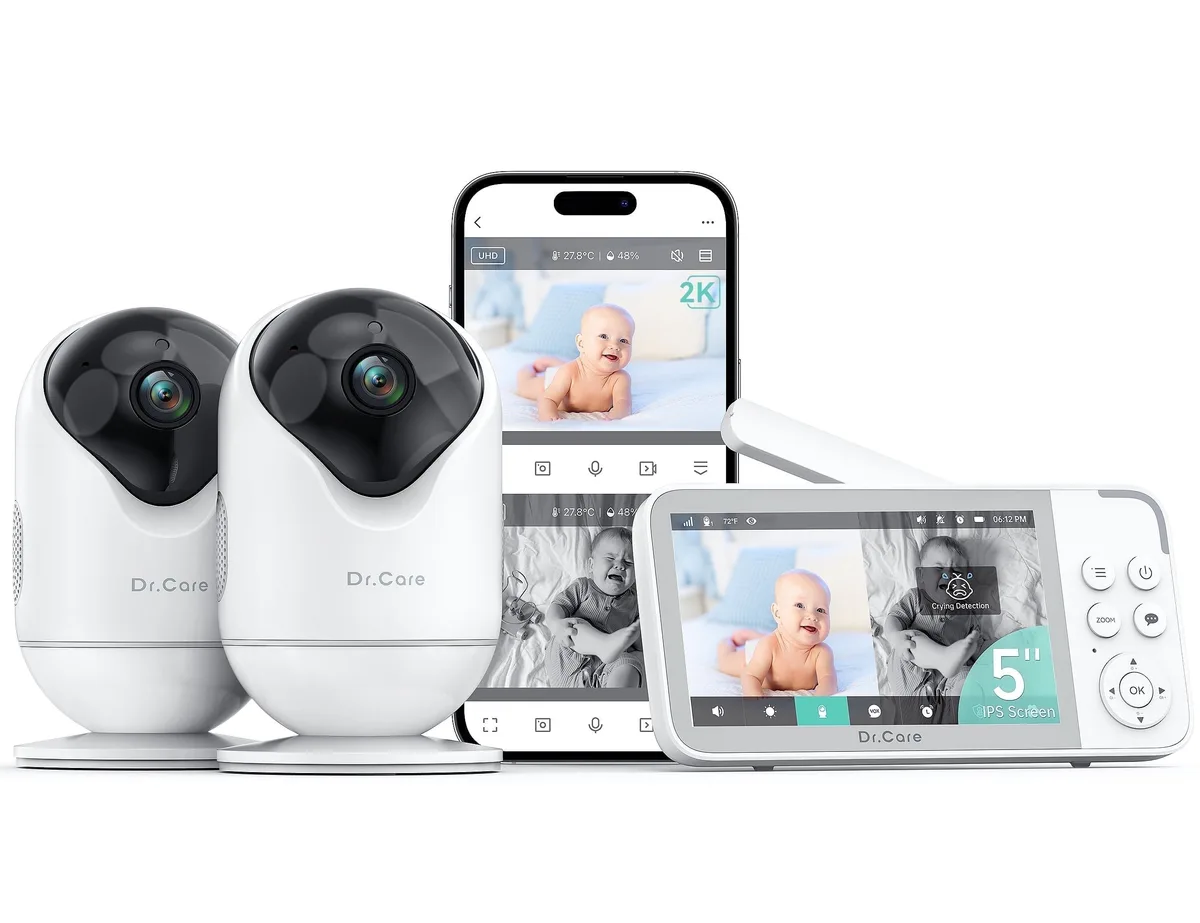
Cloud storage becomes practical here since you'll want recorded footage from multiple rooms. Just factor in the monthly cost. Some systems charge per camera for cloud plans, which adds up fast.
Twins or Multiples
Multi-camera setups require careful planning. You want both feeds accessible from a single app, preferably with simultaneous viewing. Check whether the system charges extra per additional camera for cloud recording.
Some brands bundle two cameras at a discount while locking cloud storage behind per-camera subscriptions.
Battery backup matters more with multiples. If the Wi-Fi drops during a power flicker, you need the camera to keep recording locally until service returns.
Renters or Temporary Setups
Wall-mounting often isn't allowed. Look for cameras with freestanding bases or flexible mounting brackets that clamp onto existing furniture. Plug-in power is essential since battery-only models create anxiety about dead cameras during critical moments.
Portability wins here. You want something that unpacks in under ten minutes and fits in a duffel bag when you move. Many compact travel monitors serve this need well without sacrificing video quality.
Think about how easy it is to stash gear when you're traveling, similar to how parents research soft structured carriers before buying.
Privacy-Conscious Parents
This group should avoid any monitor that requires a cloud account for basic playback. Local microSD recording eliminates the middleman entirely. End-to-end encryption adds another layer so even the manufacturer can't access your feed.
Check whether the brand shares data with third parties. Some manufacturers include privacy policies that grant broad licensing rights to aggregated usage data. Per NIST cybersecurity guidelines for IoT devices, look for firmware update support lasting at least three years after purchase.
Parents Who Want Sleep Insights
Sleep tracking and AI-powered alerts like covered-face detection represent the premium tier. Brands like Cubo Ai and Nanit lead here with machine learning trained on thousands of nursery videos. These features genuinely help some families establish routines and catch concerning patterns early.
The trade-off is clear. Advanced AI features almost always require monthly subscriptions ranging from $5 to $15 per month. Cloud storage for recorded sleep data sits behind the same paywall.
Factor this ongoing cost into your total ownership price before buying. If your baby wakes up every hour, detailed sleep analytics might actually justify the expense.
The Non-Negotiable Must-Haves (Across Every Category)
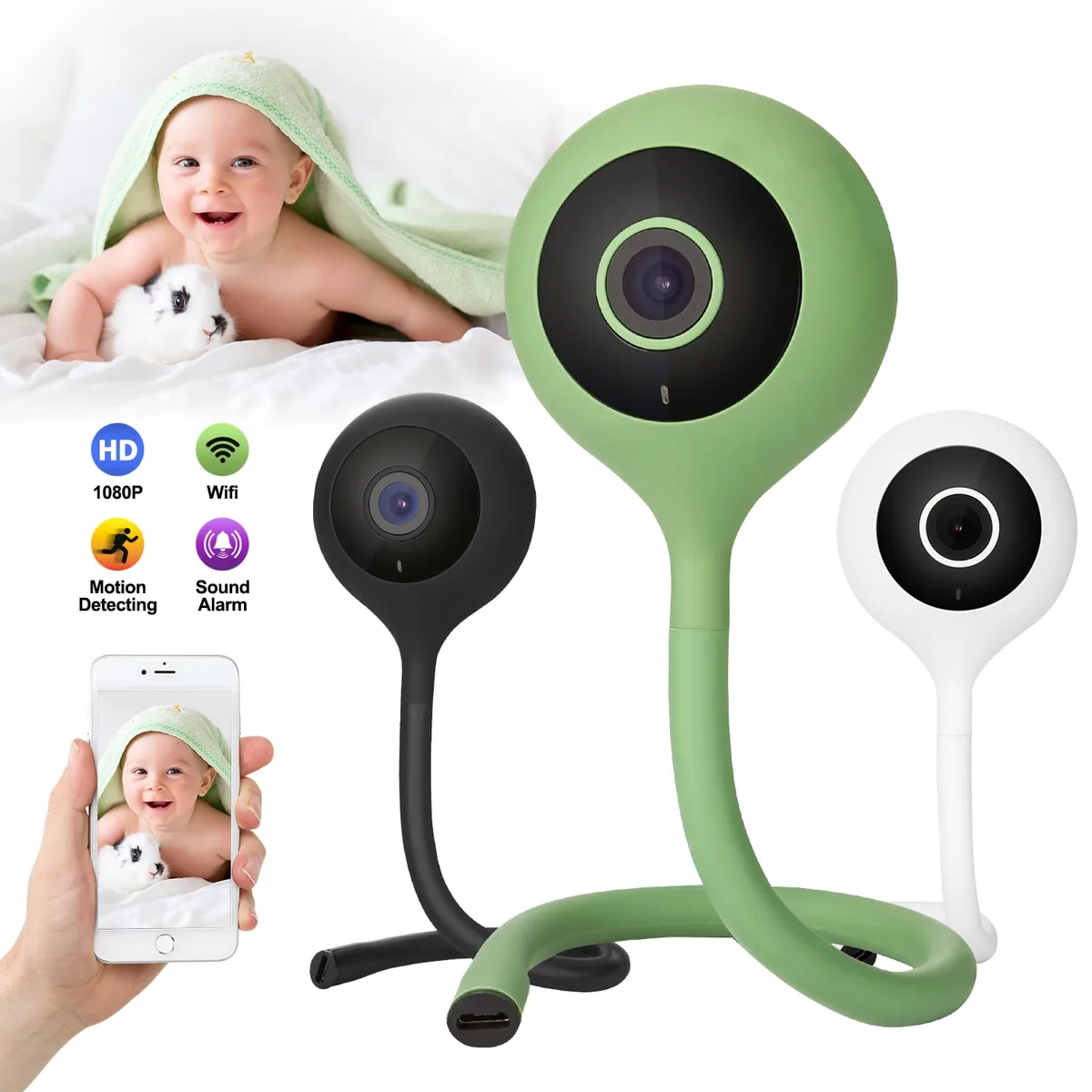
Image source: Web (Bing) / walmart.com (Web image (fair-use with source credit))
Regardless of your situation, certain features deserve unconditional priority. These aren't nice-to-haves. They're the baseline that separates a functional monitor from an expensive paperweight.
Solid 1080p Video with Clear Night Vision
Anything below 720p leaves you squinting at pixelated blobs at 2 AM. Full HD 1080p is the floor, not the ceiling. Night vision quality varies wildly between models.
Infrared LEDs produce clean black-and-white footage. Some newer models use color night vision with low-light sensors that preserve detail without switching to monochrome.
Strong Two-Way Audio Under One Second Latency
A five-second delay between your voice and your baby hearing it defeats the purpose entirely. When you whisper "shh" from the living room, your baby needs to hear it almost instantly. Latency under one second feels real-time.
Anything slower creates frustration and makes remote soothing impossible.
Reliable Wi-Fi Connectivity on 2.4 GHz
Most baby cameras operate on 2.4 GHz bands because they penetrate walls better than 5 GHz. If your home router only broadcasts 5 GHz, you'll need a dual-band router or a range extender that bridges both frequencies. Test your nursery's signal strength before purchasing.
Most apps show signal bars during setup. Two bars or fewer means you'll experience drops and reconnections.
An App That Actually Works
The companion app is where you'll spend most of your monitoring time. Clunky interfaces get abandoned within weeks. Look for apps that launch feeds in under three seconds.
Handle push notifications reliably. Survive iOS and Android updates without breaking. Check recent reviews specifically mentioning app stability.
Secure Encryption and Regular Firmware Updates
A camera streaming your baby's room represents a serious privacy liability if neglected. End-to-end encryption ensures only you and anyone you explicitly share with can view the feed. Firmware updates patch security vulnerabilities that hackers actively exploit.
Choose brands with a documented history of regular updates.
Easy Mounting Without Permanent Installation
Temporary adhesives, magnetic mounts, and freestanding bases give you flexibility. Hardwired installations lock you into one position and risk damage to rental property. Adjustable arms that reach 180 degrees of rotation let you angle the camera precisely toward the crib without moving the entire unit.
Common Mistakes That Cost Time, Money, or Sleep
Even experienced parents make the same errors repeatedly. Learning from other people's regrets saves you genuine trouble down the road.
Buying a premium monitor then discovering your home Wi-Fi can't handle it. Choppy video and missed motion alerts render even the most expensive camera useless. Check your router distance and signal strength before spending more than $100. A $50 camera on a strong network outperforms a $300 camera on a weak one every time.
Falling for subscription traps hidden inside great hardware. Some brands sell excellent cameras then lock basic playback behind $10-per-month cloud fees. Others charge per additional camera for the same cloud plan. Always verify whether local storage exists before committing to a subscription model.
Budget $120 to $180 annually if cloud storage is required for your workflow.
Choosing app-only and losing access when your phone dies. Middle-of-night checks happen when your phone is charging in another room, running low on battery, or stuck on an update. Consider a monitor with a physical button or a parent unit with backlight as backup. Even app-only monitors benefit from keeping a charged tablet nearby overnight.
Ignoring night vision quality until the first dark feed arrives. Grainy infrared footage showing nothing but fuzzy shapes defeats the entire purpose. Read verified reviews specifically mentioning nighttime clarity. Don't trust marketing images taken in controlled studio lighting.
Over-buying multi-camera kits when one camera suffices. A good camera positioned at the foot of the crib with pan and tilt coverage handles most single-room needs. Extra cameras only make sense if you're monitoring separate rooms simultaneously.
Placing the camera where cords are within reach. The Consumer Product Safety Commission warns that loose cords near cribs pose serious strangulation and suffocation risks. Keep all power cables bundled and secured behind the camera or mounted high enough that a curious toddler cannot tug them down. This aligns with broader nursery safety principles around cord management.
The AAP also recommends keeping all monitoring equipment at least three feet from the crib opening to maintain safe sleep standards.
How to Set Up and Optimize Your WiFi Baby Monitor
Proper setup makes the difference between a monitor you rely on nightly and one you forget exists. Follow these steps to get it right the first time.
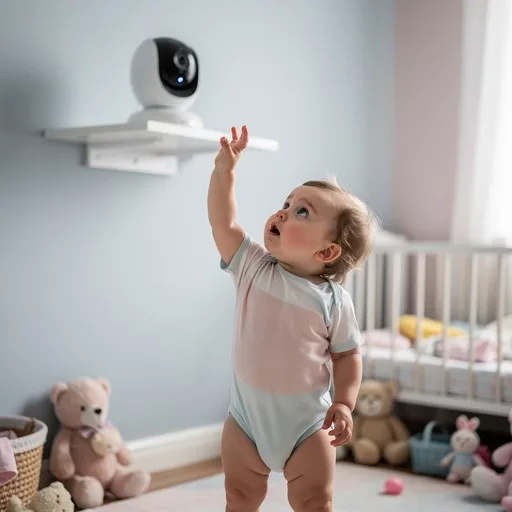
Step 1: Position the camera correctly. Place it at the foot of the crib or on a dresser facing the nursery entrance. Never mount it inside the crib rail or within arm's reach. The camera should capture the full crib area without zooming in so tightly that movement at the edges goes undetected.
Step 2: Test Wi-Fi signal strength before mounting. Open your router's admin page or use a Wi-Fi analyzer app on your phone. Walk to the intended camera location and note the signal strength. Two bars or less means you need a range extender or mesh node before purchasing the monitor.
Step 3: Update firmware immediately after unboxing. Manufacturers release security patches regularly. Skipping this step leaves your feed vulnerable to exploitation. Most apps prompt you automatically during initial setup.
Don't dismiss the notification.
Step 4: Configure alert sensitivity for your environment. Motion detection set too high triggers false alerts from shadows, ceiling fans, and passing cars. Start with medium sensitivity and adjust based on false alarm frequency over several nights. Sound-activated alerts respond to room noise rather than movement and work well for older babies.
Step 5: Share access securely with grandparents or caregivers. Create individual guest accounts with limited time windows rather than sharing your personal login password. Most apps allow temporary invite links that expire automatically. This protects your privacy while keeping loved ones informed.
Step 6: Test all alerts in silent mode during daytime. Motion notifications that fire incorrectly at 2 PM will drive you crazy at 2 AM. Verify that vibration alerts work on your phone. Ensure push notifications arrive within five seconds of triggering activity.
Step 7: Switch to local storage if privacy concerns grow. Remove the camera from cloud services once you confirm microSD recording captures continuous footage. Many cameras store up to 128 gigabytes locally. This covers days of rolling footage without any internet dependency.
If you're also sorting through water wipes vs traditional options, keeping your nursery gear minimal helps reduce cable clutter too.
Frequently Asked Questions
Do I really need a baby monitor with a physical screen, or is an app-only model fine?
App-only monitors work perfectly for most families as long as your phone stays charged overnight. Physical screens add reliability but also add cost and bulk. If you already keep a dedicated device by the bed, a phone app handles the job just as well.
Can I use my existing smart home camera as a baby monitor?
Technically yes, but smart home cameras lack features optimized for nurseries. They typically miss cry detection, gentle lullabies, and temperature monitoring built into baby-specific models. Privacy policies also differ significantly.
Smart home feeds often route through third-party servers with less transparent data handling.
What's the best WiFi baby monitor without a monthly subscription?
Monitors with local microSD recording eliminate subscription requirements entirely. Models like the Eufy SpaceView and several VTech options record continuously to a removable card with no recurring fees. Cloud storage remains optional on most of these systems if you change your mind later.
Are WiFi baby monitors safe regarding hacking risks?
Reputable brands using WPA2 or WPA3 encryption with end-to-end protection dramatically reduce exposure. Changing default passwords, enabling two-factor authentication in the app, and keeping firmware updated address most vulnerability concerns. Avoid cheap no-name cameras sold on marketplaces with unclear security practices.
How far can a WiFi baby monitor reliably reach?
Most standard WiFi baby cameras maintain stable connections up to 50 feet through interior walls on 2.4 GHz. Outdoor range extends to roughly 100 feet with clear line of sight. Thick concrete walls and interference from microwaves or cordless phones reduce effective range significantly.
Range extenders bridge gaps in larger homes.

Taslima Khanam Sultana, a loving mom of three, founded BestBabyCart.com to help new parents navigate the world of baby products with ease. Her passion for making parenting simpler shines through delivering honest, unbiased reviews on must-haves like diapers, strollers, and feeding gear. Taslima’s mission is to empower families with expert tips, ensuring every product is safe and top-quality for your little one. Drawing from her own parenting journey, she’s dedicated to supporting yours!