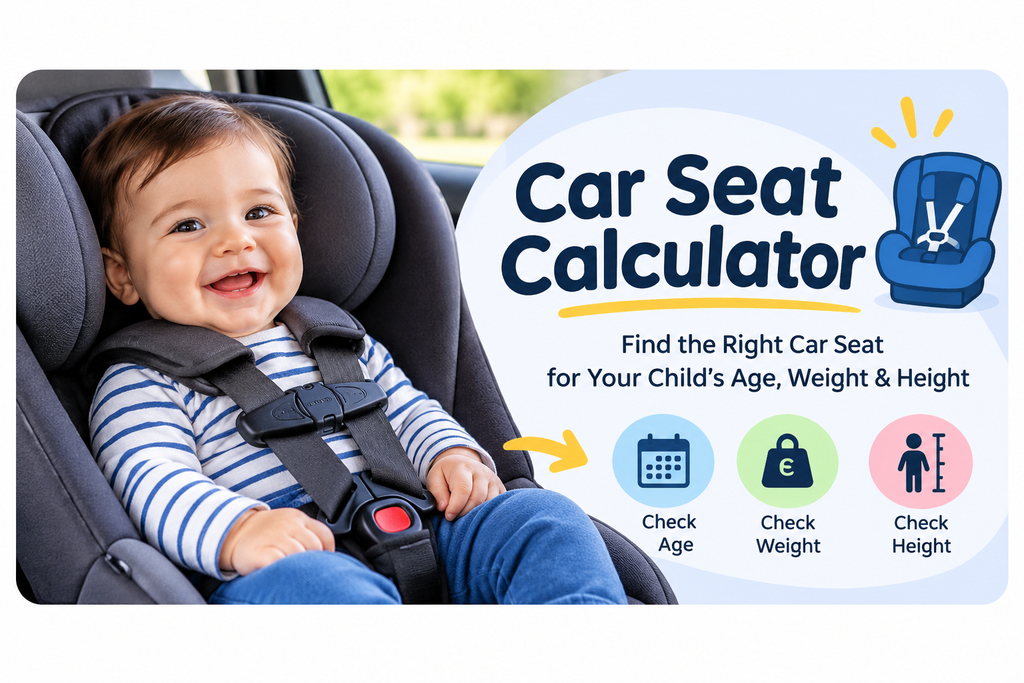
Choosing the right car seat for your child depends on their age, weight, and height. Use our free car seat calculator to find the appropriate car seat type for your child’s current growth stage. Get helpful guidance on rear-facing, forward-facing, and booster seats to make safer travel decisions.
Car Seat Calculator
Enter your child’s age, weight and optional height to get guidance on the appropriate car seat stage and what to consider next.
How Car Seat Stages Work
Children generally progress through four car seat stages: rear-facing, forward-facing with a harness, belt-positioning booster, and vehicle seat belt alone. Keep your child in each stage for as long as they fit the seat’s manufacturer-stated limits. Age and size are helpful starting points, but your actual car seat’s limits determine when it is time to move up.
Frequently Asked Questions
When can my child face forward?
Keep your child rear-facing until they reach the maximum rear-facing height or weight allowed by their car seat. The American Academy of Pediatrics recommends rear-facing for as long as possible within the seat’s limits.
When should my child use a booster seat?
Usually after outgrowing the forward-facing harness seat’s height or weight limits. Children should be mature enough to sit properly throughout every trip. Many children are at least 5 years old before they are ready.
When can my child stop using a booster?
When the vehicle seat belt fits correctly without a booster. This often happens around 4 feet 9 inches tall and between ages 8 and 12. Use the five-step seat belt fit test.
Do car seat laws differ by state?
Yes. Car seat laws vary across US states and other countries. Always check your local laws as well as the recommendations from AAP and NHTSA.
Is a second-hand car seat safe?
Only consider a used seat if you know its complete history. Avoid seats that have been in a crash, are expired, have missing labels or instructions, or have damaged parts.
Disclaimer: This calculator provides general educational guidance, not an individualized safety assessment. Always follow your car seat and vehicle manuals, manufacturer limits, and local laws. For help with installation, consult a certified Child Passenger Safety Technician (CPST).