Baby activity centers tips revolve around one non-negotiable rule: supervision always beats convenience. These seats keep little ones safely contained while giving your hands back for a few precious minutes, but the wrong habits can turn a helpful tool into a hazard. Our research shows that most parents overlook readiness checks and setup basics until it's almost too late.
A JPMA-certified activity center must support ASTM F2374 standards, and per Consumer Product Safety Commission guidelines, babies need solid head control before they ever sit inside one. The window for safe, beneficial use is narrow, and missing the signs can cost you time, money, and peace of mind. Understanding how these centers work, who they're built for, and what goes right (or wrong) in real homes changes everything.
## What Exactly Is a Baby Activity Center? (Types, Features, and When They Fit)
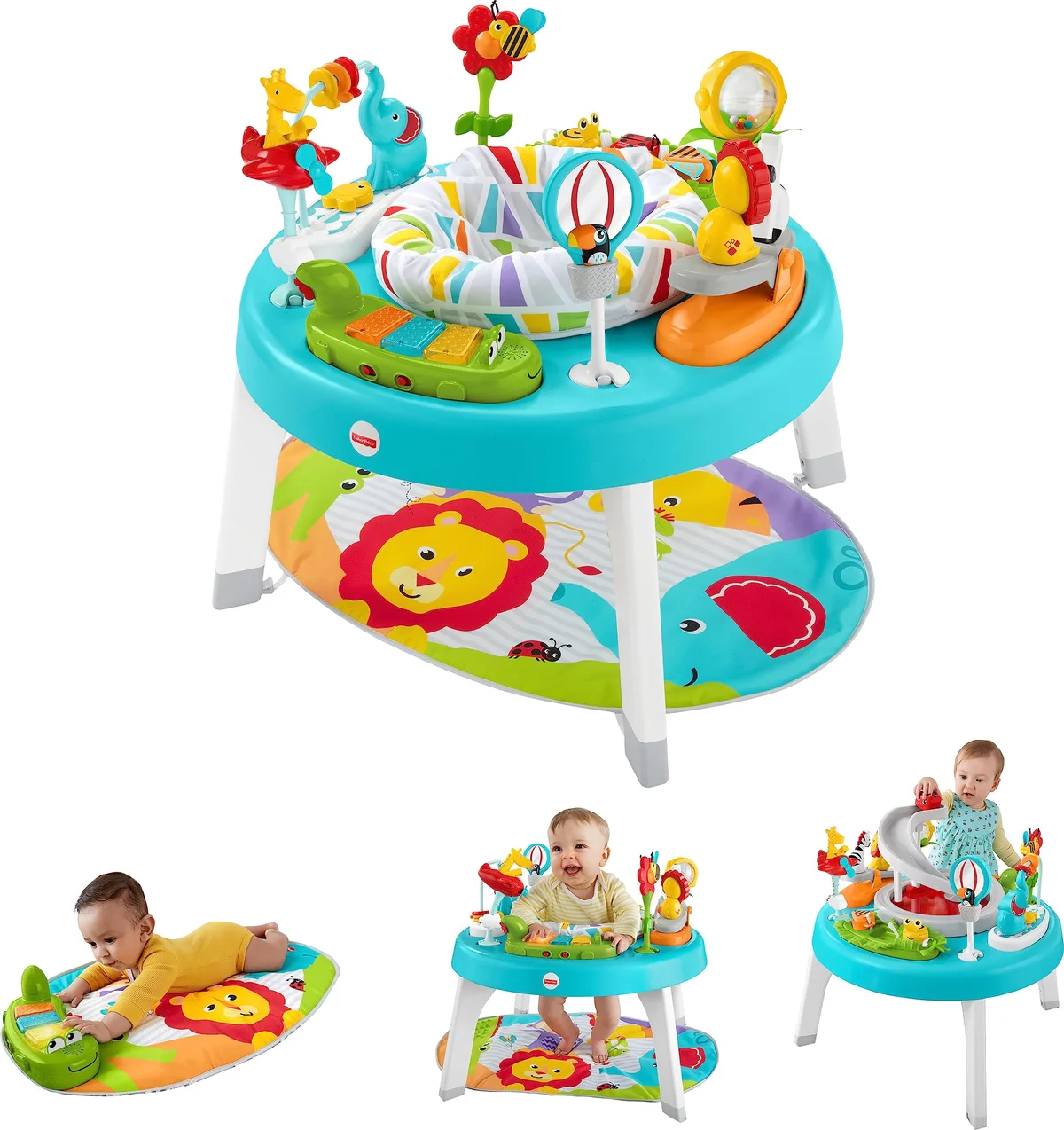
A baby activity center is a seated play station anchored to the floor, designed to keep an infant upright and engaged while they bounce, twist, or explore attached toys. Unlike bouncers that recline or jumperoos that hang from doorways, these units sit firmly on the ground and usually rotate 360 degrees around a weighted base.
Manufacturer specifications indicate three common categories. Seated stations feature a plastic tray full of interactive toys with a fabric seat in the middle. Swing seats add a gentle pendulum motion powered by manual pushing or battery motors.
Walk-behind push carts resemble sturdy strollers without wheels, letting older babies practice standing while holding onto a fixed handle.

| Feature Type | What It Does | Best Age Range | Key Consideration |
|---|---|---|---|
| Seated station | Holds baby upright with toy tray | 4–10 months | Requires solid head control |
| Swing seat | Swivels and bounces gently | 5–9 months | Limit session length |
| Push cart | Lets baby stand and push forward | 8–14 months | Transition away from sitting centers |
| Convertible 3-in-1 | Switches between modes | 4–12 months | Higher price, longer usable life |
Per aggregate user reviews, removable toy trays dominate the market because they grow with the child. As babies lose interest in dangling rattles, parents detach panels and shift toward standing support. This flexibility matters more than flashy music or light displays, which often overwhelm sensitive infants within days.
The design also influences cleanup effort. Fabric seats trap drool, spit-up, and crumbs in ways rigid plastic simply cannot. Choosing a bottle drying rack involves similar material considerations, since both require frequent washing and quick drying cycles.
Activity centers with machine-washable covers save hours of hand-scrubbing over their usable lifespan.
## Is Your Baby Actually Ready? (Signs, Limits, and Developmental Readiness)
Your baby is ready for an activity center once they can hold their head steady without wobbling and sit supported for at least five minutes. Calendar age matters far less than physical milestones, and most manufacturers agree on a minimum weight range starting around 10 pounds.
Head control represents the absolute baseline requirement. Babies under four months rarely meet this bar, and placing an infant who lacks trunk stability into any seated restraint risks spinal strain. Watch for the moment when your child lifts their chin confidently during tummy time and keeps it aligned while you hold them upright.
That signal usually arrives between three and five months for most infants.
| Readiness Signal | What It Looks Like | Why It Matters | Red Flag If Absent |
|---|---|---|---|
| Head control | Steady head lift without support | Protects neck and spine | Delayed motor development |
| Trunk stability | Sits upright with minimal leaning | Keeps airway open during play | Poor core strength |
| Weight match | Within manufacturer's minimum | Ensures proper harness fit | Unsafe seating position |
| Interest level | Reaches for toys, watches surroundings | Signals cognitive readiness | Disengagement indicates timing issue |
Developmental windows shift rapidly between six and ten months. Babies who cruise along furniture early may outgrow seated centers by eight months, preferring standing activities instead. Meanwhile, preterm infants often follow adjusted age timelines rather than birth-date calendars, so pediatric guidance becomes essential for accurate readiness assessment.
Pushing activity center use before readiness cues appear creates more problems than solutions. Some parents hope forced seating will encourage sitting skills, but babies who aren't physically prepared resist the position and gain zero developmental benefit. Watch for genuine interest signals rather than projecting timeline expectations.
## Safety Setup That Actually Prevents Incidents (Non-Negotiables Before First Use)
Proper setup separates safe activity center use from dangerous accidents, and skipping inspection steps causes the majority of reported incidents. Per CPSC data, tip-over injuries rank among the top concerns for stationary play equipment, usually triggered by uneven flooring or loose assembly joints.
Begin every new unit with a full bolt-and-clip check before your baby ever touches it. Manufacturer instructions specify torquing levels for leg locks and base connections, but generic guidance means you must verify each joint personally. Wobble tests reveal missing washers or cross-threaded screws that visual inspection alone misses.
| Setup Step | What to Check | Tool Needed | Frequency |
|---|---|---|---|
| Leg lock security | No lateral movement when pushed | Hands only | Before every use |
| Base leveling | All four feet touch floor evenly | Level app optional | Assembly + rearranging |
| Toy panel clips | Click fully with no wobble | Thumbnail press | After each removal |
| Harness straps | Buckle engages without fraying | Visual inspection | Weekly |
| Floor surface | Hard, flat, stable ground | Eyes only | Always |
Placement strategy accounts for more accidents than defective products. Never position activity centers near stair edges, heating vents, or climbing furniture where curious toddlers can reach them. Carpet transitions from thick pile to bare floor create tipping hazards that flat-surface warnings rarely emphasize enough.
ASTM F2374 compliance protects against known design failures, but third-party certification labels can fade or fall off during cleaning. Keep your product registration card handy and check cpsc.gov periodically for recall notices tied to your model number. Registration ensures manufacturers contact you directly if a safety bulletin emerges.
## Real-World Use: Session Length, Supervision, and Daily Routines
Session duration controls whether activity centers help development or hinder it. Pediatric guidelines consistently recommend 15 to 20 minutes per visit, capped at two or three sessions daily for most infants under eight months. Longer stretches compress floor play time and reduce opportunities for independent movement practice.
Supervision proximity matters as much as time limits. Being in the same room never substitutes for arm's-length contact during active bouncing or twisting phases. Babies rotate quickly in 360-degree bases, and a sudden shift in weight distribution can send toy panels swinging into nearby walls or furniture edges.
| Session Type | Recommended Length | Ideal Timing | Warning Signs |
|---|---|---|---|
| Morning play | 15 minutes | After first feeding | Fussing or arching back |
| Midday break | 20 minutes max | While caregiver handles chores | Drooping head or yawning |
| Evening wind-down | 10–15 minutes | Before bath routine | Resistance or screaming |
Daily routines benefit most when activity center time pairs with complementary floor work. Twenty minutes seated followed by twenty minutes of supervised tummy time creates balanced motor development without overloading either position. Parents who swap between floor challenges and contained play report faster crawling milestones and fewer resistance behaviors.
Equipment maintenance mirrors developmental rotation philosophy. Just as devices need cleaning cycles between uses, babies need varied positions throughout waking hours to develop comprehensively. A single activity center session should never monopolize awake time or replace social interaction with caregivers.
## Common Mistakes Even Careful Parents Make (And How to Avoid Them)
Most parent mistakes stem from good intentions applied at the wrong developmental stage. Overusing activity centers as entertainment substitutes creates dependency patterns that frustrate both baby and caregiver. Babies who spend hours contained daily often resist floor-based exploration later, slowing gross motor progression.
Weight limit disregard represents another widespread error. Manufacturers calculate capacity based on center-of-gravity mechanics, not just comfort. Exceeding maximum weight ranges shifts balance points upward and increases tip-over probability exponentially.
A 28-pound baby in a 25-pound-rated center behaves unpredictably during energetic bouncing episodes.
| Mistake Category | What Happens | How to Prevent It | Correction Strategy |
|---|---|---|---|
| Overuse substitution | Reduced floor exploration | Schedule alternating play types | Limit to two daily sessions |
| Weight limit ignored | Tip-over risk increases | Weigh baby monthly | Retire or downsize promptly |
| Harness skipped | Fall or slide-out danger | Buckle every session regardless | Model proper technique visibly |
| Noise overload | Sensory overwhelm and crying | Choose quiet manual models | Lower volume or remove batteries |
| Rough cleaning | Fabric damage and mold growth | Spot-clean immediately, machine only if approved | Follow care label precisely |
Harness shortcuts deserve special attention. Even wiggly babies who seem balanced can slip backward during excited bouncing spurts. Manufacturers include harness systems for specific reasons, and removing straps for convenience creates escape scenarios that injury reports document regularly.
Support structures exist for developmental appropriateness, not convenience maximization. Treating activity center features as optional rather than protective undermines the entire design purpose and exposes babies to preventable risks. Match equipment to current needs rather than anticipated future milestones.
## Alternatives and Comparisons (When to Choose Something Else)
Choosing the right equipment depends on your baby's developmental stage and your household needs. Activity centers serve specific purposes, but several alternatives may better match your situation.
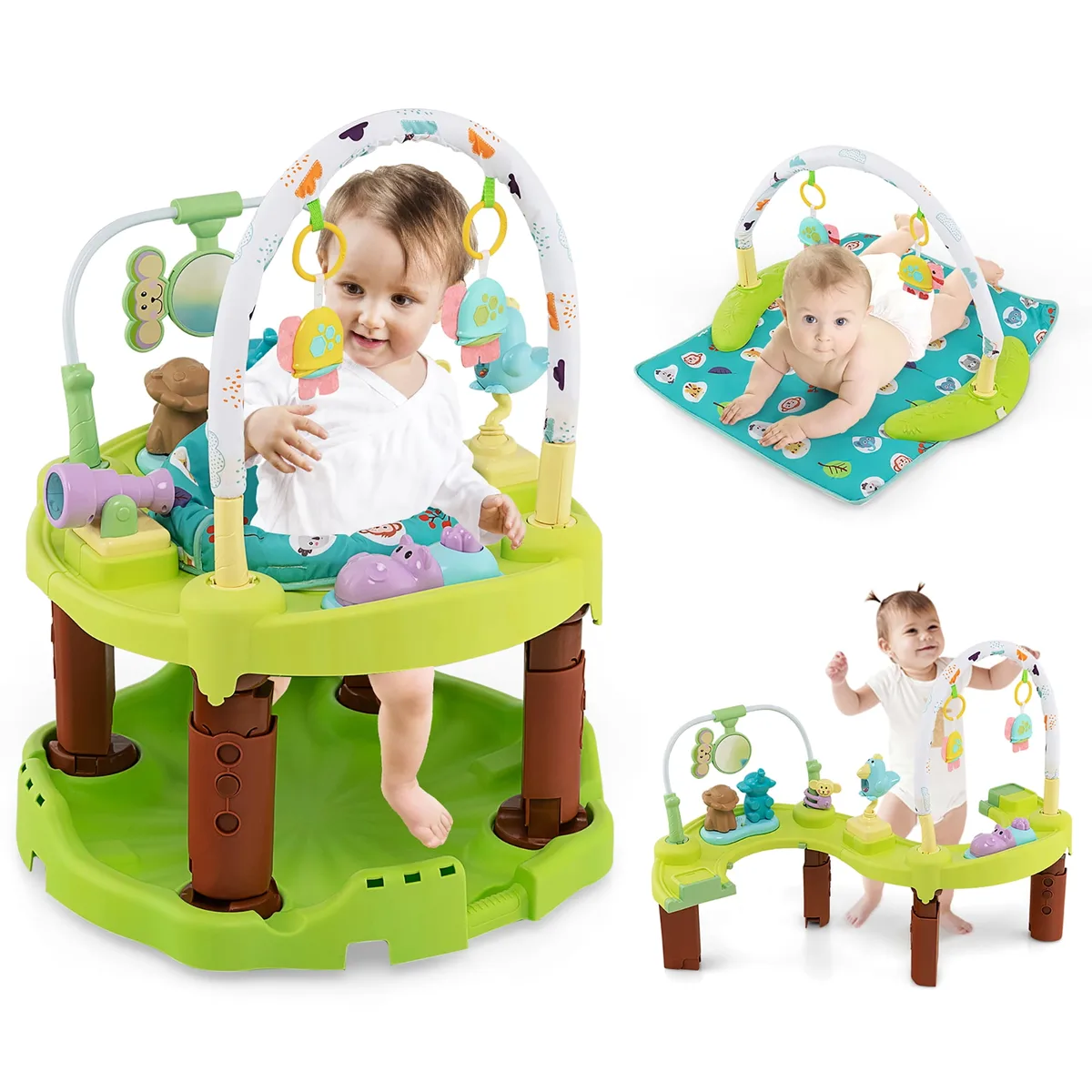
Bouncers offer reclined positioning with softer support, making them gentler on developing spines. They work well for younger infants who aren't ready for upright seating. However, bouncers provide less leg strengthening and minimal toy engagement compared to activity centers.
Jumperoos hang from doorframes and deliver intense bouncing motion. They build leg strength rapidly but require secure installation and ceiling height clearance. Safety concerns arise if the doorway mechanism fails or if babies jump too vigorously.
Floor seats keep babies upright without attached toys. They encourage core strengthening and prepare infants for independent sitting. Unlike activity centers, floor seats demand constant engagement since there are no built-in distractions.
Push walkers with rolling wheels have been strongly discouraged by pediatric safety groups. These devices increase fall risks and don't actually help babies walk faster. Stationary push carts remain safer because the fixed base prevents forward momentum accidents.
| Alternative | Best For | Key Limitation | Cost Range |
|---|---|---|---|
| Bouncer | Younger infants, spinal support | Less developmental stimulation | $20–$60 |
| Jumperoo | Leg strengthening, older babies | Installation requirements, fall risk | $40–$120 |
| Floor seat | Core development, sitting practice | No built-in toys or entertainment | $15–$50 |
| Push cart | Standing practice, pre-walking | Higher price point | $80–$200 |
Selection logic applies across all infant equipment categories. Breastfeeding covers checklist considerations mirror equipment selection logic. Both require matching product features to your specific situation rather than choosing based on trends or marketing claims.
The best choice serves your baby's current needs, not hypothetical future scenarios.
## FAQs About Baby Activity Centers
Parents consistently ask about safety boundaries, cleaning methods, and developmental impacts. Here are evidence-based answers to the most common questions.
Can I leave my baby in an activity center while I step away?
No. Never leave a baby unattended in any seated play equipment, regardless of safety certifications. Babies can tip, get limbs caught, or experience breathing difficulties within seconds.
Stay within arm's reach during every session.
How do I clean a fabric seat with food and drool messes?
Check the care label first. Most fabric seats remove for machine washing on gentle cycles. Spot-clean plastic trays immediately with baby-safe disinfectant.
Air-dry completely before reassembly to prevent mold growth in padding layers.
Do activity centers cause flat spots on the head?
Not directly when used appropriately. However, prolonged seated time reduces varied head positioning during awake hours. Balance activity center sessions with plenty of supervised tummy time and alternating head positions during feeding to support healthy skull development.
Is daily use acceptable?
Yes, within recommended time limits. Two to three short sessions daily combined with regular floor play supports balanced development. Monitor your baby's interests and adjust usage based on their individual temperament and milestones.
What if my baby refuses to sit in it?
Don't force the issue. Some babies prefer floor exploration over contained seating. Try again later with different toy arrangements or switch to alternative equipment entirely.
Resistance usually indicates timing mismatch rather than equipment defect.
## Final Verdict: How to Decide If an Activity Center Is Right for Your Baby
Activity centers work well when matched to your baby's readiness level and your household constraints. They provide legitimate benefits when used correctly but carry real risks when misapplied.
Step one involves confirming physical readiness. Your baby needs steady head control, adequate trunk stability, and alignment with manufacturer weight guidelines. Developmental age matters more than calendar age, especially for premature infants.
Step two requires selecting a model with verified safety certifications. Look for JPMA certification marks and ASTM F2374 compliance documentation. Prioritize units with adjustable features that grow with your child rather than single-mode designs.
Step three demands proper setup before first use. Inspect all connections, verify base stability on your flooring type, and remove any packaging materials from toy panels. Register the product immediately for recall notifications.
Step four establishes usage boundaries. Limit sessions to 15, 20 minutes, maintain arm's-length supervision, and watch for fatigue cues. Alternate activity center time with tummy time and free floor exploration throughout the day.
Step five recognizes when to transition. Babies typically outgrow seated centers between ten and twelve months as they prefer standing and cruising activities. At that point, consider upgrading to a push cart or focusing on open floor play opportunities.
Your final decision should balance safety priorities, developmental goals, and practical household needs. Activity centers remain valuable tools when used responsibly, but they supplement rather than replace direct interaction and diverse movement experiences.

Taslima Khanam Sultana, a loving mom of three, founded BestBabyCart.com to help new parents navigate the world of baby products with ease. Her passion for making parenting simpler shines through delivering honest, unbiased reviews on must-haves like diapers, strollers, and feeding gear. Taslima’s mission is to empower families with expert tips, ensuring every product is safe and top-quality for your little one. Drawing from her own parenting journey, she’s dedicated to supporting yours!