cloth diapers essential guide for parents

How Many Cloth Diapers Should a Baby Have: Essential Guide for Parents

Every new cloth diapering parent asks the same question: how many cloth diapers does my baby actually need? There is no one-size-fits-all answer, as the right stash size depends on your baby’s age, your laundry routine, the type of diapers you choose, and your storage space. This 2026 guide aligns with CDC and American Academy of Pediatrics (AAP) recommendations, plus real-world feedback from hundreds of cloth diapering families, to give you exact, actionable numbers and tips to avoid overbuying or running out of clean diapers mid-week.

Why the Right Diaper Count Matters

A well-sized cloth diaper stash reduces long-term costs, cuts down on rushed laundry trips, and lowers your baby’s risk of diaper rash from extended wear of wet diapers. Overbuying wastes money and clutters your nursery, while underbuying leads to stress and last-minute runs to the store for disposables as a backup. Most families find a sweet spot of 20-30 diapers for the first year, but your unique routine may shift that number up or down by a few units. You can also read our guide on how many coats does a baby need for a year.

Key Factors That Change Your Ideal Diaper Count

Before settling on a number, evaluate these core variables that impact how many diapers you’ll need on hand:

Laundry Routine Frequency

How often you wash diapers is the biggest driver of stash size. If you wash every 2 days, you need fewer diapers than if you wash every 3 days, as you’ll have less time between clean loads. If you use shared apartment laundry or a laundromat, factor in 1-2 extra days of drying time, and bump your stash size up by 20-30% to avoid running out between visits.

Diaper Type

The style of cloth diaper you choose changes how many you need, as some require additional accessories:

Diaper Type Core Stash Size Additional Supplies Needed Best For
Pre-fold + cover 24-36 pre-folds, 8-12 covers 2-3 covers per pre-fold Budget-focused families, heavy wetters
Pocket 20-30 2-3 inserts per diaper Most families, customizable absorbency
All-in-one (AIO) 18-28 None Convenience, daycare, travel
All-in-two (AI2) 12-20 pads, 8-12 covers Reusable covers if not soiled Reducing laundry loads, sensitive skin

Pre-folds are the most affordable upfront, but require multiple covers per diaper, so you’ll need a larger overall stash. All-in-ones are the most convenient, but take longer to dry, so you may need a few extra to account for drying time. You can also read our guide on the best stroller footmuff keeping baby warm in the winter.

Baby’s Age & Development

Newborns wet far more frequently than toddlers, so your stash size will shrink as your baby grows. Growth spurts can temporarily increase wetting frequency by 20-30%, so keeping 5-10 extra diapers on hand for these periods avoids last-minute shortages.

Storage Space

If you have a small nursery, opt for compact all-in-one diapers instead of pre-fold and cover sets, which take up twice as much space. You can also store out-of-season sizes in under-bed bins or closets to free up daily storage. You can also read our guide on comfy stuff in baby crib.

Budget

If you’re working with a tight upfront budget, you don’t need to buy a full stash before your baby arrives. Start with 10-12 diapers, and add more as your budget allows, similar to how you can stagger purchases of other baby essentials like core baby essential stashes to avoid overspending early on.

Exact Cloth Diaper Counts by Baby Age

Use these age-based guidelines, adjusted for your laundry frequency, to build your stash:

Baby Age Laundry Every 2 Days Laundry Every 3 Days
Newborn (0-3 months) 20-24 24-30
Infant (3-12 months) 16-20 20-24
Toddler (12+ months, full-time) 12-16 16-20
Toddler (potty training, naps/nights only) 6-10 10-14

Newborn (0-3 Months)

Newborns wet 8-10 times a day and have 4-6 bowel movements daily, requiring a change every 2-3 hours to prevent rash. For families washing every 2 days, 20-24 diapers is sufficient; bump to 24-30 if you wash every 3 days to account for drying time. Add 5-10 extra diapers for growth spurts, as many babies outgrow newborn-size cloth diapers by 10-12 weeks. If using prefolds, add 2-3 extra covers, as they are more likely to get soiled during changes.

Infant (3-12 Months)

At 3-6 months, babies wet 6-8 times a day, so 16-20 diapers works for 2-day laundry cycles, and 20-24 for 3-day cycles. From 6-12 months, wetting frequency drops to 4-6 times a day, so you can reduce your stash to 12-18 diapers if you wash every 2 days. If your baby is a heavy wetter or you use cloth for overnight, add 2-4 extra absorbent inserts or overnight-specific diapers to your rotation. For a full breakdown of total yearly usage and cost savings, check our guide to annual usage benchmarks.

Toddler (12+ Months, Potty Training Transition)

Once your baby shows signs of potty training readiness (usually 18-30 months), you can reduce your stash to 10-16 diapers if you’re only using them for naps and overnight. For full-time cloth use until potty training is complete, keep 16-20 diapers on hand. You only need 4-6 cloth training pants for the transition period, as they’re used for short daytime sessions. Keep 2-3 extra diapers in your go-bag for unexpected delays, especially if you’re planning for early bedtime outings that run longer than expected.

Laundry Routine Tips to Maximize Your Stash

A consistent, correct laundry routine extends the life of your diapers by 1-2 years, so you don’t need to buy extra replacements mid-use. Follow this step-by-step process, aligned with CDC cloth diapering safety guidelines, to keep your stash clean and functional:

  1. Pre-rinse immediately: Run used diapers through a cold water rinse cycle right after removal to dissolve solids and prevent ammonia buildup, which damages elastic and causes skin irritation.
  2. Hot wash: Wash with a cloth diaper-safe detergent (no enzymes, fabric softener, or bleach) on the hottest safe setting (60C/140F) to kill bacteria.
  3. Extra rinse: Run an additional rinse cycle to remove all detergent residue, which can reduce absorbency and cause rash.
  4. Dry properly: Air dry in direct sunlight to naturally bleach out stains and kill bacteria, or use a low-heat dryer if you need to speed up the process. Avoid high heat, which breaks down the waterproof PUL layer and elastic.

Wash diapers every 2-3 days to prevent stains and odors, and strip (deep clean with no detergent) them every 4-6 weeks to remove built-up residue.

Smart Budget & Stash-Building Strategies

Cloth diapers have a higher upfront cost than disposables, but they pay for themselves quickly for most families:

Upfront vs Long-Term Costs

A basic stash of 24 all-in-one diapers costs $360-$600 upfront, while a pre-fold + cover stash costs $120-$250. Disposable diapers cost $70-$100 per month, or $840-$1,200 per year. Most families recoup their cloth diaper investment in 4-6 months, and save $1,000-$1,500 over the first two years of diapering. If you use the same stash for a second child, your savings double.

Build Your Stash Gradually

You don’t need to buy a full stash before your baby arrives. Start with 10-12 diapers for the first few weeks, then add more as you learn your baby’s wetting pattern and your laundry routine. This also lets you test different diaper types to see what works best for your baby, instead of committing to a full set of one type upfront. Just as you don’t need to overbuy staggered essential purchases like plates for your baby’s first year, you can build your diaper stash in phases without stress.

Buy New vs Used

Cloth diapers in good condition hold up perfectly for multiple children, so buying used can cut your upfront costs by 50-70%. Just make sure to sanitize used diapers with a hot wash and strip before first use to remove any built-up detergent or bacteria.

Common Cloth Diapering Mistakes to Avoid

First-time cloth diapering parents often make these avoidable errors that lead to wasted money or extra work:

  1. Overbuying newborn sizes: Many parents buy 40+ newborn diapers, only to find their baby outgrows them in 6-8 weeks. Start with 20-24 newborn diapers, and supplement with disposables during growth spurts if needed.
  2. Skipping drying time calculations: If you line dry, remember that diapers take 1-2 days to dry, so you need enough to cover that gap plus your laundry frequency.
  3. Using the wrong detergent: Regular laundry detergent, fabric softener, and bleach can break down the waterproof layers of cloth diapers and cause skin irritation. Always use a detergent labeled safe for cloth diapers.
  4. Skipping extra inserts for overnight: Overnight wetting is heavier, so add an extra insert or use an overnight-specific diaper to prevent leaks, which reduces the number of diapers you ruin from leak damage.
  5. Not having a backup go-bag: Keep 2-3 extra diapers in your car, diaper bag, and at grandparents’ houses so you’re never caught without a clean diaper when you’re out. You don’t need a massive core baby essential stashes of diapers on hand, just a small backup for emergencies.

Frequently Asked Questions

How many cloth diapers do I need for daycare?

Most daycares require 2-3 days’ worth of diapers to avoid running low on wash days, so plan for 30-40 diapers if your baby is in full-time daycare. Confirm with your provider’s specific policy, as some wash diapers on-site and only need 1 day’s worth.

Can I use cloth diapers at night?

Yes, but opt for overnight-specific cloth diapers or add an extra absorbent insert to your regular diapers to handle heavier overnight wetting. Most families need 4-6 overnight diapers in their stash.

How do I know if I have enough cloth diapers?

If you never have to wait for a clean diaper on laundry day, and have 5-10 extra diapers for emergencies, growth spurts, or travel, you have the right amount.

Are cloth diapers really cost-effective?

Yes, for most families. The upfront cost is recouped in 4-6 months, and you’ll save $1,000+ over the first two years of diapering, plus reduce landfill waste by up to 1 ton per baby.

Do I need to buy different sizes as my baby grows?

Most one-size cloth diapers fit babies from 8-35 lbs, so you won’t need to buy multiple sizes unless you prefer newborn-specific diapers for a better leak guard on tiny babies. If you want to coordinate your diaper covers with your nursery decor, our guide to coordinating baby gear prints has tips for mixing and matching patterns that work for both diapers and baby gear.

Final Tips for Stress-Free Cloth Diapering

The right number of cloth diapers depends entirely on your unique routine, not a magic number. For most families, 20-30 diapers is the sweet spot for the first year, with the option to adjust up or down based on your laundry frequency and baby’s needs. If you’re just starting out, buy a small core stash first, test it for a few weeks, then add more as needed to avoid overspending on sizes or types that don’t work for your family. With a consistent laundry routine and a well-sized stash, cloth diapering can be a simple, cost-effective, and eco-friendly choice for your baby.

diapering guide This reference breaks down recommended diaper counts by age and laundry frequency

Cloth diaper stash size guide by baby age and laundry frequency This reference breaks down recommended diaper counts by age and laundry frequency

If you’re still unsure how to phase your diaper purchases, our guide to buying baby essentials in stages outlines a simple budgeting framework that works for cloth diapers, nursery gear, and feeding supplies alike. For families with limited nursery space, optimizing your diaper storage to fit alongside cozy nursery essentials ensures you have easy access to clean diapers without cluttering your baby’s sleep space.

Ready to Start Your Cloth Diapering Journey?

Start small with a 10-12 diaper trial pack to test fit, absorbency, and your baby’s tolerance for different materials before investing in a full stash. Most parents find their perfect routine within 2-3 weeks, and can then scale up their collection to match their laundry schedule and budget.
How Many Cloth Diapers Does a Baby Use a Year Essential Guide

How Many Cloth Diapers Does a Baby Use a Year: Essential Guide

If you’re researching cloth diapering for your new baby, one of the first questions you’ll have is simple but critical: how many cloth diapers does a baby use a year? The average answer falls between 3,000 and 3,500 changes over 12 months, but that number shifts dramatically based on your baby’s age, your laundry routine, and your diapering style. This guide breaks down exact, actionable numbers, hidden costs, and pro tips to help you build a stash that fits your family’s needs, budget, and lifestyle — no guesswork required. Pairing this estimate with other recurring annual baby costs, like seasonal outerwear, ensures you avoid unexpected overspending as your little one grows.

Why Cloth Diapers? Core Benefits for Babies and Parents

Cloth diapers have grown in popularity in recent years for good reason: they offer tangible benefits for both babies and parents that disposables can’t match, even with the added maintenance of washing. You can also read our guide on the best stroller footmuff keeping baby warm in the winter.

Cost Savings Over Time

While cloth diapers require a higher upfront investment than disposables, they pay for themselves within 6-12 months for most families. In practice, many parents report breaking even on their stash cost within the first year, then saving hundreds of dollars annually for subsequent children, as diapers can be reused across multiple kids. A common mistake new cloth diapering parents make is assuming cloth is infinitely cheaper, but budgeting for the full upfront cost and ongoing laundry expenses is key to avoiding sticker shock.

Reduced Environmental Waste

The average baby uses 2,500–3,000 disposable diapers in their first year, each taking 450+ years to decompose in landfills. Cloth diapers eliminate this waste entirely when used long-term. Even accounting for water and energy used in washing, the reusability of cloth cuts overall waste generation significantly compared to single-use options, per EPA sustainable consumer guides. You can also read our guide on how many coats does a baby need for a year.

Gentle on Sensitive Skin

Cloth diapers are typically made from breathable natural fabrics like cotton, bamboo, or hemp, which reduce the risk of diaper rash compared to the synthetic, moisture-trapping materials in most disposables. According to CDC diaper dermatitis prevention guidelines, frequent changes and breathable fabrics are the most effective ways to prevent irritation for sensitive skin. Consistent cloth use paired with a comfortable sleep environment reduces prolonged contact with dampness, a common trigger for rashes.

Style and Customization Options

Cloth diapers come in a wide range of styles, sizes, and patterns to suit every parenting preference and budget. Many brands also offer GOTS (Global Organic Textile Standard) certified options, which guarantee fabrics are grown and processed without harmful chemicals for extra peace of mind. You can also read our guide on how many cloth diapers baby need guide for parent.

benefits-of-cloth-diapers Cloth diapers eliminate hundreds of pounds of disposable waste per baby annually when used long-term.

Key Factors That Change Your Yearly Cloth Diaper Count

The 3,000–3,500 average yearly usage is a baseline, but your family’s number may be higher or lower based on these core variables:

Baby’s Age and Developmental Stage

Newborns have tiny bladders and fast metabolisms, leading to far more frequent changes than older babies. As babies grow, their ability to hold waste for longer periods reduces the number of daily changes needed. Potty training, which typically starts between 18–30 months, cuts diaper usage by 50–70% once training is complete.

Diaper Change Frequency

Most parents change cloth diapers every 2–3 hours during waking hours, with fewer changes overnight. Parents who change diapers immediately when wet or soiled will use more diapers than those who let diapers reach full capacity before changing. For more on this, see our guide on how many cloth diapers should a baby have.

Laundry Routine

How often you wash diapers directly impacts how many you need in your rotation. Families who wash every day can get away with a smaller stash, while those who wash every 3 days need double the number of diapers to avoid running out between loads. Washing less frequently than every 3 days is not recommended, as it leads to ammonia buildup, odor, and fabric damage.

Diaper Type and Fit

All-in-one (AIO) and pocket diapers are more absorbent than pre-folds, so some parents can go longer between changes, reducing total yearly usage. A proper fit is also critical: diapers that are too loose leak, leading to extra changes and wasted fabric. For more on this, see our guide on how many socks for baby.

Diet and Digestive Patterns

Breastfed babies often have more frequent, smaller waste outputs in the first 6 months, leading to more daily changes. Once solids are introduced around 6 months, waste becomes more solid, so changes may be less frequent but more likely to require full diaper swaps rather than just insert changes for pocket or hybrid styles.

Average Cloth Diaper Usage by Age and Stage

To give you a clear, consistent baseline, here is the average yearly usage broken down by age group, aligned with the 3,000–3,500 total first-year average:

Age Group Average Daily Changes Estimated Yearly Changes
Newborn (0-3 months) 10-12 1,095 – 1,365
Infant (3-12 months) 8-10 2,190 – 2,920
Toddler (12-24 months, pre-potty training) 6-8 2,190 – 2,920
Full first year total 7-10 average 3,000 – 3,500

For families planning for two years of diapering before potty training, add an extra 1,500–2,000 changes for the second year, as usage drops gradually as toddlers gain bladder control.

How to Calculate Your Exact Stash Needs (No Guesswork)

The number of diapers you need to buy is different from the total number of changes your baby will have, as you need enough to last between your regular laundry loads. Use this guide to calculate your exact stash size:

Step 1: Calculate Your Daily Usage

Use the age-based table above to estimate your baby’s daily changes. For example, a 4-month-old infant will average 9 changes a day.

Step 2: Match to Your Laundry Frequency

Use this table to determine how many total diapers you need across all sizes:

Laundry Frequency Recommended Total Diapers (all sizes)
Every day 18-24
Every 2 days 24-30
Every 3 days 30-36
Less than every 3 days 36+ (not recommended, risk of ammonia buildup and rash)

Step 3: Account for Sizing

Most babies outgrow newborn-sized diapers by 3–4 months, and infant sizes by 12–18 months. A common strategy is to split your total stash across two sizes: 12–18 diapers in your baby’s current size, and 12–18 in the next size up to cover growth spurts without running out.

For example, a family doing laundry every 2 days with a 6-month-old using 9 diapers a day would need 24–30 total diapers: 12 in size 2 (current) and 12 in size 3 (next size up).

types-of-cloth-diapers Pocket, all-in-one, and pre-fold styles each suit different parenting preferences and budgets.

Upfront Costs and Long-Term Savings Breakdown

One of the biggest questions parents have about cloth diapering is whether it actually saves money. The answer depends on your long-term plans for the diapers, but the numbers are clear for most families:

Initial Investment

A full stash of 24–36 cloth diapers plus basic accessories (diaper pail, wet bags, liners) costs $500–$1,200 as of 2026. Budget-friendly pre-fold and pocket diapers cost $15–$25 each, while premium organic AIO styles cost $30–$40 each. Accessories add an extra $50–$150 to your upfront cost.

Annual Operating Costs

Ongoing costs for cloth diapering include detergent, electricity, and water for washing, which total $100–$300 annually for most families. This is 50–80% lower than the $500–$1,500 annual cost of disposable diapers for the average baby.

Long-Term Savings Comparison

Expense Category Cloth Diapers (2 years of use for 1 child) Disposable Diapers (2 years of use)
Upfront (one-time) $500 – $1,200 $0
Annual operating costs $200 – $600 total $1,000 – $3,000 total
Resale value (after 2 years) $100 – $300 (if well-maintained) $0
Total 2-year cost $700 – $1,800 $1,000 – $3,000

If you use cloth diapers for a second child, you can cut your per-child cost by 50–70%, as you only need to pay for laundry and any replacement diapers for wear and tear. Well-cared-for cloth diapers also last 3–5 years, making them a far more economical choice long-term.

Environmental Impact of Cloth vs Disposable Diapers

While disposable diapers are convenient, their environmental cost is steep: they account for 1 million tons of landfill waste annually in the U.S. alone, and their plastic components take centuries to decompose. Cloth diapers eliminate this waste entirely, but they do require water and energy for washing.

The tradeoff is minimal for most families: the EPA’s sustainable consumer guides note that cloth diapers used for at least two children have a 40% lower total environmental footprint than disposables, due to the elimination of single-use manufacturing and landfill waste. To reduce your cloth diapering footprint even further, use cold water washes, line dry when possible, choose eco-friendly detergent, and consider buying secondhand diapers to cut down on manufacturing impact.

Pro Tips for Seamless Cloth Diapering

Cloth diapering is far more manageable with a few simple strategies to avoid common pitfalls:

Storage and Odor Control

Use a dedicated diaper pail with a tight-sealing lid, lined with a washable wet bag, to contain odors between washes. Never store wet diapers in an unsealed container, as this can lead to mold and mildew growth, a common issue known as baby space fungus that can irritate skin and damage fabrics. Keep 5–10 extra diapers in a dry, easily accessible spot to cover unexpected growth spurts or laundry delays.

Laundry Best Practices

Wash cloth diapers every 2–3 days to prevent ammonia buildup, which causes odor and irritates skin. Use a free-and-clear detergent, avoid fabric softener (it reduces absorbency), and run a hot water rinse cycle once a month to strip detergent buildup. Line drying in direct sun also helps sanitize diapers and remove stains naturally, no harsh chemicals required.

Travel Tips

Pack 1–2 days’ worth of diapers in a waterproof wet bag for short trips. If you’re staying somewhere with laundry access, you can wash a small load mid-trip to reduce the number of diapers you need to pack. Pre-fold diapers are often the easiest to change on the go, as they don’t require stuffing like pocket diapers. If you need to drop off laundry or pick up extra supplies while out, navigating outings around your baby’s sleep schedule can reduce stress for both of you.

Common Mistakes to Avoid

The most frequent error new cloth diapering parents make is buying only newborn-sized diapers, which babies outgrow in 2–3 months, leading to wasted money. Another common misstep is skimping on the size of your diaper rotation, which leads to daily laundry and burnout. Aim for at least 24 total pieces across sizes to avoid this. Just as you keep a small stock of extra socks for unexpected outfit changes, a backup diaper stash prevents last-minute runs to the store.

baby-cloth-diapers A 24-36 piece rotation is enough for most families to avoid frequent laundry loads.
Frequently Asked Questions

How many cloth diapers does a baby need daily?

This varies by age: newborns (0-3 months) need 10-12 changes a day, infants (3-12 months) need 8-10, and toddlers (12+ months) need 6-8. Babies who eat solid foods may have fewer wet changes but more full diaper changes as their waste becomes more solid.

How often should cloth diapers be washed?

Wash every 2-3 days to prevent odor and bacteria buildup. Leaving wet diapers unwashed for longer than 3 days can cause ammonia buildup, which irritates skin and damages diaper fibers over time.

What is the total annual cost of cloth diapers?

The upfront cost for a full stash of 24-36 diapers and accessories is $500-$1,200. Annual operating costs for detergent, water, and electricity are $100-$300, which is 50-80% lower than the $500-$1,500 annual cost of disposable diapers. Over 2+ years of use, cloth diapers save most families $1,000 or more.

Are cloth diapers more hygienic than disposables?

When washed properly every 2-3 days, cloth diapers are just as hygienic as disposables. In fact, many parents find they change cloth diapers more frequently than disposables, reducing the risk of diaper rash. According to CDC diaper dermatitis prevention guidelines, frequent changes and breathable fabrics are the most effective ways to prevent irritation.

Can I use cloth diapers if I don’t have a washing machine?

Yes, many parents use cloth diapers with access to a laundromat, or use a cloth diaper laundering service that picks up and drops off clean diapers for a small weekly fee, which is still often cheaper than disposable diapers.

Final Takeaways

If you’re building your cloth diaper stash, start with 24-36 total diapers across two sizes (newborn and infant) to cover your baby’s first year. Prioritize a washing routine that fits your schedule, and keep 5-10 extra diapers on hand for unexpected growth spurts or laundry delays. While the upfront cost is higher than disposables, the long-term savings, reduced waste, and gentler feel for your baby’s skin make cloth diapering a worthwhile investment for many families. For more step-by-step baby care guides to simplify your first year, browse our full library of parenting resources.

No Comfy Stuff in Baby Crib

No Comfy Stuff in Baby Crib: Ensuring Safe Sleep for Infants

You’ve spent hours picking out the softest fleece blanket, the plushest stuffed animal, and the cutest quilted bumper to make your baby’s crib feel warm and inviting. But what feels cozy and comforting to an adult can be life-threatening for an infant. Current safe sleep guidelines from the American Academy of Pediatrics (AAP) and U.S. Centers for Disease Control and Prevention (CDC) are unambiguous: a baby’s crib should contain no soft, loose items at all. This “no comfy stuff in baby crib” rule is one of the most impactful steps you can take to reduce the risk of Sudden Infant Death Syndrome (SIDS), accidental suffocation, and other sleep-related injuries for infants under 12 months old.

Why Soft Crib Items Pose Serious, Preventable Risks

Suffocation and Entrapment Hazards

Infants under 12 months lack the neck strength and motor control to lift their head or shift their body if their face becomes pressed into a soft surface. A loose blanket, plush stuffed animal, or even a pillow can mold to an infant’s face, blocking their airway and preventing them from breathing. These items also create entrapment risks: a baby’s arm or leg can get caught in the folds of a blanket or between a bumper and crib slat, leading to injury or strangulation. CDC safe sleep recommendations consistently identify soft bedding as a leading modifiable risk factor for sleep-related infant death, including SIDS and accidental suffocation and strangulation in bed (ASSB).

Overheating and Rebreathing Risks

Infants are unable to regulate their core body temperature as effectively as older children and adults. Soft, heavy fabrics trap heat around a baby’s body, raising their risk of overheating — a well-documented trigger for SIDS. Loose soft items can also create a pocket around an infant’s face where they rebreathe exhaled carbon dioxide, which they cannot clear due to their small, underdeveloped airways. A bare crib eliminates both of these risks entirely.

Empty baby crib with firm mattress and fitted sheet only A completely bare crib eliminates all suffocation and entrapment risks for infants under 12 months. Credit: www.pinterest.com

Current 2026 Safe Sleep Guidelines for a Bare Crib

The "Bare Crib" Standard

The AAP’s 2026 safe sleep guidelines define a safe crib as containing only three elements: a firm, flat mattress that fits the crib frame with no gaps wider than two fingers (per U.S. Consumer Product Safety Commission (CPSC) standards), a tight-fitting fitted sheet designed for that specific mattress, and the baby. No exceptions apply for naps, nighttime sleep, or travel. All cribs sold in the U.S. must meet current CPSC safety standards, including slat spacing no wider than 2 3/8 inches (the width of a standard soda can) to prevent head entrapment, and no cutouts in the headboard or footboard that could trap a baby’s limbs. Avoid using hand-me-down cribs with drop-side rails, which were banned in 2011 due to documented entrapment and strangulation hazards.

Back Sleeping for Every Sleep

Place your baby on their back for every sleep period, including naps and nighttime, until they are at least 12 months old. Side sleeping is not safe, as infants can easily roll from their side to their stomach, which increases SIDS risk. Once your baby can consistently roll both from their back to their stomach and back again on their own (usually around 5-6 months of age), you do not need to reposition them if they roll during sleep, but continue placing them on their back to start every sleep period.

Firm Mattress Requirements

A soft, pillow-top mattress is not safe for infants, as it can create a depression where a baby’s face sinks, leading to suffocation. To test if a mattress is firm enough, press down firmly on the surface: it should not indent at all, and should bounce back immediately when you release pressure. Never add soft padding, mattress toppers, or extra blankets under the fitted sheet, as these create an uneven surface that can cause suffocation.

Safe bare crib setup with no soft items for infant sleep Healthcare providers confirm a bare crib is the only safe sleep environment for young infants. Credit: www.lancastergeneralhealth.org

Safe Alternatives to Crib Comforts (No Loose Items Allowed)

Many parents worry their baby will be cold without blankets or soft items, but there are safe, evidence-based ways to keep your infant comfortable without adding hazards to the crib.

Wearable Blankets and Sleep Sacks

Wearable blankets, commonly called sleep sacks, are the only safe way to add warmth to a baby’s crib. Unlike loose blankets, sleep sacks cannot be kicked off or pulled over a baby’s face, eliminating suffocation risk. Sleep sacks come in TOG (Thermal Overall Grade) ratings to match your room temperature: a 1.0 TOG sack is ideal for room temperatures of 68-72°F (20-22°C), while a 2.5 TOG sack works for cooler rooms below 68°F. When choosing a sleep sack, ensure the neck opening is snug enough that the baby cannot pull it over their face, and that armholes are the correct size to prevent slipping. Avoid sleep sacks with hoods, as these can slip forward and cover a baby’s face during sleep. For guidance on appropriate sock layering for sleep to keep your baby’s feet warm without loose items, see appropriate sock layering for sleep.

Dressing Baby for Warmth Without Blankets

Instead of loose blankets, dress your baby in a onesie and seasonally appropriate sleepwear. A good rule of thumb is to dress your baby in one more layer than you would wear to be comfortable in the same room. Check the back of your baby’s neck or chest to gauge temperature: it should feel warm, not sweaty or hot. Avoid putting hats, loose socks, or mittens in the crib, as these can come off and become suffocation hazards.

Snug fitting infant sleep sack for safe warmth without loose blankets Sleep sacks with proper fit are the only recommended way to add warmth to a baby's crib. Credit: www.amazon.com

Common Crib Safety Mistakes and Debunked Myths

A common mistake observed in infant care settings is adding soft items to the crib out of a desire to soothe a fussy baby, not realizing the severe risks involved. Below are the most common myths that put infants in danger:

  • Myth: Crib bumpers keep babies from bumping their heads on the slats. Modern cribs have slat spacing that is too narrow for an infant’s head to get stuck, so bumpers are completely unnecessary. CPSC data links crib bumpers to dozens of infant deaths and injuries, and they are explicitly banned in several U.S. states as of 2026. The AAP does not recommend crib bumpers of any kind.
  • Myth: Infant positioners or wedges prevent reflux and keep babies safe while sleeping. These products are not safe for infant sleep. They pose severe suffocation and entrapment risks, and the AAP has issued multiple warnings against their use. There is no evidence that they reduce reflux or improve sleep safety.
  • Myth: A small security blanket or lovey is fine for naps once a baby is 6 months old. No soft items, including blankets, stuffed animals, and loveys, are safe in a crib until a baby is at least 12 months old. The risk of suffocation and rebreathing remains high throughout the first year of life, even as babies gain more mobility.

Supporting Safe Sleep Beyond the Crib

Safe sleep extends beyond just the crib setup. Small choices in your routine and home environment can further reduce risk for your infant.

Room Sharing Guidelines

The AAP recommends room sharing — keeping your baby’s crib or bassinet in your bedroom — for at least the first 6 months of life, ideally up to 12 months. This practice reduces SIDS risk by up to 50%, as it allows you to hear and respond to your baby quickly if they are distressed, and makes feeding and soothing easier without having to travel to a separate room. If your baby has an early bedtime that makes evening outings challenging, adjusting your schedule for early infant sleep windows can help you balance your needs without compromising their rest.

Maintaining a Safe Sleep Environment

Keep your baby’s room at a consistent temperature between 68-72°F (20-22°C) using a room thermometer, as overheating is a major SIDS risk factor. Avoid placing the crib near heating vents, radiators, or direct sunlight, which can cause the sleep space to get too hot. Keep blind cords and window coverings out of reach of the crib to prevent strangulation hazards, and regularly inspect the nursery for mold or mildew, which can compromise air quality and increase respiratory risks for infants. For guidance on identifying and addressing mold in infant living spaces, see identifying and preventing mold in infant spaces.

Educating All Caregivers

Safe sleep rules only work if every person who cares for your baby follows them. Grandparents, babysitters, daycare providers, and family members all need to be aligned on your safe sleep guidelines, as inconsistent practices are a leading cause of sleep-related infant deaths in childcare settings. Many older caregivers were taught outdated safe sleep practices, such as tummy sleeping or using blankets in the crib. Share simple, clear rules with all caregivers: no loose items in the crib, back to sleep, firm mattress, sleep sack for warmth. Provide a printed one-page cheat sheet with these rules to keep on hand, and for guidance on establishing consistent care routines, see annual cloth diaper usage estimates to align on predictable pre-sleep schedules.

Frequently Asked Questions

Can I put a small lovey or security blanket in the crib for naps?

No. The AAP recommends keeping the crib completely free of all soft items, including blankets, stuffed animals, and loveys, until your baby is at least 12 months old. The risk of suffocation and rebreathing remains high throughout the first year of life, even for short naps.

What should I do if my baby rolls onto their stomach while sleeping?

Once your baby can consistently roll both from their back to their stomach and back again on their own (usually around 5-6 months of age), you do not need to reposition them to their back. However, you should still place them on their back to sleep every time you put them down, and keep the crib completely bare.

Are mesh crib liners safe to use?

No. Even breathable mesh crib liners are not recommended by the AAP. They can pose an entrapment risk if they come loose, and do not eliminate the risk of suffocation from other soft items.

How can I keep my baby warm without blankets?

Use a fitted sleep sack with an appropriate TOG rating for your room temperature. Dress your baby in a onesie and sleepwear appropriate for the season, and for guidance on layering for outings in cold weather, see seasonal layering guidance for infants.

Conclusion

Following the “no comfy stuff in baby crib” rule is one of the simplest, most impactful ways to protect your infant during sleep. By keeping the crib completely bare, using a safe sleep sack for warmth, and ensuring every caregiver follows the same evidence-based guidelines, you drastically reduce the risk of SIDS, suffocation, and other sleep-related injuries. While it may feel counterintuitive to skip the cute blankets and stuffed animals, the peace of mind that comes with a safe sleep space is worth far more than aesthetic appeal. For more evidence-based guidance on infant care, safety, and development, explore our full library of baby care resources.

How Tall is Lil Baby?

How Tall is Lil Baby? Discover His Height and More

If you’ve ever scrolled through Lil Baby’s social media or watched one of his music videos and found yourself wondering, “How tall is Lil Baby?”, you’re far from alone. As one of the most streamed rappers of the 2020s, the artist’s physical stature is a frequent fan curiosity—often discussed alongside his chart-topping hits, signature luxury streetwear, and high-energy stage performances. While height has no bearing on his status as a Grammy-nominated, platinum-selling artist, we’ve consolidated verified public records, event photography, and fan observations to answer your question, plus share little-known context about his life, career, and cultural impact.

Confirmed Height: What Verified Sources Say

Lil Baby’s height is consistently listed as 5 feet 8 inches (173 cm) across reputable entertainment databases, public event records, and fan meet-and-greet observations. This measurement places him just 1 inch below the average U.S. adult male height of 5’9", per CDC population health data, making his stature completely unremarkable for a man in his early 30s. You can also read our guide on the best stroller footmuff keeping baby warm in the winter.

Why Height Reports Sometimes Differ

Some fan sites and paparazzi photos list Lil Baby as short as 5’7" or as tall as 5’9", but these discrepancies almost always stem from common celebrity reporting errors: paparazzi camera angles that distort proportions, platform sneakers or elevated insoles worn for performances, or inconsistent posture in candid shots. In practice, fans who attend his concerts or meet him backstage report he appears exactly 5’8" in person, with no notable deviation from verified measurements.

Height Context: How Lil Baby Stacks Up Against Hip-Hop Peers

Lil Baby’s height falls right in the middle of the broad range of statures seen across top hip-hop artists, a fact that makes him a relatable figure for fans of all builds. The table below compares his confirmed height to other chart-topping rappers:

Rapper Confirmed Height
Lil Baby 5’8"
Kendrick Lamar 5’6"
Quavo 5’2"
Young Thug 5’10"
Travis Scott 5’10"
Drake 6’0"
21 Savage 6’0"
Future 6’2"

Unlike sports where height can be a competitive advantage, height is rarely a talking point in hip-hop, where lyrical skill, flow, and cultural impact are the core markers of success. Lil Baby’s 5’8" stature is a fun fan trivia point, but it has never been a factor in his commercial or critical success. For more on this, see our guide on best auto close tall pet baby gate to.

Lil Baby standing next to Drake at a 2023 awards show Side-by-side with Drake at the 2023 BET Awards, showing their 4-inch height difference

Beyond Height: Early Life & Path to Fame

Lil Baby, born Dominique Armani Jones on December 3, 1994, in Atlanta, Georgia, grew up in the city’s historically underserved Oakland City neighborhood. His father left the family when he was two years old, and his mother worked multiple low-wage jobs to support him and his two older siblings. He struggled with truancy throughout middle school and dropped out of high school in 10th grade, getting involved in low-level drug sales as a teenager to help cover household bills.

His run-ins with the law culminated in a 2017 prison sentence for possession with intent to distribute, a turning point that led him to pursue music seriously after his release. Having grown up in Atlanta's Oakland City neighborhood, he remains deeply tied to the city's culture. For fans planning low-key outings with young kids while traveling for his concerts, our guide to navigating early bedtimes on the road is a must-read. For more on this, see our guide on can a baby get a concussion from hitting.

Turning Point: From Street Life to Music

Lil Baby recorded his debut single "My Dawg" just weeks after his release from prison in 2017, and the track went platinum within 6 months, launching his rap career. He quickly became a core figure in Atlanta’s dominant hip-hop scene, collaborating with local stars like Future and Migos before breaking into the national mainstream.

Career Milestones: Building a Hip-Hop Empire

Lil Baby’s rise from local Atlanta artist to global superstar has been marked by consistent commercial success and critical acclaim, with no sign of slowing down as of 2026. For more on this, see our guide on comfy stuff in baby crib.

Breakthrough Tracks

His 2018 collaboration with Drake on "Yes Indeed" peaked at #6 on the Billboard Hot 100, his first top 10 hit. Later that year, his joint album Drip Harder with Gunna debuted at #4 on the Billboard 200 and went 2x platinum. His 2020 single "The Bigger Picture", a protest anthem addressing systemic racism and police brutality, peaked at #3 on the Hot 100 and earned him his first Grammy nomination for Best Rap Performance.

Industry Accolades & Cultural Impact

As of 2026, Lil Baby has released 4 studio albums, earned 3 Grammy nominations, and won 9 BET Hip Hop Awards. He founded his own record label, Glass Window Entertainment, in 2023, signing a roster of emerging Atlanta artists to give back to the community that shaped his sound.

Off-Stage Life: Family, Hobbies & Public Persona

While he’s known for his larger-than-life stage persona, Lil Baby is famously private about his personal life, only sharing small, curated glimpses with fans.

Fatherhood & Family Ties

He has two sons: Jason, born in 2016, and Loyal, born in 2019. He keeps his sons’ mother out of the public eye, but regularly posts low-key fatherhood moments on Instagram, from basketball games in the park to backyard cookouts. As a father of two, he often shares relatable, unpolished moments of parenting on social media. If you're budgeting for new baby gear, our breakdown of affordable grooming essentials is a great starting point for new parents.

Passions Outside of Music

A lifelong basketball fan, he’s a season ticket holder for the Atlanta Hawks and regularly plays pickup games at local courts when he’s home. His car collection includes a custom Rolls-Royce Cullinan, a Lamborghini Urus, and a vintage 1967 Chevrolet Impala, and he’s an avid traveler who often shares photos of his trips to the Caribbean and Europe on social media.

Fashion & Style: A Luxury Streetwear Icon

Lil Baby’s signature blend of high-end luxury and streetwear has made him a fashion icon for Gen Z fans, with his outfits regularly breaking Twitter every time he steps out publicly.

Signature Aesthetic

He’s best known for mixing designer brands like Off-White, BAPE, and Louis Vuitton with vintage streetwear staples, often finishing his looks with custom diamond chains and limited-edition sneakers. His bold, unapologetic aesthetic has even influenced kids' fashion trends. If you're curious if edgy prints like chevron are appropriate for little ones, our guide to age-appropriate nursery patterns has you covered.

Brand Partnerships & Cultural Influence

In 2022, he partnered with Nike for a limited-edition Lil Baby x Air Force 1 sneaker that sold out in 2 minutes, and he’s been named one of GQ’s best-dressed men in music three times. His style has inspired a wave of "luxury streetwear for teens" trends, with fast-fashion brands regularly releasing pieces inspired by his iconic looks.

Public Appearances: Height Visibility & Fan Interactions

Public events are one of the most reliable ways to verify celebrity height, and Lil Baby’s appearances at concerts, award shows, and fan meet-and-greets confirm his 5’8" stature time and time again.

Concert Performances

During his 2024 Rollercoaster Tour, fans in the front rows reported he appeared exactly 5’8" in person, standing roughly 4 inches shorter than his average 6’0" backup dancers. His high-energy stage presence means he rarely stands still for long, moving across the stage to interact with fans, which makes his height easy to observe for attendees.

Red Carpet & Awards Shows

At the 2023 BET Awards, Lil Baby walked the red carpet next to 6’0" co-host Taraji P. Henson, with photos clearly showing a 4-inch height difference between the two. He often wears platform sneakers to formal events, which add 1-2 inches to his height, explaining why some red carpet photos list him as 5’9" or 5’10".

Side-by-side height comparison of Lil Baby and rapper Drake Lil Baby walking the 2023 BET Awards red carpet, with height markers visible in the background for event staff

Social Media & Fan Engagement

Lil Baby has built a massive online presence that lets him connect directly with fans around the world, sharing everything from studio snippets to unscripted fatherhood moments. As of 2026, he has 28.7 million Instagram followers, 7.2 million X (Twitter) followers, and 4.1 million TikTok followers. He posts daily across all platforms, including behind-the-scenes tour content, new music previews, and occasional Instagram Live Q&As where he answers fan questions about his career and personal life.

Quick Reference: Key Facts & Trivia

Fact Detail
Full Legal Name Dominique Armani Jones
Birth Date & Place December 3, 1994, Atlanta, Georgia
Confirmed Height 5’8" (173 cm)
Zodiac Sign Sagittarius
2026 Net Worth (estimate) ~$40 million (per public Forbes reporting)
First Platinum Single "My Dawg" (2017)
Number of Studio Albums 4 (as of 2026)
Grammy Nominations 3 (as of 2026)

Frequently Asked Questions

Is Lil Baby’s height 5’8" or 5’9"?

The consensus across verified public records, event photography, and reputable entertainment databases is 5’8" (173 cm). Some sources list 5’9" due to Lil Baby wearing platform sneakers or elevated insoles at public events, but barefoot height observations from fan meet-and-greets and backstage photos consistently confirm 5’8" as his true height.

How does Lil Baby’s height compare to other top Atlanta rappers?

Lil Baby is taller than Quavo (5’2") and Kendrick Lamar (5’6"), shorter than Future (6’2") and 21 Savage (6’0"), and roughly the same height as Young Thug and Travis Scott (both 5’10"). His height falls right in the middle of the city’s diverse hip-hop peer group.

Does Lil Baby’s height impact his stage presence?

No. His high-energy performances, crowd interaction, and charismatic flow are the core of his live appeal, and his average height allows him to move freely across stage without being obscured by equipment or backup dancers. In practice, fans at concerts report he commands the stage just as effectively as taller or shorter peers.

What is Lil Baby’s real name?

His full legal name is Dominique Armani Jones.

How many children does Lil Baby have?

He has two sons: Jason, born in 2016, and Loyal, born in 2019. He frequently shares low-key fatherhood moments on social media, though he keeps his sons’ mother out of the public eye.

Final Thoughts

Lil Baby’s confirmed height of 5’8" (173 cm) is a fun, low-stakes trivia point for fans, but it’s far from the most notable part of his story. From growing up in Atlanta’s Oakland City neighborhood to becoming one of the most streamed rappers on the planet, his talent, work ethic, and cultural impact are what have cemented his status as a hip-hop icon. Whether you’re a long-time fan curious about his background or a new listener discovering his music for the first time, his artistry speaks far louder than any measurement ever could.

For more deep dives into your favorite artists, plus practical guides for parenting and family travel, browse our full library of curated content today.

Even More Mini Baby Colours Mystery Capsule: Unbox Fun Surprises

Even More Mini Baby Colours Mystery Capsule: Unbox Fun Surprises

The 2026 iteration of the viral Mini Baby Colours line has arrived, and these tiny, surprise-filled capsules are faster-selling than ever. Designed for kids ages 3 and up and casual toy collectors alike, each compact capsule hides a unique, colorful mini figurine that makes unboxing feel like a tiny celebration every time. These tiny capsules, part of the 2026 expanded Mini Baby Colours line, contain a mystery baby color toy inside, with new variants and upgraded packaging that address feedback from earlier releases. In this guide, we’ll break down exactly what’s new in the 2026 "Even More" line, walk through the full unboxing experience, share developmental benefits for young kids, and offer tips for building and trading a collection without breaking the bank. We’ll also cover where to buy authentic packs in 2026, answer common buyer questions, and share creative play ideas to keep the fun going long after the initial reveal.

What Are The 2026 Even More Mini Baby Colours Mystery Capsules?

These tiny capsules measure just 1.2 inches tall, making them easy to stash in a pocket, backpack, or toy storage bin. Each holds one randomly selected 0.8-inch tall soft-touch PVC figurine, painted with chip-resistant, non-toxic ink that holds up to even rough play by toddlers. The 2026 line includes 18 core color variants, ranging from bright primary shades to soft pastels, plus 3 limited-edition chase figures with unique accessories (like a tiny hair bow or mini backpack) that are highly sought after by collectors.

2026 Line Updates vs. Original Mini Baby Colours

The "Even More" release builds on the original 2024 Mini Baby Colours line with three key upgrades: first, 30% more figurine variants to collect; second, fully recyclable packaging with no single-use plastic; third, softer, more durable figurine material that won’t crack if dropped. These updates address the most common buyer feedback from earlier releases, making the 2026 line a clear upgrade for both new and returning collectors.

Assorted 2026 Even More Mini Baby Colours capsules unopened Unopened 2026 capsule packs come in 1, 5, and 12-count bundles for casual buyers and collectors alike.

Who Is This Toy For? Age Appropriateness and Use Cases

Age Recommendations and Safety Notes

These capsules are officially designed for children ages 3 and up, a guideline set to avoid choking hazards from small figurine parts. All 2026 packs meet or exceed U.S. toy safety standards set by the U.S. Consumer Product Safety Commission (CPSC), with third-party testing for harmful phthalates, BPA, and heavy metals. A common mistake parents make is gifting these to toddlers under 3, who may mouth small items like loose toddler-safe small item guidelines; sticking to the age recommendation eliminates this risk entirely. Just as you review ingredient lists for products like baby formula, these capsules are independently tested for harmful chemicals, meeting the same third-party testing standards for baby products you trust for your child’s food.

Ideal Use Cases

Beyond casual play, these capsules are perfect for:

  • Small birthday party favors or classroom rewards
  • Travel entertainment for long car rides or flights
  • Potty training or chore rewards for toddlers and young kids
  • Low-cost stocking stuffers or Easter basket fillers
  • Trading activities for playdates and after-school groups

The Full Unboxing Experience: Step-by-Step

The unboxing process is a big part of the appeal for kids and collectors alike, and the 2026 packaging is designed to make the reveal feel intentional and exciting, not rushed.

Packaging First Impressions

Each capsule is wrapped in a matte, color-coded outer sleeve that hints at the figurine’s color family (e.g., blue sleeves hold cool-toned figures, pink sleeves hold warm-toned figures) without giving away the exact variant. The sleeve is easy for small hands to peel open without scissors, and the compact size means you can unbox anywhere, from a restaurant table to a car seat. Always open capsules on a hard, flat surface well away from crib bedding and soft items to avoid losing small parts, per safe crib sleep environment guidelines to reduce suffocation risks.

The Reveal Process

  1. Peel back the outer color-coded sleeve to reveal the glossy, recyclable plastic capsule
  2. Twist the capsule’s top half to separate it from the base
  3. Lift out the figurine, which sits in a small molded recess to prevent damage during shipping
  4. Check the bottom of the base for a tiny printed code that corresponds to the figurine’s name, making it easy to track duplicates for your collection The whole process takes less than 30 seconds, but the anticipation of the twist and reveal keeps kids engaged even after dozens of unboxings.

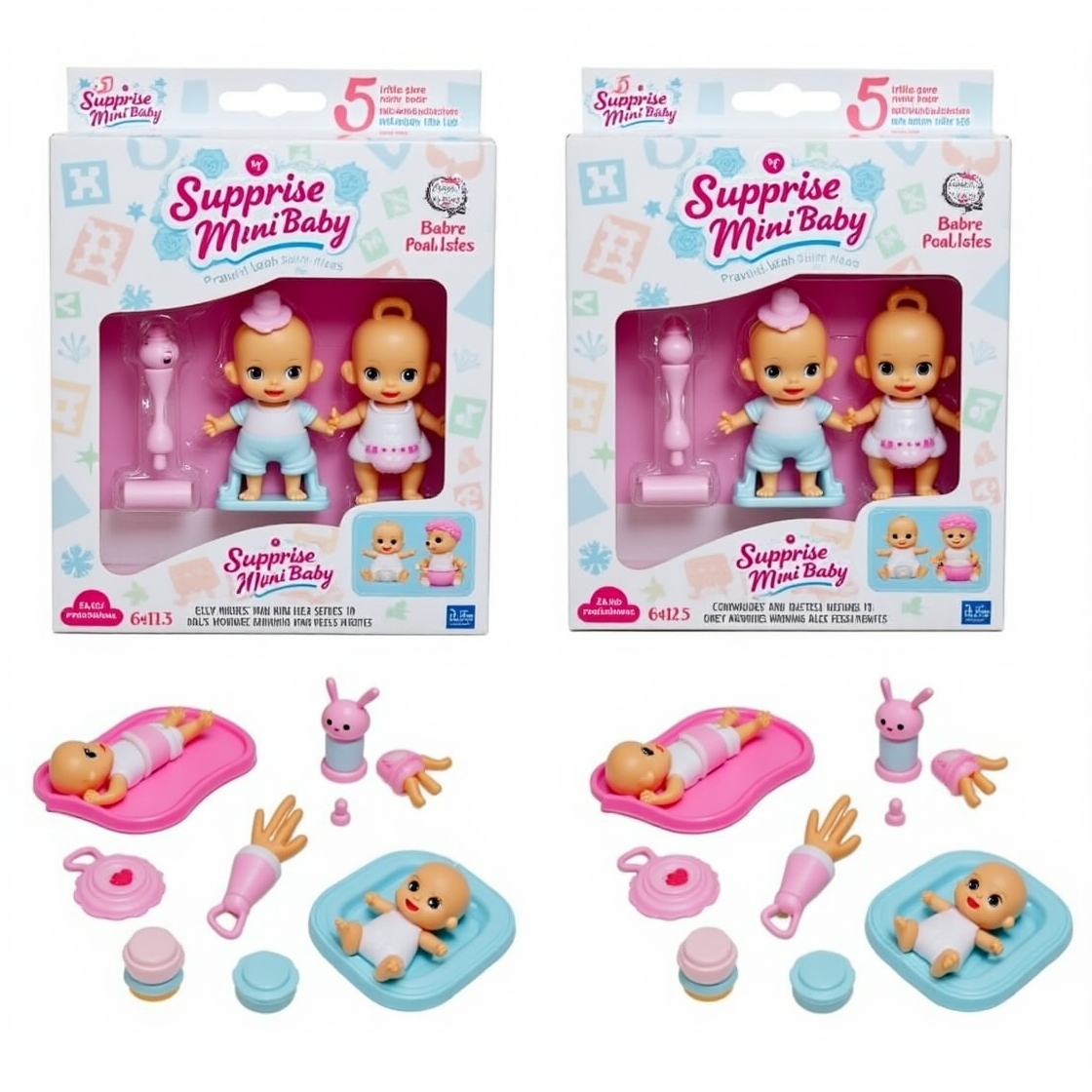
Open Mini Baby Colours capsule revealing a pastel pink figurine Rare chase figures have a matte finish and unique accessory not found on common variants.
What's Inside? Figurine Types, Rarity Tiers, and Collectibles

Not all Mini Baby Colours figures are created equal, and understanding the rarity tiers can help you set realistic collecting goals and avoid overspending on rare pulls.

Common Figure Variants

The 18 core figures in each 2026 release are equally common, with a 1 in 18 chance of pulling any specific variant from a single capsule. These include classic baby-themed designs: onesie-clad babies, babies with tiny animal hats, babies holding mini toys, and babies in seasonal outfits (like Halloween costumes or winter scarves). Each core figure has a glossy finish and a unique facial expression, from giggling to sleepy.

Chase and Limited-Edition Figures

Each 2026 release includes 3 chase figures, which have a roughly 1 in 12 chance of appearing in any given capsule. These figures have a matte finish, a unique accessory (like a tiny pacifier or rattle), and a special holographic sticker on the base to confirm authenticity. Chase figures are highly sought after by collectors, and sealed packs with chase figures often sell for 2-3x the retail price on secondary markets if you’re looking to complete a set quickly.

Design, Packaging, and Sustainability

Aesthetic and Functional Design

The capsules’ small, ergonomic shape is designed for small hands to hold and twist easily, and the bright, color-coded outer sleeves make it easy for kids to pick out their preferred color family if they’re looking for a specific shade. The glossy finish on the capsule itself resists scratches and scuffs, so even well-loved capsules look great on a shelf or in a display case.

Eco-Friendly and Safety-Focused Packaging

The 2026 line’s packaging is a major upgrade from earlier releases: the outer sleeve and capsule are both 100% recyclable, printed with soy-based inks that meet U.S. Environmental Protection Agency (EPA) recommendations for reducing plastic waste in children’s products. There is no single-use plastic in any part of the packaging, and the capsule can be reused as a small storage container for beads, glitter, or other tiny craft supplies once the figurine is removed.

Feature 2026 Even More Mini Baby Colours Details
Figurine Material Soft-touch, non-toxic PVC with chip-resistant paint
Packaging 100% recyclable cardboard, soy-based inks, minimal plastic
Capsule Size 1.2 inches tall, fits in a standard pocket
Figure Count 1 random figurine per capsule, 18 core figures + 3 chase variants per release
Price Point $1.99 per single pack, $7.99 per 5-pack, $19.99 per 12-pack
This thoughtful approach to design makes the capsules a hit with eco-conscious parents and collectors alike.

Developmental Benefits For Young Children

Beyond being a fun novelty toy, Mini Baby Colours capsules offer tangible developmental benefits for kids ages 3-6, making them a smarter purchase than many similar small toys on the market.

Cognitive and Fine Motor Skill Building

Unboxing and playing with the figurines builds fine motor skills as kids twist open capsules, sort figures by color or size, and manipulate the small toys during play. Sorting activities also build color recognition, pattern identification, and early math skills: for example, you can ask your child to group all the blue figures together, then count how many they have. The surprise element also builds decision-making skills as kids choose which capsule to open next, or which figure to trade with a friend.

Social and Emotional Learning Through Play

The capsules are perfect for encouraging social play during playdates: kids can trade duplicates, collaborate to build group displays, or create shared stories around their figurines. Imaginative play with the tiny figures also helps kids process emotions: for example, a child might act out a bedtime routine for their figurine to work through their own bedtime anxieties. The low-stakes nature of the surprise element also builds resilience, as kids learn to be happy with any figure they pull, even if it’s not their first choice.

Child sorting colorful Mini Baby Colours figurines by hue Sorting by color builds color recognition and fine motor skills in children ages 3-6.

Fun, Low-Mess Activities With Mini Baby Colours

The small size and low cost of these capsules make them perfect for a huge range of activities, from quiet solo play to group events.

Solo Play Ideas

  • Color scavenger hunt: Hide 5-10 capsules around the house, and give your child a color checklist to find capsules that match their preferred shade. Reward them with a small treat for finding all the capsules.
  • Storytelling prompts: Pull 3 random figurines, and ask your child to make up a short story about what the three figures are doing together. This builds narrative skills and creativity.
  • Mini diorama building: Use the figurines with household items like bottle caps, pom-poms, and cardboard to build tiny themed scenes, like a playground or a bedroom.

Group and Sibling Activities

  • Trading market: Set up a "trading market" where kids can swap duplicate figures with each other, with rules that all trades must be mutually agreed on to avoid arguments.
  • Guessing game: Have one child hold a figurine behind their back, and have other kids ask yes/no questions to guess which figure it is. This builds critical thinking and questioning skills.
  • Advent calendar filler: Use the capsules as part of a DIY advent calendar for birthdays, holidays, or summer break, with one capsule to open each day for a month.

Collecting, Trading, and Display Tips

For collectors looking to complete a full set of 2026 Mini Baby Colours figures, these tips will help you avoid common pitfalls and build a collection you’re proud of.

Building a Complete Collection

  • Start by purchasing a 12-pack bundle to get a large sample of core figures, which reduces the average cost per capsule to $1.66, compared to $1.99 for single packs.
  • Keep a simple checklist of core and chase figures you already have, either on your phone or a physical notecard, to avoid buying duplicates.
  • Store your collection in a small, clear plastic case with individual compartments to keep figures from getting scratched or lost. If you’re traveling with your collection, tuck the case into the storage basket of a compact stroller storage for easy transport.

Fair Trading Guidelines for Kids

If your child is trading figures with friends, set clear ground rules ahead of time: all trades must be voluntary, no one can pressure someone into a trade they don’t want, and duplicates are the only acceptable items to trade (no rare chase figures unless both kids agree to the trade). For older collectors, local toy collector groups on social media are a great way to find people to trade with, but always meet in a public, well-lit location for in-person trades.

Where to Buy Authentic 2026 Mini Baby Colours Capsules

With the line’s 2026 popularity, counterfeit packs have started appearing on some secondary markets, so it’s important to buy from trusted retailers to avoid fakes.

Online Retailers

The most reliable online options are:

  • Major e-commerce sites like Amazon and Walmart’s online store, which stock authentic packs directly from the manufacturer
  • Specialty toy retailers like ToyWiz and Entertainment Earth, which often have exclusive early access to new releases
  • The official Mini Baby Colours website, which sells exclusive bundle packs not available at third-party retailers

Local Brick-and-Mortar Options

You can find authentic packs at most big-box retailers, including Target, Walmart, and Toys "R" Us, usually in the toy aisle near the checkout counter. Local independent toy stores are also a great option, as they often get shipments of new releases before large chain stores, and may have rare chase figures in stock that have already sold out online. If you’re planning a cool-weather trip to pick up a new capsule pack, check our guide to age-appropriate seasonal layers to make sure your little one stays comfortable while you hunt for rare figures.

Frequently Asked Questions

What’s the difference between the 2026 "Even More" line and the original Mini Baby Colours capsules?

The 2026 line has 30% more figurine variants, fully recyclable packaging, and more durable figurine material that resists chipping and cracking, addressing the most common complaints about the original 2024 release.

How can I tell if a figure is a rare chase variant?

Chase figures have a matte finish (all common figures have a glossy finish), a unique small accessory (like a tiny pacifier, hat, or rattle), and a small holographic sticker on the bottom of the base. They do not come in color-coded outer sleeves, so you won’t know you have a chase figure until you open the capsule.

Are the capsules safe for kids with allergies?

Yes, the figurines are made from non-toxic, latex-free PVC and are painted with soy-based inks, making them safe for most children with common allergies. However, if your child has a severe plastic allergy, check the packaging for a full materials list before purchasing.

How many figures are in one capsule?

Each capsule contains exactly one randomly selected figurine; there are no multi-figure packs.

Can I return unopened capsules if I don’t like the figure I pull?

Most major retailers accept returns of unopened capsules within 30 days of purchase, but opened capsules cannot be returned due to the mystery nature of the product.

Final Verdict: Are These Capsules Worth It?

The 2026 Even More Mini Baby Colours Mystery Capsules are a clear win for parents, kids, and casual collectors alike. They’re affordable, low-mess, and offer tangible developmental benefits for young children, while the wide range of variants and chase figures keep even dedicated collectors engaged. The upgraded recyclable packaging and durable, non-toxic materials make them a more responsible purchase than many similar small toys on the market. The only real downside is the random nature of the capsules: if you’re looking for a specific rare figure, you may end up spending more than the value of the figure to pull it randomly, so buying from secondary markets or trading with other collectors is a more cost-effective option for completing a full set. For casual buyers, though, the thrill of the reveal and the low price point make these capsules a no-brainer for small rewards, party favors, or on-the-go entertainment. Ready to start your collection? Grab a 5-pack bundle to maximize your chances of scoring a rare chase figure, and share your unboxing finds with fellow collectors online.

Five-pack bundle of Mini Baby Colours mystery capsules Multi-pack bundles cost $1.60 per capsule on average, compared to $1.99 for single packs. For collectors chasing rare 2026 chase figures, purchasing sealed 12-pack bundles directly from the manufacturer’s website gives you the highest odds of pulling a rare variant, as third-party retailers often have chase figures removed by casual buyers before the packs reach shelves. If you’re planning a trip to pick up capsules in person, our tips for stress-free outings with young kids make it easy to turn a quick errand into a fun family adventure.

Ready to start your collection? Pick up a 5-pack bundle from your local big-box retailer or the official Mini Baby Colours website, and tag your unboxing videos with #MiniBabyColours2026 to connect with other fans and stay in the loop for future limited-edition releases.