
If you’re reading this while rocking a fussy newborn at 2 a.m. for the third night in a row, you’re not alone. The average new parent gets just 2–3 hours of uninterrupted sleep per night during the first three months of their baby’s life, and unpredictable newborn sleep patterns are one of the most common sources of stress for first-time caregivers. The good news? You don’t have to survive on caffeine and hope forever. With an evidence-based understanding of newborn sleep biology and a few simple, consistent strategies, you can build a newborn baby sleep schedule that supports your little one’s development while giving you the rest you need to show up as the parent you want to be.
This guide covers everything from the science of newborn sleep to safe environment setup, routine building, troubleshooting common challenges, and prioritizing your own well-being. No one-size-fits-all rigid rules here—just actionable, parent-tested advice tailored to the unique needs of your new family. You can also read our guide on baby eye color calculator predict your babys beautiful eyes.
Understanding Newborn Sleep Biology
Before building a schedule, it helps to understand what “normal” newborn sleep actually looks like. Many new parents worry their baby’s frequent wake-ups are a sign of bad sleep habits, but most of these patterns are temporary, developmentally appropriate, and easy to work around with the right framework.
Typical Sleep Patterns for 0–3 Month Olds
The American Academy of Pediatrics (AAP) recommends newborns (0–3 months) get 14–17 hours of total sleep per 24-hour period, split into 7–9 separate sleep windows rather than one long stretch. Unlike adults, newborns are not born with a fully developed circadian rhythm (their internal body clock), so they have no innate sense of day vs. night for the first 6–8 weeks of life. This is why newborns often sleep for long stretches during the day and are wide awake at night—a pattern called “day-night confusion” that is easy to correct with consistent cues. You can also read our guide on diaper rash remedies for babies quick relief tips.
Newborns also have very small stomachs, so they need to eat every 2–3 hours, even at night, to support rapid growth and avoid low blood sugar. Frequent wake-ups for feeding are not a sign of poor sleep training—they are a biological necessity at this age.
REM vs. Non-REM Sleep Cycles
Newborns spend 50% of their total sleep in REM (rapid eye movement, or “active”) sleep, compared to just 20% for adults. This is the stage where brain development and memory consolidation happen, which is why it is so critical for young infants. You may notice your baby twitching, smiling, grunting, or moving their eyes under their eyelids during this stage—these are all normal signs of active sleep, and they make babies far more likely to wake up to small disturbances. You can also read our guide on comfy stuff in baby crib.
The other 50% of newborn sleep is non-REM (or “quiet”) sleep, a deeper, more restful stage where breathing is slow and regular, and movement is minimal. Newborn sleep cycles last just 50–60 minutes, half the length of an adult’s 90-minute cycle. This means babies transition between light and deep sleep twice as often as adults, leading to frequent short wake-ups at the end of each cycle—usually lasting just 5–10 minutes before they fall back asleep on their own.
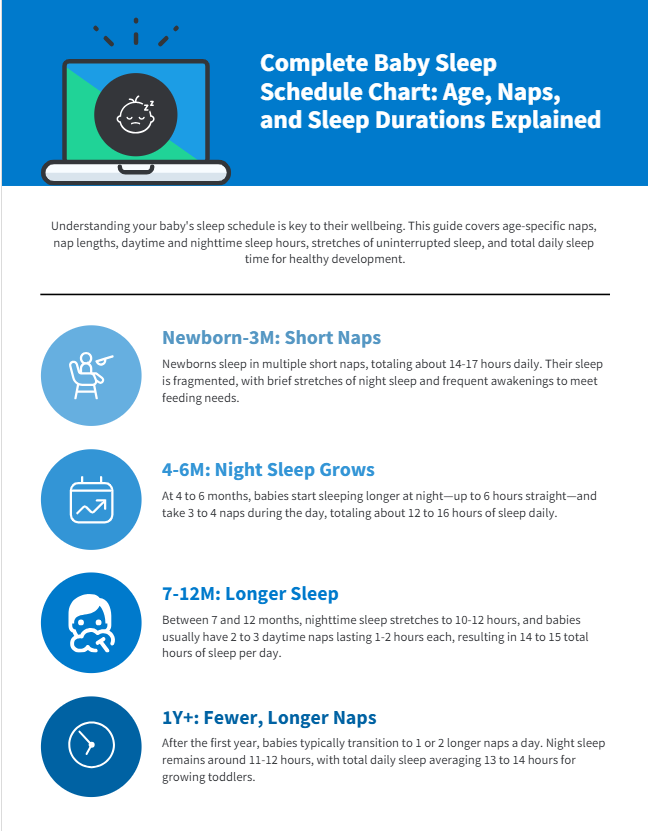
 Reference chart outlining age-appropriate total sleep ranges for babies 0–12 months
Building a Safe, Sleep-Inducing Environment
A sleep-friendly space does more than help your baby fall asleep faster—it reduces SIDS risk, minimizes unnecessary wake-ups, and sets clear cues that it’s time to rest. Prioritize safety first, then optimize for comfort. You can also read our guide on how to stop baby snack feeding breastfeeding.
Non-Negotiable Safe Sleep Guidelines
To reduce the risk of Sudden Infant Death Syndrome (SIDS) and other sleep-related hazards, always follow CDC's evidence-based safe sleep recommendations for every sleep period, naps included. This includes:
- Always placing your baby on their back to sleep, not their side or stomach
- Using a firm, flat sleep surface (a safety-approved crib or bassinet) with a tight-fitting sheet
- Keeping all soft items, including stuffed animals, bumper pads, and loose blankets, out of the sleep space
- Avoiding bed-sharing, which increases suffocation and overheating risk
Optimizing Temperature, Light, and Noise
Small adjustments to the sleep environment can cut down on unnecessary wake-ups significantly:
- Temperature: Keep the room between 68–72°F (20–22°C). Use a wearable room thermometer for accuracy, and dress your baby in a sleep sack or wearable blanket instead of loose bedding to avoid overheating. For guidance on selecting the right sleepwear for your baby’s needs, reference our guide to appropriate sleepwear layering.
- Light: Use bright, natural light during awake periods to help regulate your baby’s developing circadian rhythm. For sleep, keep the room completely dark, or use a dim red nightlight (red light does not suppress melatonin production) for late-night feedings or diaper changes.
- Noise: Consistent, low-level white or pink noise at 50–60 decibels (about the volume of a quiet shower) mimics the sound of the womb and blocks sudden household noises that might startle your baby awake. Place the noise machine at least 6 feet from the crib, and turn it off once your baby is asleep if you prefer.
Crib Setup Best Practices
Stick to a minimalist crib setup to avoid hazards and reduce confusion for your baby. Avoid adding unsafe soft crib items like plush toys, loose blankets, or crib bumpers, which increase suffocation risk. If you’re using a bassinet for the first few months, ensure it has a firm, flat mattress and meets current safety standards. A consistent sleep space (the same crib in the same room for all naps and nighttime sleep) also helps your baby associate the space with rest, making it easier to settle down.
 Sample flexible daily routine aligning feeding, awake time, and sleep for 4–6 week old infants
Establishing a Realistic Newborn Sleep Schedule
Newborns don’t follow a strict schedule, but you can build a flexible routine aligned with their natural rhythms to create predictability for both of you. The goal isn’t to force your baby to sleep on your timeline—it’s to work with their biological needs to reduce overtiredness and make sleep easier for everyone. You can also read our guide on best newborn hair care.
The Feed, Play, Sleep Framework
The most effective routine for newborns 0–3 months old follows a simple cycle: feed → short awake window → sleep. Newborns can only stay awake for 45–60 minutes max before they become overtired, which spikes cortisol levels and makes it far harder for them to fall and stay asleep.
Follow this cycle for every nap and nighttime sleep period:
- Feed your baby fully to ensure they are not waking from hunger
- Spend 30–45 minutes on low-key awake activities: tummy time, gentle singing, looking at high-contrast books, or a short stroller walk
- Put your baby down for sleep as soon as you see early sleep cues (see below) to avoid overtiredness
This cycle prevents the common cycle of overtiredness → fussiness → short naps → more overtiredness that plagues many new parents. You can also read our guide on baby nap schedule.
Sample Flexible Daily Schedule for a 6-Week-Old
This schedule is a guideline, not a rigid rule—adjust timings to match your baby’s unique cues and feeding needs:
| Time | Activity |
|---|---|
| 7:00 AM | Wake, full feeding, 15 minutes of awake play/tummy time |
| 8:30 AM | Nap 1 (45–60 minutes) |
| 9:30 AM | Feeding, short outdoor stroller walk if weather permits |
| 11:00 AM | Nap 2 (1–1.5 hours) |
| 12:30 PM | Feeding, interactive play (reading, singing, sensory play) |
| 2:00 PM | Nap 3 (1–2 hours) |
| 4:00 PM | Feeding, cluster feed (extra 15–30 minutes of feeding) to extend nighttime sleep stretches |
| 5:30 PM | Nap 4 (short, 30–45 minutes, end by 6 p.m. to protect bedtime) |
| 7:00 PM | Consistent bedtime routine (warm bath, lullaby, final feeding) |
| 7:30 PM | Sleep |
| 10:30 PM | Dream feed (gently rouse baby to feed without fully waking them, to extend nighttime sleep) |
| 1:30 AM | Feeding |
| 4:30 AM | Feeding, then back to sleep until 7 a.m. |
Teaching Day vs. Night Cues
To help your baby’s circadian rhythm mature faster, keep clear differences between daytime and nighttime:
- During the day: Keep lights bright, allow normal household noise, and interact with your baby during feedings (talk, smile, play)
- At night: Keep lights dim, speak in a low, calm voice, and only do necessary care (feeding, diaper changes) with no play or interaction
If you need to run errands or attend events with your baby’s early bedtime, our guide to navigating outings with early infant bedtimes offers practical tips to protect their rest without canceling your plans.
Reading and Responding to Sleep Cues
Newborns can’t tell you they’re tired with words, so they rely on body language to signal sleep readiness. Learning to spot these cues early is the single most impactful thing you can do to reduce fussiness and build a consistent schedule. You can also read our guide on baby stroller sitting tips expert guidelines.
Early vs. Overtired Sleep Signals
Early sleep cues (put baby down for sleep immediately when you see these):
- Yawning, eye rubbing, or pulling ears
- Sucking on hands or fists
- Decreased activity, quieting down, or loss of interest in toys
- Drooping eyelids or glazed eyes
- Mild fussing
Overtired cues (baby is already past the point of easy sleep, so soothe first then put down):
- Arching the back, stiffening limbs
- Inconsolable crying or screaming
- Turning red or sweaty
- Refusing to feed
A common mistake new parents make is waiting until baby is crying to put them down for sleep. By the time overtired cues appear, cortisol levels have spiked, making it far harder for your baby to fall asleep and leading to short, broken naps.
Gentle Soothing Techniques for Sleep Transitions
Newborns cannot self-soothe yet, so it is normal for them to need help falling asleep. Effective, age-appropriate soothing techniques include:
- The 5 S’s: swaddling (stop swaddling as soon as your baby shows signs of rolling, usually around 2 months), holding baby on their side or stomach (only while awake, never for sleep), shushing loudly near their ear, gentle swinging, and offering a pacifier
- Patting or shushing gently while baby is in the crib to help them settle
- White noise or soft lullabies to mimic womb sounds
If your baby is experiencing frequent fussy wake-ups, our guide to calming fussy wake-ups offers step-by-step strategies to soothe them back to sleep quickly.
Navigating Common Newborn Sleep Challenges
Even with a solid routine, you will hit bumps in the road during the first few months. Knowing what to expect and how to respond will help you navigate these challenges without derailing your progress.
Normal Night Wakings and Feeding Needs
For the first 3–4 months, it is completely normal for newborns to wake every 2–4 hours for feeding. At 1 week old, a newborn’s stomach is only the size of a walnut, holding just 1–1.5 ounces per feeding; by 1 month, that increases to 2–3 ounces. As their stomach capacity grows, wake-ups will naturally space out on their own—you do not need to “train” your baby to sleep longer at this age.
If your baby is waking more frequently than every 2 hours even after a full feeding, check for common sources of discomfort: a wet or dirty diaper, room that is too hot or cold, reflux, or signs of illness like a stuffy nose or fever.
Sleep Regressions and Growth Spurts
The first sleep regression typically hits around 6–8 weeks of age, as your baby’s sleep cycles start to mature and they become more alert to their surroundings. This phase usually lasts 1–2 weeks, with more frequent night wakings and shorter naps. Stick to your routine as consistently as possible, and offer extra comfort—this phase is temporary.
Growth spurts at 2–3 weeks, 4–6 weeks, 3 months, and 6 months also cause increased hunger and more frequent wake-ups, as your baby needs extra calories to support rapid growth. Cluster feeding in the late afternoon and evening during these periods can help extend nighttime sleep stretches.
Red Flags to Discuss With Your Pediatrician
While most newborn sleep patterns are normal, contact your child’s doctor if you notice:
- Sleeping more than 19 hours per day consistently, or difficulty waking for feedings
- Weight loss or poor weight gain alongside frequent sleep
- Loud snoring, gasping, or pauses in breathing during sleep
- Persistent fussiness that cannot be soothed with feeding or comfort measures
If frequent wake-ups are paired with signs of overtiredness, our guide to resolving overtiredness offers targeted strategies to break the cycle of short naps and night wakings.
Parent Self-Care for Long-Term Sleep Success
You cannot pour from an empty cup—prioritizing your own rest is not selfish, it is a necessity for showing up as a patient, present parent. Chronic sleep deprivation affects mood, immune function, and decision-making, so building in small moments of rest will benefit your entire family.
Practical Rest Strategies for Caregivers
- Nap when your baby naps, even if it’s just a 20-minute power nap. Set an alarm if you’re worried about oversleeping on household tasks.
- Split nighttime duties with a partner: one person handles feedings, the other handles diaper changes and soothing, so each gets at least one 4-hour uninterrupted sleep block. If you’re a single parent, ask a family member or friend to watch the baby for 2–3 hours once a week so you can catch up on rest or do something for yourself.
- Set up a dedicated nighttime feeding station with burp cloths, diapers, and essential nighttime feeding supplies within arm’s reach to avoid fumbling for items in the dark and fully waking yourself up.
Managing Sleep Debt and Reducing Stress
It is okay to let non-essential tasks wait. The dishes, laundry, and spotless floors can wait—your rest cannot. If you’re feeling overwhelmed, reach out to your pediatrician, a lactation consultant, or a postpartum support group for help. The sleepless phase of newborn parenthood is temporary: most babies start sleeping 6–8 hour stretches consistently by 4–6 months, and many sleep through the night by 6–12 months.
 Chart outlining common behaviors associated with newborn active (REM) and quiet (non-REM) sleep stages
Image source: www.bcchr.ca
Chart outlining common behaviors associated with newborn active (REM) and quiet (non-REM) sleep stages
Image source: www.bcchr.ca
Frequently Asked Questions
How many hours should a newborn sleep daily?
Newborns (0–3 months) need 14–17 hours of total sleep per 24-hour period, split into 7–9 short sleep windows. Some babies may sleep slightly more or less than this range, and that is normal as long as they are feeding well and gaining weight appropriately.
Why do newborns wake up so frequently at night?
Newborns wake every 2–4 hours at night because they have small stomachs that can only hold small amounts of food, and they need frequent feedings to support rapid growth. Their short, 50–60 minute sleep cycles also mean they transition between light and deep sleep often, leading to brief, normal wake-ups between cycles.
When do newborns start sleeping through the night?
Most babies start sleeping 6–8 hour stretches at night between 3–6 months of age, though every baby develops at their own pace. You do not need to rush sleep training before 4 months, as newborns are not developmentally ready to self-soothe for long periods.
Is it okay to let my newborn fall asleep while feeding?
For the first 3 months, it is completely normal for newborns to fall asleep while breastfeeding or bottle-feeding. Do not worry about "bad sleep habits" at this age—your baby’s comfort and nutrition are the top priorities. You can start gently encouraging independent sleep skills around 3–4 months, when their circadian rhythm is more mature.
When can I start a more structured sleep schedule?
You can start introducing a more structured, age-appropriate sleep schedule around 3–4 months, when your baby’s circadian rhythm is fully developed and they can stay awake for longer stretches (1.5–2 hours) between naps. Before that, focus on flexible routines aligned with their natural cues rather than rigid timetables.
Conclusion
Building a newborn baby sleep schedule isn’t about rigidly enforcing a strict timetable—it’s about aligning with your baby’s natural rhythms to create predictability for both of you. The first three months of parenthood are a season of adjustment, and small, consistent changes will add up to bigger wins over time. Be patient with yourself and your baby, trust your instincts, and don’t hesitate to reach out to your pediatrician if you have concerns about your little one’s sleep. The sleepless nights won’t last forever, and the routines you build now will set the stage for healthy sleep habits for years to come. Ready to build a routine that works for your family? Explore our full library of newborn care guides for more practical, evidence-based tips.

Taslima Khanam Sultana, a loving mom of three, founded BestBabyCart.com to help new parents navigate the world of baby products with ease. Her passion for making parenting simpler shines through delivering honest, unbiased reviews on must-haves like diapers, strollers, and feeding gear. Taslima’s mission is to empower families with expert tips, ensuring every product is safe and top-quality for your little one. Drawing from her own parenting journey, she’s dedicated to supporting yours!