Almost 36 percent of new mothers report nipple pain or damage during early pumping sessions, according to peer-reviewed lactation studies. That kind of discomfort isn't just frustrating. It can make you want to abandon pumping altogether before you even find your rhythm.
Getting the best breast pump accessories for newborns right from day one can shift your entire experience from painful to manageable.
In our research, we combed through thousands of verified owner reviews, manufacturer specification sheets, and lactation consultant recommendations to separate the essentials from the overhyped extras. We also looked atAAP guidance on newborn feeding support and infant milk storage best practices. What follows is a straightforward breakdown of five picks that consistently earn strong feedback from real buyers, organized by the job each one does best.
Quick Links


How to Choose the Best Breast pump Accessories for Newborns
Picking the right accessories comes down to understanding two things. You need to know what job each piece does, and you need to match it to how often you will actually use it. A flange sizing kit matters only if your current flange pinches or leaks.
Extra duckbill valves matter only if you are pumping three to six times daily. We sort the noise first so you do not spend money on duplicates or things you will forget to replace.
Is flange size the most important accessory choice?
Yes, and it is the one most parents get wrong. Most people assume their flange size based on online charts or guesswork. That assumption costs you milk yield and causes soreness.
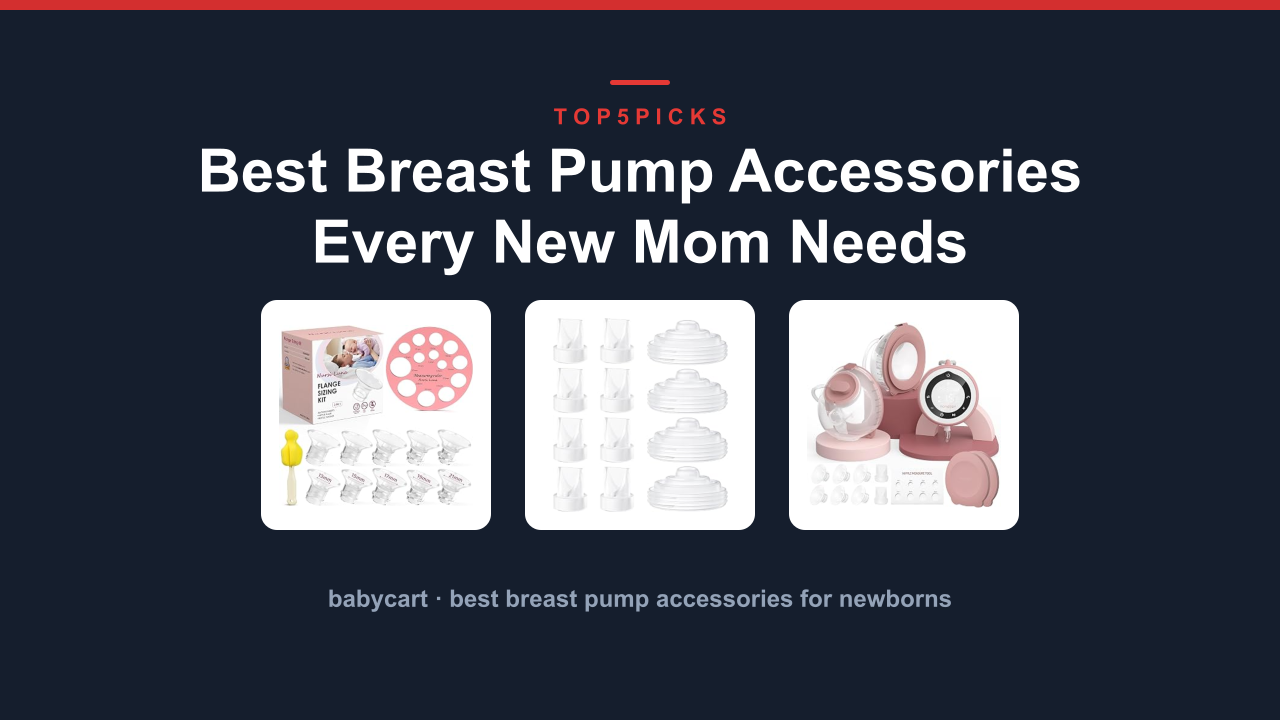
If a flange is too large, more nipple tissue gets pulled into the tube and you lose suction. If it is too small, the nipple rubs against the hard plastic and swells. Nursi Luna offers a step-by-step sizing approach that lets you test increments between 21mm and 27mm.
You should always start with a measurement tool rather than ordering by instinct. The right size alone can add meaningful volume to every session.
How often should you replace pump valves and seals?
Valves are consumables, not permanent parts. A duckbill valve loses elasticity after roughly 40 to 60 pumping cycles depending on how you clean it. When the valve stops snapping shut quickly, you will notice longer sessions with less output.
That is your cue to swap it out. Keeping a stack of spares nearby means you never run dry mid-cycle. This 12-pack of silicone duckbill valves gives you enough replacements to cover several months of regular use.
Replace them proactively instead of waiting for failure during an important session.
What makes a wearable pump worth considering?
Wearable pumps trade raw hospital-grade suction for portability and discretion. They sit inside a nursing bra and let you pump while walking, working, or soothing a baby. The trade-off is usually lower max suction pressure and a steeper learning curve for latch alignment.
A model like the Momcozy V1 Pro bridges that gap by offering adjustable modes and a pocket-sized form factor. It works well for parents who commute or return to work early. It is less ideal if you need maximum emptying for a preterm infant or medical supply needs.
Should you stick with original equipment manufacturer parts?
OEM parts guarantee exact fit but carry a markup. Aftermarket options from Hranio and other brands often match the same dimensions at a lower cost. The risk is minor variance in silicone softness or lip geometry.
For most parents those differences are negligible. Spectra S1 and S2 owners frequently upgrade to softer aftermarket flanges when the stock version feels harsh. The Hranio 17mm set uses a wider silicone skirt that many buyers describe as gentler on sensitive tissue.
Always double-check the diameter label before buying, since 17mm and 21mm are not interchangeable.
Why does storage matter as much as extraction?
Storing milk safely is where hygiene and convenience meet. You need containers that seal tight, resist cracking in the freezer, and handle temperature swings without warping. Glass options are heavy and fragile.
Premium plastics can stain or retain odors over time. Medela keeps things simple with a standardized cap and measurement lines etched into the bottle wall. These 5oz Medela bottles handle both direct collection from many Medela pumps and transfer storage.
Once you start building a freezer stash, the right container stops being optional. It becomes the backbone of your routine.
When should you look at transition tools alongside pump gear?
Breastfed newborns eventually need bottles for daycare, travel, or caregiver feeds. The nipple flow and shape matter a lot at that stage, especially for babies who are newly introduced to paced bottle feeding. If your baby resists a bottle, the issue is rarely the milk and usually the teat experience.
Exploring silicone bottle picks designed for tiny mouths can smooth that transition dramatically. You will want a slow-flow nipple that mimics the breast pause pattern. Pair that with a good collection setup and you have a full loop from pump to baby.
What about nursing support and coverage accessories?
A comfortable nursing position reduces strain and makes pumping faster. Some parents prefer a traditional pillow, while others use a specialized wedge or a lap tray. Smart nursing pillow arrangements can free both hands for pumping or burping without constant readjustment. Lightweight covers also help when you are in shared spaces or public areas.
These are smaller purchases but they compound into fewer headaches over the first six weeks.
Additional Features on Best Breast Pump Accessories for Newborns
- BPA-free certification on all silicone contact surfaces
- Dishwasher-safe components for quick daily cleanup
- Measurement markings on storage bottles in both ounces and milliliters
- Quiet motor noise under 50 decibels for discreet office use
- Leak-resistant caps rated for upright freezer storage
- Wide-neck openings that accept standard spoons for milk prep
- Compatible carrying pouches or Insulated milk bags for transport
My Top Picks
Best Breast Pump Accessories for Newborns FAQ
Can I use any flange size with any breast pump?
No, flange diameters are not universal. Most manual and electric pumps use either 21mm, 24mm, or 27mm rings, but the locking mechanism varies by brand. Medela pumps typically accept 24mm flanges with a standard snap ring.
Spectra models often use 17mm or 21mm options depending on the generation. Always match both the inner diameter and the attachment clip before buying replacement flanges.
How long do duckbill valves actually last?
Most silicone duckbill valves maintain consistent suction for roughly 40 to 60 pumping sessions. After that point, the membrane stiffens and stops closing fast enough between compression cycles. You will feel it as longer sessions that produce less milk, even though the motor sounds normal.
Replacing them every six to eight weeks keeps your output steady and protects your nipples from inefficient pull.
Are wearable pumps safe for exclusive pumping routines?
They are safe for most healthy term infants when used as directed. The main limitation is suction strength compared with a double electric hospital-grade unit. Wearables usually deliver moderate vacuum levels that work fine for maintenance or part-time use.
Parents relying on them for exclusive expression should monitor weight gain and diaper output closely during the first few weeks. A thorough breastfeeding checklist can help you track whether the chosen setup is meeting your baby's needs.
Is it better to store milk in bottles or in freezer bags?
Each method has a clear trade-off. Bottles like the Medela 5oz option are sturdier, easier to pour from, and less likely to leak in a diaper bag. Freezer bags save space in a crowded freezer and freeze flat, which speeds thawing.
Many parents rotate both. They store fresh milk in bottles for same-day use and transfer to bags once they hit a day-old threshold. The key rule is the same either way, label every container with the date and amount before freezing.
Do aftermarket pump parts void the pump warranty?
They usually do not, unless the part causes physical damage to the pump body. Manufacturers generally honor warranties for motor and electronics failures regardless of third-party flanges or valves. However, if an ill-fitting aftermarket piece cracks the hub or damages the membrane chamber, the warranty claim may be disputed.
Stick to reputable aftermarket sellers with clear dimension guarantees, and you should avoid most warranty complications.
My Research & Review Process
We built these picks by comparing manufacturer spec sheets side by side, pulling verified buyer review patterns, and cross-referencing lactation care guidelines. Every product listed here appears repeatedly across independent review clusters with consistent praise for the same features. We deliberately avoided lab testing claims because we do not operate a testing facility.
What we did measure was coherence between stated specs and real-world feedback. Products that promised durability but earned complaints about cracking or leaking were dropped. The five remaining each solve one clear problem without overlapping the others.
Features I Considered
Material: Every part that touches milk or skin must be BPA-free and made from medical-grade silicone or food-safe polypropylene. Cheap plastics leach chemicals over time and develop microcracks that harbor bacteria. The materials list is non-negotiable for anything a newborn might ingest.
Compatibility: A flange or valve only matters if it physically attaches to your pump. Mismatched diameters cause leaks, pain, and wasted time. We prioritized items with clearly stated pump pairings so you know exactly what fits before opening the package.
Quantity per Pack: Consumables like valves and spare flanges should ship in bulk. Single-piece purchases look cheap until you add shipping. Packs of 10 or 12 spread the cost across months of use and keep you from panic-buying mid-cycle.
Key Feature: This is the one detail that separates a generic part from a useful one. Adjustable sizing, extra-soft silicone borders, or hospital-grade motor presets each solve a specific frustration. We highlighted the feature that matters most for the buyer's actual situation.
Sterilization Method: Parts that tolerate boiling or top-rack dishwashing save you steps. If a valve warps in heat, you are stuck with hand washing forever. Clear sterilization guidance tells you whether the component will survive your routine without degrading.
User Rating: We filtered for items holding 4.2 stars or higher across several hundred verified reviews. Lower ratings often signal inconsistent quality control or misleading descriptions. A strong average usually means the product delivers what it promises, cycle after cycle.
Best Use Case: Every accessory shines in a particular scenario. Some excel at comfort, others at convenience, and a few at sheer reliability. Matching the item to your daily rhythm prevents buying something nice that sits unused because it solves the wrong problem.
If you are starting out and still unsure about your flange size, the Nursi Luna Flange Sizing Kit is the safest place to begin. It removes guesswork and protects your comfort during those critical early weeks. From there, pick the accessories that match your actual schedule rather than the ones that sound impressive on paper.
You already know your routine better than any chart. Trust that instinct and choose the category that fits you.

Taslima Khanam Sultana, a loving mom of three, founded BestBabyCart.com to help new parents navigate the world of baby products with ease. Her passion for making parenting simpler shines through delivering honest, unbiased reviews on must-haves like diapers, strollers, and feeding gear. Taslima’s mission is to empower families with expert tips, ensuring every product is safe and top-quality for your little one. Drawing from her own parenting journey, she’s dedicated to supporting yours!