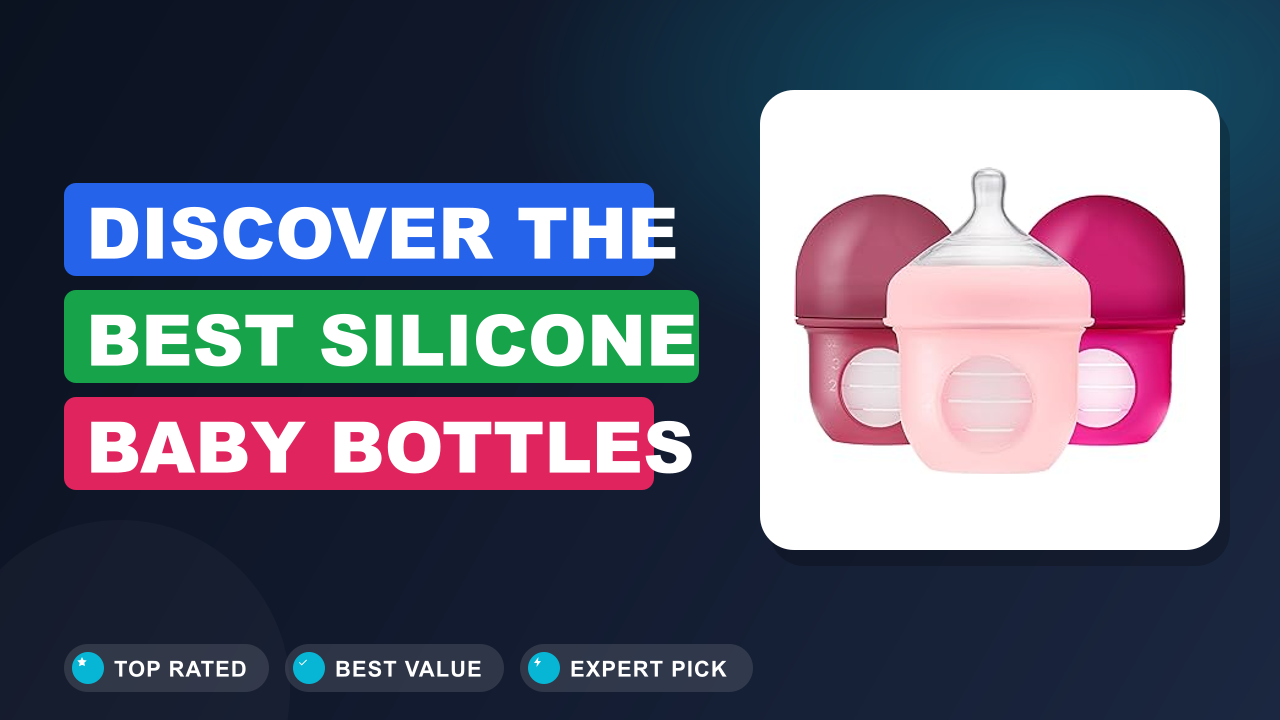
Choosing the best silicone baby bottles for newborns gets harder when every label says “soft” or “colic-friendly.” I’ve spent time comparing capacities, materials, pack sizes, and manufacturer guidance, while separating useful newborn details from marketing language. Philips Avent, Boon, and Medela are familiar names in feeding gear, but this ranking stays focused on the five documented options.
Based on that research, Boon Nursh Bottles Slow Flow Silicone is the strongest all-around pick because its 4-ounce format, slow-flow design, and 3-bottle pack fit the 0-3-month use case clearly. Philips Avent Natural Glass Newborn Gift is the runner-up when glass bodies, five bottles, and two silicone sleeves take priority. Here’s the quick winner, then the full comparison.
Comparison Chart of Best Silicone Baby Bottles for Newborns
| Product | Details | Rating | Buy |
|---|---|---|---|
Editor’s Choice  | Boon Nursh Bottles Slow Flow Silicone | ★★★★☆4.6/5 | |
Top Pick  | Philips Avent Natural Glass Newborn Gift | ★★★★☆4.6/5 | |
Best Budget  | Boon Nursh Silicone Baby Bottles | ★★★★☆4.7/5 | |
| ★★★★☆4.6/5 | ||
| ★★★★☆4.7/5 |


List of Top 5 Best Silicone Baby Bottles for Newborns
I weighted explicit newborn labeling, documented capacity, pack usefulness, material construction, and reported customer ratings. Only the first set carries an explicit 0-3-month label, so each review separates confirmed newborn fit from broader silicone-bottle value and flags missing flow or age details.
Below are the list of products:
1. Boon Nursh Bottles Slow Flow Silicone
In our research, this 4-ounce set stands out as the most focused newborn option because the slow-flow format is specified for ages 0-3 months. Its listing says it may help ease colic symptoms, meaning prolonged, hard-to-soothe crying, but that wording is a product claim rather than a medical guarantee.
Why I picked it
I picked this set because it provides the clearest newborn-specific evidence in the group. The documented 4-ounce capacity, slow-flow format, three-bottle count, and explicit 0-3-month range align with smaller, frequent feeding sessions.
Key specs
- Capacity: 4 ounces, approximately 118 mL
- Pack size: 3 bottles
- Intended age: 0-3 months
- Flow designation: Slow flow
- Material wording: Platinum food-safe silicone
- Intended contents: Formula and breast milk only
Real-world experience
For a newborn who takes smaller portions, the roughly 118 mL capacity can suit daytime formula or breast milk feeds without carrying a larger bottle. A three-bottle rotation is more practical when you also maintain a bottle-drying rack, but caregivers should treat 4 ounces as the limit rather than a target every baby must finish.
- 0-3-month labeling gives parents the clearest age guidance in this list.
- Slow-flow specification is useful when comparing feeding equipment for a newborn.
- Three 4-ounce bottles provide a practical rotation for cleaning and drying.
- The 4-ounce capacity suits parents who want a smaller bottle than an 8-ounce model.
- Four ounces may not cover a larger feed without a second bottle.
- The listing limits intended use to formula and breast milk rather than every liquid.
- The colic wording is a product claim, not proof that the bottle will treat a medical issue.
- ✔ You want an explicitly newborn-focused bottle
- ✔ Your baby is starting with smaller feeds
- ✔ You rotate bottles for breast milk or formula
- ✖ You need documented 8-ounce capacity
- ✖ You want glass instead of silicone
2. Philips Avent Natural Glass Newborn Gift
In our research, this gift set stands out for households that want glass bottles plus the largest documented bottle count. It includes five bottles and two silicone sleeves, although the available inventory does not identify each bottle's capacity or nipple flow.
Why I picked it
I chose this set for its documented configuration rather than an assumed flow advantage. Five glass bottles create the most generous rotation in the inventory, while two silicone sleeves add an outer material that the four all-silicone Boon sets do not document.
Key specs
- Configuration: 5 glass bottles
- Included accessories: 2 silicone sleeves
- Product format: Newborn gift set
- Reported rating: 4.6 out of 5
- Individual bottle capacities: Not stated in the available inventory
- Nipple flow stage: Not stated in the available inventory
Real-world experience
The five-bottle count is useful for a family that wants multiple bottles in rotation rather than washing one or two each time. A quick drying setup helps, but you shouldn't assume all five bottles have the same capacity or flow, so check the markings and Philips Avent instructions before feeding.
- Five bottles provide the largest documented rotation in this roundup.
- Glass bodies give you a different material option from the four silicone sets.
- Two silicone sleeves provide an added outer layer around compatible bottles.
- The reported 4.6 rating gives buyers a positive but imperfect satisfaction signal.
- The available record does not state individual capacities for the five bottles.
- The available record does not identify a slow, medium, or other nipple flow.
- Glass is rigid and breakable, so it needs more careful handling than a flexible silicone bottle.
- ✔ You prefer glass bottle bodies
- ✔ You want five bottles for rotation
- ✔ You are building a newborn gift setup
- ✖ Breakable materials are a major concern
- ✖ You need documented slow-flow nipples
3. Boon Nursh Silicone Baby Bottles
I included this 8-ounce set because it combines a three-bottle pack with a reported 4.7 rating. Its value is strongest for babies taking larger feeds, but the available title does not document an age range or nipple flow stage.
Why I picked it
I picked the green set as the capacity option for families who want fewer refills and a documented three-bottle pack. It ties for the highest reported rating here at 4.7, but the age and flow omissions keep it behind the explicitly labeled newborn set.
Key specs
- Capacity: 8 ounces, approximately 237 mL
- Pack size: 3 bottles
- Material: Silicone
- Color: Speckle green
- Reported rating: 4.7 out of 5
- Age range and flow stage: Not stated in the available inventory
Real-world experience
At approximately 237 mL, the 8-ounce format is more useful when a baby is already taking larger feeds or when a caregiver wants fewer bottle changes. For a very small newborn, the capacity may be unnecessary, and an air-drying routine remains important because all washed components need time to dry fully.
- Eight-ounce capacity reduces the need for a second bottle during larger feeds.
- Three bottles support a rotation instead of relying on a single bottle.
- Silicone construction gives you a flexible option for everyday handling.
- The reported 4.7 rating is the highest listed in this roundup.
- Eight ounces may be more capacity than a small newborn needs in one feed.
- The inventory does not state an age range, so newborn suitability is not confirmed.
- The inventory does not identify the nipple flow, which limits feeding comparisons.
- ✔ You want a larger silicone capacity
- ✔ Your baby already takes substantial feeds
- ✔ You want three bottles in one pack
- ✖ You need an explicit 0-3-month label
- ✖ You need a documented slow-flow nipple
4. Boon Nursh Silicone Baby Bottles
This 4-ounce speckle set is a separate three-bottle configuration with a reported 4.6 rating. I treat it as a capacity match for the winner, not an equal feeding recommendation, because the supplied record leaves both age range and flow unstated.
Why I picked it
I picked this version because the 4-ounce size offers a smaller alternative to both 8-ounce Boon sets. That is useful information, but the absence of a stated flow means you must confirm that detail before treating it as a newborn bottle.
Key specs
- Capacity: 4 ounces, approximately 118 mL
- Pack size: 3 bottles
- Material: Silicone
- Color: Speckle
- Reported rating: 4.6 out of 5
- Age range and nipple flow: Not stated in the available inventory
Real-world experience
This configuration is most useful when a caregiver wants three smaller bottles rather than three larger-capacity bottles. A drying checklist can help track disassembly and drying, but the same 4-ounce bottle still needs a separately verified flow suitable for your baby.
- Four-ounce bottles provide a smaller capacity for modest feeds.
- Three bottles provide a workable rotation for home use.
- Silicone construction offers a flexible body material.
- The reported 4.6 rating is close to the top of the documented range.
- Four ounces may require a second bottle during a larger feed.
- The available inventory does not state a newborn age range.
- The nipple flow is unstated, so suitability cannot be confirmed from the supplied data.
- ✔ You want three smaller silicone bottles
- ✔ Your baby takes modest feed volumes
- ✔ You prefer a 4-ounce format
- ✖ You need documented slow-flow guidance
- ✖ You need a larger capacity per bottle
5. Boon Nursh Silicone Baby Bottles
The pink 8-ounce set closes the list as another high-rated, high-capacity option. It offers three silicone bottles and a reported 4.7 rating, while leaving the same two important newborn questions unanswered: stated age range and flow.
Why I picked it
I picked the pink set for families who want more capacity in each bottle and a three-count pack. Its 4.7 reported rating matches the green 8-ounce set, but neither listing provides enough age or flow detail to outrank the explicit newborn model.
Key specs
- Capacity: 8 ounces, approximately 237 mL
- Pack size: 3 bottles
- Material: Silicone
- Color: Pink
- Reported rating: 4.7 out of 5
- Age range and flow stage: Not stated in the available inventory
Real-world experience
The 8-ounce size is better suited to larger feeds or fewer refills, while the flexible body may be easier to grip than glass during a busy feeding. A caregiver should still confirm that the included nipple works for the baby's feeding pace, especially when organizing feeding-area essentials around a feeding station.
- Eight-ounce bottles help parents reduce the number of refills.
- Three bottles provide enough units for a basic rotation.
- Silicone construction offers a flexible, break-resistant option.
- The reported 4.7 rating supports its place among the strongest options here.
- Eight ounces may be more volume than a newborn needs at one feeding.
- The available record does not confirm an age range.
- The included nipple flow is unstated, so feeding-pace fit is unclear.
- ✔ You want 8-ounce silicone bottles
- ✔ Your baby takes larger feeds
- ✔ You prefer a three-bottle rotation
- ✖ You need a smaller newborn capacity
- ✖ You need a documented flow stage
How I picked
I compared the five documented products on four things: age guidance, nipple-flow wording, capacity, pack count, and material configuration. I treated an explicit 0-3-month label as more useful than a general “silicone bottle” description, and I treated a stated flow as a separate decision from bottle size.
I also checked the practical details that affect a daily routine. A 4-ounce bottle is approximately 118 mL, while an 8-ounce bottle is approximately 237 mL, so the smaller model may mean more feeds but less leftover volume. The reported ratings helped with the comparison, but a 4.7 rating does not tell us whether a bottle is the right flow for an individual baby.
The research did not include physical use, feeding trials, or long-term durability testing. I did not test how long any silicone bottle remained flexible, how the glass set handled drops, or how newborns accepted each nipple, because those claims need controlled, hands-on evaluation that this editorial process does not claim to have completed.
Buying guide — what actually matters for best silicone baby bottles for newborns
Is a 4-ounce or 8-ounce bottle better for a newborn?
A 4-ounce bottle is usually the more focused choice for a newborn, while an 8-ounce bottle can be useful once feeds are larger. The 4-ounce option is about 118 mL, and the 8-ounce option is about 237 mL, so the larger bottle may reduce refills but also leave more unused milk. Let your baby's feeding cues and pediatric guidance matter more than a brand's age label.
A small bottle can be convenient when a newborn takes small volumes, but it may need replacing during a feed if the baby is still hungry. A larger bottle can be useful for a baby who takes more milk in one sitting, yet the available titles for the 8-ounce Boon models do not state an age range or nipple flow, so those details need confirmation before purchase.
What does slow flow mean for a newborn bottle?
Slow flow is a nipple-flow designation intended to deliver milk at a slower rate than a medium-flow or fast-flow nipple. In this list, the Boon Nursh Bottles Slow Flow Silicone set is the only product with both “slow flow” and an explicit 0-3-month designation in its available title, which makes it easier to compare with a newborn use case.
Flow is not the same thing as capacity. A 4-ounce bottle with slow flow and an 8-ounce bottle with an unspecified flow cannot be compared fairly without knowing the nipple design and the baby's feeding pattern. If the baby consistently struggles, leaks, or falls asleep during feeds, ask a healthcare professional for guidance rather than switching flow based on packaging alone.
Is glass or silicone better for baby bottles?
Glass is rigid, easy to inspect, and breakable, while silicone is flexible and less likely to shatter when dropped. That makes the Philips Avent set a strong option for a stationary feeding area, while the Boon sets offer a different handling profile for travel, daycare, or a bag where space and breakage matter.
A glass body also needs more deliberate care around storage, washing, and transport. A silicone body is not automatically safer in every situation, so check the manufacturer's care instructions and inspect the bottle, nipple, and sleeve regularly. The [U.S.
Food and Drug Administration's official resource center](https://www.fda.gov/) is a useful place to start when you want background on food-contact materials and consumer safety.
How many bottles should you buy for a newborn?
A set of three bottles gives you a workable basic rotation, while five bottles can reduce the pressure to wash and dry one unit before another is needed. The four Boon sets in this list contain three bottles each, and the Philips Avent set contains five, so your choice depends on drying space, routine, and how often you want to wash.
You do not need to finish every bottle in a pack. A smaller pack can make storage easier in a compact home, while a larger set helps if you rotate bottles through feeding, washing, and air-drying. Keeping parts together during drying is easier when you have a practical bottle storage plan.
Is a colic bottle worth it for a newborn?
A colic-focused bottle can be worth comparing if your baby has prolonged, uncomfortable crying, but no bottle can be treated as a medical fix for colic. The Boon Nursh Slow Flow listing says it may help ease colic symptoms, which is a manufacturer or product claim, not a guarantee and not a diagnosis.
Look for fit, flow, cleaning, and caregiver comfort first. If your baby is not feeding comfortably, speak with your pediatrician rather than relying on a product description. It also helps to keep a small feeding-area setup separate from the bottle itself, since carriers and feeding gear serve different purposes.
Frequently Asked Questions (FAQ)
Is silicone better than plastic for newborn bottles?
Silicone is a flexible bottle material that can be easier to handle and less likely to shatter, but it is not automatically the best choice for every family. The right comparison includes the nipple, cap, sleeve, replacement parts, cleaning method, and whether you prefer glass or plastic. For this list, silicone sets provide flexible 4-ounce and 8-ounce options, while the Philips Avent set provides a glass alternative with silicone sleeves.
Which bottle in this list has the clearest newborn labeling?
The Boon Nursh Bottles Slow Flow Silicone set has the clearest newborn labeling because its full title specifies slow flow, 4 ounces, 0-3 months, and a three-bottle pack. That extra wording gives you more useful starting information than an unstated age range. It does not mean every newborn will use the same bottle, so confirm flow and fit with your healthcare professional.
Are 8-ounce silicone bottles too large for a newborn?
An 8-ounce bottle is about 237 mL and may be more than a small newborn needs in one feeding. The two 8-ounce Boon sets can be useful for larger feeds or fewer refills, but their available titles do not state an age range or nipple flow. A 4-ounce set is about 118 mL and may fit a smaller feeding pattern better, while the baby's actual intake and feeding cues should guide the decision.
Can I use a silicone bottle for both formula and breast milk?
Use a bottle only for the contents and preparation instructions supported by its manufacturer. The Boon Nursh Slow Flow title specifically mentions formula and breast milk, while the other Boon sets do not provide the same content guidance in the supplied inventory. Follow the bottle's care instructions, prepare feeds according to current health guidance, and discard leftovers according to professional advice.
How do I know whether I need a slow-flow nipple?
Slow flow is not automatically right for every baby, and the supplied data only confirms that designation for the Boon Nursh 4-ounce 0-3-month set. Compare the nipple marking, the baby's sucking and swallowing cues, and any advice from your pediatrician. If the baby coughs, chokes, leaks, or seems uncomfortable, pause and get guidance rather than choosing a larger flow yourself.
Are glass bottles easier to see than silicone bottles?
Glass bottles are usually easier to inspect visually because the rigid body shows its contents clearly, but they are heavier and breakable. The Philips Avent set combines five glass bottles with two silicone sleeves, giving you a different material and grip option. The Boon sets focus on flexible silicone bodies, so the right choice depends on whether you prioritize visibility, flexibility, or drop resistance.
Final verdict
Boon Nursh Bottles Slow Flow Silicone is the best overall recommendation because it is the only option here with an explicit 0-3-month range, slow-flow wording, a 4-ounce capacity, and a three-bottle pack. For a larger-capacity or glass-focused setup, the Philips Avent Natural Glass Newborn Gift is the runner-up because it includes five bottles and two silicone sleeves, though its individual capacities and flow are not stated in the available record.
Affiliate disclosure: This post contains affiliate links. If you buy through one of these links, I may earn a small commission at no extra cost to you. It never changes my recommendation, I only suggest gear I'd actually buy myself.

Taslima Khanam Sultana, a loving mom of three, founded BestBabyCart.com to help new parents navigate the world of baby products with ease. Her passion for making parenting simpler shines through delivering honest, unbiased reviews on must-haves like diapers, strollers, and feeding gear. Taslima’s mission is to empower families with expert tips, ensuring every product is safe and top-quality for your little one. Drawing from her own parenting journey, she’s dedicated to supporting yours!