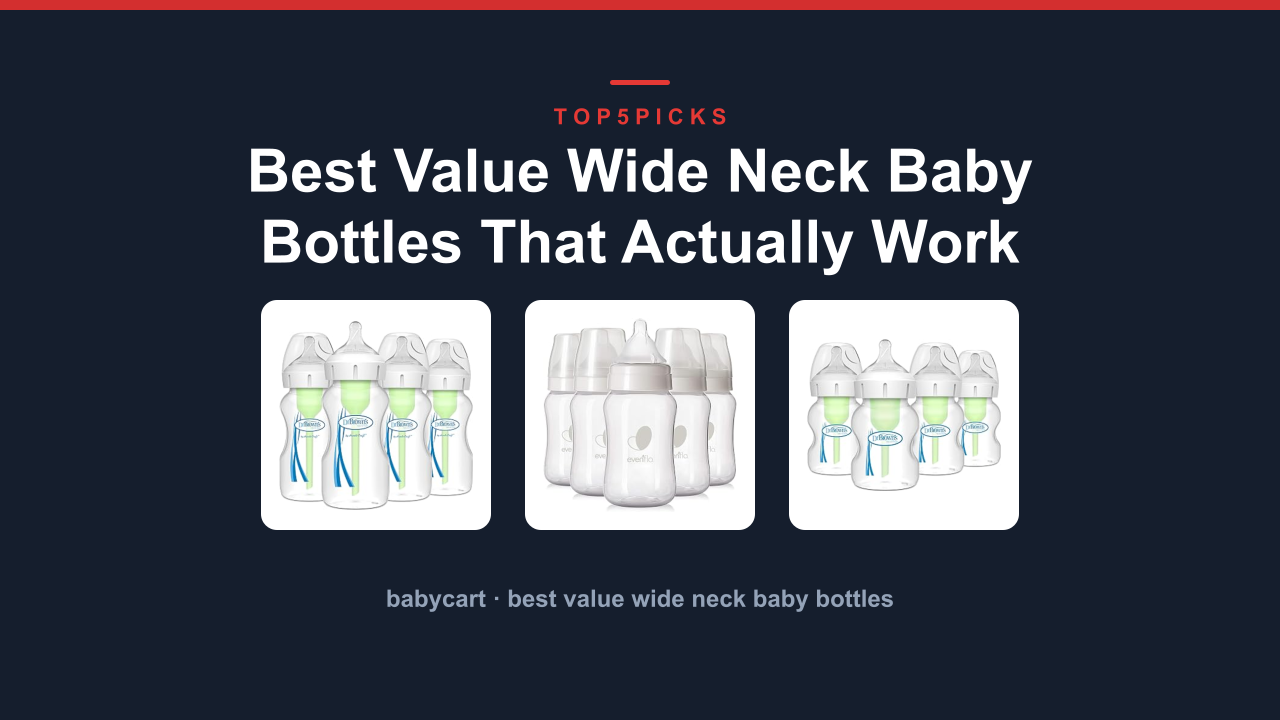
Evenflo Feeding Premium Proflo Venting Balance: Best Starter Bundle for First-Time Parents
#4
EvenfloCompact Six-Pack
7.5OUT OF 10
Anti-colic perf.7.8
Ease of cleaning6.8
Value for money8.0
Owner verdict7.3
This is the no-regrets starter pack for first-time parents who want quantity without complexity. The Evenflo Proflo 5 oz six-pack gives you a full week’s rotation in newborn size, which matters when laundry day coincides with a growth spurt. The bottom-vented design means you assemble it in three pieces instead of five, saving precious seconds during a crying fit.
Parents appreciate the smaller capacity for young infants who only take three to four ounces per feeding. Less wasted milk or formula is a real benefit when every drop counts. The wide neck accepts standard bottle brushes, and the ergonomic curves fit comfortably in sleep-deprived hands during those middle-of-the-night feeds.
Flaws but not dealbreakers. You will outgrow these within six to eight weeks for most babies, so budget for an upgrade soon after. The bottom-venting system also provides slightly less air removal than Dr. Brown’s internal tube, which some gassy babies still notice. A few reviewers report that the nipple flow runs a bit fast for very young newborns.
If your baby has already moved past the newborn stage, the
Evenflo 9 oz six-pack listed earlier keeps the same simple design in a larger size that lasts longer.
⚠Capacity: Five ounce bottles suit most infants for roughly the first six to eight weeks. Plan to transition to a larger size soon after if your pediatrician confirms steady weight gain.
Pros
- ✓Six bottles in newborn size means a full rotation without constant refilling during the earliest weeks
- ✓Three-piece assembly is faster than multi-part vented bottles, which matters at 3 AM
- ✓Smaller capacity reduces waste when infants only take three to four ounces per feeding
- ✓BPA-free plastic construction meets standard safety expectations at a competitive price point
Cons
- ✕Small capacity means transition to larger bottles happens within two months for most infants
- ✕Bottom-venting removes slightly less air than internal tube systems, which some gassy babies detect
- ✕Nipple flow runs faster than some parents prefer for very young or premature infants
Best for: First-time parents and grandparents building a newborn starter kit who want maximum bottles per dollar with straightforward assembly and cleaning.
Dr. Brown’s Anti-Colic Options+ Wide-Neck Glass: Best Eco-Conscious Choice for Health-Focused Families
#5
Dr.Heat-Resistant Glass
8.0OUT OF 10
Anti-colic perf.8.5
Ease of cleaning8.0
Value for money7.5
Owner verdict8.0
This is the pick for families who prioritize material safety and long-term durability over convenience. The Dr. Brown’s glass version keeps the same internally vented system that makes the plastic model effective, but replaces the container with heat-resistant borosilicate glass. That means no plastic taste, no discoloration over time, and no concerns about microplastic leaching.
Glass handles repeated sanitizing without warping or degrading, which is a genuine advantage for parents who boil or steam-clean bottles weekly. The wide neck accepts standard brushes just like the plastic version, and the 9 oz capacity serves infants through their first several months. Three bottles per pack is a smaller quantity, but the longevity of glass often offsets that difference.
Flaws but not dealbreakers. Glass is heavier than plastic, which tires small hands during extended feeding sessions. Dropping a glass bottle on a tile floor is a real risk, even with silicone sleeves available from third parties. The price per bottle also runs higher than the plastic alternatives, which matters for budget-conscious households.
If cost is your primary concern but you still want Dr. Brown’s venting, the
plastic 9 oz four-pack at the top of this list delivers identical anti-colic performance at a lower entry price.
⚠Breakage risk: Glass bottles require careful handling around hard surfaces. Consider silicone protective sleeves and always place bottles on soft surfaces during preparation and cleaning.
Pros
- ✓Glass construction eliminates plastic taste and avoids microplastic concerns that worry many health-focused parents
- ✓Heat-resistant borosilicate glass withstands repeated boiling and steaming without warping or degrading
- ✓Same internal vent system as the plastic Dr. Brown’s models, so anti-colic benefits remain intact
- ✓Wide neck accommodates standard bottle brushes and makes powder mixing equally straightforward
Cons
- ✕Heavier weight fatigues small hands during extended feeding sessions compared to lightweight plastic
- ✕Higher upfront cost per bottle than plastic alternatives, though longevity may offset long-term expense
- ✕Breakage risk on hard surfaces requires extra caution and potentially silicone protective sleeves
Material
Borosilicate glass
Best for: Parents who prioritize material safety, plan to reuse bottles for multiple children, or want to avoid plastic contact while still benefiting from proven anti-colic venting technology.
Buying Guide: Venting Technology, Capacity, Materials and Budget
The best wide neck baby bottles for value sit at the intersection of anti-colic performance and practical daily use. Your choice depends on how much your baby struggles with gas, how long you expect to use each size, and whether material safety outweighs convenience.
Is venting technology worth the extra parts?
Venting systems exist to reduce the amount of air babies swallow during feeding. Swallowed air turns into gas, which causes fussiness, spit-up, and sleep disruptions. The two main approaches are internal tubes and bottom vents.
Internal tube systems, like Dr. Brown's Options+, channel air away from the milk through a silicone sleeve inside the bottle. This design has decades of clinical references behind it.
Pediatricians frequently recommend these bottles for infants with diagnosed colic or severe reflux. The trade-off is assembly complexity. You clean more parts, and losing the vent insert in the dishwasher is a genuine risk.
Bottom vent systems, like Evenflo's Proflo design, route air through channels at the base of the bottle. These have fewer parts, which makes assembly and cleaning faster. Most healthy infants tolerate them well.
Babies with severe colic may still show symptoms because the air-removal efficiency trails internal tube designs.
The American Academy of Pediatrics notes that while no single bottle prevents all colic, reducing air intake during feeds can meaningfully decrease discomfort in sensitive infants. Your baby's individual response matters more than marketing claims.
Does bottle size actually matter for value?
Capacity determines how often you refill and when you outgrow the bottle. Newborns typically consume three to four ounces per feeding in their first weeks. A five ounce bottle leaves room for error without excessive waste.
Most babies outgrow five ounces within six to eight weeks as appetite increases.
Nine ounce bottles serve infants from roughly two months onward through their first year. They handle growth spurts better and reduce the number of size transitions your household navigates. The trade-off is potential waste during early weeks when babies cannot finish nine ounces.
If your family prioritizes longevity, nine ounce packs deliver better value despite higher per-unit costs. If you are shopping for a newborn or preemie, five ounce options minimize waste during the critical early weeks. Some parents buy both sizes simultaneously to cover the full transition period.
Plastic versus glass: which material fits your priorities?
Plastic bottles win on weight and breakage resistance. They are easier for older infants to hold, safer around hard floors, and generally less expensive upfront. Modern baby bottles use BPA-free plastics that meet current safety standards.
The concern now centers on microplastics and long-term chemical exposure, which is why some parents prefer glass.
Glass bottles eliminate plastic taste and avoid any leaching concerns. Borosilicate glass withstands repeated heating and sterilizing without degrading. Many parents who plan to reuse bottles for younger siblings choose glass specifically for durability across multiple children.
The downsides are weight and fragility. Glass fatigues small hands during extended feeds, and a drop on tile means replacement.
According to FDA guidance, current BPA-free plastics on the market meet safety standards for infant feeding. If you choose plastic, look for bottles labeled BPA-free and avoid products with unknown chemical compositions. Glass remains the preference for families prioritizing material inertness over convenience.
How should budget shape your decision?
Value combines price per bottle, pack size, and expected lifespan. The Evenflo six-packs offer the lowest cost per unit among these picks. Six bottles in one purchase means less frequent reordering and better availability when you need a replacement mid-week.
Dr. Brown's four-packs cost more per bottle but deliver stronger anti-colic performance for sensitive infants. If your baby shows clear gas symptoms, that performance justifies the higher unit price.
The glass three-pack sits in the middle for upfront cost but offers the longest lifespan, which improves long-term value for families planning multiple children.
Your budget should reflect your baby's needs, not just the sticker price. A slightly more expensive bottle that reduces colic symptoms saves money on formula waste, diaper changes from spit-up, and parental exhaustion. Start with the pick that matches your primary concern, then adjust as your baby grows.
When shopping for complementary items, consider pairing your bottles with reliable bottle drying racks to keep assembled parts organized and airborne contaminants minimal. Proper drying equipment complements any bottle choice and extends the life of venting components.
To see how these factors play out on real picks, compare the Dr. Brown's Anti-Colic Options+ Wide-Neck Baby, Evenflo Feeding Premium Proflo Venting Balance and the Dr. Brown's Anti-Colic Options+ Wide-Neck Baby reviewed above.
Who Should NOT Buy Best Value Wide Neck Baby Bottles
Wide-neck vented bottles serve most infants well, but they are not appropriate for every feeding situation. Certain medical conditions and feeding goals require specialized equipment that these consumer bottles cannot provide.
You Need a Medical-Grade Feeding Solution
Infants with severe gastroesophageal reflux disease, oral-motor coordination disorders, or swallowing difficulties often require specialty nipples and bottles prescribed by feeding therapists or gastroenterologists. Standard anti-colic bottles do not replace medical-grade equipment designed for specific anatomical or neurological challenges.
If your pediatrician has recommended a specific feeding program or device, follow that guidance rather than switching to consumer bottles. These products address common fussiness and gas, not diagnosed medical conditions. Delaying proper medical feeding interventions can worsen outcomes for infants with underlying disorders.
Your Baby Prefers Breastfeeding and Rejects Bottles
Some breastfed infants refuse bottles entirely, regardless of nipple shape or flow rate. Wide-neck bottles do not solve nipple preference issues. If your baby consistently rejects bottles, focus on establishing breastfeeding techniques rather than buying additional bottle varieties.
Work with a lactation consultant if bottle refusal persists. Some infants accept cups or syringes for supplemental feeding when bottles fail. Forcing a bottle purchase before exhausting other options wastes money and adds stress to an already challenging situation.
You Want Maximum Convenience with Minimal Cleaning
If you prefer snapping together a bottle and moving on, the multi-part vented designs on this list will frustrate you. Dr. Brown's internal vent system requires disassembly, separate cleaning of the vent insert, and careful reassembly to maintain function.
Evenflo's simpler bottom-vent design reduces part count but still requires more attention than basic two-piece bottles.
For maximum convenience, consider basic wide-neck bottles without venting systems if your baby does not show colic symptoms. Those models assemble in seconds and clean in one step. The trade-off is accepting whatever level of gas and fussiness comes with standard feeding.
Final Verdict
The Dr. Brown's Anti-Colic Options+ Wide-Neck 9 oz 4-Pack remains the best best value wide neck baby bottles choice for families dealing with visible colic symptoms. Its internal vent system has the strongest track record for reducing gas and fussiness among consumer bottles, and the 9 oz capacity serves most infants through their first several months.
Want a larger quantity at a lower per-unit cost? The Evenflo Proflo 9 oz 6-Pack delivers solid everyday performance with simpler assembly and more bottles per purchase. It suits healthy infants who do not display severe gas symptoms.
Need something for a newborn or preemie? The Dr. Brown's 5 oz 4-Pack provides the same venting technology in a size that matches early feeding volumes.
The Evenflo 5 oz 6-Pack offers maximum quantity in newborn size for parents building a starter inventory.
Prefer material safety over convenience? The Dr. Brown's Glass 9 oz 3-Pack delivers proven anti-colic performance in heat-resistant glass that avoids plastic contact entirely.
Just accept the weight and breakage risk.
Before purchasing, review the Who Should NOT Buy section to confirm these bottles match your baby's needs. If your infant has medical feeding requirements or severe breast refusal, professional guidance should precede any consumer bottle selection.
FAQ
What's the best value wide neck baby bottles overall?
The Dr. Brown's Anti-Colic Options+ Wide-Neck 9 oz 4-Pack earns the top spot because its internal vent system has the strongest evidence base for reducing colic symptoms among budget-friendly options. It balances performance, capacity, and price effectively for the majority of families.
Are wide neck bottles actually better than narrow neck?
Wide necks make cleaning significantly easier because bottle brushes reach the bottom without angling. They also accommodate powdered formula mixing with less spillage. For parents washing bottles by hand, the difference is noticeable.
Automated dishwashers narrow the gap somewhat, but wide necks still dry more completely.
Do anti-colic bottles really work?
They reduce swallowed air, which decreases gas formation in most infants. Babies with mild to moderate colic often show measurable improvement. Severe reflux or medical conditions may not respond adequately.
Results vary by individual, and some infants reject vented bottles due to flow characteristics or nipple feel.
How long do wide neck baby bottles last?
Plastic bottles typically last three to six months before nipples degrade or bottles develop cloudiness from repeated sanitizing. Glass bottles can last years if handled carefully. Most parents transition infants to larger sizes within two months of starting with five ounce bottles.
Plan purchases around your baby's expected growth trajectory.
Can I mix different bottle brands in one household?
Yes, but each brand uses different nipple shapes and flow rates. Switching between brands can confuse some infants who prefer consistent feedback. If you own multiple bottle types, reserve each for specific situations, such as one brand for home use and another for travel, to minimize confusion.
What accessories pair well with wide neck bottles?
Bottle drying racks keep assembled vented components organized and airborne-dirty-free. Silicone sleeves protect glass bottles from breakage. Formula dispensers compatible with wide mouths simplify nighttime prep.
Avoid generic accessories that do not match your bottle's neck diameter, as improper fits compromise sealing and function.
Taslima Khanam Sultana, a loving mom of three, founded BestBabyCart.com to help new parents navigate the world of baby products with ease. Her passion for making parenting simpler shines through delivering honest, unbiased reviews on must-haves like diapers, strollers, and feeding gear. Taslima’s mission is to empower families with expert tips, ensuring every product is safe and top-quality for your little one. Drawing from her own parenting journey, she’s dedicated to supporting yours!
Advertisement
Advertisement