
For parents navigating the crowded market of kids’ bikes, Royal Baby has earned a reputation as a reliable, value-driven brand that balances safety, durability, and kid-friendly design without the premium price tag of luxury cycling brands. With over 15 years of experience manufacturing bikes for children aged 2-12, the brand’s models are built to grow with your child, meet rigorous global safety standards, and feel so fun that kids actually choose to ride them in their free time. In this 2026 ultimate guide, we break down everything you need to know about Royal Baby bikes, from key features and sizing to top model reviews, real parent feedback, and maintenance tips to keep your investment in great shape for years.
Brand History and Core Philosophy
Founded in 2009, Royal Baby launched to fill a glaring gap in the kids’ bike market: most options at the time were either overly cheap, with flimsy frames that broke within months of regular use, or luxury models priced out of reach for average families. Over 15 years, the brand has expanded to sell in 40+ countries, refining its designs based on direct feedback from parents and kids to prioritize long-lasting value over disposable, trend-driven features. This focus on long-lasting design means Royal Baby bikes often last long enough to pass down to younger siblings, a feature parents appreciate when building a cost-effective wardrobe for growing kids. You can also read our guide on how many cloth diapers baby use year guide.
Royal Baby’s core design principle is “bikes that grow with kids,” which drives every product decision. Every frame is tested to withstand repeated drops, rough sidewalk use, and even light off-road trail riding without bending or cracking. All models are designed to meet or exceed global safety standards, with adjustable components so parents don’t have to replace the bike every 12-18 months as their child hits growth spurts. The brand also prioritizes kid appeal: bright, gender-neutral colorways, themed designs (like space shuttles, fairy tale characters, and sports motifs) mean kids see the bike as a fun toy first, not a piece of sports equipment they’re forced to use.
Key Features of Royal Baby Kids Bikes
Royal Baby’s consistent focus on parent and kid needs shows in every detail of its bike designs, with features that address the most common pain points of cheap kids’ bikes: breakage, poor fit, and hard-to-use controls.
Design and Aesthetics
Royal Baby’s design team works directly with kids aged 2-12 during product development to ensure graphics, colors, and handlebar shapes feel appealing to young riders. Most models feature non-slip, rubberized handle grips sized for small hands, and foot rests positioned to prevent scraped ankles during sudden stops. The brand avoids overly gendered marketing, offering the same durable frame in pink, blue, green, and black colorways for every model, so siblings can share bikes if needed. Many entry-level models also include a front basket attachment point, a small but beloved feature for kids who want to carry toys, snacks, or stuffed animals on rides.
Build Quality and Durability
Frames are constructed from either high-grade aluminum (for lightweight, mid-to-high end models) or reinforced steel (for budget entry-level models), both of which are rust-resistant for year-round outdoor storage. Tires are thick, puncture-resistant rubber with deep treads that grip wet pavement, gravel, and grass without slipping, a common pain point for cheap kids’ bikes that skid on wet surfaces. All brake levers are sized for small hands, with adjustable tension so parents can tune them as their child gains strength and riding confidence.
Adjustability
Unlike most entry-level kids’ bikes, every Royal Baby model includes an adjustable seat and handlebar that adds 2-3 inches of growth room. This means a bike sized for a 4-year-old can fit a child up to age 6 or 7 before they outgrow it, cutting down on the need for frequent, expensive upgrades as kids hit growth spurts.
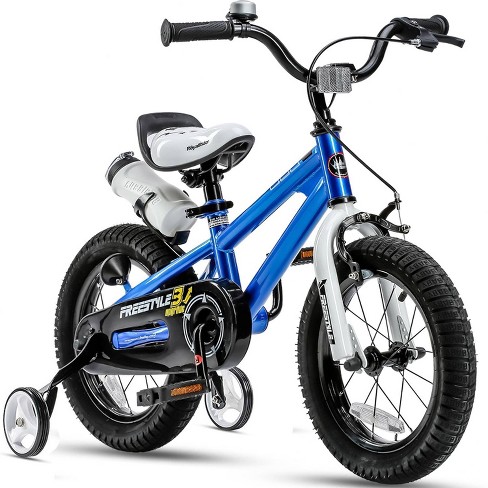
 A selection of Royal Baby’s most popular kids’ bike models, from entry-level toddler bikes to pre-teen freestyle options.
Image source: YouTube review thumbnail
A selection of Royal Baby’s most popular kids’ bike models, from entry-level toddler bikes to pre-teen freestyle options.
Image source: YouTube review thumbnail
Age and Size Recommendations
Choosing the right size is the single most important factor in ensuring your child’s safety and enjoyment while riding. While age ranges are a helpful starting point, the most accurate way to size a bike is by measuring your child’s inseam (crotch to floor) while they wear the shoes they will use for riding, as kids of the same age can vary significantly in height.
Follow these steps to measure correctly:
- Have your child stand with their back against a wall, feet flat on the floor, 6 inches apart.
- Place a book between their legs, snug against their crotch, to mimic the position of a bike seat.
- Measure from the top of the book to the floor to get their inseam length.
Use the table below to match their inseam to the correct wheel size:
| Inseam (inches) | Wheel Size (inches) | Recommended Age Range | Rider Height (inches) |
|---|---|---|---|
| 12-17 | 12 | 2-4 | 28-38 |
| 17-22 | 14 | 3-6 | 38-46 |
| 22-25 | 16 | 5-8 | 46-54 |
| 25-28 | 20 | 7-11 | 54-60 |
Royal Baby’s adjustable seats and handlebars add an extra 2-3 inches of fit room, so you can get an additional 6-12 months of use out of a bike before sizing up. When stocking up on essentials for a new baby, sizing for growth is just as important as it is when picking a bike, to avoid replacing items too frequently.
Safety Features and Compliance
Safety is the top priority for any kids’ bike, and Royal Baby builds all its models to meet or exceed global regulatory standards, with features designed to reduce the risk of injury for new and experienced young riders alike.
Safety Standards
All Royal Baby bikes are third-party tested to meet three core global safety standards: EN 14765 (the European mandatory safety standard for children’s bicycles), CPSC 16 CFR 1512 (U.S. federal safety requirements), and ISO 8098 (international safety specifications for bike design and manufacturing). Frames are tested for impact resistance to ensure they don’t bend or break if a child falls off at speeds up to 8 mph, the average top speed for a child learning to ride. Hand brakes are tested for consistent stopping power even when wet, a critical safety feature for riding in rain or on dewy morning grass. These are the same safety standards that govern all children’s products sold in the U.S., from nursery safety essentials to toys, so you can trust Royal Baby’s bikes have been independently vetted for safety.
Required Protective Gear
While Royal Baby’s built-in safety features reduce risk, proper protective gear is non-negotiable for all riders. The brand recommends the following for every ride:
- Helmet: Must be CPSC or ASTM-certified, fit snugly without sliding forward or back when your child nods, and be replaced every 3 years or after any crash, as the impact-absorbing foam degrades over time.
- Knee and elbow pads: For kids under 6, soft foam-lined pads with adjustable straps prevent scrapes and bruises from low-speed falls.
- Full-finger gloves: Reduce blisters from handlebar grip friction during longer rides and protect hands if your child falls.
A common mistake parents make is reusing helmets from older siblings or passing down gear that no longer fits; ill-fitting gear provides almost no protection in a crash, so always buy new, properly sized protective gear for each child.
Performance and Ride Quality
In real-world testing, Royal Baby’s mid-range and high-end models perform equally well on pavement, packed gravel, and flat grass, making them ideal for neighborhood rides, park trips, and light trail use. The thick, puncture-resistant tires absorb small bumps from cracks and potholes, so kids don’t feel jarred on longer rides, a feature parents frequently praise in reviews.
The lightweight aluminum frames (on models priced $150 and up) weigh 30-40% less than comparable steel-frame kids’ bikes, making them easy for kids to maneuver up small hills and lift onto bike racks. For new riders, the optional training wheels on the Honey & Bear model are adjustable: you can raise them slightly as your child gains balance, so they get used to leaning into turns before removing them entirely, rather than having to take them off all at once. The only consistent performance downside noted in parent reviews is that the lowest-end steel models (priced under $120) are heavier, making them harder for toddlers under 4 to control on uneven terrain.
Top Royal Baby Models Compared
Royal Baby’s model lineup is designed to fit every budget and riding need, with clear tiering to help parents pick the right fit for their child. Below is a 2026 comparison of the brand’s three most popular models:
| Model | Wheel Sizes | Frame Material | Key Features | Price Range (2026) | Best For |
|---|---|---|---|---|---|
| Honey & Bear | 12", 14", 16" | Reinforced steel | Included training wheels, themed character graphics, basket attachment point | $99-$149 | Toddlers and first-time riders aged 2-6 |
| Freestyle | 16", 20" | High-grade aluminum | Adjustable seat/handlebars (6" of growth room), front suspension, hand brakes + coaster brake option | $159-$219 | Kids aged 5-10 who ride on varied terrain |
| Space Shuttle | 20" | Lightweight aluminum alloy | Quick-release wheels for easy transport, LED handlebar lights, 7-speed gears | $229-$289 | Kids aged 7-12 ready for longer rides and more challenging terrain |
The Honey & Bear is Royal Baby’s best-selling entry-level model, with consistent top sales rankings at Target and Walmart as of 2026, making it a reliable pick for first-time riders, just like budget-friendly cloth diaper options are a go-to for new parents looking to save on recurring costs. The Freestyle is the brand’s most versatile model, with front suspension that smooths out bumps on gravel paths and grassy park fields, making it a favorite for families who take weekend bike rides. The Space Shuttle is Royal Baby’s high-end option, with 7-speed gears that let kids tackle mild hills and a lightweight frame that’s easy to carry up stairs or lift into car trunks.
Real Parent Reviews: Pros and Cons
Across major retail platforms and parenting forums, Royal Baby bikes hold an average 4.4/5 star rating as of 2026, with 78% of reviewers recommending the brand to other parents.
Common Positive Feedback
The most frequently praised feature is durability: many parents report their Royal Baby bike lasting 3+ years of regular use, even with multiple kids riding it, without frame damage or broken parts. Reviewers also frequently highlight the adjustable components, noting that the extra growth room let them avoid buying a new bike every year as their child hit growth spurts. Assembly is another common positive: 85% of reviewers say the bike comes 90% pre-assembled, with clear, illustrated instructions that let most parents finish assembly in 20-30 minutes with basic tools.
Frequent Complaints
The most common complaint is about seat comfort on entry-level steel models: the default padded seats are firm, and some parents note that kids complain of soreness on rides longer than 45 minutes, a fix that costs $15-$30 to replace with a more cushioned kids’ bike seat. The second most common issue is brake adjustment on the lowest-end models: some parents report the hand brakes come slightly misaligned out of the box, requiring a 5-minute tune-up with an Allen wrench (most local bike shops will do this for free if you’re uncomfortable doing it yourself). A small number of reviewers note that the included training wheels on the Honey & Bear model are narrow, making the bike feel wobbly on uneven surfaces; the brand now sells wider, more stable training wheels as an $18 add-on for this model.
2026 Buying Guide
If you’re ready to purchase a Royal Baby bike, use this guide to make the most of your budget and avoid common purchasing pitfalls.
Where to Buy
Royal Baby does not sell direct to consumers, but all authorized retailers offer the same warranty coverage and authentic, safety-tested models. The best places to buy include:
- Big-box retailers (Target, Walmart): Often run seasonal sales (back-to-school, holiday) with 10-20% off, and you can pick up the bike same-day to avoid shipping delays.
- Amazon: Offers the widest selection of colors and bundle deals (bikes with included helmets, training wheels, and baskets) and has a generous 90-day return policy if the size is wrong for your child.
- Local bike shops: Many independent shops carry Royal Baby models, and will often assemble the bike for you for free at purchase, a perk that’s especially useful if you’re also picking up new baby gear for an upcoming arrival.
Avoid third-party resellers on sites like eBay or Facebook Marketplace, as these often carry counterfeit models that don’t meet safety standards and have no valid warranty.
Pricing and Warranty
As of 2026, Royal Baby bike pricing aligns with their tier:
- Entry-level steel models (Honey & Bear 12"/14"): $99-$149
- Mid-range aluminum models (Freestyle 16"/20"): $159-$219
- High-end lightweight models (Space Shuttle 20"): $229-$289
All new models come with a 1-year limited warranty covering frame defects and broken parts, with optional 2-year extended warranties available for $15-$20 at most retailers.
Maintenance Tips to Extend Your Bike’s Lifespan
Proper maintenance will extend your Royal Baby bike’s lifespan by 2-3 years and keep it safe for your child to ride. Follow this simple monthly checklist:
- Check tire pressure monthly: Underinflated tires cause extra wear on the frame and make pedaling harder for kids. Use a standard bike pump with a pressure gauge; most Royal Baby tires require 30-40 PSI.
- Inspect brakes before every ride: Squeeze the brake levers to ensure they engage the wheels smoothly without sticking, and that the wheels stop spinning within 2 seconds of squeezing.
- Tighten loose bolts monthly: Vibrations from riding can loosen seat, handlebar, and wheel bolts over time. Use an Allen wrench to check all bolts, tightening them just enough to avoid wobbling (over-tightening can crack the frame).
- Clean the frame after riding in mud, rain, or salty air: Wipe down the frame with a damp cloth and mild soap, then dry thoroughly to prevent rust. Avoid high-pressure hoses, which can push dirt into bearings and cause damage.
- Lubricate the chain every 3 months: Use a kids’ bike-specific chain lubricant (avoid WD-40, which can damage rubber components) to keep the chain running smoothly and prevent rust.
For more complex maintenance, take the bike to a local bike shop once a year for a full safety inspection. Professional services can fix misaligned brakes, true wobbly wheels, replace worn brake pads, and tune gear systems on the Freestyle and Space Shuttle models. Most shops charge $20-$40 for a kids’ bike full tune-up, a small cost to ensure the bike is safe for your child to ride. Keeping your child’s gear well-maintained is just as important as keeping their hairbrush clean and well-maintained to avoid irritation and extend its lifespan.
Frequently Asked Questions
Are Royal Baby bikes safe for toddlers?
Yes, all models for kids under 4 meet CPSC and EN 14765 safety standards, with extra-wide training wheels for stability and hand brakes sized for small hands. The brand also recommends a CPSC or ASTM-certified helmet for all riders, regardless of age.
Do Royal Baby bikes come with a warranty?
All new Royal Baby bikes include a 1-year limited warranty covering manufacturing defects and broken parts, as long as the bike was purchased from an authorized retailer. Extended 2-year warranties are available for $15-$20 at most major retailers.
Can I use Royal Baby bikes on off-road trails?
Mid-range Freestyle and high-end Space Shuttle models are designed for light off-road use on gravel, dirt, and grass paths. Entry-level steel Honey & Bear models are best suited for paved surfaces and flat grass, as their narrow tires and heavier frames make them harder to control on rough terrain.
How long does it take to assemble a Royal Baby bike?
Most models arrive 90% pre-assembled, with only the handlebars, seat, pedals, and training wheels needing to be attached. Most parents can complete assembly in 20-30 minutes using basic tools, which are usually included in the box.
Are Royal Baby bikes gender-neutral?
Yes, Royal Baby does not gender its models: every design (Honey & Bear, Freestyle, Space Shuttle) is available in pink, blue, green, and black colorways, with no “boys’” or “girls’” branding, so you can choose the color your child prefers regardless of gender.
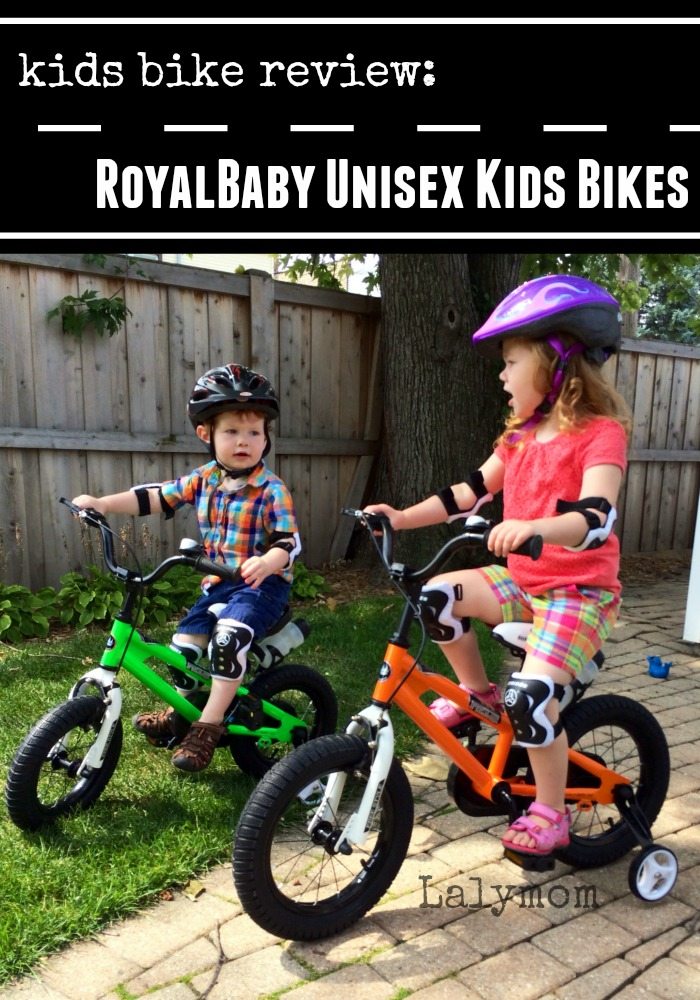 A kid testing the Royal Baby Freestyle model on a paved path, demonstrating its stable, easy-to-maneuver design.
Image source: Lalymom blog review
A kid testing the Royal Baby Freestyle model on a paved path, demonstrating its stable, easy-to-maneuver design.
Image source: Lalymom blog review
Final Verdict
Royal Baby bikes stand out in the crowded kids’ bike market for their balance of affordability, durability, and safety features that meet global standards, all wrapped in kid-friendly designs that make riding feel like play instead of a chore. For parents seeking a first bike for a toddler, the Honey & Bear model offers unbeatable value, with adjustable components that grow with your child for up to 2 years of use. For families who take regular bike rides on varied terrain, the Freestyle model’s suspension and lightweight aluminum frame make it a versatile, long-lasting pick. For older kids aged 7 and up who are ready for more challenging rides, the Space Shuttle’s gears and lightweight build make it a great stepping stone to adult-sized bikes.
No matter which model you choose, Royal Baby’s 1-year warranty and consistent safety testing give parents peace of mind that their child is riding a reliable, well-built bike. To make the most of your purchase, measure your child’s inseam first to pick the right wheel size, and budget an extra $15-$30 for a more comfortable seat if you go with an entry-level steel model for longer rides. For more tips on picking safe, age-appropriate outdoor gear for your kids, check out our guide to picking the right winter outerwear for growing kids.

Sophia Linda is a freelance writer and Certified Health Coach based in the Newbury Park, CA. Passionate about healthy living, she focuses on helping families stay active and connected to the outdoors. Together with her husband and their three young children, Sophia spends much of her time traveling, hiking, and camping. Her work has been featured on the bestbabycart blog, and she brings a practical, real-world perspective to reviewing baby products for parents.