
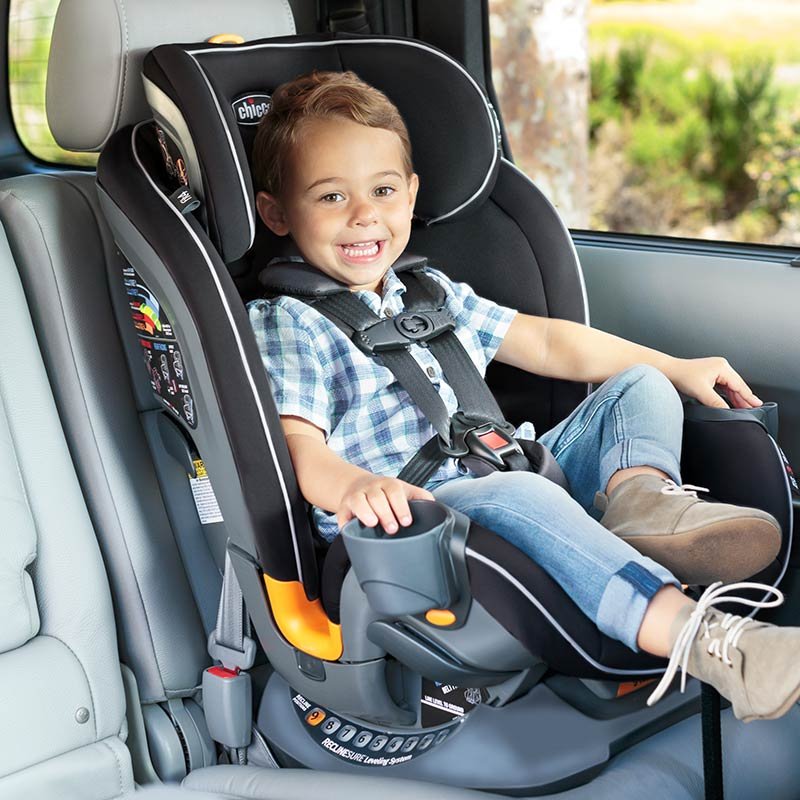
As a parent, your child’s safety is non-negotiable, especially when it comes to car travel. If you’re wondering, “What age do you face an infant car seat forward?” you’re not alone: conflicting advice from family, outdated social media posts, and vague legal guidelines can make this milestone feel overwhelming. Many parents feel pressure to switch early for convenience, or guilt for waiting too long, but the right timing comes down to evidence-based safety standards, not peer opinion or arbitrary age cutoffs.
This 2026 updated guide aligns with the latest guidance from the American Academy of Pediatrics (AAP) and the National Highway Traffic Safety Administration (NHTSA) to answer all your questions, dispel common myths, and help you make the safest choice for your child. We’ll cover legal requirements, crash safety data, seat type comparisons, and common mistakes to avoid, so you can feel confident in your decision.
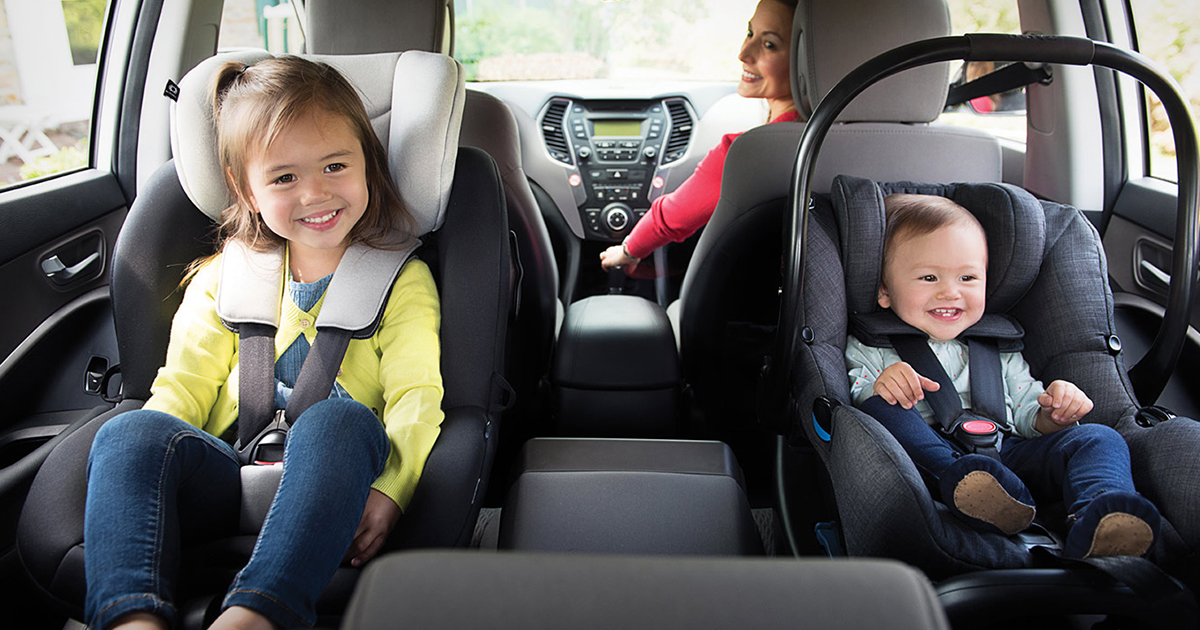 Proper rear-facing positioning cradles the head, neck, and spine for maximum crash protection.
Image source: safewise.com
Proper rear-facing positioning cradles the head, neck, and spine for maximum crash protection.
Image source: safewise.com
2026 Legal Requirements vs. Safety Best Practices
Federal and State Car Seat Laws
In the U.S., car seat laws are set at the state level, with federal minimum standards for seat manufacturing. Most states require children to remain rear-facing until at least age 2, with stricter laws in states like California, New York, and New Jersey mandating rear-facing until age 2 or 40 pounds, whichever comes first. For a state-by-state breakdown of legal requirements, refer to the official NHTSA child seat guidelines.
It’s critical to remember that legal minimums are just that: minimums. They represent the lowest acceptable standard, not the safest option for your child. If you travel across state lines, you must follow the stricter of the two states’ laws.
Manufacturer Guidelines Trump All Rules
Every car seat has specific height and weight limits printed on a sticker on the seat shell, and these are the only rules you need to follow when deciding when to switch. Infant carriers with carrying handles often have rear-facing limits of 30-35 pounds and 30-35 inches, while convertible rear-facing seats can accommodate children up to 40-50 pounds and 40-49 inches. Age is never a factor in these limits: a small 3-year-old may still fit rear-facing in a convertible seat, while a large 2-year-old may have outgrown their infant carrier.
Why Rear-Facing Is Non-Negotiable for Young Kids
Crash Science Explained Simply
The primary reason rear-facing seats are so much safer for young children comes down to developmental biology: kids under 4 have underdeveloped neck muscles and soft, pliable vertebrae that haven’t fully hardened. In a frontal crash (the most common and severe type of collision), a forward-facing child’s head is thrown forward at 2-3 times the force of the impact, putting extreme stress on the spine and spinal cord. A child’s spinal cord can stretch up to 2 inches before the vertebrae stop it, which can cause fatal spinal injury or paralysis.
Rear-facing seats cradle the child, distributing crash force evenly across the back, head, and buttocks, rather than concentrating it on the neck and chest. Per NHTSA data, rear-facing seats reduce the risk of fatal injury by 71% for children under 2. The American Academy of Pediatrics (AAP), the leading U.S. pediatric medical association, recommends keeping children rear-facing for as long as possible, up to the maximum limits of their car seat, which for most kids means until at least age 3, and often longer. You can review their full 2026 car seat safety guidelines for detailed, evidence-based recommendations.
Common Myths About Rear-Facing Limits
Two persistent myths push parents to switch to forward-facing too early:
- “My child’s legs touch the car seat, so it’s unsafe/uncomfortable”: Children are far more flexible than adults, and can sit cross-legged or with their legs bent comfortably rear-facing. There is no evidence that legroom issues cause injury, and most kids do not complain about this position unless an adult mentions it first.
- “They’ll get car sick rear-facing”: Motion sickness is caused by inner ear development and conflicting sensory signals, not seat orientation. Switching to forward-facing will not reduce car sickness, but will reduce their crash protection.
Exactly When to Switch to Forward-Facing: No Guesswork Required
The short answer: there is no magic age. The only valid reasons to switch are when your child exceeds the rear-facing limits of their current seat.
The Only Signs Your Child Is Ready to Transition
Ignore pressure from family or other parents to switch by a certain age. Your child is only ready for forward-facing when all of the following are true:
- The top of their head (measured with no bulky hat or hairstyle) is within 1 inch of the top of the car seat shell
- They exceed the maximum weight limit listed on the seat’s manufacturer sticker
- Their shoulders are above the highest available harness slot for rear-facing use
If your child fits within all three of these limits, keep them rear-facing. There is no benefit to switching early, and significant safety risks.
Why Waiting Longer Is Always Better
There is no downside to extended rear-facing. Many parents worry their child will be bored or uncomfortable, but in practice, most young children prefer the reclined, supported position of rear-facing, especially on long trips. Many parents find extended rear-facing makes road trips easier, as the reclined position lets young children nap more comfortably – check our guide to nap-friendly travel tips for stress-free family trips.
Types of Forward-Facing Car Seats to Choose From
Once your child outgrows their rear-facing seat, you’ll need to select a forward-facing option that fits their size and your budget. There are three main types to choose from:
Convertible Seats (Dual-Mode)
These seats start as rear-facing for infants, then switch to forward-facing with a 5-point harness as your child grows. Most have forward-facing weight limits of 40-65 pounds, with some models supporting up to 70 pounds. They are a cost-effective option for families who want to use one seat for multiple years.
Combination Seats (Harness + Booster)
These seats are forward-facing only, with a 5-point harness that can be removed to convert to a belt-positioning booster for older kids. Harness limits usually range from 40-80 pounds, with booster limits up to 100-120 pounds. They are ideal for kids who have outgrown their infant carrier but aren’t yet tall enough for a standard booster.
All-in-One (3-in-1) Seats
These versatile seats cover all growth stages: rear-facing for infants, forward-facing with a harness for toddlers, and booster mode for older kids, with total weight limits up to 120 pounds. They are the most expensive upfront option, but eliminate the need to purchase multiple seats over time, making them a smart pick for families budgeting for long-term baby gear investments.
Forward-Facing Only Infant Seats
Some infant carriers are designed for forward-facing use only after a child outgrows the rear-facing mode, with weight limits up to 40 pounds. These are less common than convertible models, but are a good option for families who want to keep the carrying handle functionality for travel.
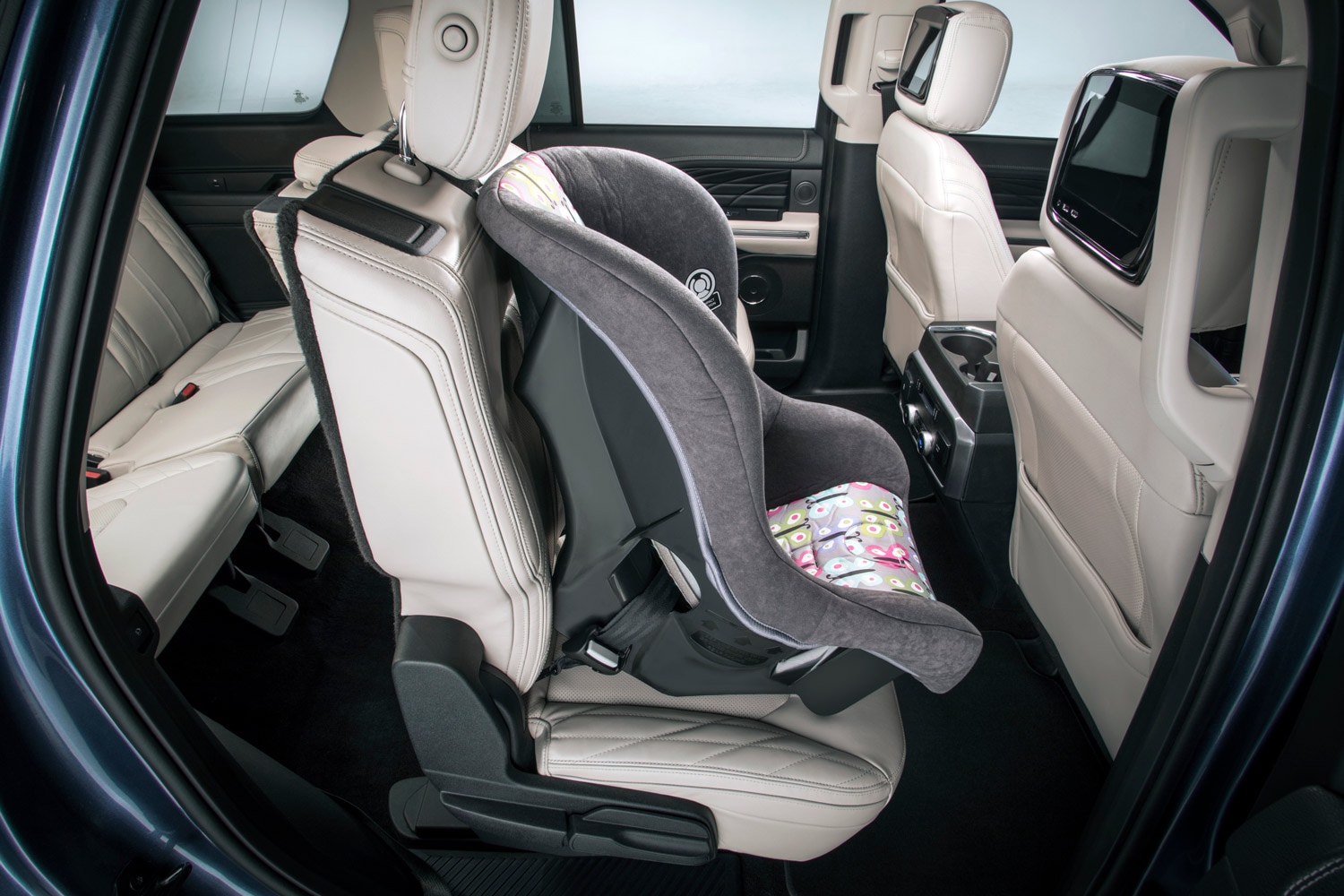 Forward-facing seats are only used once a child exceeds all rear-facing height and weight limits.
Image source: capitalone.com
Forward-facing seats are only used once a child exceeds all rear-facing height and weight limits.
Image source: capitalone.com
Critical Safety Tips for Forward-Facing Use
Even the best car seat can’t protect your child if it’s installed or used incorrectly. Follow these guidelines to ensure maximum safety:
Installation Best Practices
- Install the seat in the backseat, in the middle position if possible (this is the farthest spot from any side impact or front-end collision)
- Use either your vehicle’s LATCH system or seatbelt to secure the seat, never both unless your car seat’s manual explicitly allows it
- The seat should move less than 1 inch side to side or front to back when you push firmly on the base
- Never place a forward-facing seat in the front passenger seat if the airbag is active: airbag deployment can cause fatal head injuries to children
- For a free, professional installation check, use the NHTSA’s car seat inspection locator to find a certified Child Passenger Safety Technician (CPST) near you – NHTSA estimates 75% of car seats are installed incorrectly, and a 10-minute inspection can catch dangerous errors.
Harness Fit Rules
- Position the harness straps at or above your child’s shoulders (not below, as this can cause upper body injury in a crash)
- The straps should be snug enough that you cannot pinch any horizontal slack at the chest
- The chest clip should be level with your child’s armpits, never their stomach or neck
- Always remove bulky outerwear (winter coats, snowsuits) before buckling your child in, as thick fabric creates dangerous slack in the harness. For safe cold-weather layering that keeps your child warm without compromising safety, refer to our guide to safe cold-weather layering.
- Never add extra padding, seat protectors, or aftermarket accessories unless they are crash-tested and approved by your car seat’s manufacturer: these can interfere with the seat’s performance in a collision.
Travel Comfort and Safety
Long car rides are far less stressful when kids are comfortable: keep extra snacks, toys, and road trip comfort essentials within reach, and never remove the 5-point harness even for short trips, as 75% of crashes occur within 10 miles of home. Check the harness fit every 3 months as your child grows, and adjust the straps as needed.
 Always position the harness at or above your child’s shoulders for forward-facing use.
Image source: todaysparent.com
Always position the harness at or above your child’s shoulders for forward-facing use.
Image source: todaysparent.com
Common Costly Mistakes to Avoid
Even well-meaning parents make these errors, which can put their child at risk:
- Switching too early for convenience: Many parents switch to forward-facing because their child complains about legroom, or because other parents say their kids were forward-facing at 1 with no issues. This is survivorship bias: rear-facing is 5x safer for kids under 2, and there is no benefit to switching early.
- Incorrect installation or harness use: The most common error is a loose seat or improperly positioned harness. Always read your car seat’s manual, and get a free CPST inspection to confirm your install is correct.
- Ignoring seat expiration or damage: Car seats expire 6-10 years after the manufacture date (check the sticker on the seat, not the purchase date), as plastic degrades over time from sun, heat, and temperature swings, even if the seat looks perfect. Any seat that has been in a moderate or severe crash, even with no visible damage, should be replaced immediately, as structural integrity may be compromised. Using a damaged seat also increases the risk of rare car seat ejection incidents during high-speed collisions.
- Using aftermarket, unapproved accessories: Seat protectors, extra padding, and harness covers not approved by your seat’s manufacturer can interfere with the seat’s crash performance, and should never be used.
- Skipping the booster phase: Kids must stay in a forward-facing 5-point harness seat until they reach the maximum weight/height limit for that seat, usually at least 4 years old and 40 pounds. Moving to a booster too early means the seatbelt will not fit properly across their chest and hip, increasing injury risk.
When to Transition to a Booster Seat
Once your child outgrows the forward-facing harness limits of their seat (usually 65-80 pounds, depending on the model), they can move to a belt-positioning booster. Kids should remain in a booster until they are 4’9” tall, usually between 8 and 12 years old, so the seatbelt fits snugly across the shoulder (not the neck) and hip (not the stomach). Never move a child to a regular seatbelt before they reach this height, as ill-fitting seatbelts can cause severe internal injury in a crash.
Frequently Asked Questions
Can my child’s legs touching the car seat be a reason to switch to forward-facing?
No, this is one of the most common myths about car seat transitions. Children are far more flexible than adults, and can sit cross-legged or with their legs bent comfortably rear-facing. There is no evidence that legroom issues cause injury, and rear-facing remains far safer regardless of leg position.
Is it safe to forward face before age 2?
While some states allow forward-facing at age 1, it is not recommended by safety experts. Rear-facing reduces fatal injury risk by 71% for children under 2, and there is no valid reason to switch before your child exceeds the rear-facing limits of their seat.
What are the weight requirements for forward-facing seats?
Most forward-facing seats with a 5-point harness have a minimum weight limit of 20 pounds, but you should only switch once your child exceeds the rear-facing limits of their current seat, not just hits the forward-facing minimum. Many kids stay rear-facing until 30-50 pounds, depending on their seat.
Can I use a secondhand car seat?
Only if you can verify the seat has never been in a crash, has not expired, has all original parts, labels, and manuals, and has not been recalled. You can check for recalls on the official NHTSA recall lookup tool, and never use a seat with missing parts or unknown history.
What if my child gets car sick rear-facing?
Car sickness is caused by inner ear development and conflicting sensory signals, not seat orientation, so switching to forward-facing will not fix it. Instead, try cracking a window for fresh air, avoiding heavy meals before travel, or using over-the-counter motion sickness remedies approved by your pediatrician.
Final Takeaways
The question “What age do you face an infant car seat forward?” has no one-size-fits-all answer, because the right timing depends on your child’s size and your car seat’s limits, not their age. The safest choice is always to keep your child rear-facing for as long as possible, up to the maximum height and weight limits of their seat, which for most kids means until at least age 3, and often 4 or older.
Always follow your car seat’s manufacturer guidelines over peer advice or outdated recommendations, get a free professional installation check to ensure your seat is secure, and replace any expired or damaged seats immediately. Your child’s safety on the road is worth the small inconvenience of a longer rear-facing phase.
For more evidence-based baby gear and safety guides to keep your little one protected at every stage, browse our full library of trusted parenting resources.

Emma Grace is a devoted mother and passionate content writer at BestBabyCart.com. With firsthand parenting experience and a love for research, she creates helpful guides and honest reviews to support parents in choosing the best for their babies. Her goal is to make parenthood easier, one article at a time.