

If you’ve ever come home to a puddle on the floor from your senior cat, or worried about your feline friend licking at post-surgery incision sites, you’ve likely wondered: can cats wear diapers? The short answer is yes — for many cats with medical needs, temporary mobility issues, or stress-related accidents, well-fitted, vet-approved diapers are a safe, humane management tool that keeps both your pet and your home clean and comfortable. This guide covers everything pet owners need to know about selecting, using, and maintaining cat diapers, plus vet-backed guidance on when they’re appropriate and how to avoid common pitfalls.
Why Would a Cat Need a Diaper?
Diapers are not a novelty item for cats — they serve a clear medical or practical purpose for felines struggling with bathroom control or wound protection. Understanding the root cause of your cat’s needs is the first step to determining if a diaper is the right choice, and consulting your veterinarian is always recommended before starting diaper use.
Medical Conditions
Chronic health issues are the most common reason cats need diapers. Urinary incontinence, often linked to age-related muscle weakness, urinary tract infections, kidney disease, or diabetes, affects an estimated 1 in 5 cats over 12 years of age, per clinical veterinary observations. Neurological conditions, advanced arthritis that makes climbing into a litter box painful, and cognitive decline (similar to dementia in humans) that causes cats to forget litter box location can also lead to accidents. For detailed veterinary guidance on feline urinary incontinence, see the Cornell Feline Health Center’s resources.
Post-Surgery Recovery
After procedures like spay/neuter, orthopedic surgery, or bladder surgery, cats may experience temporary loss of bladder or bowel control, or need to prevent licking at incision sites to avoid infection. Diapers protect surgical wounds from dirt and bacteria, and catch any accidental waste during the recovery period. In practice, most vets recommend using diapers for 7-14 days post-op, depending on the procedure, to reduce infection risk.
Temporary Situations
Even fully healthy cats may need a diaper for short-term scenarios: long car rides, vet visits, moves to a new home, or periods of extreme stress that cause litter box avoidance. Disposable diapers are ideal for these short use cases, as they require no laundering and can be thrown away after use.
Types of Cat Diapers
Not all cat diapers are built the same — choosing the right type for your cat’s needs, use case, and skin sensitivity will make a dramatic difference in comfort and effectiveness.
Disposable Diapers
Disposable diapers are designed for single use, with built-in leak guards and absorbent cores to catch waste. They are best for short-term use (1-7 days) such as post-op recovery, vet trips, or temporary stress-related accidents. Most are scented to reduce odor, and come in a wide range of sizes to fit most cat body types.
- Pros: No laundering required, highly absorbent, easy to travel with
- Cons: Higher long-term cost for chronic use, generate more household waste, some scented options may irritate sensitive skin
Reusable Fabric Diapers
Reusable diapers are made of soft, washable fabric (usually cotton or polyester blends) with adjustable tabs for a custom fit. They are the most cost-effective option for cats needing long-term diaper use (months or years), and are often fragrance-free, making them ideal for cats with allergies or sensitive skin. For long-term diaper use, reusable fabric options are a cost-effective, eco-friendly pick, much like reusable cloth diapers for infants which save money over disposable options.
- Pros: Cost-effective over time, breathable, adjustable for a perfect fit, eco-friendly
- Cons: Requires regular laundering, may be less absorbent than high-end disposables for heavy incontinence
Custom-Made Diapers
For cats with unique body types — such as hairless Sphynx cats, cats with amputations, obese cats that don’t fit standard sizes, or cats with medical devices that need to be accommodated — custom-made diapers are the best option. Many pet supply brands offer made-to-order options based on your cat’s exact measurements, and DIY patterns are available for owners who are handy with sewing.
| Diaper Type | Ideal Use Case | Pros | Cons |
|---|---|---|---|
| Disposable | Short-term use (post-op, vet trips, travel) | No laundering needed, high absorbency, easy to use | Higher long-term cost, generates waste, may irritate sensitive skin |
| Reusable Fabric | Long-term chronic use (incontinence, senior care) | Cost-effective over time, breathable, adjustable, eco-friendly | Requires regular washing, less absorbent for heavy accidents |
| Custom-Made | Unique body types (amputations, hairless breeds, obesity) | Perfect fit, no leaks, can accommodate medical devices | Higher upfront cost, longer lead time for delivery |
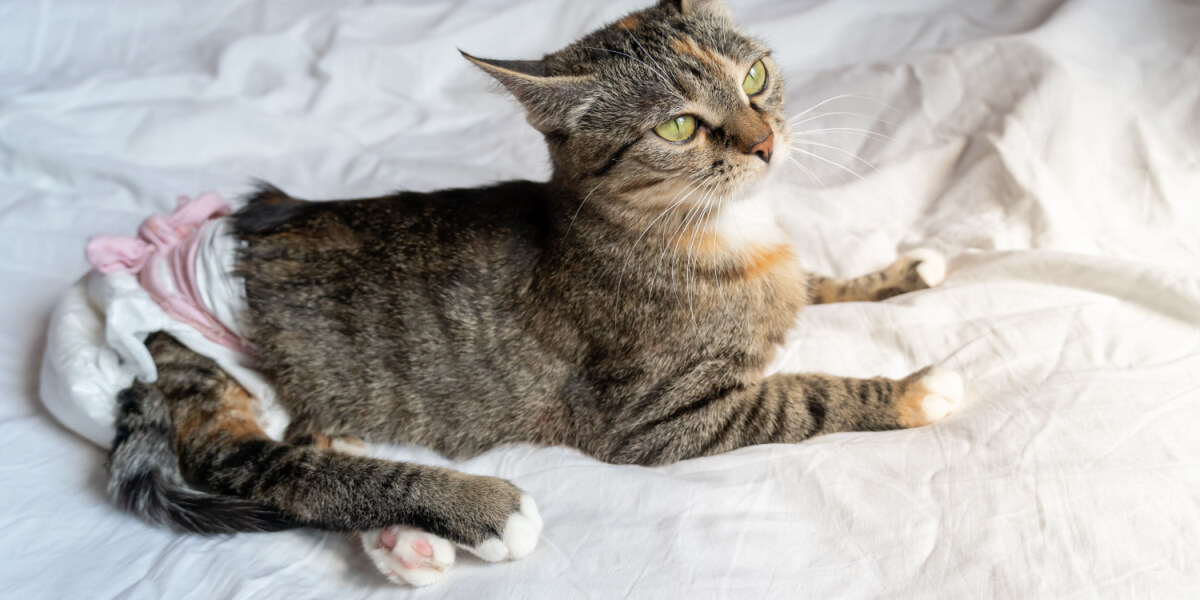 This adjustable, leak-proof reusable diaper is designed for senior cats with urinary incontinence, featuring breathable fabric to reduce skin irritation. Credit: cats.com
How to Choose the Right Size and Fit
A poorly fitting diaper is the top cause of cat discomfort, leaks, and resistance to wearing diapers. Unlike dogs, cats have varied body shapes, so measuring your cat accurately is critical.
How to Measure Your Cat Correctly
Getting the right fit is just as important as picking the correct size for baby essentials — a too-tight diaper will cause chafing and restrict movement, just like ill-fitting baby clothing. To get accurate measurements:
- Measure your cat’s waist circumference 1-2 inches behind their front legs, using a soft flexible measuring tape.
- Measure the circumference of their tail base, where the tail meets the body.
- Note their current weight as a secondary reference, as most brand size charts include weight ranges.
Fit Check Guidelines
Once you have the diaper on, perform a quick fit check:
- You should be able to fit 1-2 fingers comfortably under the waistband when it is secured.
- There should be no gaps around the leg holes or tail hole, which cause leaks.
- The diaper should not slip or twist when your cat walks, runs, or grooms themselves. If your cat is between two sizes, size up and use the adjustable tabs to create a snug fit, rather than buying a size too small that will constrict movement.
Common Sizing Mistakes to Avoid
A common error new pet owners make is buying a size too small to prevent leaks, which causes chafing, skin irritation, and makes cats more resistant to wearing diapers over time. If you notice red marks on your cat’s skin after removing the diaper, it is too tight. For breeds with unusual body shapes (like Munchkins, Maine Coons, or Sphynx cats), prioritize brands with extra-wide adjustable tabs or opt for a custom-sized option to avoid fit issues.
Step-by-Step Guide to Putting a Diaper on Your Cat
Cats are creatures of habit, and introducing a new, restrictive item like a diaper requires patience and positive reinforcement to avoid stress. Most cats adjust to wearing a diaper within 3-5 days of gradual, reward-based introduction, though highly anxious or independent cats may take longer.
Pre-Application Prep
Choose a calm time to put the diaper on, such as right after a meal or play session when your cat is relaxed and tired. Have high-value treats (like wet food or freeze-dried chicken) and a favorite toy on hand to create positive associations. If your cat is extremely resistant to handling, use the "purrito" method: gently wrap your cat in a soft towel, leaving their hindquarters exposed, to restrict movement without causing stress or injury.
Application Steps
- Lay the diaper flat on a clean surface, with the adhesive tabs facing up and the tail hole aligned.
- Gently guide your cat’s tail through the tail hole, being careful not to pull or tug on their fur.
- Lift your cat’s hind legs slightly, and pull the front of the diaper up between their legs.
- Secure the adhesive tabs on your cat’s lower back, adjusting for a snug but not tight fit.
- Check that the leg holes and waistband are not digging into your cat’s skin, and that there are no gaps around the tail.
Acclimating Your Cat to Wearing a Diaper
The first time your cat wears a diaper, keep the session short (5-10 minutes) and reward them heavily with treats and praise. Gradually increase wear time by 10-15 minutes each day, as long as your cat remains calm. Introduce the diaper gradually over a few days, letting your cat sniff and explore it first, much like easing a baby into a new sleep routine to reduce stress and avoid negative associations. If your cat tries to remove the diaper or hides, go back to shorter sessions and increase rewards until they associate the diaper with positive experiences.
For a visual walkthrough of the application process, especially for cats that resist handling, this short tutorial demonstrates the gentle purrito wrap method to keep both you and your cat calm: https://www.youtube.com/watch?v=pepdYHdFHQU
Maintaining Hygiene and Preventing Health Complications
Proper hygiene is non-negotiable when using cat diapers, as prolonged exposure to waste can cause severe skin irritation, infections, and urinary tract issues. Follow these guidelines to keep your cat healthy:
How Often to Change Diapers
Change disposable diapers every 4-6 hours, or immediately if they are wet or soiled. Reusable diapers should be changed on the same schedule, then laundered promptly to avoid bacterial buildup. Never leave a diaper on for more than 8 hours at a time, even if it appears dry — the AVMA recommends limiting restrictive pet garments to short, supervised periods to prevent irritation and overheating, especially in brachycephalic breeds like Persians.
Cleaning Your Cat’s Skin Properly
Each time you change the diaper, use fragrance-free, hypoallergenic pet wipes to gently clean your cat’s genital and anal area. Avoid human wipes with alcohol, fragrances, or harsh chemicals, which can irritate sensitive skin. Pat the area completely dry with a soft towel before putting on a new diaper, as moisture buildup is the leading cause of diaper rash in cats. If you notice mild redness, apply a thin layer of vet-approved zinc oxide barrier cream to protect the skin.
Caring for Reusable Diapers
Pre-rinse soiled reusable diapers immediately after removal to remove solid waste, then wash separately from other household laundry using a mild, fragrance-free detergent. Avoid fabric softener and dryer sheets, as they can leave residues that irritate your cat’s skin and reduce the diaper’s absorbency. Air dry or tumble dry on low heat to preserve the fabric’s elasticity.
 Disposable cat diapers are ideal for short-term use, such as post-operative recovery or vet visits, with built-in leak guards to protect your home from accidents. Credit: www.hartz.com
Common Challenges and Troubleshooting
Even with the best preparation, you may encounter hurdles when introducing diapers to your cat. These are the most common issues and how to solve them:
Behavioral Resistance
Cats may resist wearing diapers at first, showing signs of distress, trying to remove the diaper, or hiding. This is almost always a sign of poor fit, discomfort, or negative association. First, double-check that the diaper is not too tight or rubbing against sensitive skin. Then, increase positive reinforcement: offer high-value treats every time you put the diaper on, and pair diaper time with play or affection your cat loves. If resistance persists, try a different brand with a different fastening system (some cats prefer snap closures over adhesive tabs) or a softer fabric.
Skin Irritation
Redness, rashes, hair loss, or frequent scratching/grooming of the diaper area are signs of skin irritation. First, rule out a poor fit by adjusting the tabs or sizing up. Change diapers more frequently to reduce moisture exposure, and switch to a fragrance-free, breathable fabric diaper if you are using disposable scented options. If irritation persists after 24 hours, stop using the diaper and consult your veterinarian, as it may be a sign of an allergy or secondary infection.
Leaks
Leaks are almost always caused by poor fit or incorrect placement. Ensure the tail hole is aligned correctly with your cat’s tail, and that the waistband is snug enough that it does not slip when your cat moves. If leaks persist, try a diaper with higher absorbency, or add a disposable booster pad inside the diaper for extra protection.
Chewing or Removing the Diaper
Some cats will chew at their diaper to remove it. Apply a small amount of pet-safe bitter spray to the outside of the diaper to deter chewing, or layer a cat onesie over the diaper to block access. If your cat continues to chew, consult your vet to rule out anxiety or discomfort as the root cause.
Alternatives to Cat Diapers
Diapers are not the right solution for every cat, especially cats that are fully continent but have litter box aversion issues. These alternatives may work better for your situation:
Enhanced Litter Box Setups
For cats with mobility issues that make climbing into a standard litter box difficult, switch to a low-entry litter box, place litter boxes on every floor of your home, and use low-dust, soft-clumping litter that is gentle on sensitive paws. Adding non-slip mats around the box can also help cats with arthritis maintain traction.
Absorbent Pet Pads
For cats that have occasional accidents in common areas, lay down absorbent pet pads or puppy pads in their favorite resting spots. These are easy to replace, require no handling of your cat, and are far less stressful for cats that hate wearing restrictive garments.
Cat Onesies and Bodysuits
Cat-specific onesies cover the hindquarters to catch light accidents, and are far less restrictive than diapers for cats that hate the feeling of a waistband. They are also ideal for post-op use, as they prevent cats from licking at incision sites without constricting the body. Opt for breathable, stretchy fabric for maximum comfort.
Medical Management
For incontinence caused by treatable conditions like UTIs, diabetes, or hormone imbalances, vet-prescribed medication can reduce or eliminate accidents entirely, making diapers only a temporary solution while the underlying issue is treated. For stress-related accidents, pheromone diffusers, additional litter boxes, and reduced household stress can often eliminate the need for diapers entirely.
What Veterinarians Recommend
Veterinarians agree that cat diapers are a useful management tool, but they should only be used under professional guidance to ensure they are safe and appropriate for your cat’s needs. Key vet recommendations include:
- Rule out underlying conditions first: Incontinence is often a symptom of treatable health issues, so a full veterinary exam is required before starting diaper use.
- Use diapers as a management tool, not a cure: Diapers keep your home clean and your cat comfortable, but they do not treat the root cause of accidents or mobility issues.
- Prioritize fit and comfort over cost: A cheap, ill-fitting diaper will cause more stress and health issues than a properly fitted, higher-quality option.
- Monitor skin closely: Check your cat’s skin for redness, sores, or hair loss every time you change the diaper, and stop use immediately if you notice irritation.
- Avoid long-term use without oversight: Prolonged diaper use without veterinary supervision can lead to skin breakdown, urinary tract issues, or behavioral stress.
After surgery, set up a quiet, confined recovery space for your cat, similar to prepping a calm nursery for a new baby to reduce stress and prevent them from jumping or moving too much and irritating incision sites.
 Custom cat diapers are tailored to unique body types, such as hairless Sphynx cats or cats with mobility impairments, to ensure a secure, leak-proof fit. Credit: petparentsbrand.com
Frequently Asked Questions
Is it okay to put a diaper on my cat?
Yes, diapers are safe and appropriate for cats with medical needs, post-op recovery requirements, or temporary accident risks, as long as they fit properly and are changed regularly. Always consult your veterinarian before starting diaper use to rule out underlying health issues.
How long can cats wear a diaper at a time?
Most cats can wear a diaper safely for 4-6 hours at a time, as long as it is changed promptly when wet or soiled. Never leave a diaper on for more than 8 hours at a time, even if it appears dry, to prevent moisture buildup and skin irritation.
Can cats wear human diapers instead of pet-specific ones?
No, human diapers are not designed for feline anatomy, and will often be too loose or too tight, leading to leaks, chafing, and discomfort. Pet-specific diapers have tail holes and shaped designs to fit a cat’s body correctly, and use materials that are safe for animal skin.
Can a cat wear a diaper overnight?
Cats can wear a diaper overnight if needed for incontinence or post-op recovery, but you should set an alarm to check and change it halfway through the night to avoid prolonged moisture exposure. Opt for a high-absorbency diaper designed for overnight use, and monitor your cat closely for signs of discomfort in the morning.
Do cat diapers prevent a cat from using the litter box?
No — cat diapers are designed to catch waste after it is expelled, not block elimination. Most cats can still use the litter box while wearing a diaper, though you may need to adjust the diaper slightly to avoid obstruction. If your cat is fully continent, diapers are not necessary, and you should focus on addressing the root cause of any accidents with your veterinarian.
How can I tell if my cat's diaper is too tight?
Signs of a too-tight diaper include chafing or hair loss around the waist or leg holes, redness or sores on the skin, difficulty walking, frequent attempts to remove the diaper, or leaks around the leg openings. You should be able to fit 1-2 fingers comfortably under the waistband when the diaper is secured. If you notice any of these signs, adjust the tabs to loosen the fit, or size up to the next size.
Opt for diapers made of soft, breathable fabric to reduce irritation, just as you would selecting gentle materials for a baby’s wardrobe to avoid sensitive skin reactions.
Final Verdict: Are Cat Diapers Right for Your Pet?
Cat diapers are a practical, compassionate tool for managing accidents, protecting surgical sites, and supporting senior cats with mobility or cognitive challenges. While they aren’t a replacement for veterinary care for underlying health conditions, they can dramatically reduce stress for both you and your pet when used correctly. Prioritize a proper fit, gradual acclimation, and consistent hygiene to keep your cat comfortable and healthy. If you’re considering diapers for your feline friend, schedule a checkup with your veterinarian first to rule out treatable underlying conditions, and opt for a high-quality, properly fitted option to keep your companion safe and content.

Emma Grace is a devoted mother and passionate content writer at BestBabyCart.com. With firsthand parenting experience and a love for research, she creates helpful guides and honest reviews to support parents in choosing the best for their babies. Her goal is to make parenthood easier, one article at a time.