
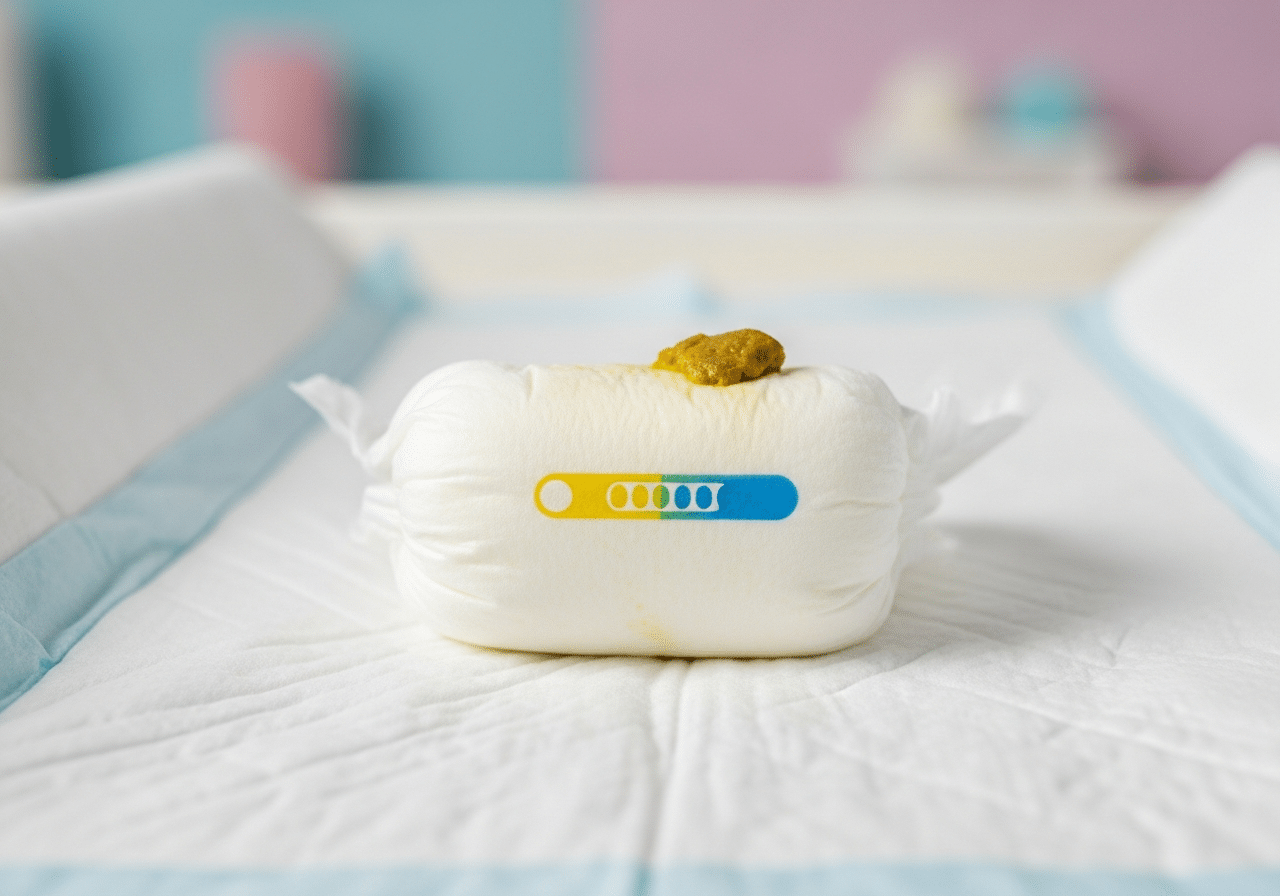
For new and seasoned caregivers alike, guessing whether a baby’s diaper is wet is a universal, often frustrating challenge. You don’t want to wake a sleeping infant for a pointless check, or fumble with a full diaper change in public only to find it’s still dry. Wetness indicators — the small strips on the front of most modern disposable diapers — solve this problem with a simple, reliable color shift. Most dry indicators are pale yellow, turning blue or green when exposed to urine, but there’s far more to this small feature than meets the eye. This guide breaks down exactly how these indicators work, brand-specific color differences, surprising little-known facts, and how to use them to make diapering easier for you and more comfortable for your baby.
How Do Diaper Wetness Indicators Work?
The Science Behind the Color Shift
Wetness indicators rely on pH-sensitive dyes embedded in the top lining of the diaper, just below the outer shell. Urine is slightly acidic, with a typical pH between 4.5 and 8 depending on your baby’s diet and hydration levels. When urine soaks through the diaper’s superabsorbent core and reaches the indicator strip, the acid in the urine triggers a chemical reaction in the dye, causing it to shift from its dry pale yellow hue to a visible blue or green. This reaction is fast, usually completing in 10 to 30 seconds, and uses only small amounts of non-toxic, FDA-approved dyes that pose no risk to baby skin. You can also read our guide on best diapers for chunky babies.
In practice, most caregivers find that wetness indicators eliminate the guesswork of checking for minor dampness, reducing unnecessary full diaper checks by a noticeable margin for most families. A common mistake new parents make is assuming the indicator will also react to solid waste, but it only triggers for liquid urine that has soaked through the diaper core.
Placement And What Indicators Detect
Indicators are almost always placed on the front waistband of the diaper, a spot that is easy to check without fully undressing your baby, even when they’re wiggling or sleeping. This placement also ensures the indicator only reacts to urine that has fully saturated the core, not surface moisture from a small, quick leak that hasn’t soaked through yet. You can also read our guide on best diaper wipe warmers.
It’s important to note that wetness indicators do not detect solid waste. Even if the indicator is still in its dry yellow state, you should always do a quick visual and smell check for poop during routine changes, as solid waste can cause skin irritation even in small amounts.
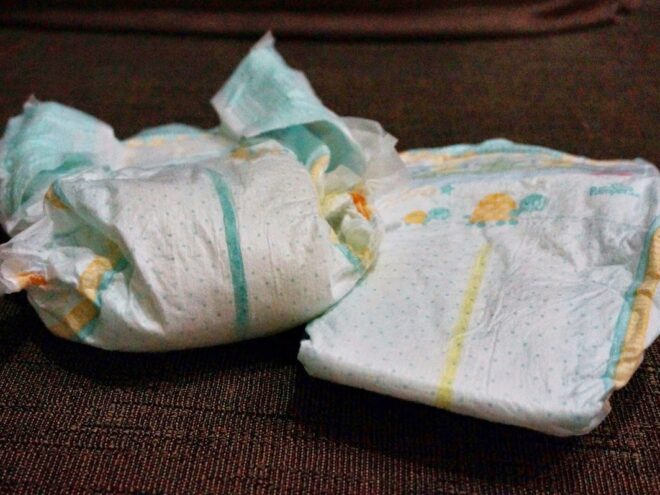 Wetness indicators are embedded in the top lining of the diaper for easy visibility without full undressing.
Credit: tulamama.com
Wetness indicators are embedded in the top lining of the diaper for easy visibility without full undressing.
Credit: tulamama.com
Standard Wetness Indicator Colors By Brand
While most dry indicators are a uniform pale yellow, the wet shift color varies slightly by brand, with blue and green being the most common. A small number of budget brands use pink as their wet indicator color, but this is rare. You can also read our guide on can i put diaper rash cream on my face.
| Brand | Dry Indicator Color | Wet Indicator Color | Notes |
|---|---|---|---|
| Pampers (standard lines) | Pale yellow | Bright blue | Visible even in low light for midnight checks |
| Huggies (standard lines) | Pale yellow | Green | Paired with playful printed designs that become more visible when wet |
| Luvs | Pale yellow | Bluish-green | Budget-friendly option with a clear, easy-to-spot shift |
| Honest | Pale yellow | Bright blue | Uses plant-based dyes for sensitive skin |
| Seventh Generation | Pale yellow | Light blue | Biodegradable line with natural indicator dyes |
For premium and eco-focused lines, the shade of blue or green may be slightly lighter to align with natural dye formulations, but the shift is always easy to spot with a quick glance.
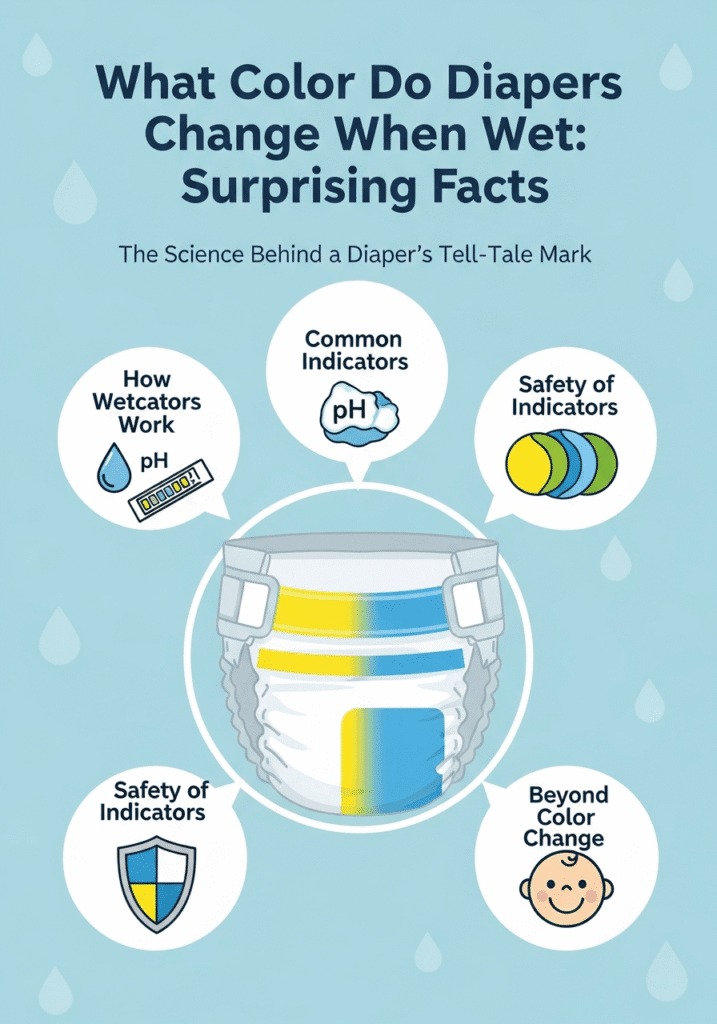 Dry indicators are typically pale yellow, shifting to blue or green when exposed to urine.
Surprising Facts About Wetness Indicators
The title of this guide promises surprising facts, and wetness indicators have more quirks and little-known details than most caregivers realize:
- They don’t detect solid waste: The pH reaction only triggers for liquid urine. A dry indicator does not mean your baby’s diaper is clean, so always check for poop during changes.
- Indicators can fade back to dry: If a diaper is only lightly wet and not fully saturated, the indicator may fade back to its pale yellow state after 2 to 4 hours, which can confuse new caregivers who assume a color change means the diaper is permanently full.
- They’re safe even for chewing babies: All wetness indicators used by major FDA-compliant brands are made with non-toxic, skin-safe dyes embedded in the top lining, so they pose no risk even if your baby chews on the diaper waistband.
- They’re a relatively modern innovation: Wetness indicators were first added to mass-market disposable diapers in the late 20th century, an innovation that cut down on unnecessary nighttime diaper changes for millions of families.
- Cloth diapers now have indicators too: Reusable cloth diapers traditionally did not include wetness indicators, but many brands now sell separate silicone strips that shift color when exposed to moisture and reset to their original color when washed, combining convenience with sustainability.
How To Use Wetness Indicators Effectively
Wetness indicators are a simple tool, but using them correctly can make diapering even easier and help protect your baby’s skin:
- Check the indicator during every routine diaper change, not just when you suspect wetness, to get a baseline for how often your baby wets and what their normal indicator pattern looks like.
- Never rely solely on the indicator for hygiene checks: always inspect the diaper for solid waste, even if the indicator is still dry.
- For overnight checks, use a dim nightlight to avoid fully waking your baby; the color shift is visible even in low light for most major brands designed for extended wear.
- If the indicator has not changed but the diaper feels heavy, smells damp, or your baby is fussy, the core may be saturated before the indicator reacts, so change it promptly.
- For cloth diapers with reusable indicators, wash the strip with the rest of the diaper to reset it to its dry color after cleaning.
This feature is especially helpful for families prioritizing consistent early bedtime routines, as you can confirm wetness without fully waking your baby and disrupting their sleep cycle. You can also read our guide on what age can babies face forward in car seat.

Common Misconceptions About Diaper Color Changes
Many caregivers have incorrect assumptions about how wetness indicators work. Let’s clear up the most common myths:
- All diapers have wetness indicators: False. Many budget disposable brands, eco-focused biodegradable brands, and most standard cloth diapers skip wetness indicators to reduce excess materials and chemical use.
- The indicator changes color immediately when wet: False. It takes 10 to 30 seconds for the pH reaction to fully develop, depending on the volume of urine. A very small wetting may only cause a faint, partial color shift that is easy to miss.
- A changed indicator means the diaper is completely full: False. The indicator triggers as soon as moisture reaches the top lining, so a color change only means urine is present, not that the diaper is at capacity. Most diapers can hold multiple wettings before needing a change, so use the indicator as a prompt to check, not an automatic signal to change immediately.
- Wetness indicators work for detecting leaks: False. The indicator only reacts to urine that has soaked through the diaper core to the top layer. If urine is leaking out the sides or back, the indicator may not change at all, so always check the diaper’s exterior for dampness during changes.
Safety And Environmental Considerations
Wetness indicators are designed with both baby safety and environmental impact in mind, but there are a few key things to know:
Safety
All wetness indicators used by major FDA-compliant diaper brands are made with non-toxic, skin-safe dyes and are embedded in the top lining of the diaper, so they do not come into direct contact with your baby’s skin. For babies with extreme sensitivities, look for brands that use plant-based indicator dyes, which are formulated to be even gentler and free of synthetic chemicals. Per FDA guidance on disposable diaper safety, these dyes are rigorously tested to ensure they do not leach chemicals even if the diaper is chewed or sucked on.
Environmental Impact
Wetness indicators add a small amount of non-biodegradable material to disposable diapers, so for families prioritizing zero waste, reusable cloth diapers with separate washable indicators are a more sustainable choice. Biodegradable disposable brands often use natural, plant-based dyes for their indicators to reduce long-term environmental impact, and these diapers break down significantly faster than standard disposables in industrial composting facilities. For all disposable diapers, wetness indicators do not need to be separated for recycling or disposal in most municipal waste programs. If you’re considering switching to reusable cloth diapers to reduce waste, most babies need roughly 12 to 24 cloth diapers depending on laundry frequency, which you can read more about in our guide to yearly cloth diaper needs. For families focused on reducing household waste, proper diaper disposal is a key consideration, and you can find step-by-step guidance for safe diaper disposal steps to minimize environmental impact. You can also read our guide on best non toxic swim diapers.
Frequently Asked Questions
Do Huggies Pull-Ups change color when wet?
Yes, all Huggies Pull-Ups training pants include a wetness indicator that shifts from pale yellow to green when exposed to urine. This feature is designed to help with potty training by giving toddlers a clear visual cue of when they have had an accident, in addition to alerting caregivers.
What color do Honest diapers turn when wet?
Honest brand disposable diapers use a wetness indicator that shifts from pale yellow to bright blue when wet. The indicator is placed on the front waistband for easy checking without fully undressing your baby.
Do wetness indicators work for cloth diapers?
Most standard cloth diapers do not include built-in wetness indicators, as they are designed to be reused and do not contain the same chemical layers as disposables. However, many cloth diaper brands sell separate reusable silicone indicator strips that attach to the inside of the diaper; these shift color when exposed to moisture and reset to their original color when washed.
Can wetness indicators irritate my baby’s skin?
No, all wetness indicators used by major FDA-compliant diaper brands are made with skin-safe dyes and are embedded in the top lining of the diaper, so they do not come into direct contact with your baby’s skin. For babies with extreme sensitivities, opt for brands that use plant-based indicator dyes, which are formulated to be even gentler, or explore our picks for gentle options for sensitive skin.
Do all diaper brands use the same wetness indicator color?
No, while most dry indicators are pale yellow, the wet shift color varies by brand: Pampers uses blue, Huggies uses green, Luvs uses bluish-green, and Seventh Generation uses a light blue. A small number of budget brands use pink as their wet indicator color.
Conclusion
Wetness indicators are a small but mighty innovation that takes the guesswork out of diapering for millions of families. Most dry indicators are pale yellow, shifting to blue or green when exposed to urine, and they work via a simple, safe pH-sensitive chemical reaction that triggers only when liquid soaks through the diaper core. While they don’t detect solid waste and may fade back to their dry state for lightly wet diapers, they are a reliable tool for reducing unnecessary changes and protecting your baby’s skin from prolonged exposure to moisture.
If you’re looking for diapers with reliable wetness indicators for heavy wetters or sensitive skin, check out our guide to gentle overnight diaper options for a restful night’s sleep for you and your baby. For families with heavy wetters who need extended protection, look for overnight options for heavy wetters that keep the indicator functional for 12 hours or more.

Emma Grace is a devoted mother and passionate content writer at BestBabyCart.com. With firsthand parenting experience and a love for research, she creates helpful guides and honest reviews to support parents in choosing the best for their babies. Her goal is to make parenthood easier, one article at a time.