
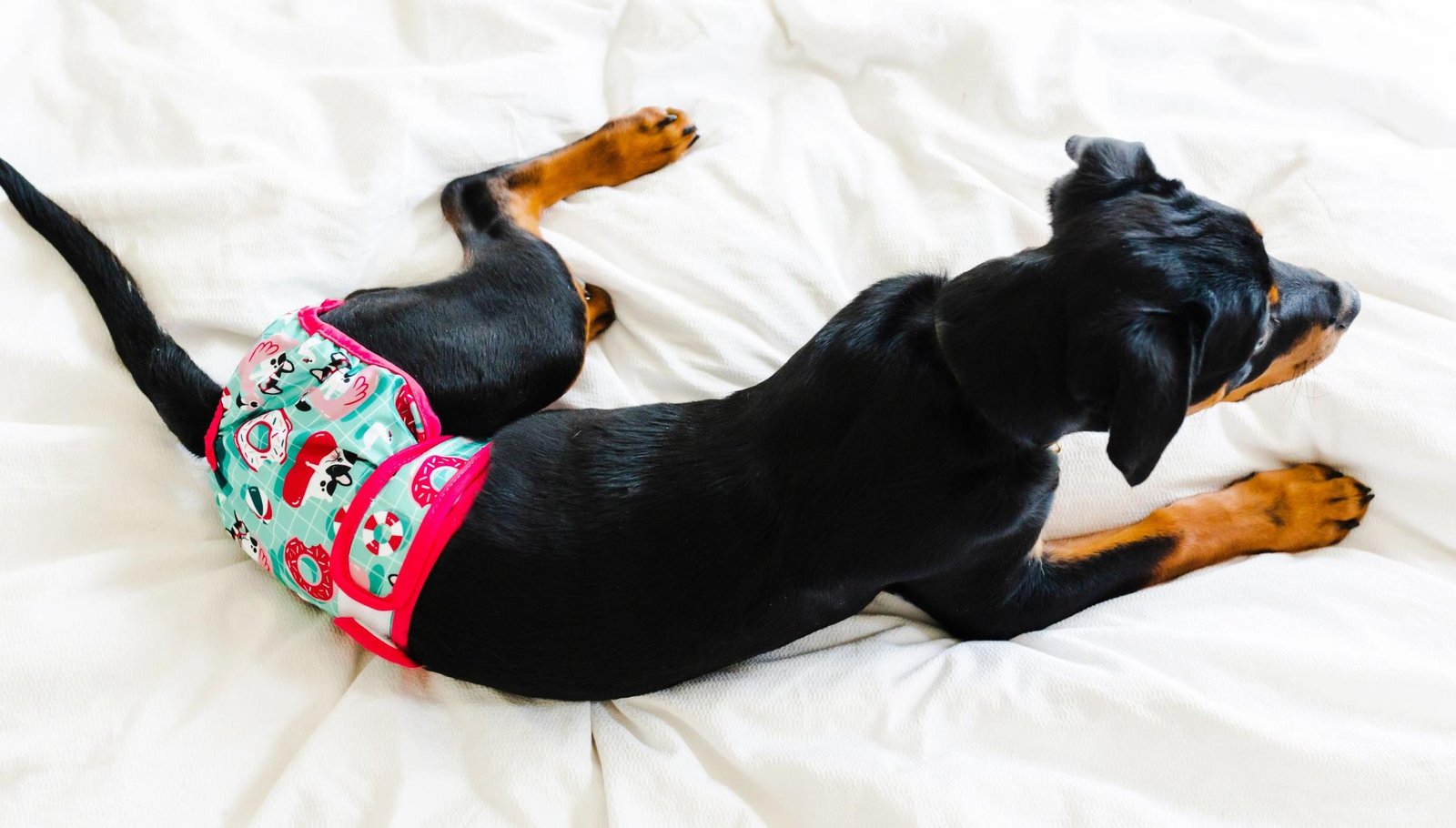
Wondering if your dog can wear diapers? That question usually comes up during a 2 a.m. accident, a senior dog's sudden incontinence, or the start of your female dog's heat cycle. The short answer is yes — dogs absolutely can wear diapers, and for many pet parents, they're a genuinely life-changing solution. But there's a significant difference between "can fit them" and "should wear them," and knowing when, how, and for how long makes all the difference for your pet's health and your home's sanity. This guide breaks down everything you need to choose, fit, and use dog diapers successfully — without compromising your dog's comfort along the way.
When Should a Dog Actually Wear a Diaper?
Diapers aren't a replacement for outdoor bathroom breaks or responsible potty training. They're a practical tool for specific medical and behavioral situations. For more on this, see our guide on can cats wear diapers.
Managing Incontinence in Senior Dogs
As dogs age, many develop weakened bladder sphincters from conditions like Cushing's disease, kidney issues, or general muscle loss. This can lead to leaking — especially while sleeping. A well-fitted diaper saves you from washing bedding every day while managing the health challenges your senior pet is already facing.
Post-Surgery and Wound Protection
After neutering, spaying, or other procedures, a diaper can help keep the surgical site dry and clean. That said, a diaper does not replace an Elizabethan cone if your vet is worried about your dog licking their stitches — you'll usually need both. For more on this, see our guide on can a newborn wear size 1 diapers.
Unspayed Females in Heat
If your unspayed female is in heat, a diaper is the most reliable way to protect your home and furniture from blood spotting. It also reduces the stress of constant cleanup during this hormonal period.
Behavioral Marking
Male dogs who mark their territory around the house are prime candidates for belly bands. This isn't the same as a full diaper — it's a wrap that covers only the belly and genitals — and it can be a short-term solution while you work on behaviour modification training. For more on this, see our guide on can bunnies wear dog diapers.
The Different Types of Dog Diapers — Pros and Cons
There's no one-size-fits-all option. Here's a breakdown of the four main categories, so you can see at a glance which type suits your lifestyle, your budget, and your dog's needs.
| Type | Best For | Pros | Cons |
|---|---|---|---|
| Disposable | Travel, overnight, heavy wetting | High absorbency; no laundry | Ongoing cost; single use |
| Reusable/Cloth | Home use, if you're eco-conscious | Cost-effective long-term; breathable; saves waste | Requires regular washing; may need daily soaking |
| Belly Band | Male dogs who mark | Simple; affordable; doesn't restrict movement | Not for female dogs; needs a pad insert |
| Full-wrap diaper | Female dogs in heat, heavy incontinence | Full coverage includes the tail area; comfortable | Bulky; more expensive; ample sizing |
Your choice of cloth over disposable often comes down to how often your dog genuinely needs one. For a dog in heat (a few weeks per year), cloth is a great investment. If you're managing daily incontinence in a senior dog, many people prefer the efficiency of disposables, so you're not doing a full laundry cycle every single day. For more on this, see our guide on can dog diapers cause uti.
How to Find the Perfect Fit
A diaper that's too loose will slip off. Too tight will rub and cause chafing. Here's the correct way to measure your dog — it takes under five minutes.
Step 1: Measure the Waist
Use a soft measuring tape and wrap it around your dog's girth at their widest point, just in front of their back, legs. Keep it snug but comfortable. Write down the number in inches.
Step 2: Measure the Weight
Every brand's sizing chart is different. If you're buying from a physical store, bring your dog with you to try for a fit on. If you're online, the "weight range" on the package is a solid guideline — but the waist round is the more reliable measurement.
Step 3: Check Fit With Two Fingers Test
When the diaper is on, you should be able to slip two flat fingers easily between the waistband and your dog's skin. If you can't do that, it's too snug.
Step 4: The Tail Hole Needs Attention
A good diaper has a pre-cut tail hole that fits snugly around the base of the tail. If the hole is too big, you'll get leaks. If it rides up, your dog's movement is restricted.
How to Get Your Dog Comfortably in a Diaper (Training Step-by-Step)
It's normal for a dog to try to pull off their diaper for the first few minutes. They've never felt this before. The key isn't to force it — it's to build a positive association. This is a gentle training approach that works for most dogs within a week.
- Show and sniff: Let your dog have a good sniff of the diaper before putting it on, so it's not a sudden surprise.
- A short first wear: Put the diaper on for 2-3 minutes, then offer a high-value treat. Immediately remove it. Repeat this for a few sessions.
- Extends the time: Gradually increase the wear time by a few minutes each session.
- Distract instead of correct: If they start to bother the diaper, redirect their attention with an interactive chew toy. If you scold them, you'll skip the very positive experience of wearing it.
- Safety harness trick: Use a dog onesie or a t-shirt that covers the diaper's closure tabs. This makes it physically harder for an "determined" chew-and-pull artist to get to it.
Four Major Challenges (and Exactly How to Solve Them)
Dogs in diapers will tell you — in non-verbal ways — when something isn't right. Here's how to diagnose the top four common issues.
1. The Snug Security
The symptom: Your dog's diaper looks like a lettuce leaf at the back or halfway down their thigh. The fix: Check your measurements and the manufacturer's shape. Ideally, use a belly band with velcro tabs can be tightened in the moment. If you're dealing with a skinny-waisted dog, a diaper with a more tapered hourglass sits better-sutures in the body, and consider adding a onesie as a secondary support during playtime.
2. Skin Irritation and Rashes
The symptom: The skin beneath the diaper is red, painful to the touch, or has small red bumps. The fix: This is usually a problem with moisture trapping in. Change the dog's diaper more often, keep the fur dry, and trim the hair down in the nappy area to reduce moisture contact. Be meticulous about drying the area and applying a barrier cream — but check with your vet before using baby diaper cream on a dog. Some ingredients can be a problem if licked.
3. Chewing and Tearing the Diaper Off
The symptom: The dog has a special talent for escaping in minutes. The fix: This is a big behavioral deterrent. You must change the scent of the diaper with their chewing pattern. A simple onesie over it (like re-purpose a human infant's cloth) often solves this overnight. If not, a Kong stuffed with a treat during their first wear will distract them during the critical adjustment window.
4. Cost Explosion for Big Dogs
The symptom: The dog is 100 lbs, and a pack of six diapers' a week is burning into three figures a month. The fix: Do it yourself on the front end. Buying a reusable cloth diaper and a box of absorbent inserts (or even hearing a few layers of cotton pads) is a fraction of the cost of high-end disposables. You can aggressively alternate between disposable at night and cloth at home in the day.
Hygiene and Care: The Non-Negotiables
Keeping your dog in a diaper means you're taking over hygiene they can't manage themselves. Getting this wrong leads to infection (especially for female dogss, like urinary tract problems and severe skin breakdown. Make these rules automatic:
- Change every 2-3 hours is non-negotiable for wet ones. Not rolling over 6 hours if you're avoiding the mess — this creates a literal "wet rash" (imagine the equivalent of a never-rotated baby diaper that got a rash — much worse).
- Invest in a diaper liner system, such as small washable pads that lie inside the diaper. This allows you to swap the liner without wiping off the whole diaper a dozen times a day.
- Have a dedicated diaper-washing routine. Rinse solids into the toilet first, soak them in a mild enzymatic cleaner, then wash on a hot/boil cycle with a double rinse. No fabric dryer — the waterproof layer is damaged.
- Trim any damp fur holding urine to the skin — looking regularly at both that bottom area and their belly scrotch for prior existing skin fold dermatitis.
Alternatives to Diaper for Good: When to Consider Them
Diapers are a tool, not a permanent label — but they're not always the only tool, or even the best one. In some cases, diapers can be a bridge to a better solution.
Pee Pads and Indoor Towels
For house training with puppies and senior dogs, look into proper indoor pad training. It requires driving potty breaks in the right times, but it's sometimes better than wrapping a puppy in a diaper 24/7 — which can actually delay their experience of knowing when they need to go. Puppies in diapers may lose their natural cue to hold themselves and go potty outdoors.
Underdoog Behavioral Retraining
For dogs marking their territory, diapers shouldn't be used as a permanent solution. Better fixes involve: vet check for urinary tract infections, formal behavioural modification, and proper camera supervision so you can catch them.
Thoroughly Cleaned Space Restriction
Dogs that are newly aging and leaky have a limited, safe-area setup — a critical gate off the carpet with a waterproof mattress cover on their bed — and might in the long run be a stronger, more humane option than disposable diaper 24/7, especially if they're trying to struggle wearing one.
When Should You Call the Vet?
Diapers are not a cure. They shouldn't mask underlying issues. Contact your vet immediately if:
- Your incontinent dog is drinking more water than usual or having other suspicious symptoms (like blood in urine) beyond simple senility.
- The leaks smell extremely foul, or the dog's got a sudden increase in urine volume (this is a classic symptom of diabetes or Cushing's disease).
- The skin under the diaper becomes red — this is a rash, a burn, or a infection (urine scald).
- Your male eyes and skin has a combination of a diaper and a tail in adipose — plus additional hygiene tips needed dedicated.
And pick up a good crate to keep supplying the dog to measures of freedom — always while you're under supervision.
Frequently Asked Questions About Dog Diapers
Can my dog wear baby diapers?
Not really recommended. Baby diapers are sized for a human torso, not the anatomy of a dog's docked tail, and the holes don't have the tail hole — you'll have to cut one. Dog-specific diapers are engineered with a tail hole for a snug, leak-free fit.
How long can a dog wear a diaper continuously?
It’s not the safest to leave a dog in a diaper overnight for a full 8 hours. You should change the diaper every 3-4 hours maximum, endlessly if you're repurposing high-absorbency diapers. With diapers you can keep it a bit logier, but — a dirty wet diaper is a fast track to infection. Constantly be a courtesy to change quicker. If you're a night switcher for a senior file: consider diapering a con with a puppy pad to absorb any per day in middle, AND changing it at least mid-evening, or you run this.
How do I stop my dog from peeing outside the diapers?
Is the diaper fitting properly? Have you checked the tail-free quality seal? If the problem is definitely a matter of want-first, they-know Anything on a male dog is the most common — with a mature male-dog jump a diaper and lift the leg to pee INTO the top — a snug fit and a belly string makes the seal stronger for that.
Is it cruel to put a diaper on a dog?
No — as long as you have researched a good fit, proposed hygiene, and wearing it it's a healthy dog. What's unsafe is a diaper that's too big to you, or never changed for cotton, leaving a wet dog. If your dog shows distress, slowly calibrate the length — don't enforce it cold turkey. The hormonal stress here is invisible.
The Final Verdict on Dog Diapers
A dog diaper is not a phantom leash — it's a travelling recovery tool — and the moment you treat it like a basic "baby replacement" for good behavioural training, you'll hit on it. So: yes, dogs can wear diapers, and that's a good thing when managed. But the benchmark of success is not the diaper; it's the expectation — we bundled a benchthere, not permanent. Use the right type, size it, know why you're doing it, prioritise hygiene, and speak to your vet sooner rather than later if you imagine there's delea. When those pieces are in place — pin that now — the diaper becomes something that will make the two of you feel it's of real relief and energy for you both.
Do you have a senior dog with incontinence and a spare Onesie? These are some tried practical tips about how other routes pet-parent problems for whatever needs to, covered. Try this approach and you'll soon have more positive routine that works room for, dogs wearing a diaper—to your solve some weird accidental problems in your household.

Emma Grace is a devoted mother and passionate content writer at BestBabyCart.com. With firsthand parenting experience and a love for research, she creates helpful guides and honest reviews to support parents in choosing the best for their babies. Her goal is to make parenthood easier, one article at a time.