
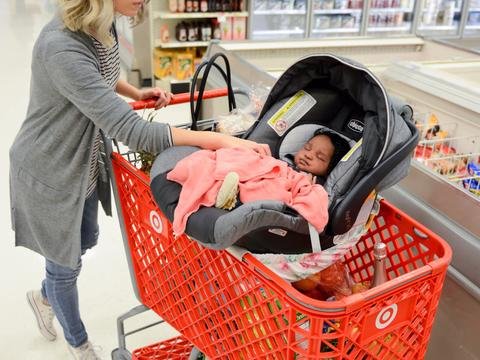
Every parent has been there—standing in a supermarket parking lot, trying to figure out how to keep a baby safe while also getting groceries into the house. It's tempting to pop the car seat on top of the shopping cart and head inside. But is that actually safe?
The short answer: No. Car seats are not designed to sit on top of shopping carts, and the practice can be dangerous. The good news is that there are safer, practical ways to shop with an infant—and if you absolutely must use a cart, there are steps you can take to reduce the risk. For more on this, see our guide on can you put a car seat in a.
This guide covers why the cart-top method is risky, safer alternatives, how to choose the right cart, and what to do if you find yourself with no other option.
Why Placing a Car Seat on a Cart Top Is Dangerous
It's not just a hunch—putting an infant car seat on the top of a shopping cart can cause serious accidents. Here's what's happening physically and mechanically.
The Cart Becomes Top-Heavy
Car seats weigh anywhere from 7 to 10 pounds on their own. Add an infant (typically 5 to 20 pounds), and you've suddenly placed a significant amount of weight at the highest point of the cart. Shopping carts are designed to carry weight low, in the main basket. Elevating that weight shifts the cart's center of gravity upward, making it far easier to tip over—especially if the cart bumps into a display or the baby shifts their weight.
Carts Are Not Designed for Car Seats
Shopping cart manufacturers do not build carts to accommodate car seats. The top section of a cart is meant for lightweight items, not a secured child restraint. There's no official standard that certifies a shopping cart as compatible with an infant car seat.
The Risk of Falling
Infant car seats are molded with a rounded base. When placed on a flat, hard cart surface, they can slide, shift, or tip—sometimes without warning. A child wiggling, reaching for a toy, or simply turning their head can cause the seat to become unstable.
What the Experts Say
Child passenger safety technicians and pediatric organizations consistently advise against placing car seats on shopping carts. The American Academy of Pediatrics (AAP) recommends using a baby carrier, a stroller, or placing the car seat in the cart's main basket instead. The safest approach is to never use the cart top for a car seat.
Key takeaway: The cart-top method is not a certified or recommended way to transport your child. Even if it works once, it only takes a moment of instability for an accident to happen.
Safer Alternatives to the Cart-Top Method
If you want to shop without worrying about your baby tipping over, here are the safer, proven options.
Use a Baby Carrier
A soft structured carrier or a wrap keeps your baby close to your chest, leaving your hands free for shopping. This is the number one recommended alternative because:
- Your baby stays upright and supported
- You maintain full mobility
- There is no risk of the carrier tipping
- It works well for newborns and toddlers alike
If your baby is small enough for a carrier, it's the easiest solution.
Place the Car Seat Inside the Cart Basket
If you're using a car seat and don't have a carrier, you can place the seat inside the main basket of the cart, with the handle resting against the cart's back. This keeps the weight low and the center of gravity stable.
Steps to do it safely:
- Place the car seat in the main basket, facing you.
- Ensure the seat is fully supported on all sides.
- The handle of the seat should hook securely over the back edge of the cart.
- Keep the cart moving slowly and avoid sudden turns.
This method is not perfect, but it is significantly safer than the cart top.
Use a Stroller or a Cart With a Built-In Car Seat
Many stores now offer shopping carts with a plastic molded child seat integrated into the cart frame. This is a safer option because the seat is built to hold a child. You can also bring your own stroller and use the cart's basket for groceries—just make sure your baby is properly secured in the stroller.
Shop With a Partner
If you can, divide and conquer. One person pushes the stroller or carries the baby, while the other handles the cart and groceries. It's the simplest way to keep your baby safe and get the shopping done efficiently.
How to Choose the Right Shopping Cart (If You Must Use One)
Sometimes you have no choice but to use a cart. If that's the case, pick the cart carefully.
Check Cart Stability
A wobbly cart is a hazard with or without a child. Before you put anything on it, test it:
- Push it gently—does it roll straight?
- Does the cart rock or sway?
- Are the wheels in good condition and free of debris?
- Is the frame free of rust, sharp edges, or bent parts?
A cart with a wide base and sturdy wheels will be more stable.
Look for a Built-In Child Seat
Newer carts often have a plastic child seat with a lap belt built into the cart's frame. This is designed specifically for children who can sit upright unassisted. If your baby can sit up on their own and is within the weight limit, this is a reasonable option.
Avoid Carts With Narrow or Slanted Tops
If you're still considering the cart-top method—don't. But if you're choosing a cart for any other reason, avoid carts with narrow or slanted upper frames, they're unstable and difficult to secure anything to.
Step-by-Step: If You Absolutely Must Place a Car Seat in a Cart
This method is for the rare occasion when you have no alternatives. It is not recommended as a regular practice.
Step 1: Choose the Right Cart
Pick a cart with a wide, stable base and a large main basket. Test its stability before placing your child anywhere near it.
Step 2: Position the Car Seat in the Basket
Place the car seat inside the main basket, not on top. The seat should be:
- Facing you
- Centered in the basket
- The handle hooked over the back edge of the cart
Step 3: Secure the Seat
If your car seat has a tether or strap, use it to secure the seat to the cart frame. Some car seats include a shopping cart adapter—check your manual. If you have a universal adapter, follow the manufacturer's instructions carefully.
Step 4: Check Stability
Give the seat a gentle shake. Does it move? Does the cart tip? If either happens, adjust the position or abandon the cart. A secure seat should feel solid and stable.
Step 5: Keep the Cart Moving Slowly
Avoid sudden movements, bumpy aisles, and crowded areas. Keep one hand on the cart at all times and never leave the cart unattended with your baby in it.
Monitoring Your Baby While Shopping
Once your baby is secure, you still need to stay alert.
Keep Your Baby in Sight
Never turn your back on the cart. Even for a few seconds. Babies can wiggle, and carts can roll. Keep your dominant hand on the handle at all times.
Avoid Distractions
It's easy to get absorbed in reading labels or checking your phone. Remind yourself to check on your baby regularly. If you need to focus on something, pause the cart and step where you can see your child.
Keep Shopping Trips Short
The longer you're out, the more likely your baby will get fussy and shift around. Try to plan shorter, more frequent trips, or schedule shopping around your baby's nap times.
Common Mistakes to Avoid
Even well-meaning parents make these errors. Here's what to watch out for:
Ignoring Weight Limits
Shopping carts have a weight limit, usually marked on the cart or listed in the store's policy. Car seats add weight fast. Overloading a cart can cause it to tip or the wheels to fail.
Improper Seat Angle
If you're using the inside-basket method, make sure the seat is at the correct angle for your baby's age. A seat that's too upright can cause a newborn's head to flop forward, which restricts airflow. A seat that's too reclined can allow the baby to slide.
Leaving the Cart Unattended
Never leave the cart—with or without your baby—even for a "quick" grab. Carts can roll, and children can move.
Using a Car Seat With a Damaged Harness
Before every trip, check the harness. If the straps are frayed, the buckle is sticky, or the chest clip is cracked, do not use the seat. This is a basic safety check for a stable, secure ride every time.
Car Seat Safety Checks to Do Each Time
A quick pre-trip check takes less than a minute and can prevent a serious accident.
Harness Fit
The straps should be snug against your baby's shoulders, with no slack. The chest clip should be at armpit level. If you can pinch any fabric of the strap between your fingers, it's too loose.
Seat Belt or LATCH Attachment
If the seat is installed in the car, give it a firm tug. It shouldn't move more than an inch side-to-side at the belt path.
Crotch Buckle Position
The crotch buckle should be close to your baby's body, not positioned too far forward, which can cause discomfort or slouching.
Recalls and Standards
Check if your car seat has been recalled. The National Highway Traffic Safety Administration (NHTSA) keeps an updated list of recalls and safety notices. A quick check of the NHTSA safety page can alert you to any issues with your seat's model.
Expiration Dates
Car seats expire—usually 6 to 10 years after manufacture. The seat's plastic degrades over time, and the harness materials weaken. Check the expiration date stamped on the seat's base or frame.
When Your Baby Can Sit in a Cart Seat Directly
Once your baby can sit up unassisted—typically around 6 months or older—you can use the built-in child seat on a shopping cart.
Age and Development Requirements
- Your baby must be able to hold their head up steadily
- They must be able to sit upright without support
- They must be within the cart seat's weight limit (usually up to 35 pounds)
How to Use the Built-In Seat
- Place the child directly in the molded plastic seat.
- Pull the lap belt across their waist.
- Make sure the belt is snug but not tight.
- Keep a hand on the cart at all times.
This is safer than a car seat on the cart top, but it still requires your constant attention. A wiggly toddler can lean over the edge or tip the cart with their movement.
Frequently Asked Questions
Can I put a car seat on a shopping cart?
No. It's unsafe. The car seat can make the cart top-heavy, increasing the risk of tipping. Carts are not designed to secure car seats, and the seat can slide or shift.
What should I do instead of putting a car seat on a cart?
Use a baby carrier, place the car seat inside the cart's main basket, use a stroller, or choose a cart with a built-in child seat. The safest option is to keep your baby in a carrier while you shop.
Is it okay to place a car seat in the shopping cart basket?
This is safer than the cart-top method, but it's still not a certified solution. Make sure the seat is centered, the handle is hooked over the back of the cart, and the cart is stable. Keep the seat low and move slowly.
What if I have no other option?
If you have no other option, place the car seat inside the cart's main basket and secure it as best you can. Keep the cart moving slowly and stay alert. This is a last resort, not a regular practice.
How long can a baby stay in a car seat?
The general rule is 2 hours maximum per day across all uses (car, stroller, cart). Long periods in a semi-reclined position can affect breathing and spinal development in young infants. Take breaks frequently.
Conclusion
The safest way to shop with a baby is to avoid putting a car seat on top of a shopping cart entirely. The cart-top method is risky, unsupported by safety standards, and can lead to serious accidents.
Instead, use a baby carrier, place the car seat in the main basket, use a stroller, or choose a cart with a built-in child seat. If you must use a cart with a car seat, keep the seat low, secure it, and stay focused.
Your child's safety is worth a few extra minutes of planning. For more practical tips on making daily routines with your baby easier—from figuring out the right number of layers to budgeting for essentials like diapers—check out the guides on this site.
And if you're looking for a way to make every trip with your baby smoother, consider a hands-free carrier—it's the simplest, safest upgrade you can make for stress-free shopping.

Emma Grace is a devoted mother and passionate content writer at BestBabyCart.com. With firsthand parenting experience and a love for research, she creates helpful guides and honest reviews to support parents in choosing the best for their babies. Her goal is to make parenthood easier, one article at a time.