
Baby diapers are one of the most consistent, high-cost expenses for families with infants and toddlers, with most parents spending thousands of dollars over a child’s potty training years. If you’re enrolled in a Health Savings Account (HSA) through a qualifying high-deductible health plan, you may have wondered: can I use pre-tax HSA funds to cover this cost? The answer is not a simple yes or no, and misunderstanding the rules can lead to denied claims, tax penalties, or missed savings opportunities. This guide breaks down the exact 2026 IRS guidelines for HSA diaper eligibility, common misconceptions, required documentation, and alternative strategies to cut your baby care costs.
HSA Eligibility Rules: Core Background for 2026
Health Savings Accounts are only available to individuals enrolled in a qualifying high-deductible health plan (HDHP) as of 2026, with annual contribution limits set by the IRS. To qualify for reimbursement, all HSA expenses must be used to treat or prevent a specific medical condition, for the account holder, their spouse, or eligible dependents. Per IRS Publication 502, which defines eligible medical expenses, personal care items that serve general health or hygiene purposes are explicitly excluded from coverage. Over-the-counter items may qualify only with a doctor’s prescription, and only if they are used to treat a diagnosed medical condition. You can also read our guide on can diapers be bought with hsa.
Common Eligible HSA Expenses
Typical HSA-eligible costs include copays, deductibles, prescription medications, medical devices (such as crutches or blood pressure monitors), dental and vision care, and preventive services like vaccines and health screenings. These examples help contextualize why standard diapers fall into a gray area for many parents: they are a routine care product for most families, but may qualify as a medical aid for children with specific health needs.
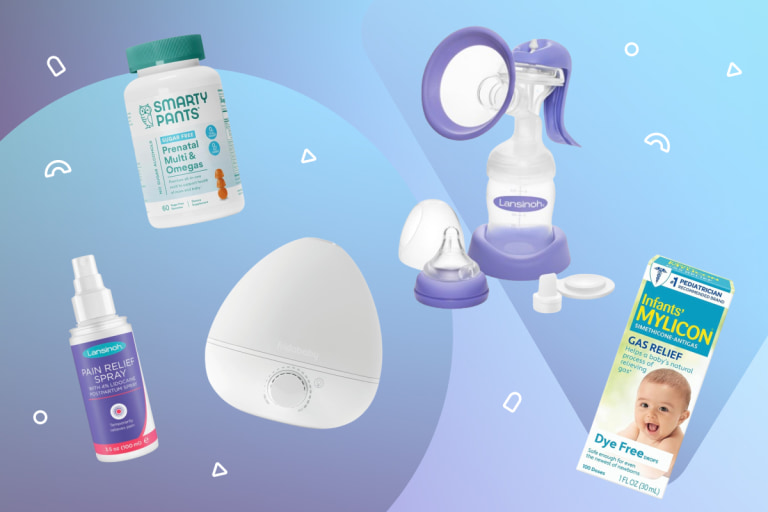 A selection of baby care items that qualify for HSA reimbursement with a doctor's note
Credit: www.babylist.com
A selection of baby care items that qualify for HSA reimbursement with a doctor's note
Credit: www.babylist.com
Are Standard Baby Diapers HSA Eligible?
The short answer for most parents is no: standard infant and toddler diapers are classified as personal care items by the IRS, and do not qualify for HSA reimbursement under any circumstances, regardless of brand, material (including organic or biodegradable options), or marketing claims about sensitive skin suitability. Most retailers flag standard diapers as ineligible for HSA or FSA debit cards at checkout, which is a common point of confusion for parents who assume hypoallergenic variants may qualify. You can also read our guide on how many coats does a baby need for a year.
Exceptions: When Diapers Do Qualify for HSA Coverage
Diapers only become eligible for HSA reimbursement if they are prescribed by a licensed healthcare provider to treat or manage a specific, diagnosed medical condition. Qualifying conditions include:
- Diagnosed urinary or fecal incontinence unrelated to age-appropriate potty training delays
- Severe, chronic diaper dermatitis or eczema that requires specialized barrier diapers to prevent skin breakdown
- Developmental or physical disabilities that prevent a child from achieving potty training at a typical age
- Post-surgical or injury-related incontinence needs during recovery In these cases, the diapers are classified as medical aids rather than personal care products, making them eligible for reimbursement. Note that standard store-bought diapers used for these conditions do not qualify unless they are specifically prescribed for the medical need.
Required Documentation for HSA Diaper Claims
To receive reimbursement, you will need to submit:
- A formal doctor’s prescription or letter of medical necessity that specifies the diagnosed condition, required diaper type, and expected duration of use
- Itemized receipts for all diaper purchases, clearly listing the product and cost
- Proof of payment if you used a personal payment method instead of your HSA debit card In practice, most HSA administrators require a detailed letter of medical necessity rather than a simple prescription note, so ask your pediatrician to include specific details about the medical need for diapers to avoid claim denials. Keep all records for at least 3 years, as the IRS may audit HSA spending during that window. For up-to-date guidance on HSA rules and contribution limits, refer to the official IRS HSA guidance page. You can also read our guide on how to dispose of adult diapers.
Common Misconceptions About HSA Diaper Eligibility
Many parents assume certain diaper products or related items qualify for HSA funds, but these claims are almost always incorrect:
Misconception 1: Hypoallergenic or organic diapers are automatically eligible
Even if your pediatrician recommends gentle, organic diapers for mild eczema or sensitive skin, they are still classified as personal care items unless you have a formal prescription for a diagnosed medical condition that requires specialized diapers. High-quality non-toxic overnight diapers designed for sensitive skin do not qualify for HSA reimbursement without this documentation.
Misconception 2: Cloth diapers are eligible for HSA reimbursement
Cloth diapers follow the same eligibility rules as disposable diapers: they are only eligible if prescribed for a medical condition. For everyday use, they are considered personal care items and do not qualify for HSA funds. That said, cloth diapers for rash prevention may reduce out-of-pocket costs for babies with recurrent skin irritation, even if they are not HSA eligible.
Misconception 3: Diaper accessories (wipes, creams, pail refills) are covered
Over-the-counter diaper wipes, standard diaper creams, and diaper pail refills are all classified as general hygiene products and are not eligible for HSA reimbursement. Medicated diaper creams may qualify if you have a valid prescription from a healthcare provider to treat a diagnosed skin condition.
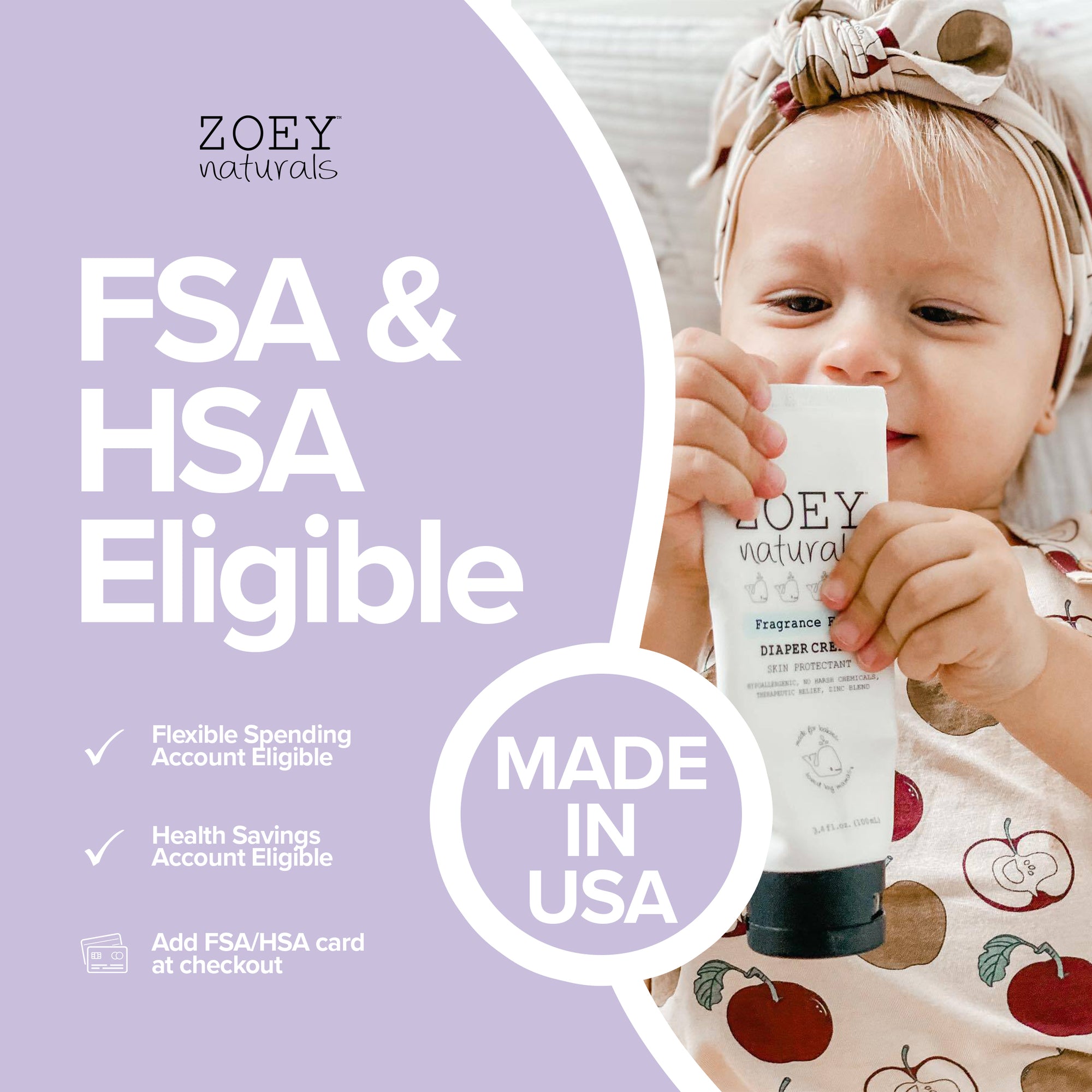 Medicated diaper creams may be HSA eligible with a valid prescription
Credit: zoey-naturals.com
Medicated diaper creams may be HSA eligible with a valid prescription
Credit: zoey-naturals.com
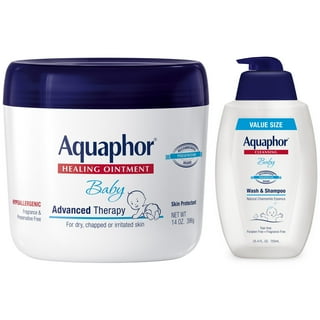 Over-the-counter baby ointments typically require a prescription for HSA coverage
Credit: www.walmart.com
Over-the-counter baby ointments typically require a prescription for HSA coverage
Credit: www.walmart.com
How to Maximize Savings on Diapers (With or Without HSA Funds)
Even if your baby’s diapers do not qualify for HSA reimbursement, there are proven strategies to reduce this recurring family expense:
Leverage Other Pre-Tax Benefit Accounts
If you have access to a Flexible Spending Account (FSA) through your employer, note that some FSA plans have slightly more flexible eligibility rules for medically necessary diapers than HSAs. Check your plan’s eligible expense list or contact your FSA administrator to confirm coverage, as FSA eligibility rules for diapers vary by provider. Dependent Care Accounts (DCAs) cannot be used for diaper costs, as they are limited to childcare expenses like daycare and babysitting. However, using a DCA for childcare costs can free up cash in your monthly budget to cover diaper expenses without dipping into post-tax income.
Reduce Out-of-Pocket Diaper Costs
For standard diaper purchases, use these cost-cutting strategies:
- Buy diapers in bulk from warehouse clubs or online retailers to take advantage of volume discounts
- Use manufacturer coupons, store loyalty rewards, and cashback apps to lower per-unit costs
- Consider cloth diapers for long-term savings: annual cloth diaper usage estimates show that cloth diapers can cut diaper costs by 50% or more over a child’s potty training years, even after accounting for laundry costs
- Look for state or local diaper assistance programs for low-income families, which provide free or discounted diapers to eligible households
Avoid Costly HSA Mistakes
Using HSA funds for non-eligible expenses like standard diapers can result in income taxes and a 20% penalty if the IRS audits your spending. To avoid this:
- Confirm eligibility with your HSA administrator before purchasing any diaper product you plan to claim for reimbursement
- Keep all receipts and medical documentation organized in a dedicated folder or digital storage app
- Only use your HSA debit card for confirmed eligible expenses to streamline record-keeping If you’re unsure whether a planned purchase qualifies, contact your HSA provider directly before checking out to avoid denied claims and unexpected out-of-pocket costs.
Frequently Asked Questions
Are standard baby diapers HSA eligible?
No, standard infant and toddler diapers are classified as personal care items by the IRS and do not qualify for HSA reimbursement, regardless of brand, material, or skin sensitivity claims.
When are diapers HSA eligible?
Diapers only qualify if prescribed by a licensed healthcare provider for a diagnosed medical condition, such as incontinence, severe skin disease, or developmental delays that prevent age-appropriate potty training.
What documentation do I need for HSA diaper claims?
You will need a formal doctor’s prescription or letter of medical necessity detailing the condition, required diaper type, and duration of use, plus itemized receipts for all purchases. Keep these records for at least 3 years in case of an IRS audit.
Are diaper wipes and creams HSA eligible?
Over-the-counter diaper wipes and creams are not eligible unless you have a valid prescription for a medicated version specifically to treat a diagnosed medical condition.
Do diaper subscription services qualify for HSA reimbursement?
Only if the subscription is for medically prescribed diapers, and you submit supporting documentation for each purchase. Standard diaper subscriptions for everyday use are not eligible.
Final Takeaways
For most parents, standard baby diapers are not HSA eligible, as they are classified as personal care items under IRS rules. Only diapers prescribed for a diagnosed medical condition, with proper documentation, qualify for reimbursement. Misusing HSA funds for non-eligible expenses can lead to tax penalties, so always confirm eligibility with your administrator before making a purchase. Even if your baby’s diapers don’t qualify for HSA coverage, combining pre-tax benefit accounts, bulk purchasing, and assistance programs can significantly reduce this recurring family expense. For more tips on managing baby-related costs and maximizing your family’s health benefits, explore our full library of parenting and financial guidance resources.

Emma Grace is a devoted mother and passionate content writer at BestBabyCart.com. With firsthand parenting experience and a love for research, she creates helpful guides and honest reviews to support parents in choosing the best for their babies. Her goal is to make parenthood easier, one article at a time.