
There’s nothing more jarring for a parent than the sharp thud of their baby hitting their head in the crib, followed by a wail that seems to stretch on for minutes. For babies between 4 and 12 months old — who are rapidly mastering rolling, scooting, and pulling to stand — minor crib head bumps are a common, if frightening, part of development. The good news? Most of these bumps are superficial, and you can drastically reduce their frequency and severity with evidence-based, CPSC and AAP-approved safety steps, no risky hacks required.
This guide walks you through actionable, up-to-date tips to create a crib environment that protects your baby’s head while supporting safe sleep and motor skill development. We’ll cover crib setup, safe padding alternatives, positioning strategies, and supervision practices that give you peace of mind without compromising your baby’s comfort. For more on this, see our guide on can a baby get a concussion from hitting.
Evidence-Based Crib Safety Foundations
A properly set up crib is the single most effective way to prevent head injuries, as it eliminates hard impact surfaces and entrapment risks before they occur. All crib safety guidelines align with current U.S. CPSC standards, which are updated regularly to reflect new injury data and product safety research.
Choose a Standards-Compliant Crib
Prioritise cribs that meet all current CPSC requirements, regardless of whether you buy new or secondhand. Slat spacing must be no more than 2 3/8 inches (6 cm) apart — wide enough to prevent a baby’s head from getting trapped, but close enough to stop limbs from slipping through. Drop-side cribs have been banned in the U.S. since 2011 due to repeated entrapment and suffocation risks, so avoid any crib with movable sides entirely. If you use a portable option like the Uppababy Vista, follow proper portable crib setup guidelines to ensure slat spacing and mattress fit meet safety standards, even for temporary use. For more on this, see our guide on how to protect baby from sun in stroller.
Prioritise a Firm, Snug-Fitting Mattress
A soft, sagging mattress increases bump risk in two ways: it allows babies to sink in, making it harder to roll away from crib rails, and it creates an uneven surface that can jostle a baby’s head during movement. The mattress must fit the crib frame perfectly, with no gap larger than 1 inch (2.5 cm) between the mattress edge and crib sides — even small gaps can trap a baby’s head or limbs. Opt for high-density foam or innerspring mattresses designed for infants, and avoid any padded mattress toppers, even if they are marketed as “cushiony” for comfort.
Eliminate All Unsafe Soft Bedding
Soft bedding is one of the leading preventable causes of both suffocation and head injury in cribs. Skip the unsafe plush crib items that increase both risks, including pillows, loose blankets, stuffed animals, and even traditional padded bumper pads. The only safe crib covering is a tight-fitting, breathable cotton or muslin fitted sheet; no additional padding belongs in the sleeping area. For more on this, see our guide on comfy stuff in baby crib.
 A properly set up crib meets all current CPSC safety standards to minimise head injury risk.
Credit: www.imperfecthomemaking.com
A properly set up crib meets all current CPSC safety standards to minimise head injury risk.
Credit: www.imperfecthomemaking.com
Crib Bumpers & Padding: Risks and Safe Alternatives
Padded crib bumpers were once a popular, seemingly sensible solution to prevent head bumps, but decades of injury data have led safety experts to advise against their use entirely. Understanding the risks and safer alternatives will help you make an informed choice for your nursery.
Why Traditional Padded Bumpers Are Unsafe
Prior to 2011, padded bumpers were widely marketed as head injury protection, but the AAP and CPSC have since issued repeated warnings that they pose severe suffocation and strangulation risks, with dozens of reported infant deaths linked to their use. Babies can press their face into the padding and struggle to breathe, get trapped between the bumper and mattress, or pull loose ties loose and choke. Even “breathable” padded bumpers do not eliminate these risks, and they provide minimal impact protection anyway, as most babies can roll over them easily by 6 months old. For more on this, see our guide on loose baby tooth during cleaning tips.
Safe, Breathable Alternatives
If you want to add a barrier between your baby and hard crib rails, opt for a CPSC-approved mesh crib liner. These are made of tightly woven, breathable fabric that allows full airflow, eliminating suffocation risk while cushioning minor bumps. Some parents opt for high-contrast mesh crib liners, which are safe for infants and can help babies visualise the crib’s edges to reduce bump risk — check our guide to baby-safe pattern choices for options that work with your nursery decor. For extra rail protection, choose padded rail covers made of firm, non-slip mesh that attach securely to the crib sides, with no loose fabric that could become a hazard. Modern cribs with built-in rounded rails are also a low-risk, no-add-on option for reducing hard impact points.
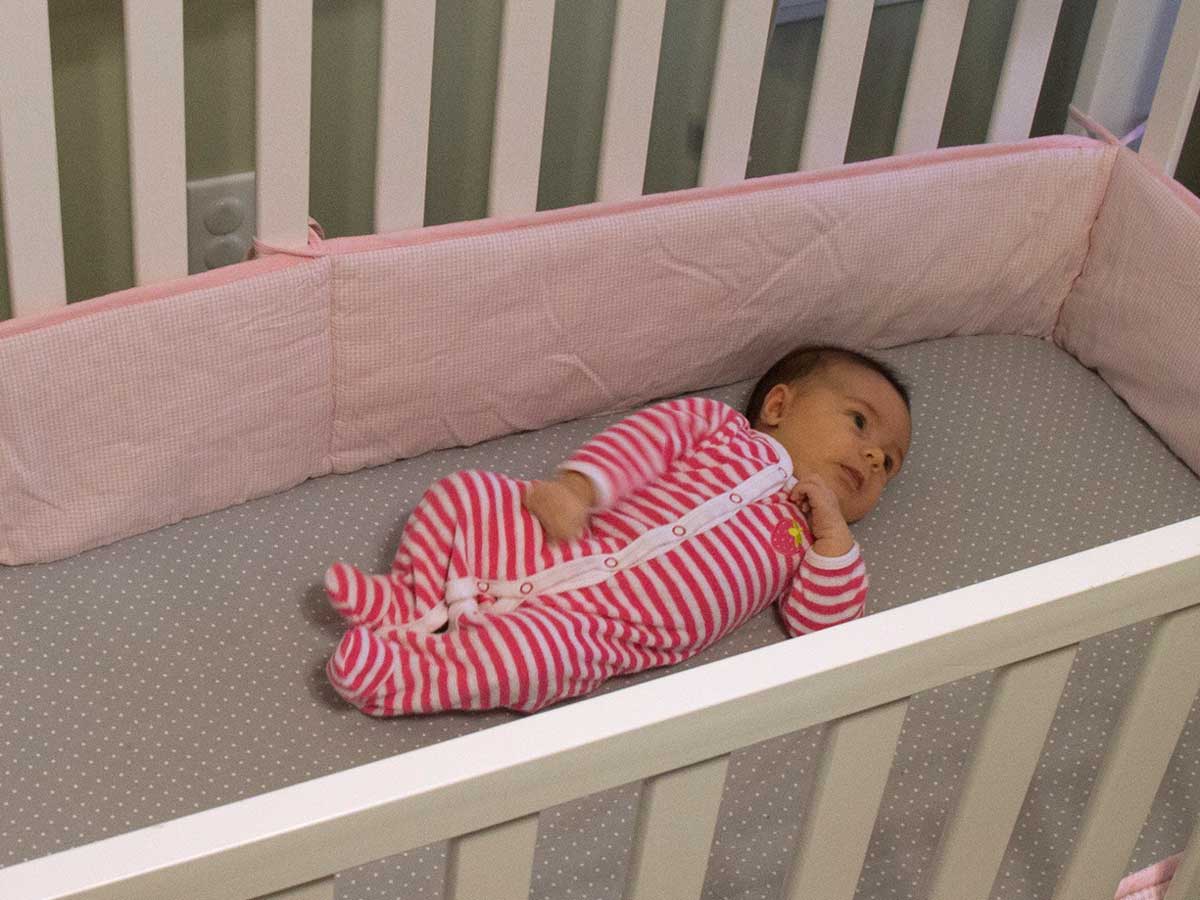 Padded crib bumpers are linked to dozens of infant suffocation and strangulation deaths, per CPSC data.
Credit: medicine.washu.edu
Padded crib bumpers are linked to dozens of infant suffocation and strangulation deaths, per CPSC data.
Credit: medicine.washu.edu
 Mesh crib liners provide a breathable barrier that reduces bump risk without suffocation hazards.
Credit: www.newtonbaby.com
Mesh crib liners provide a breathable barrier that reduces bump risk without suffocation hazards.
Credit: www.newtonbaby.com
Positioning & Active Baby Safety
Most crib head bumps happen when babies are in active REM sleep, or when they are learning new motor skills like rolling, scooting, or pulling to stand — milestones that typically occur between 4 and 9 months old. Adjusting your baby’s sleep setup and routine to match their developmental stage can cut down on unnecessary impacts. For more on this, see our guide on baby stroller sitting tips expert guidelines.
Safe Sleep Positioning Basics
Per guidelines from the American Academy of Pediatrics, placing your baby on their back for every sleep reduces sudden infant death syndrome (SIDS) risk and limits head impact from rolling during active sleep cycles. Avoid placing babies on their stomach or side for sleep, as these positions increase both suffocation risk and the chance of rolling into hard crib surfaces. Once your baby can roll both directions reliably, you do not need to reposition them back to their back if they roll during sleep, but ensure the crib remains completely clear of all soft items.
Reducing Roll and Stand-Related Bumps
When babies start pulling to stand, they often lose balance and hit their head on the front crib rail. To reduce this risk: use a wearable, fitted sleep sack instead of loose blankets to keep your baby warm without excess fabric that could cause overheating or get caught during movement; our baby sock layering guide has tips for keeping little feet warm in cooler temperatures without over-bundling. Avoid placing pacifiers, small toys, or teething rings in the corners of the crib, as babies may reach for these items and lose their balance while standing. Never use soft head cushions, hats, or headbands in the crib — these can slip over a baby’s face during active sleep, creating a severe suffocation hazard, and they do not reduce bump risk as babies can roll over them easily.
Temperature & Layering for Active Sleep
Overheating makes babies more restless during sleep, leading to more frequent rolling and bumping. Maintain a consistent room temperature between 68–72°F (20–22°C) to keep your baby comfortable without overheating; reference our seasonal baby layering tips for temperature-specific clothing guidance to avoid over-dressing your baby for sleep.
Crib Placement & Room Setup for Bump Prevention
Even a perfectly set up crib can lead to hard impacts if it is placed too close to walls, furniture, or other hard surfaces. Small adjustments to your nursery layout can eliminate these risks entirely.
Avoid Hard Surfaces Near the Crib
Keep at least 2 feet (60 cm) of clearance between the crib and all walls, furniture, windows, heaters, and baseboards. If your nursery layout requires placing the crib against a wall, choose a wall with no sharp corner trim or hard baseboards, or attach a soft, CPSC-approved wall guard to prevent impact injuries if your baby bumps their head while sleeping. Avoid placing the crib near metal furniture, shelving units, or window blinds, as these pose both head injury and entanglement risks.
Clear the Surrounding Area
Remove all small stools, ottomans, or climbable furniture from the area around the crib, as babies may use these to pull themselves up and fall out of the crib. Keep all cords (including monitor cords, blind cords, and charger cables) at least 3 feet away from the crib to prevent entanglement or accidental pulling of the crib frame. Position the crib away from direct sunlight or drafty windows, as temperature fluctuations can make babies restless and more likely to roll into hard surfaces.
Monitoring & Proactive Supervision
Supervision is the final line of defense against crib head injuries, especially as your baby masters new motor skills. You don’t need to disrupt your baby’s sleep to keep an eye on them — simple, low-effort monitoring practices can catch risks before they lead to injuries.
Baby Monitor Best Practices
Audio monitors are sufficient for most parents to hear if their baby is in distress, but video monitors are a helpful tool for checking if your baby has rolled into a corner, become tangled in sleepwear, or is restless enough to risk a bump. Place the monitor at a corner of the crib to capture a full view of the sleeping space, and never place the monitor unit inside the crib, as it poses a choking and strangulation hazard. Avoid monitors with unnecessary distracting features like built-in lullabies or night lights, which can interfere with your baby’s sleep quality.
Regular Check-Ins Without Disruption
You do not need to wake your baby to check on them — simply peek into the nursery every 2–3 hours during naps and night sleep to check their position and the state of the crib. Look for signs that your baby is restless, has rolled into a corner, or is at risk of hitting their head on a hard surface. If you notice your baby consistently bumps their head in the same spot, adjust your crib setup immediately: move the crib away from the hard surface, add a rail cover to the affected area, or lower the mattress if your baby is standing and bumping the front rail.
Frequently Asked Questions
Can I use a padded crib bumper to prevent head bumps?
No. The AAP and CPSC strongly advise against traditional padded crib bumpers due to severe suffocation and strangulation risks. Opt for a breathable mesh crib liner or padded rail covers designed for infant safety instead.
Are wearable head cushions safe for crib use?
No. Soft head cushions or hats can slip over a baby’s face during active sleep, creating a suffocation hazard. They also do not reduce bump risk, as babies can roll over them easily.
When do most crib head bumps happen?
Most minor bumps occur when babies are learning to roll (4–6 months) or pull to stand (6–9 months), as they gain new motor skills and may lose balance in the crib.
What should I do if my baby hits their head in the crib?
For minor bumps, comfort your baby, apply a cool compress if there is swelling, and monitor them for 24 hours. Seek immediate medical care if they experience vomiting, excessive drowsiness, loss of consciousness, or clear fluid draining from the nose or ears.
Do I need to adjust crib safety as my baby grows?
Yes. As your baby gets taller and more mobile, lower the crib mattress to the lowest setting to prevent them from climbing out and falling. Check slat spacing and mattress fit regularly to ensure they still meet safety standards as your baby's size changes.
Conclusion
Protecting your baby from crib head bumps doesn’t require expensive gear or complicated routines — it comes down to consistent, evidence-based safety practices. By prioritising a standards-compliant crib, eliminating unsafe soft bedding, using safe padding alternatives, and adjusting your setup as your baby grows, you can drastically reduce the risk of minor bumps and more serious injuries.
Remember that most small crib bumps are a normal part of active infants learning to move, but persistent impacts in the same spot may signal an issue with your crib setup that needs adjustment. Stay consistent with safety checks, follow the latest AAP and CPSC guidance, and trust your instincts as a parent — you know your baby’s habits better than anyone. For more evidence-based baby safety and care guides, browse our full library of newborn resources to keep your little one safe at every stage.

Emma Grace is a devoted mother and passionate content writer at BestBabyCart.com. With firsthand parenting experience and a love for research, she creates helpful guides and honest reviews to support parents in choosing the best for their babies. Her goal is to make parenthood easier, one article at a time.