
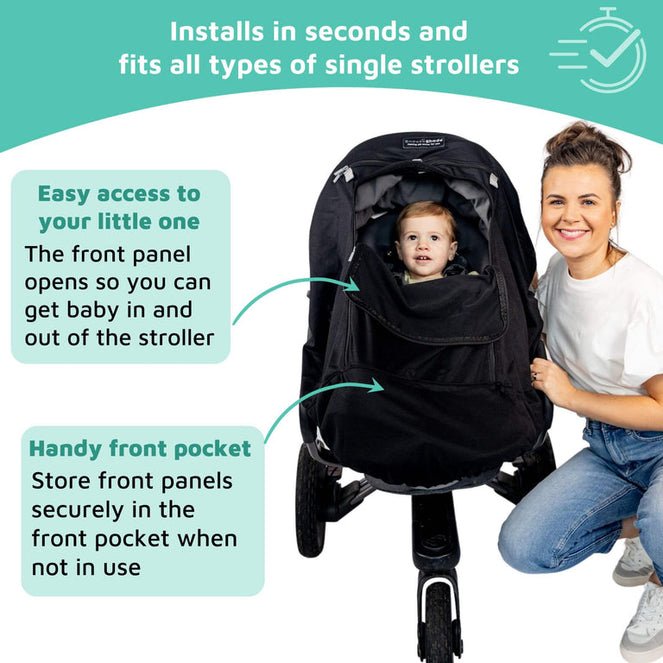
Stepping out for a stroller stroll on a sunny day should feel like a joyful break, not a source of anxiety. Infants have far thinner, less melanin-rich skin than adults, making them extremely vulnerable to sunburn, heat stress, and long-term UV damage even during brief 10-minute trips to the park or coffee shop. According to the CDC, most lifetime sun exposure occurs before age 18, so building consistent, evidence-based sun safety habits early is critical for reducing lifetime skin cancer risk.
This 2026 updated guide draws on pediatrician-backed guidance and parent-tested strategies to keep your baby fully protected in their stroller, from optimizing built-in stroller features to dressing for sun safety without overheating. We’ve cut outdated myths and guesswork to deliver only actionable, safe steps you can implement on your next outing.
Start With Your Stroller’s Built-In Sun Defenses
Your stroller is your first line of defense against UV exposure, but most standard models only offer minimal default protection that falls short in real-world use.
Verify Your Stroller Canopy’s UPF Rating First
Most standard stroller canopies only cover the top of the seat, and many unrated models only block 30–40% of UV rays, leaving your baby’s face, legs, and arms exposed when the sun sits low in the sky (early morning, late afternoon, or during winter months). Before adding extra gear, check your stroller’s manual or product listing for a UPF 50+ rating: this means the fabric blocks 98% of harmful UV rays. If your canopy is unrated, has small mesh windows that let in direct sun, or only covers the top of the seat, you’ll need an add-on shade to fill coverage gaps.
If you use a compact or travel stroller, using proper folding technique ensures the canopy stays aligned for full coverage, rather than slipping out of place mid-walk.
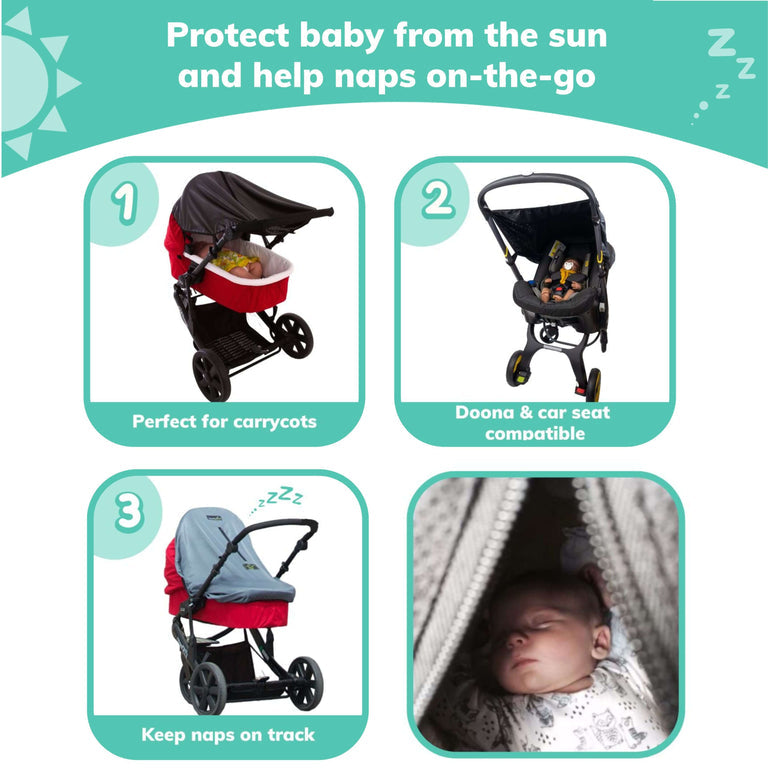 Image source: www.snoozeshade.com
A properly fitted UPF-rated sun shade blocks 98% of UV rays without trapping heat.
Image source: www.snoozeshade.com
A properly fitted UPF-rated sun shade blocks 98% of UV rays without trapping heat.
Add a Ventilated Add-On Sun Shade
A stroller’s built-in canopy is rarely enough for full-day protection, especially for long walks or days at the park. Attachable UPF 50+ sun shades clip securely to the stroller frame, with adjustable angles to follow the sun’s path as it moves across the sky. Unlike blankets (which trap heat and block airflow, raising stroller internal temperatures by 10–15°F in just 10 minutes), these shades are made of breathable, ventilated fabric that blocks UV rays without causing dangerous overheating.
When shopping for a sun shade, look for models with weighted edges that won’t blow away in light wind, and avoid any shades with thick, non-breathable backing. Check your stroller’s model compatibility before purchasing, as some shades only fit specific stroller frame designs.
Dress Baby for Sun Safety Without Overheating
Clothing is your first line of defense against UV exposure, and the right pieces eliminate the need to reapply sunscreen to covered areas every 2 hours.
Prioritize UPF-Rated Clothing Over Regular Fabrics
Regular lightweight cotton or linen only has a UPF rating of 5–10, meaning 20–50% of UV rays pass through the fabric, especially when the fabric is stretched or wet. UPF 50+ clothing, specifically designed for sun protection, blocks 98% of harmful rays, and the protection does not wash out with regular use.
Opt for loose, long-sleeve onesies, breathable pants, and UPF-rated swimwear for stroller outings to parks, beaches, or pools. Light colors reflect sunlight to keep your baby cooler, while dark colors absorb heat and raise core body temperature. While UPF clothing can have a higher upfront cost than regular cotton, its durability and consistent protection make it a cost-effective choice for families who spend frequent time outdoors.
Choose the Right Head and Foot Protection
A wide-brimmed hat (minimum 3 inches of brim all around) is non-negotiable for stroller outings: it shields the face, ears, and neck, which are the most common spots for infant sunburn. Look for hats with an adjustable chin strap to keep them in place as your baby moves in the stroller, and UPF-rated fabric for extra protection. For babies over 6 months, add UV-blocking sunglasses with 100% UVA/UVB protection and flexible, breakaway frames to prevent choking hazards. A common parent mistake is choosing a baseball cap, which leaves the ears and sides of the neck fully exposed to sun, even when the brim is pulled forward.
For newborns or babies who resist hats, a clip-on sun hood that attaches directly to the stroller’s frame is a reliable alternative that stays in place no matter how much your baby moves. For cool, sunny days, add proper foot coverage to protect your baby’s delicate skin from UV exposure and scrapes if they kick the stroller frame.
Layer Smart for Cool, Sunny Days
On days when temperatures drop below 65°F (18°C), layering is key to keeping your baby warm without bundling them so heavily they sweat, which increases dehydration risk in the sun. Start with a UPF-rated long-sleeve base layer, add a thin mid-layer if needed, and top with a wind-resistant outer layer if it’s breezy. Avoid heavy fleece or puffer jackets for stroller outings, as they trap heat and make it hard to adjust your baby’s temperature as the sun moves.
When choosing layers, use appropriate layering guidelines to avoid over-bundling: you should be able to feel your baby’s chest and back for warmth without them feeling sweaty to the touch.
Apply Baby-Safe Sunscreen Correctly
For any skin not covered by clothing or shade, sunscreen is a critical backup layer of protection.
Stick to Mineral Formulas for Infants
Only use mineral (physical) sunscreens for babies, which sit on top of the skin rather than being absorbed, and contain only zinc oxide or titanium dioxide as active ingredients. Avoid chemical sunscreens with oxybenzone, avobenzone, or added fragrances, which can irritate delicate infant skin and cause allergic reactions. SPF 30–50 is sufficient for infant use: higher SPF values add negligible extra protection, and often include more irritating ingredients.
The American Academy of Pediatrics recommends mineral-only formulas for children under 2, as chemical sunscreens can trigger irritation or allergic reactions on sensitive skin HealthyChildren.org.
Follow Application and Reapplication Rules
Apply sunscreen 15 minutes before heading outside, to give it time to bind to the skin and form a protective barrier. Use a dime-sized amount for the face and neck, and a shot-glass sized amount for the rest of the body, covering often-missed spots: the tops of the feet, back of the knees, ears, and scalp along the hairline. Stick formulas are ideal for the face, as they reduce mess and avoid getting sunscreen in your baby’s eyes.
For babies under 6 months, only apply a thin layer of sunscreen to small exposed areas (like the face and hands) if you cannot access full shade; otherwise, stick to protective clothing and shade as the CDC recommends. Reapply every 2 hours, or immediately after your baby sweats, wipes their face, or spits up, as these actions can rub off the protective layer.
Avoid Common Sunscreen Mistakes
Never use spray sunscreen on infants, as it is easy to inhale and can get into the eyes, causing irritation or respiratory discomfort. Avoid applying sunscreen to the eyelids and lips, as these areas are sensitive; use a fragrance-free SPF lip balm for the lips, and a stick formula for the skin around the eyes if needed. If your baby has eczema or sensitive skin, test a small patch of sunscreen on their inner arm 24 hours before your outing to check for reactions.
Another common mistake is relying on "water-resistant" sunscreen for water activities: even water-resistant formulas need to be reapplied every 40–80 minutes when your baby is swimming or sweating heavily.
Time Outings to Minimize Peak UV Exposure
Timing is one of the easiest, most effective ways to reduce UV exposure, with zero extra gear required.
Stick to Low-UV Hours
UV rays are strongest between 10 a.m. and 4 p.m., but UV levels can remain high early in the morning and late in the afternoon during clear summer days. Check your local weather app’s daily UV index before heading out: if the index is 3 or higher, full protection (shade, clothing, sunscreen) is required. For the lowest possible risk, plan stroller walks before 9 a.m. or after 5 p.m., when UV levels are typically below 2.
If you have to go out during peak hours, timing outings around nap windows lets you stick to shaded routes and take breaks when your baby is already resting, reducing their total exposure time. This is especially useful for parents of young babies who nap 2–3 times per day, as you can plan outings around their longest nap to keep them in a fixed, shaded spot for an hour or more.
Prioritize Shaded Routes and Breaks
Tree-lined paths, covered park pavilions, and shaded sidewalks reduce UV exposure by 50% or more, even during midday hours. If you’re walking in an open area, stick to the side of the street with the most shade, and take 5-minute breaks in full shade every 20–30 minutes to check on your baby’s temperature and skin for early signs of sunburn or overheating.
Avoid open parking lots, treeless parks, or concrete plazas during peak UV hours, as these surfaces reflect UV rays, increasing your baby’s exposure by up to 25% compared to shaded areas.
Prevent Heat Stress Alongside Sun Exposure
Heat stress is a separate, equally serious risk for babies in strollers, as infants cannot regulate their body temperature as efficiently as adults until they are at least 6 months old.
Never Use Non-Breathable Covers for Shade
Never cover the stroller’s canopy or seat with a blanket, muslin cloth, or rain cover to block sun, even if it seems like a quick fix. These covers trap hot air and can raise the internal stroller temperature to 110°F (43°C) or higher in just 10 minutes, leading to heatstroke in as little as 15 minutes.
Always use a ventilated, UPF-rated sun shade designed for strollers, which allows airflow while blocking UV rays. When setting up your stroller, safe stroller setup ensures the canopy and shade are properly secured, rather than slipping and blocking ventilation ports that are designed to release hot air.
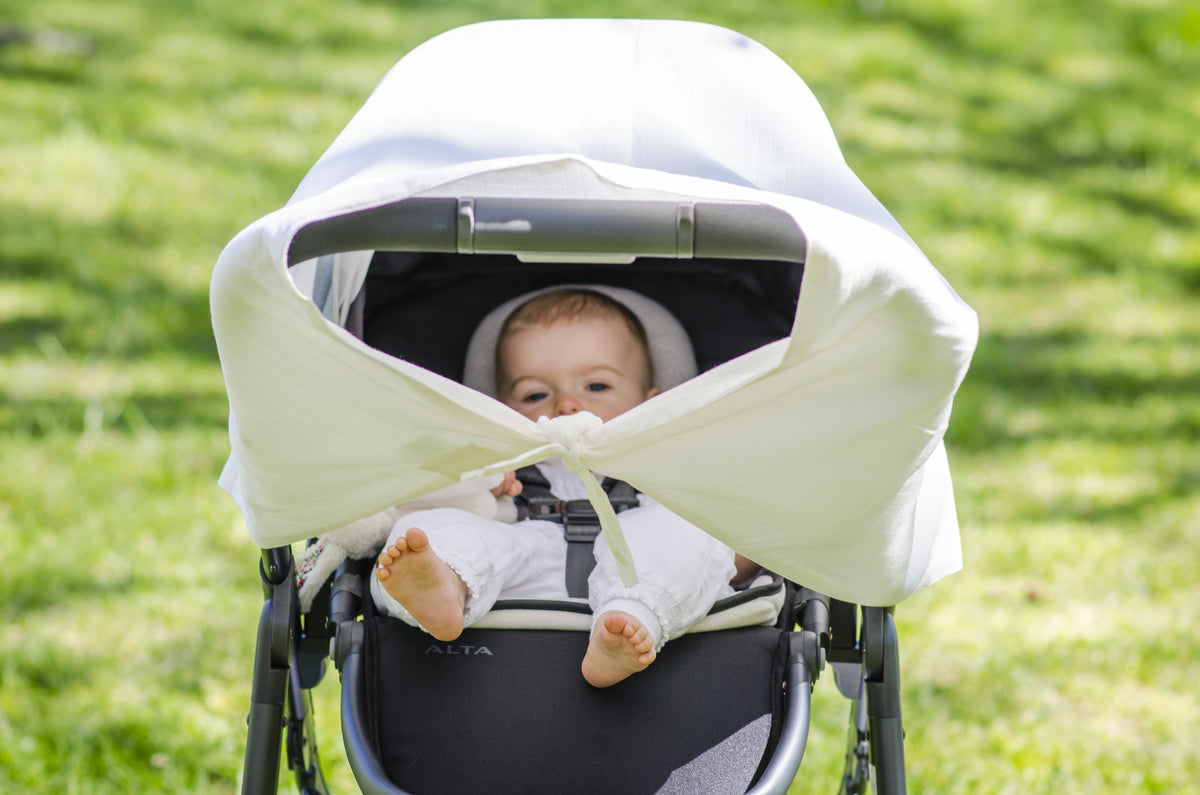 Image source: musluv.com
Ventilated sun shades and moisture-wicking seat liners reduce dangerous heat buildup inside strollers.
Image source: musluv.com
Ventilated sun shades and moisture-wicking seat liners reduce dangerous heat buildup inside strollers.
Monitor Hydration and Overheating Signs
For babies under 6 months, breast milk or formula provides all the hydration they need: offer feeds 10–15 minutes more frequently than usual in hot weather to prevent dehydration. For babies over 6 months, offer 1–2 ounces of cool (not cold) water every 15–20 minutes during outings. Cold water can cause stomach cramps in infants, so stick to room-temperature or slightly cool options.
Signs of overheating include red, hot skin, rapid breathing, unusual fussiness, vomiting, and—especially for infants under 6 months, who do not sweat efficiently—cool, clammy skin. If you notice these signs, move to full shade immediately, remove excess layers, and place a cool, damp cloth on your baby’s neck and wrists. If symptoms do not improve within 5 minutes, seek medical attention right away. Never leave a baby unattended in a stroller, even for a minute, in hot or sunny conditions.
Debunk Common Stroller Sun Protection Myths
Misinformation about infant sun safety is widespread, leading many parents to make avoidable mistakes. Let’s clear up the most common myths:
- Myth: A stroller’s built-in canopy is enough for all sun exposure. Fact: Most standard canopies only cover the top of the seat, and many are unrated for UPF protection, leaving your baby’s face, legs, and arms exposed to low-angle sun.
- Myth: Blankets are a cheap, effective sun shade for strollers. Fact: Blankets trap hot air and can raise stroller internal temperatures to dangerous levels in minutes, increasing heatstroke risk significantly.
- Myth: Sunscreen is unsafe for babies under 6 months old. Fact: The CDC and AAP agree that small amounts of mineral sunscreen are safe for exposed areas like the face and hands if full shade is not available.
- Myth: Dark clothing is better for sun protection. Fact: Dark colors absorb heat, raising your baby’s core body temperature, while light-colored UPF-rated clothing blocks UV rays while reflecting heat.
- Myth: You don’t need sun protection on cloudy days. Fact: Up to 80% of UV rays penetrate cloud cover, so full protection is required even on overcast summer days.
Perform Post-Outing Skin Checks
Even with perfect protection, it’s a good idea to do a quick full-body skin check on your baby after every stroller outing, especially during summer months. Pay close attention to often-missed burn spots: the tips of the ears, back of the neck, tops of the feet, and the hairline, where sunscreen or clothing may have rubbed off during the walk.
If you notice mild redness, move your baby to full shade immediately, apply a cool, damp cloth to the affected area, and soothe with a small amount of fragrance-free aloe vera gel. If blisters form, or your baby is unusually fussy or in pain, contact your pediatrician right away. Remember that repeated mild sun exposure can cause long-term skin damage even without visible burns, so consistent protection is key for your baby’s long-term health.
Frequently Asked Questions
Can I use a blanket to cover my stroller for sun shade?
No. Blankets trap hot air and can raise the stroller’s internal temperature by 10–15°F (5.5–8.3°C) in minutes, increasing heatstroke risk significantly. Use a ventilated, UPF-rated stroller sun shade instead, which allows airflow while blocking UV rays.
Is sunscreen safe for babies under 6 months old?
The CDC recommends avoiding sunscreen for infants under 6 months if possible, by keeping them in full shade and covering exposed skin with clothing and a hat. If shade is not available, apply a small amount of mineral sunscreen (zinc oxide or titanium dioxide) to exposed areas like the face and hands, after testing a small patch of skin for irritation first. The American Academy of Pediatrics supports this guidance for infants with sensitive skin.
How do I know if my baby is overheating in the stroller?
Look for red, hot skin, rapid breathing, unusual fussiness, vomiting, and—for infants under 6 months, who do not sweat efficiently—cool, clammy skin. If you notice these signs, move to shade immediately, remove excess layers, and offer a cool compress to the neck and wrists. If symptoms don’t improve within 5 minutes, seek medical attention.
What UV index is safe for baby stroller outings?
There is no fully "safe" UV index for infants, as their skin is highly sensitive to UV damage. If the UV index is 1 or lower, basic protection (canopy, hat) is sufficient. If it’s 2 or higher, add sunscreen to exposed skin and UPF-rated clothing. Always avoid peak UV hours (10 a.m. to 4 p.m.) when possible.
Do I need sun protection on cloudy days?
Yes. Up to 80% of UV rays penetrate cloud cover, so your baby is still at risk of sunburn and long-term UV damage on overcast days. Follow the same layered protection routine (shade, clothing, sunscreen) as you would on sunny days.
Can I use a regular umbrella for stroller shade?
Regular umbrellas are not recommended for stroller sun protection, as they do not block UV rays unless they are specifically rated UPF 50+, and they can easily blow away in wind or slip out of place, leaving your baby exposed. Stick to stroller-specific sun shades that are designed to stay securely attached to your stroller’s frame.
Conclusion
Protecting your baby from sun damage and heat stress in their stroller doesn’t require expensive gear or complicated routines. The most effective approach is layered: combine a properly fitted UPF-rated sun shade with your stroller’s existing canopy, dress your baby in UPF 50+ clothing and a wide-brimmed hat, apply mineral sunscreen to any exposed skin, and plan outings outside of peak UV hours whenever possible. Always avoid non-breathable covers like blankets, monitor your baby closely for signs of overheating, and perform a quick skin check after every outing to catch any mild irritation early.
For more practical guidance on making outings with your little one safe and stress-free, check out our tips for timing outings around your baby’s nap schedule to avoid peak sun hours and keep your baby rested and protected all day.

Emma Grace is a devoted mother and passionate content writer at BestBabyCart.com. With firsthand parenting experience and a love for research, she creates helpful guides and honest reviews to support parents in choosing the best for their babies. Her goal is to make parenthood easier, one article at a time.