

If you’re setting up a nursery for the first time or updating a hand-me-down crib, you’ve likely seen conflicting advice about crib bumper pads. One minute you’ll hear they’re a must-have to protect your baby from bumps and drafts; the next, a safety alert warns they can cause fatal suffocation. As of 2026, the confusion is only growing, thanks to a new generation of “breathable” mesh bumpers that claim to eliminate old risks while still offering the cushioning parents want.
To answer the core question upfront: Yes, crib bumper pads are still manufactured and sold, but traditional padded styles are heavily restricted, and most pediatric and child safety organizations recommend avoiding all crib bumpers entirely for infants under 12 months old. This guide breaks down current availability, the evidence behind safety risks, regulatory updates, common myths, and safe, low-risk alternatives to help you make an informed choice for your baby’s sleep space.
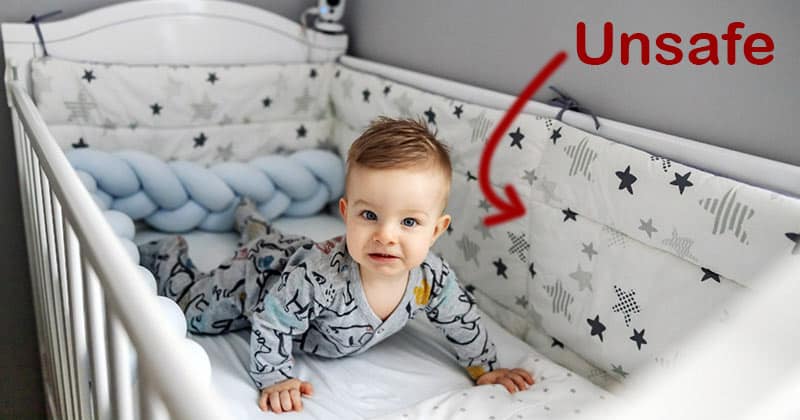 Credit: babyandchildsafety.com
Traditional padded crib bumpers like this have been recalled by the CPSC for dozens of infant suffocation deaths.
Credit: babyandchildsafety.com
Traditional padded crib bumpers like this have been recalled by the CPSC for dozens of infant suffocation deaths.
Are Crib Bumper Pads Still Manufactured and Sold in 2026?
The crib bumper market looks very different today than it did 15 years ago, driven by updated safety standards and widespread public health campaigns warning parents of their risks.
Traditional Padded Bumpers: Limited Availability
As of 2026, traditional plush padded crib bumpers are still produced, but their availability is far lower than in the 2000s. Major national retailers including Target, Walmart, and Buy Buy Baby have voluntarily removed nearly all padded bumper styles from their shelves and online listings, citing safety concerns. Many large online marketplaces, including Amazon, restrict sales of bumpers that fail to meet updated U.S. Consumer Product Safety Commission (CPSC) testing standards. You will still find small-batch, artisanal padded bumpers sold via independent nursery boutiques and direct-to-consumer brand websites, but these make up a tiny fraction of the overall crib accessory market.
Modern Breathable Crib Liners: The Confusing Exception
The product most parents today refer to as a “crib bumper” is actually a breathable mesh crib liner, a newer design that uses perforated, rigid materials to allow air flow while blocking small limbs from passing through crib slats. These liners are widely available at most major baby retailers, and their marketing often emphasizes “safety” and “breathability” — leading many parents to assume they are risk-free. It is critical to distinguish between these modern liners and traditional padded bumpers, as their safety profiles and regulatory status are very different.
Core Safety Risks Backed by Current Guidance
All major pediatric and child safety organizations warn that both traditional padded bumpers and breathable mesh bumpers carry avoidable risks for infants, with the highest danger for babies under 12 months old.
Suffocation and Strangulation Hazards
The single most serious risk of traditional padded bumpers is suffocation. Soft, plush materials conform easily to a baby’s face if they roll against the bumper during sleep, blocking their nose and mouth. Infants under 12 months lack the head control and motor skills to reposition themselves or push the soft material away from their face, and suffocation can occur in as little as 90 seconds. The CPSC has documented dozens of infant deaths and hundreds of non-fatal suffocation incidents linked to padded bumpers over the past 30 years, with most victims between 4 and 10 months old, the peak age for rolling and increased mobility. Loose ties or attachments on older bumper styles also pose a strangulation risk if they become wrapped around a baby’s neck. You can review the commission’s full CPSC crib bumper safety guidance for detailed incident data and safety recommendations.
Overheating and Increased SIDS Risk
Crib bumpers also raise the risk of overheating, a well-documented contributor to Sudden Infant Death Syndrome (SIDS). Padded bumpers trap body heat around the baby’s head and torso, preventing the cool air circulation that is critical for safe infant sleep. Even breathable mesh bumpers can slightly reduce airflow around the crib, making it harder for babies to regulate their body temperature during sleep. The American Academy of Pediatrics (AAP) notes that overheating is a well-documented SIDS risk factor, and bumpers eliminate the open airflow that keeps cribs at a safe, consistent temperature for sleeping infants. You can review the AAP’s full AAP safe sleep crib guidelines for detailed, age-specific safe sleep recommendations.
Entrapment and Injury from Poorly Fitted Designs
Loose or poorly fitted bumpers create dangerous gaps between the bumper and crib mattress or slats, where a baby’s head, arm, or leg can become trapped. This can lead to panic, injury, or positional asphyxia if the baby is unable to free themselves. Even bumpers that are initially secured tightly can shift as babies kick and move during sleep, creating new entrapment hazards night after night. In practice, many parents report that bumpers become loose after just a few weeks of use, creating hidden risks they may not notice during quick nighttime checks.
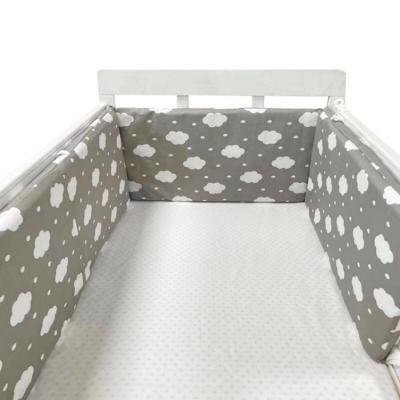 Credit: www.cpsc.gov
This style of traditional padded bumper was recalled by the U.S. CPSC after multiple infant suffocation deaths.
Credit: www.cpsc.gov
This style of traditional padded bumper was recalled by the U.S. CPSC after multiple infant suffocation deaths.
What Can You Use Instead of Crib Bumper Pads?
If you’re wondering what to use instead of crib bumper pads, the safest approach is to keep your baby’s sleep space simple. A firm, flat crib mattress with a properly fitted sheet is the basic setup recommended for infant sleep. Soft or padded items should not be added around the crib rails.
If you’re looking for practical products that can make everyday sleep easier, these are better options to consider:
1. Fitted Crib Sheet — The Everyday Essential
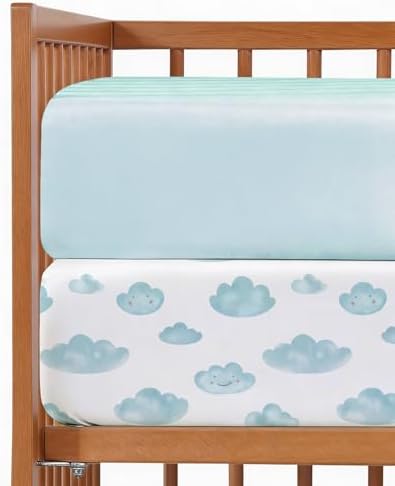
- PERFECT STANDARD CRIB FIT: Designed for standard crib mattresses 28”x52” with 8” deep pockets for a secure, smooth fit—n…
- MICROFIBER: Ultra-soft microfiber feels cozy and breathable for sensitive skin—an everyday baby essential that works for…
- STAYS PUT ALL NIGHT: 360° elastic edge hugs the crib mattress to help prevent shifting, even with wiggly sleepers—great …
A well-fitting crib sheet is one of the few items your baby needs in the crib. Choose a sheet made for your exact crib mattress and make sure it fits snugly without loose fabric.
What to look for:
- Snug fit on the crib mattress
- Breathable, durable fabric
- Elastic edges that stay securely in place
- Correct size for your crib mattress
Best for: Parents replacing decorative crib bumpers and looking for a simple, practical crib essential.
2. Baby Sleep Sack — A Safer Way to Keep Baby Warm

If you’re concerned about your baby getting cold without a blanket or crib bumper, a wearable blanket or sleep sack can be a practical alternative.
A properly fitted sleep sack keeps your baby’s body warm without adding loose bedding to the sleep area. Choose one that fits your baby’s size and follow the manufacturer’s instructions for use.
What to look for:
- Correct size and fit
- Appropriate warmth for the room
- Sleeveless design that allows comfortable movement
- Easy-to-use zipper or fasteners
Best for: Babies who need an extra layer of warmth without loose blankets in the crib.
3. Crib Mattress Protector — For Easier Cleanup
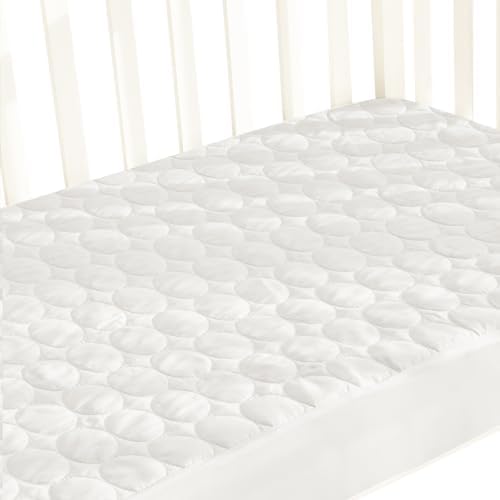
- Greatly Fit: Our waterproof crib mattress protector measures 28 x 52 x 5 inches, fitting snugly onto any standard mattre…
- Cool Comfort: Biloban baby crib pad keeps your baby warmer in winter and cooler in summer. Soft fabric is the most absor…
- Comfy, Ultra Soft and Noiseless: Our toddler crib mattress protector with an extra thick padding ensures your little one…
A waterproof crib mattress protector can help protect the mattress from diaper leaks, spit-up, and other everyday messes. It should fit securely underneath the fitted crib sheet rather than sitting loose in the sleep space.
What to look for:
- Correct crib-mattress size
- Snug fit
- Waterproof protection
- Easy-to-wash material
Best for: Parents who want to keep the crib mattress clean and protected.
What Should You Avoid Putting in the Crib?
Avoid replacing a padded crib bumper with another soft or padded item that sits around the inside of the crib. The American Academy of Pediatrics recommends keeping soft objects and loose bedding out of an infant’s sleep area.
For a safe sleep setup, use a firm, flat mattress with a fitted sheet and place your baby on their back for sleep. If you’re unsure about a particular product, check current guidance from the U.S. Consumer Product Safety Commission and your pediatrician before using it.
2026 Regulatory and Expert Guidelines
Safety rules for crib accessories have tightened significantly in recent years, with updated standards that have reshaped what products are available to consumers.
Government Safety Standards for Crib Accessories
The CPSC updated its crib bumper safety standards in 2022, requiring all bumpers sold in the U.S. to pass rigorous testing for suffocation, strangulation, and entrapment risks before they can be legally sold. Many major manufacturers discontinued traditional padded bumper lines entirely rather than invest in redesigning their products to meet these new, strict standards. Bumpers that do pass CPSC testing are required to carry clear, prominent labeling warning that they should not be used for infants under 12 months old, and that a bare crib is the safest sleep option.
Pediatric Association Recommendations for Safe Sleep
The AAP’s 2026 evidence-based safe sleep guidelines explicitly recommend against all soft crib bedding, including both traditional padded bumpers and breathable mesh bumpers, for infants under 12 months old. This recommendation is backed by decades of research linking soft crib barriers to increased SIDS, suffocation, and entrapment risk. The AAP advises that the only safe items for a baby’s crib are a firm, flat mattress and a tight-fitting waterproof fitted sheet, with no additional padding, blankets, pillows, or stuffed animals.
Common Crib Bumper Myths, Fully Debunked
Decades of marketing and anecdotal advice from other parents have created a long list of persistent myths about crib bumper safety. Here is what the evidence actually shows:
Myth 1: Bumpers Prevent Bruises from Crib Slats
Many parents believe bumpers are necessary to protect their baby from bruises or hair pulling when they kick or roll against hard crib slats. In reality, the minor bruises or hair pulling that can occur from contact with crib slats are almost always superficial and heal without intervention. These small injuries pose no long-term risk, whereas padded bumpers carry a risk of fatal suffocation that far outweighs any minor cosmetic injury from crib slats. In practice, most pediatricians advise parents to ignore minor bump-related bruises in favor of eliminating far more serious hazards.
Myth 2: Bumpers Stop Limb Entrapment
A common parental concern is that a baby’s arm, leg, or head will get stuck between crib slats. Bumpers seem like an obvious fix for this problem, but modern, safe cribs are built with slats spaced no more than 2 3/8 inches (6 cm) apart — a CPSC-mandated standard that is small enough to prevent even a newborn’s small hand or foot from passing through. A properly spaced, modern crib eliminates the risk of limb entrapment entirely, with no need for additional padding. Bumpers can actually increase entrapment risk by creating a soft surface that a baby’s limb can get stuck against, rather than passing safely through the slat gap.
Myth 3: Bumpers Improve Sleep Quality and Comfort
Some parents believe bumpers create a cozy, womb-like space that helps their baby sleep longer and more soundly. There is no peer-reviewed evidence to support this claim. Babies are able to sleep safely and comfortably on a firm, flat mattress with a fitted sheet alone, and many parents report that removing bumpers actually reduces nighttime restlessness, as babies are able to push off the crib sides as they learn to roll and sit up, rather than getting stuck against a soft barrier.
Myth 4: Breathable Mesh Bumpers Are 100% Safe
A common mistake parents make is assuming that a “breathable” label on a mesh bumper eliminates all risk. While these bumpers do reduce suffocation risk compared to padded styles, they still pose entrapment hazards if not fitted perfectly to the crib’s interior dimensions. Loose mesh bumpers can shift during sleep, creating gaps where a baby’s head can become trapped, and the AAP still recommends avoiding all crib bumpers, including breathable styles, for the safest possible sleep environment.
Safe, Low-Risk Alternatives to Traditional Crib Bumpers
If you’re looking to reduce minor bump-related injuries or add a small barrier to your baby’s crib, there are far lower-risk options than traditional padded bumpers.
Breathable Mesh Crib Liners (If You Insist on a Barrier)
If you are concerned about your baby’s limbs passing through crib slats, a tightly fitted breathable mesh crib liner is a lower-risk alternative to padded bumpers. These liners use rigid, perforated materials that allow air to flow freely, reducing suffocation risk, and are designed to fit snugly against the crib’s interior walls with no loose edges. If you choose to use a mesh liner, remove it as soon as your baby can roll over or push up on their hands and knees, as it becomes an entrapment risk once they are mobile.
Crib Design Features That Eliminate the Need for Bumpers
Modern cribs are built with safety features that eliminate the need for aftermarket bumpers entirely. Look for cribs with slats spaced no more than 2 3/8 inches (6 cm) apart, a snug-fitting mattress that leaves no gaps between the mattress and crib frame, and smooth, rounded edges on crib posts to prevent head injuries. Many modern cribs also include padded rail covers on the exterior of the crib (not the interior) to soften impact if a baby rolls against the side, without introducing soft barriers inside the sleep space.
Building a Fully Safe Sleep Environment
The safest possible crib setup for infants under 12 months old is completely bare, with only a firm mattress and tight-fitting fitted sheet. Follow these evidence-based steps to minimize risk:
- Use only a firm, flat crib mattress that fits the crib snugly with no gaps between the mattress and crib frame
- Use a tight-fitting, waterproof fitted sheet only; no additional padding, blankets, pillows, or stuffed animals
- Place your baby on their back to sleep for every nap and nighttime sleep, until they are able to roll over consistently on their own
- Keep the room temperature between 68 and 72°F (20 and 22°C) to avoid overheating. To reduce overheating risk, use correct sock layering for your baby’s sleep rather than adding padded crib bumpers for warmth.
- Use a wearable sleep sack or blanket instead of loose bedding to keep your baby warm
- Ensure crib slats are spaced no more than 2 3/8 inches (6 cm) apart to prevent head or limb entrapment
- Regularly inspect your baby’s nursery for hidden hazards like mold, which can exacerbate respiratory issues for sleeping infants; our guide to identifying and addressing nursery mold walks you through low-risk remediation steps
- If you’re setting up a safe sleep space while traveling, a properly assembled portable crib eliminates the need for aftermarket bumpers; our guide to proper travel crib setup ensures you get a secure, compliant setup every time
- If you’re looking to add gentle, non-hazardous soft goods to your baby’s sleep space, our guide to safe crib soft goods outlines exactly what is appropriate for different age groups
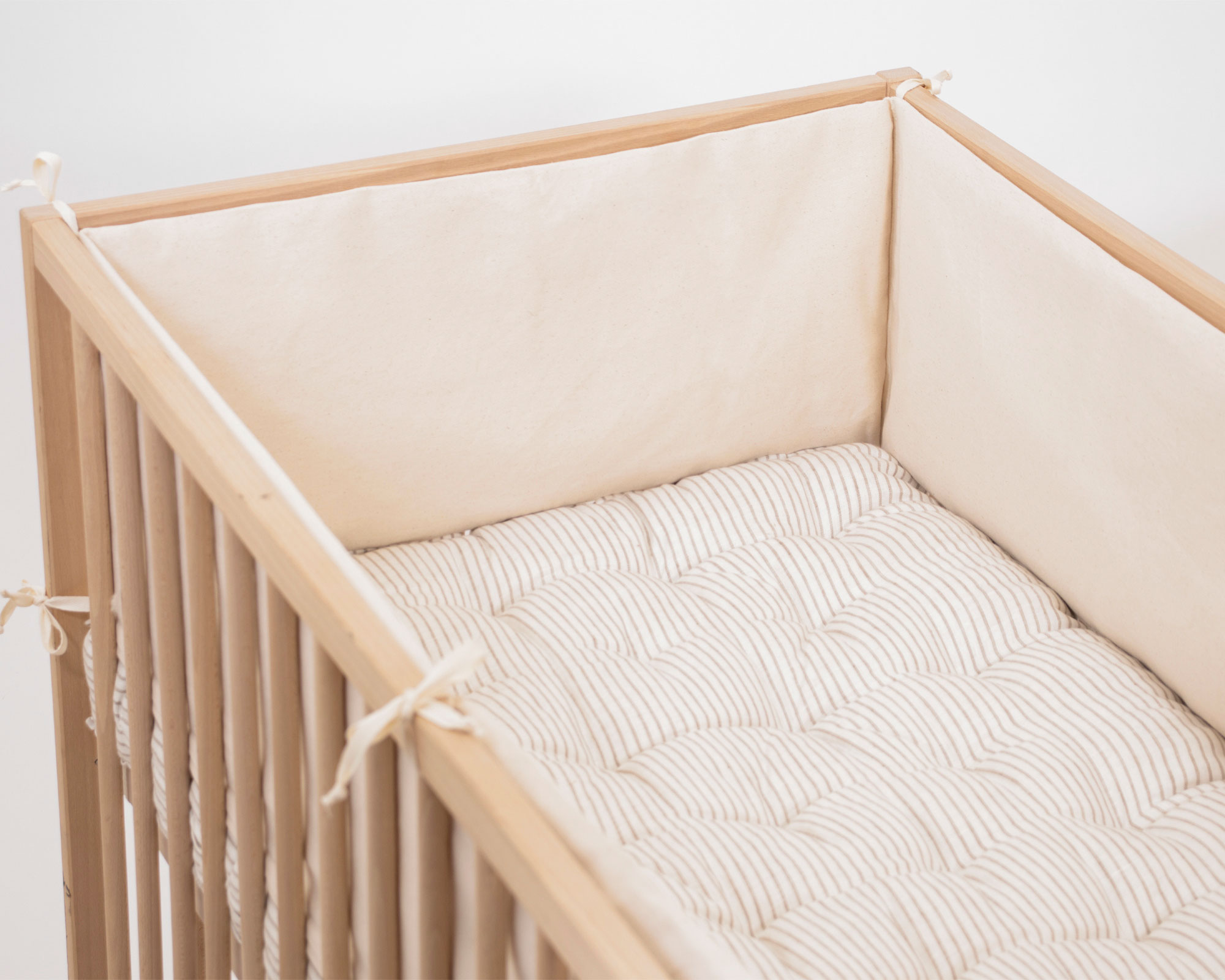 Credit: homeofwool.com
Modern breathable crib liners use firm, perforated materials to reduce suffocation risk while blocking small limbs from passing through crib slats.
Credit: homeofwool.com
Modern breathable crib liners use firm, perforated materials to reduce suffocation risk while blocking small limbs from passing through crib slats.
Frequently Asked Questions
Are crib bumper pads still available for purchase?
Yes, traditional padded crib bumper pads are still available for purchase as of 2026, but their availability is limited compared to 2010. Most major national retailers no longer carry them in-store, and many online marketplaces restrict listings to models that meet updated CPSC safety standards. You will still find small-batch, handmade bumpers sold via independent nursery boutiques and small brand websites, but these make up a tiny fraction of the overall crib accessory market.
Why are crib bumper pads considered unsafe?
Traditional padded crib bumpers are considered unsafe due to well-documented risks of suffocation, strangulation, and entrapment. Soft padding can block a baby’s airway if they roll against it, loose ties or attachments can pose strangulation hazards, and poorly fitted bumpers can create gaps where a baby’s head or limbs become trapped. The AAP and CPSC both recommend against their use for all infants under 12 months old.
Are breathable mesh crib bumpers safe for newborns?
While breathable mesh bumpers carry a lower suffocation risk than traditional padded bumpers, most pediatric safety organizations still recommend against using them for newborns and infants under 12 months old. Even mesh bumpers can shift during sleep, creating entrapment hazards, and they are not necessary for safe sleep if your crib has properly spaced slats. If you do choose to use a mesh liner, ensure it is fitted perfectly to your crib’s interior dimensions with no loose edges or gaps, and remove it as soon as your baby can roll or push up on their hands and knees.
What are safer alternatives to crib bumper pads?
The safest alternative to traditional bumpers is a bare crib with only a firm mattress and fitted sheet. If you are concerned about limb entrapment or minor bumps from crib slats, a tightly fitted breathable mesh crib liner is a lower-risk option, though the AAP still recommends avoiding all crib bumpers, including mesh styles, for the safest possible sleep environment. Wearable sleep sacks are also a safe, low-risk way to keep your baby warm without adding soft items to the crib.
How do regulations affect crib bumper pad production?
Updated CPSC safety standards implemented in 2022 require all crib bumpers to pass rigorous testing for suffocation, strangulation, and entrapment risks before they can be sold in the U.S. Many major manufacturers discontinued traditional padded bumper lines rather than invest in redesigning their products to meet these new, strict standards, leading to a sharp drop in the number of padded bumpers available on the market. Bumpers that do meet current standards are required to have clear safety labeling warning of the risks of use for infants under 12 months old.
Final Verdict and Next Steps for Parents
As of 2026, traditional padded crib bumper pads are still manufactured and sold, but their availability is limited, and they are strongly discouraged by every major pediatric and child safety organization in the U.S. While modern breathable mesh liners are a lower-risk alternative for parents concerned about limb entrapment, the safest crib setup for infants under 12 months old is completely bare, with only a firm mattress and fitted sheet.
Always follow current AAP and CPSC safe sleep guidelines when setting up your baby’s crib, and prioritize evidence-based safety recommendations over anecdotal advice from other parents or social media. For parents worried about stepping away from the nursery after putting baby down, our tips for errands with an early-sleeping baby let you manage necessary tasks without disrupting safe sleep routines. For more evidence-based baby product safety guidance, browse our full library of parent-tested nursery and sleep resources.

Emma Grace is a devoted mother and passionate content writer at BestBabyCart.com. With firsthand parenting experience and a love for research, she creates helpful guides and honest reviews to support parents in choosing the best for their babies. Her goal is to make parenthood easier, one article at a time.