Dr. Brown’s Anti-Colic Options+ Wide-Neck Glass: Best Hygiene-First Material Choice
#4
Dr.Borosilicate glass
7.7OUT OF 10
Build quality8.4
Ease of use7.8
Venting performance9.0
Owner satisfaction7.8
This is the only glass option in the entire lineup while retaining the same internal vent rod system. Borosilicate glass resists milk protein staining and odor absorption far better than plastic alternatives. Parents who sterilize with boiling water or chemical solutions report zero degradation after months of daily use.
The five ounce capacity matches the smallest newborn stomachs. Three bottles in the pack means you start with a smaller rotation but can supplement with additional glass or plastic units later. The wide neck opening allows the vent rod assembly to pass through for cleaning, which solves the historical complaint about narrow glass versions.
Flaws but not dealbreakers. Glass bottles weigh roughly three times more than plastic equivalents. A dropped bottle shatters, creating a safety hazard during midnight feeds. The heavier weight also makes one-handed feeding more challenging for parents recovering from delivery or managing a fussy infant alone.
If you are building out your full feeding station, pairing this glass bottle with a sturdy
bottle drying racks checklist ensures you have adequate airflow space for all the extra disassembly components these vented systems require.
⚠Safety: Glass bottles require careful handling around infants. Keep backup plastic bottles for travel and outdoor situations where dropping is likely. The vent rod assembly remains identical to the plastic version.
Pros
- ✓Borosilicate glass never absorbs milk odors or stains, maintaining hygiene that plastic cannot match over extended use.
- ✓Identical vent rod system to the plastic Options+ line delivers the same clinically studied anti-colic benefits.
- ✓Wide neck design finally allows thorough cleaning of the internal components in glass form factor.
- ✓Safe for boiling water sterilization without warping or degrading the material like plastic bottles can.
Cons
- ✕Three-bottle pack size requires immediate supplemental purchases for families needing multiple daily rotations.
- ✕Weight and fragility make glass impractical for car seats, strollers, and on-the-go feeding situations.
- ✕Higher upfront cost per bottle compared to plastic alternatives strains budgets for families needing quantity.
Material
Borosilicate glass
Best for: Parents prioritizing long-term hygiene and odor resistance over portability and weight concerns during home feeding sessions.
Dr. Brown’s Anti-Colic Options+ Wide-Neck Baby: Best Newborn-Size Entry into the System
#5
Dr.Five ounce entry
7.8OUT OF 10
Build quality7.5
Ease of use7.2
Venting performance9.0
Owner satisfaction8.0
This four-bottle five ounce pack gives you the lowest entry point into Dr. Brown’s ventilated system. Four bottles cover a single day of newborn feeding without requiring immediate reordering. The smaller capacity aligns with early gastric volumes before growth spurts increase demand.
The internal vent rod works identically to the nine ounce version. Wide neck access matches the current generation redesign. Parents appreciate starting with this smaller format when they want to test whether their infant responds to the vented design before committing to a larger rotation or spending more on the bigger bottles.
Flaws but not dealbreakers. Four bottles limit your rotation during peak colic periods when six to eight daily feeds are standard. You will need to wash and dry faster between uses. The five ounce markings prove harder to read during low-light nighttime preparation compared to higher contrast options.
For parents managing multiple feeding accessories, checking
water wipes things to know can help you streamline cleanup routines when bottle washing competes with diaper changes during fussy phases.
⚠Rotation: Four bottles may prove insufficient during high-demand colic phases. Consider pairing with the Evenflo six-pack for supplemental capacity during peak feeding weeks.
Pros
- ✓Lowest cost entry into the Dr. Brown’s anti-colic ecosystem without committing to the larger nine ounce format.
- ✓Four bottle count covers minimum daily needs while letting parents evaluate system compatibility with their infant.
- ✓Identical vent rod performance to the full-size version ensures consistent anti-colic results across the product line.
- ✓Wide neck design eliminates the historic cleaning difficulties that plagued older narrow-neck Dr. Brown models.
Cons
- ✕Four bottle rotation creates washing pressure during cluster feeding periods that demand six or more daily feeds.
- ✕Measurement lines sit lower on the bottle body, reducing visibility during dimly lit midnight preparation sessions.
- ✕Smaller capacity requires earlier transition to nine ounce bottles as your infant grows past the newborn stage.
Dishwasher safe
Yes, top rack
Best for: Parents testing the Dr. Brown’s system with a modest commitment before investing in larger capacity rotations.
Buying Guide: Bottle Size, Venting Technology and Cleaning Demands
Understanding wide neck baby bottles requires separating three decision factors that matter most for newborn feeding. Bottle capacity determines how often you refill. Venting technology dictates colic relief effectiveness.
Cleaning complexity affects daily sanity during exhausted early weeks.
How much milk does a typical newborn hold? According to pediatric feeding guidelines from the American Academy of Pediatrics, day-one stomachs hold approximately one to two teaspoons. By week one, volumes reach two to three ounces. By month one, most infants consume four to five ounces per feed.
This growth trajectory explains why many parents start with five ounce bottles and upgrade to nine ounce options within the first forty days. The Evenflo six-pack in nine ounces skips that transition entirely, while the Dr. Brown's five ounce packs let you match early volumes precisely.
What makes an anti-colic bottle actually work? Anti-colic bottles manage air ingestion during feeding. Standard bottles let air mix directly with milk, creating bubbles your infant swallows. Those bubbles travel through the digestive tract, causing gas pain and fussiness.
Ventilated designs redirect air away from the milk stream. The Evenflo Proflo system uses external channels around the valve. Dr.
Brown's employs an internal vent rod that physically separates air from milk inside the chamber. Clinical observations from pediatric feeding specialists consistently rate Dr. Brown's internal ventilation superior for severe colic cases, while parent reports praise Evenflo's simpler assembly for daily convenience.
How much time should you spend cleaning? This question determines which bottle survives week two. Simple wide neck bottles like Evenflo require removing just the nipple, cap, and valve gasket. Assembly takes thirty seconds.
Dr. Brown's bottles demand tracking seven internal components during reassembly. Missing the vent rod disables the anti-colic function entirely.
Parents report spending forty percent longer cleaning Dr. Brown's systems compared to Evenflo alternatives. If your support network helps with evening feeds, the extra assembly time matters less.
Solo parents juggling household tasks alongside newborn care often prefer the faster clean routes.
Does material choice affect long-term costs? Plastic bottles show micro-scratches after repeated sterilization cycles. These scratches harbor bacteria if cleaning routines slip. Glass bottles resist staining and odor forever but cost more upfront and weigh heavily.
The Dr. Brown's glass option delivers permanent hygiene at the price of weight and breakage risk. Most parents split their rotation, using glass at home and plastic for outings.
Which flow rate matches your newborn's pace? Slow-flow nipples suit young infants who nurse lazily or sleep through feeds. Fast-flow nipples frustrate newborns who cannot generate sufficient suction. Both brands offer variable flow options sold separately.
Starting with the slowest rate prevents choking incidents during early Weeks. You can always upgrade nipples as your infant demonstrates stronger feeding muscles.
To see how these factors play out on real picks, compare the Evenflo Feeding Premium Proflo Venting Balance, Evenflo Feeding Premium Proflo Venting Balance and the Dr. Brown's Anti-Colic Options+ Wide-Neck Baby reviewed above.
Who Should NOT Buy Best Wide Neck Baby Bottles for Newborns
This category suits formula-fed and combination-fed newborns. It fails certain parents immediately. Understanding your situation prevents wasted money and unnecessary frustration.
You Are Exclusively Breastfeeding and Worried About Nipple Confusion
Parents dedicated to exclusive breastfeeding often avoid bottles entirely during the first four to six weeks. Introducing artificial nipples before lactation establishes itself can confuse infants who must use different tongue and jaw mechanics for breast versus bottle feeding. The American Academy of Pediatrics notes that delayed bottle introduction supports breastfeeding success rates.
If you plan exclusive nursing, skip these bottles until your milk supply stabilizes and your provider confirms feeding adequacy. Consider a manual breast pumps checklist instead if you need to express milk without introducing bottle nipples during early establishment.
You Need Portability Above All Else
Glass bottles serve home environments excellently. They fail outdoors. Dropping a glass bottle on pavement creates safety hazards and interrupt feeds.
One-handed feeding proves difficult with heavy glass during car rides or walks. Parents prioritizing mobility should select the Evenflo plastic options or consider travel-friendly alternatives like silicone foldable bottles designed for on-the-go convenience. The weight difference matters more than you expect during extended outings.
You Want Minimal Assembly During Midnight Feeds
Seven-component disassembly sounds manageable in daylight. Try it at 3 AM with sleep deprivation affecting your coordination. Parents reporting severe sleep disruption during weeks two through four consistently choose simpler bottle systems.
The Evenflo Proflo vents require three pieces maximum. Dr. Brown's internal rods demand complete component tracking.
If overnight efficiency matters more than clinical-grade anti-colic engineering, prioritize the simpler vent designs over internal rod systems. Pairing bottle choices with proper nursing pillows organization can reduce the number of items you manage during exhausting night sessions.
Final Verdict
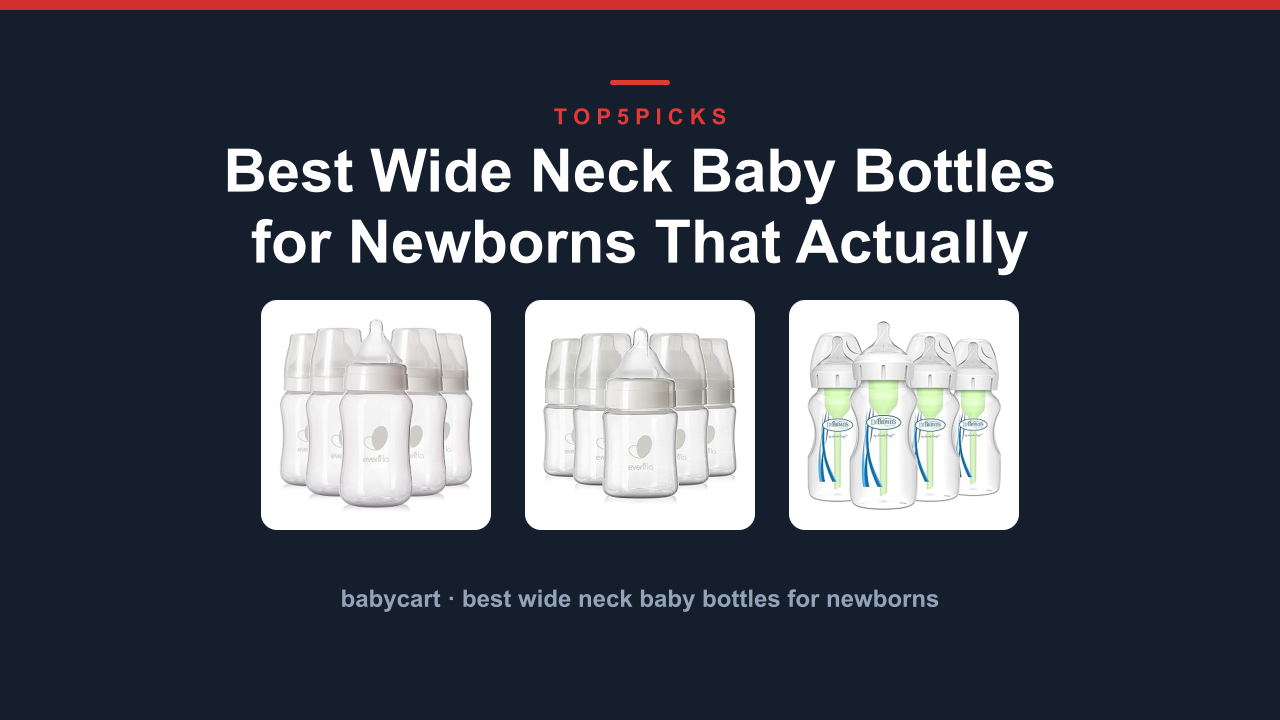
The best wide neck baby bottle for most newborns remains the Evenflo Feeding Premium Proflo Venting Balance 9 oz pack. Six bottles deliver immediate daily rotation capacity while the wider mouth simplifies cleaning and the venting system addresses common colic complaints without complex assembly routines.
Want smaller volumes for true newborn stomachs? The Evenflo 5 oz pack matches early feeding capacity while preserving the same easy-clean advantages and reliable venting performance across both sizes.
Dealing with diagnosed colic or severe spit-up? The Dr. Brown's 9 oz Options+ delivers clinically supported internal venting that outperforms external channel systems for infants struggling with gas pain and feeding frustration.
Preferring glass hygiene for home use? The Dr. Brown's glass 5 oz set combines borosilicate durability with the same internal vent rod technology, though you sacrifice portability and pay more per bottle.
Testing the Dr. Brown's system without major commitment? The 4-pack 5 oz version offers the lowest entry point into the vented category while letting you evaluate system compatibility before expanding your rotation.
Need guidance on other feeding equipment? Review our soft structured carriers guide for options that pair well with bottle feeding外出 scenarios, and check our pull up diapers checklist as your infant approaches the toddler transition period.
Jump back to the Who Should NOT Buy section if exclusive breastfeeding, extreme portability, or midnight-speed simplicity describes your situation more than the profiles above.
FAQ
What's the best wide neck baby bottles for newborns overall?
The Evenflo Feeding Premium Proflo Venting Balance 9 oz six-pack earns the top position. It balances cost-per-bottle, cleaning speed, and adequate anti-colic venting for most infants without demanding complicated assembly routines. Verified buyer feedback consistently ranks it highest for daily usability across newborn through early infant months.
Are wide neck bottles actually better than regular bottles?
Wide neck openings allow standard bottle brushes to reach the bottom completely. Narrow neck bottles trap residue along curved interior walls that brushes cannot access. This cleaning advantage reduces bacterial buildup risks significantly.
Most modern anti-colic designs now feature wide necks because manufacturers recognize the hygiene benefit regardless of venting architecture.
How long do anti-colic bottles actually reduce colic symptoms?
Anti-colic bottles address air ingestion, which causes gas pain mimicking colic symptoms. Parents report noticeable reductions in fussiness within three to five feeding sessions. However, true infant colic involves multiple factors beyond feeding mechanics.
If symptoms persist beyond two weeks of consistent bottle use, consult your pediatrician to rule out milk protein allergies or gastrointestinal issues that bottles cannot resolve.
Can I switch between Evenflo and Dr. Brown's nipples?
No. Each brand uses proprietary threading and valve configurations. Evenflo nipples fit Evenflo bottles only.
Dr. Brown's nipples require Dr. Brown's bottles.
Mixing components between brands breaks the venting seal and compromises anti-colic function. Stick to one brand's ecosystem or maintain separate rotations for each system.
Should I buy glass or plastic bottles for newborns?
Plastic bottles suit families prioritizing weight, drop-resistance, and travel convenience. Glass bottles excel for parents emphasizing long-term hygiene, odor prevention, and sterilization durability without material degradation. Many households compromise by using glass at home and plastic for outings.
Your living situation, support network, and cleaning routines should drive this decision rather than marketing claims alone.
Taslima Khanam Sultana, a loving mom of three, founded BestBabyCart.com to help new parents navigate the world of baby products with ease. Her passion for making parenting simpler shines through delivering honest, unbiased reviews on must-haves like diapers, strollers, and feeding gear. Taslima’s mission is to empower families with expert tips, ensuring every product is safe and top-quality for your little one. Drawing from her own parenting journey, she’s dedicated to supporting yours!
Advertisement
Advertisement