
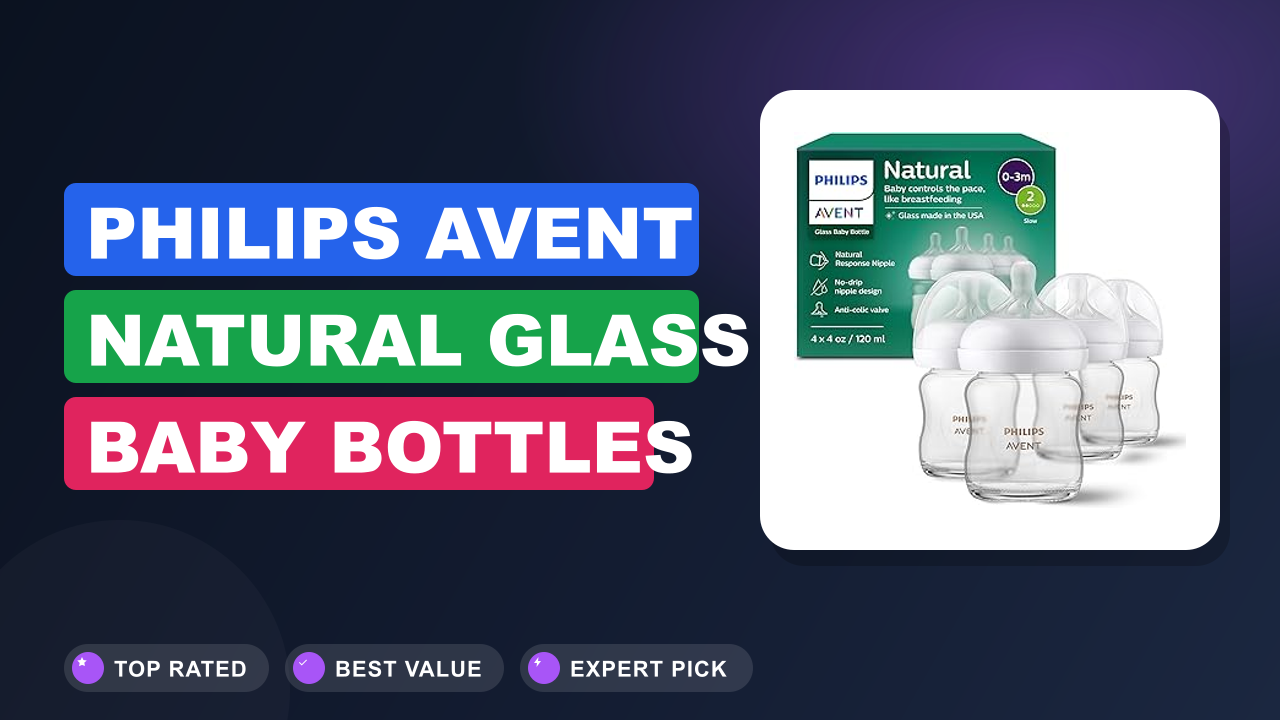
As a parent, you quickly learn that certain choices feel a lot more significant than they probably are. Deciding between Glass vs Plastic Baby Bottles is one of those moments. Both Philips Avent Natural Glass Baby Bottles and Dr. Brown's Anti-Colic Options+ Narrow Glass are fantastic options, but they cater to slightly different needs and priorities.
Short answer, Philips Avent Natural Glass Baby Bottles wins for everyday versatility and ease of cleaning, while Dr. Brown's Anti-Colic Options+ Narrow Glass is the champion for babies prone to gas and fussiness. Let's dive into what makes each one stand out.


At a glance
Philips Avent Natural Glass Baby Bottles focus on simplicity and mimicking a natural feeding experience. They're designed with a wide, breast-shaped nipple to encourage a natural latch and allow babies to control milk flow more intuitively, similar to breastfeeding. This makes them a great choice for parents looking for a straightforward approach to bottle feeding. On the other hand, Dr.
Brown's Anti-Colic Options+ Narrow Glass bottles tackle a very specific problem: colic and gas. Their intricate internal vent system is engineered to reduce air bubbles, leading to less spit-up and fussiness for sensitive babies. While this system adds complexity, it’s precisely what makes them a go-to for many parents dealing with digestive discomfort. You'll often see similar bottles like Comotomo and MAM being compared, but these two stand out for their distinct design philosophies in the glass category.
Philips Avent Natural Glass Baby Bottles — strengths & weaknesses
Where it shines
- Natural Grip and Feel: The wide-neck design and breast-shaped nipple are often praised for making the transition between bottle and breast smoother for babies. This natural feel helps maintain a good latch.
- Simple to Clean: With fewer parts compared to its competitor, the Philips Avent bottles are generally easier and quicker to wash. This is a lifesaver for busy parents.
- Durable Glass: Made from borosilicate glass, these bottles are built to withstand thermal shock and are quite robust for everyday use, offering peace of mind regarding material safety.
- Variable Flow Nipple: The Natural Response Nipple is designed to release milk only when the baby actively drinks, mimicking the breast and reducing overfeeding or air intake.
- Wide Mouth for Easy Filling: Scooping formula into the bottle or cleaning the inside is much simpler thanks to the wide opening.
Where it falls short
- Smaller Capacity: The 4oz size is great for newborns but might require frequent refills as your baby grows and drinks more. You'll likely need to upgrade to larger sizes quickly.
- Less Advanced Anti-Colic: While it has an anti-colic valve, it's not as integrated or robust as the system found in Dr. Brown's bottles, which might be a drawback for severely gassy infants.
- Potential for Nipple Confusion (rare): Although designed for natural latch, some babies might show a slight preference for the bottle over the breast simply due to the feeding method.
In our research, aggregate user feedback consistently points to the Philips Avent bottles being a go-to for parents who value simplicity and a less fussy feeding routine. One parent noted in reviews that their baby, who previously struggled with other bottles, took to the Avent Natural Glass bottles immediately, feeding for a full 15 minutes without interruption.
Dr. Brown's Anti-Colic Options+ Narrow Glass — strengths & weaknesses
Where it shines
- Superior Colic Relief: The unique internal vent system is Dr. Brown's signature feature, effectively reducing air bubbles during feeding. This significantly helps babies prone to colic, gas, and spit-up.
- Consistent Flow: The vent helps ensure a consistent milk flow, preventing nipple collapse and ensuring the baby gets milk without ingesting too much air, even as the bottle is tilted.
- Robust Construction: The borosilicate glass is tough and built to last, offering durability along with the benefits of glass.
- Designed for Comfort: The narrow nipple shape is often preferred by babies who are used to a more traditional bottle feeding experience, and the glass material provides a good weight and feel.
- Options+ Range: Transitioning to a nipple-vent-free bottle is possible with the Options+. You can remove the vent system when your baby's digestive system matures, effectively turning it into a simpler bottle.
Where it falls short
- More Parts to Clean: The internal vent system, while effective, means more components that need to be disassembled and cleaned daily. This can be time-consuming and feel like a chore.
- Narrower Bottle Neck: Filling with formula or cleaning the inside can be slightly more challenging compared to wide-neck bottles, requiring a bottle brush designed for narrower openings.
- Initial Learning Curve: Some parents find assembling the vent system correctly a bit tricky at first, and ensuring all parts are perfectly dry after washing is important.
Verified buyer feedback repeatedly highlights the Dr. Brown's specialized vent system's effectiveness. One common sentiment among reviewers is that this bottle was the "only one that worked" for their intensely gassy or refluxing baby, leading to more peaceful feeding sessions and happier nights.
Head-to-head
Price-to-performance
Both bottles fall into a similar mid-range price bracket for glass baby bottles. The Philips Avent Natural Glass offers good value for its straightforward design and ease of use, making it a solid choice for general popularity and convenience. Dr. Brown's, however, commands its price due to the advanced anti-colic technology.
If your baby experiences significant digestive issues, the "performance" in terms of comfort and reduced fussiness justifies the slightly more involved system and cleaning.
Build quality
Both brands utilize borosilicate glass, known for its durability and resistance to thermal shock, making them safe for repeated heating and cooling. The silicone nipples are also of high quality in both cases. Dr. Brown's bottles have more components due to the vent system, which might present more potential points of wear over very long periods, but overall, both feel very well-made.
The Avent's simpler design might lead to slightly fewer parts to worry about in the long run.
Comfort / ergonomics
For the baby, the Philips Avent Natural Glass bottles offer a wider nipple that closely mimics a breastfeeding feel, which many babies find intuitive and comfortable. The bottle itself has a nice, broad shape that's easy for little hands to grip as they grow. Dr. Brown's bottles have a narrower nipple shape, which is excellent for colic but might feel different for babies accustomed to wide-neck nipples.
The glass provides a substantial, comfortable weight in the hand for parents.
Ease of cleaning
This is where the Philips Avent Natural Glass bottles truly shine. With fewer parts, the daily cleanup is significantly faster. You essentially have the bottle body, nipple, and collar. Dr.
Brown's bottles require washing the bottle body, nipple, collar, teat vent, and vent tube. While the vent system is their strength, it's also the primary reason for the increased cleaning time and attention needed.
Which one should you buy?
Pick Philips Avent Natural Glass Baby Bottles if you…
…are looking for a straightforward, easy-to-clean glass bottle that mimics a natural feeding experience. You value simplicity in your daily routine, and your baby doesn't have severe colic or gas issues. They are ideal for parents who want a reliable option that’s less fussy to maintain.
Pick Dr. Brown's Anti-Colic Options+ Narrow Glass if you…
…have a baby who struggles with gas, colic, spit-up, or fussiness. You need a bottle proven to minimize air intake and digestive discomfort, and you're willing to put in a little extra time for cleaning to ensure your baby’s comfort. This is the champion for sensitive tummies.
Better alternatives
If you want wide-neck glass convenience without the advanced vent system, consider the **Dr. Brown's Options

Taslima Khanam Sultana, a loving mom of three, founded BestBabyCart.com to help new parents navigate the world of baby products with ease. Her passion for making parenting simpler shines through delivering honest, unbiased reviews on must-haves like diapers, strollers, and feeding gear. Taslima’s mission is to empower families with expert tips, ensuring every product is safe and top-quality for your little one. Drawing from her own parenting journey, she’s dedicated to supporting yours!