

Strollers are everyday essentials for parents and caregivers, yet improper use, poor maintenance, or unsafe design can lead to preventable injuries. Studies and safety authority reports consistently show that stroller-related incidents often occur due to tip-overs, brake failures, improper harness use, or unsafe environments rather than manufacturing defects alone.
Most stroller accidents happen:
- During everyday walks on uneven sidewalks or slopes
- When caregivers stop briefly without engaging brakes
- While boarding public transport or navigating stairs
- When heavy bags are hung from stroller handles
This stroller safety checklist is designed for:
- New and expecting parents
- Caregivers, grandparents, and babysitters
- Families who travel frequently with strollers
Used consistently, it helps reduce risk and build safe daily habits.
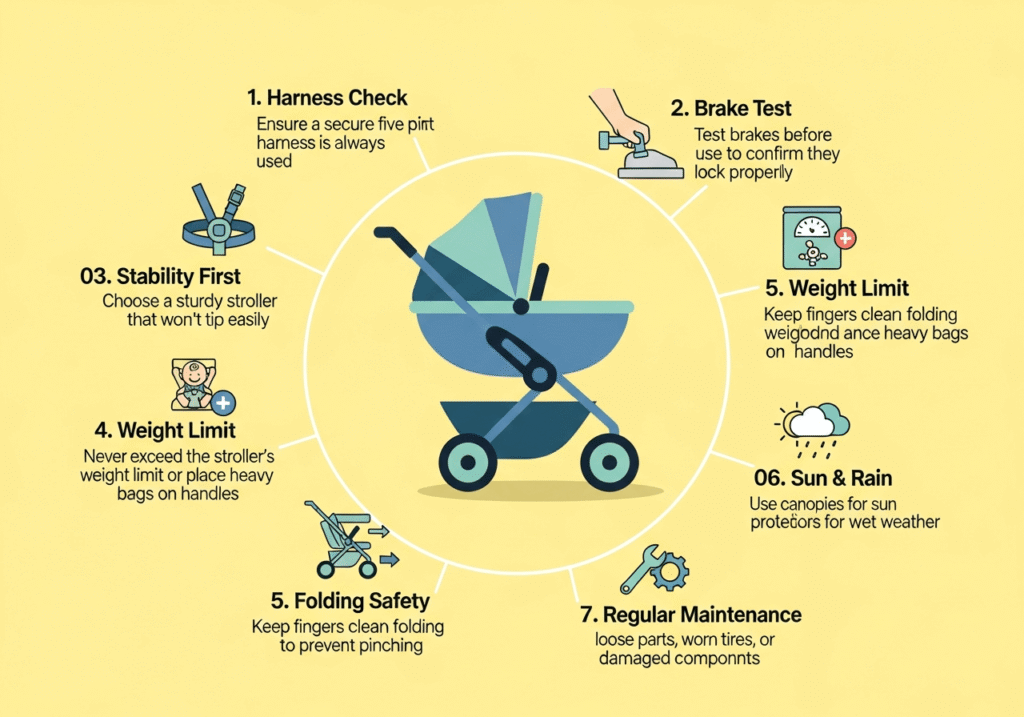
Pre-Purchase Safety Checklist (Before You Buy)
Before purchasing a stroller, safety should be prioritized over style or convenience.
Check for compliance with safety standards
- Look for certification under recognized standards such as JPMA, ASTM, or EN
- Avoid unbranded or uncertified products
Confirm age and weight suitability
- Ensure the stroller is designed for your child’s current and near-future size
- Using a stroller beyond its weight limit increases tip-over risk
Evaluate stability and tip-over resistance
- Test the stroller with weight in the seat and basket
- It should remain stable on flat surfaces and mild inclines
Assess build quality
- Sturdy frame with no sharp edges
- Secure joints and durable, breathable fabric
Inspect brakes and wheel locks
- Brakes should engage firmly and easily
- Wheel locks must hold the stroller in place
Choose the right harness system
- A 5-point harness provides better restraint than a 3-point system, especially for active children
Check recall and safety history
- Research whether the model or brand has been recalled
- Avoid second-hand strollers with unknown safety records
Setup & Assembly Safety Check
Improper assembly is a common source of stroller accidents.
- Follow manufacturer instructions step by step
- Ensure all locking mechanisms click firmly into place
- Confirm wheels are fully attached and properly aligned
- Test seat recline positions to ensure smooth and secure adjustment
- Check that canopies, trays, and accessories are tightly secured and do not interfere with the child’s space
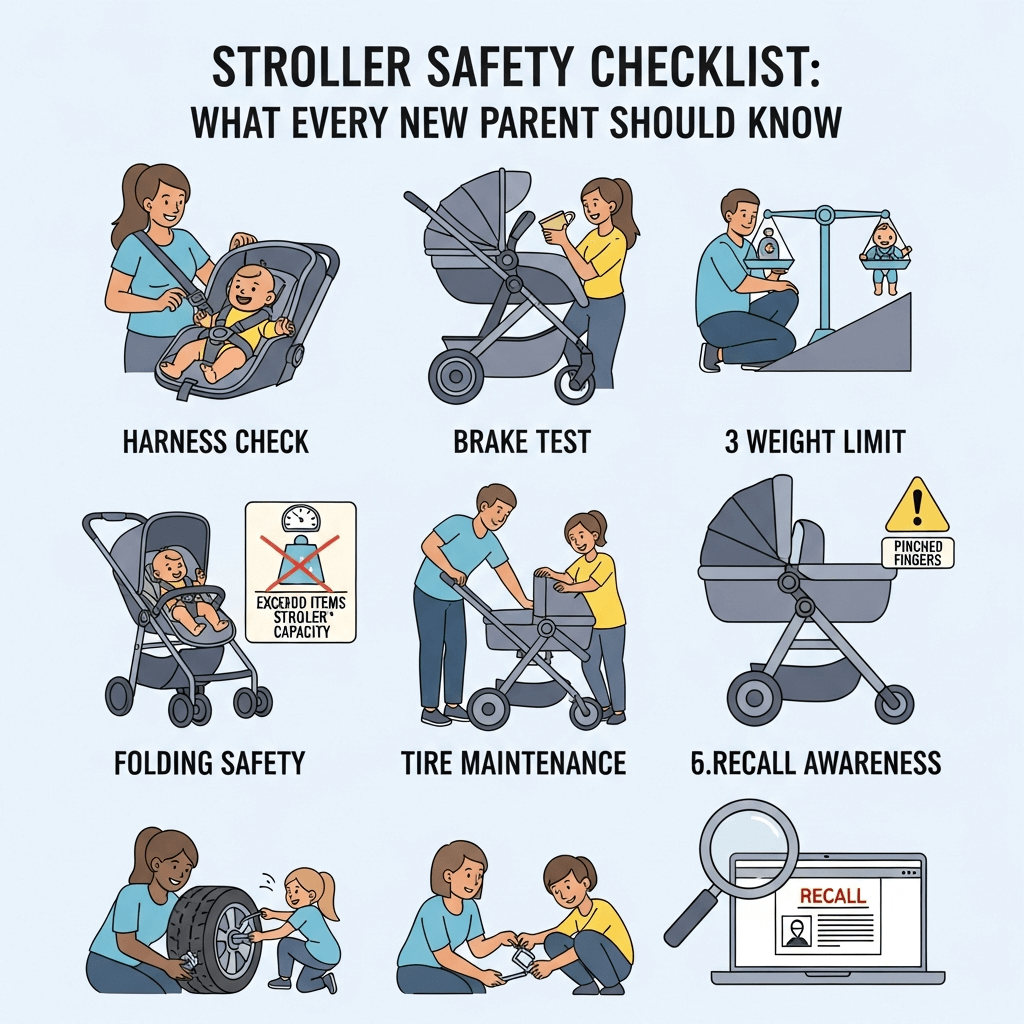
Harness & Seating Safety
The harness is the most critical safety feature.
- Position straps snugly over shoulders and hips
- You should fit no more than two fingers between strap and child
- Perform a buckle security test by gently pulling upward
- Adjust shoulder strap height as your child grows
- Inspect padding and seams for rough edges or loose stitching
Brake & Wheel Safety Checklist
Reliable brakes and wheels are essential for control.
- Test brakes on flat surfaces and gentle slopes
- Always lock swivel wheels when stability is needed
- Inspect tires for wear, cracks, or low inflation (if air-filled)
- Ensure axles are straight and wheels rotate smoothly
- Use strollers only on terrains they are designed for
Usage Safety Checklist (Every Time You Use the Stroller)
Safe habits matter as much as safe equipment.
- Always secure the harness, even for short stops
- Lock brakes whenever the stroller is stationary
- Never hang heavy bags from handles
- Help children in and out—do not let them climb alone
- Follow the one-child rule unless the stroller is designed for multiple occupants
Terrain & Environment Safety
Environmental factors significantly increase risk.
- Navigate curbs and slopes slowly and straight on
- Never use strollers on escalators or stairs
- Protect children from heat, rain, and strong wind without restricting airflow
- Be cautious in crowded areas and public transport
- Use reflective elements or visibility flags when near traffic
Folding, Carrying & Transport Safety
Improper folding can cause finger injuries and equipment damage.
- Always remove the child before folding
- Identify finger-pinch zones and keep hands clear
- Ensure the stroller locks securely when folded
- Secure strollers in car trunks to prevent shifting
- For air travel, confirm airline handling and locking procedures
Maintenance & Regular Safety Inspections
Routine maintenance extends stroller safety and lifespan.
Weekly checks
- Harness, brakes, and wheels
Monthly inspections
- Frame joints, fasteners, and fabric wear
Cleaning
- Follow manufacturer guidelines
- Avoid harsh chemicals that weaken materials
Replace parts when needed
- Do not improvise repairs with non-approved components
Stop using the stroller if
- Structural cracks appear
- Brakes fail
- The stroller has been recalled or severely damaged
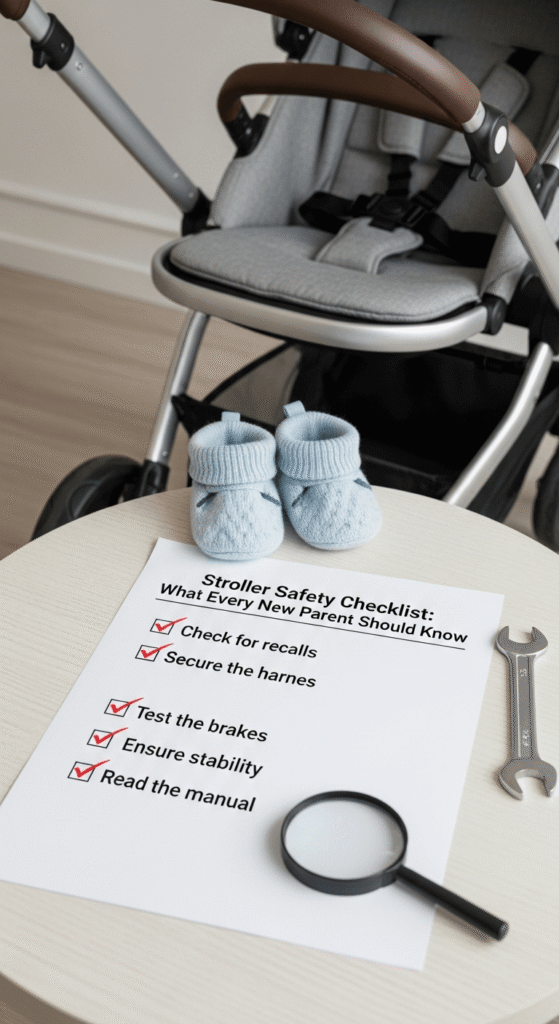
Accessories & Add-Ons: Safety Do’s and Don’ts
Accessories can improve comfort—but also introduce risks.
- Use only manufacturer-approved accessories
- Ensure rain covers allow proper ventilation
- Avoid excessive blankets that may cause overheating
- Do not overload cup holders, hooks, or organizers
- Secure toys carefully to prevent choking or entanglement
Common Stroller Safety Mistakes to Avoid
- Skipping harness use
- Overloading storage baskets
- Continuing to use damaged or recalled strollers
- Leaving children unattended, even briefly
- Using strollers for jogging, shopping loads, or tasks they weren’t designed for
Quick Printable Stroller Safety Checklist
A one-page checklist should include:
- Pre-use checks: harness, brakes, wheels
- In-use rules: supervision, terrain awareness
- Post-use checks: cleaning and storage
Ideal for saving on mobile devices or printing for caregivers.
Expert Tips & Pediatric Safety Advice
- Adjust safety practices as children grow and become more active
- Infants require full recline and neck support
- Transition to toddler strollers only when children can sit upright unassisted
- Regularly review updated safety recommendations from pediatric and consumer safety authorities
Conclusion & Final Safety Reminder
Stroller safety is not a one-time decision—it’s a daily practice. Choosing a well-designed stroller, assembling it correctly, maintaining it regularly, and using it responsibly can significantly reduce injury risk.
Make safety checks a habit, share this checklist with all caregivers, and review it as your child grows. A few extra seconds of attention can prevent serious accidents.
Frequently Asked Questions (FAQ): Stroller Safety Checklist
At what age can a baby safely use a stroller?
Most babies can use a stroller from birth only if it fully reclines or is compatible with an infant car seat. Babies should have proper head, neck, and back support. Always follow the manufacturer’s age and weight recommendations.
Is a 5-point harness really necessary?
Yes. A 5-point harness (shoulders, hips, and crotch) provides significantly better restraint than a 3-point harness, especially as babies grow more active and attempt to lean or climb.
Should I use the harness even for short trips?
Absolutely. Many stroller accidents happen during very short stops when caregivers skip the harness “just for a minute.” Always buckle up—no exceptions.
Is it safe to hang bags on stroller handles?
No. Hanging heavy bags on stroller handles increases the risk of tip-over accidents, particularly when the child shifts weight or the stroller is stationary. Use the storage basket instead and stay within weight limits.
How often should I check stroller brakes and wheels?
- Brakes: Test before every outing
- Wheels: Inspect weekly
- Full safety check: Once a month
Frequent checks help catch wear before it becomes dangerous.
Can I use a stroller on stairs or escalators?
Never. Strollers should not be used on stairs or escalators under any circumstances. Always carry your child separately and fold the stroller when navigating these areas.
Are second-hand strollers safe to use?
They can be—but only if:
- The stroller has not been recalled
- All parts are intact and functional
- The harness, brakes, and frame are in good condition
- You have access to the original manual
Avoid very old models or those with missing parts.
What should I do if my stroller is recalled?
Stop using it immediately. Follow the manufacturer’s recall instructions, which may include repairs, replacements, or refunds. Continuing to use a recalled stroller is unsafe.
Can accessories make a stroller unsafe?
Yes. Third-party accessories—such as hooks, organizers, or thick blankets—can:
- Reduce ventilation
- Cause overheating
- Increase tip-over risk
- Create choking or entanglement hazards
Only use accessories approved by the stroller manufacturer.
How do I know when it’s time to stop using a stroller?
Stop using a stroller if:
- Your child exceeds the height or weight limit
- Brakes no longer function properly
- The frame is cracked or bent
- Parts are missing or cannot be securely replaced
Safety always outweighs convenience.
Is jogging with a regular stroller safe?
No. Regular strollers are not designed for jogging or running. Use only jogging strollers with fixed front wheels, proper suspension, and wrist straps if you plan to run.
What’s the most common stroller safety mistake parents make?
The most common mistake is not using the harness consistently, followed closely by overloading the stroller and failing to lock brakes when stopped.
Should grandparents and babysitters follow the same checklist?
Yes—and ideally, they should receive a printed or shared version of the checklist. Many accidents happen when caregivers are unfamiliar with modern stroller safety features.
Is stroller safety really that big of a concern?
Yes. While strollers are generally safe when used correctly, most injuries occur due to misuse, lack of maintenance, or environmental hazards, all of which are preventable with proper awareness.

Emma Grace is a devoted mother and passionate content writer at BestBabyCart.com. With firsthand parenting experience and a love for research, she creates helpful guides and honest reviews to support parents in choosing the best for their babies. Her goal is to make parenthood easier, one article at a time.