Baby Monitor Radiation Explained: Safety Tips For Parents

Baby Monitor Every parent wants a safe night’s sleep while keeping one eye on their baby. Baby monitors promise peace of mind. But many parents worry about radiation from these devices. This guide breaks that worry down into clear facts. You will learn what radiation and EMF mean, how baby monitors send signals, and how much radiation they actually emit. You will also find practical steps to lower exposure and pick safer models. This article uses plain language and trusted sources like the World Health Organization (WHO) and the Federal Communications Commission (FCC). It aims to make infant safety, wireless devices, and baby technology easy to understand. Read on to feel informed and calm.

Introduction – Why Parents Worry About Baby Monitor Radiation
Source: pvpd.com

Introduction – Why Parents Worry About Baby Monitor Radiation

Many parents fear anything labeled “radiation.” The word sounds dangerous. Parents also hear about EMF and long-term risks. Babies feel more fragile, and parents want to protect their brains and bodies.

Wireless baby monitors are now common. Wi‑Fi video monitors stream 24/7. Cloud features and apps keep parents connected from anywhere. This growth raises questions about EMF exposure and infant brains.

Medical groups and governments give mixed messages. Some say low levels are safe. Others recommend caution for infants. Parents want simple guidance they can trust.

This guide explains the science in plain words. It covers types of signals, real exposure levels, safety tips, and best monitor choices. You will get practical steps to reduce risk.

What Radiation Means in Baby Monitors
Source: techwellness.com

What Radiation Means in Baby Monitors

Baby monitors use radio frequency (RF) energy to send sound and video. RF is a type of electromagnetic field (EMF). It moves data through the air without wires.

EMF is a broad term. It covers electric fields, magnetic fields, and radio waves. Many household devices make EMF, such as routers, phones, and microwaves. EMF from monitors is usually non‑ionizing.

Non‑ionizing radiation does not remove electrons from atoms. It does not cause the DNA breaks linked to cancer in the way ionizing radiation can. Baby monitors and Wi‑Fi use non‑ionizing radio waves. Still, long‑term low‑level exposure is a topic of ongoing research.

Types of Baby Monitor Signals
Source: youtube.com

What EMF radiation actually is

EMF stands for electromagnetic fields. It includes a spectrum from very low frequency up to gamma rays. Radio waves used in baby monitors sit near the low‑energy end.

These waves carry information. The monitor’s transmitter creates an oscillating electric and magnetic field. A receiver captures that field and converts it back to sound or image. The strength of this field drops quickly with distance.

How Much Radiation Do Baby Monitors Emit?
Source: bebcare.com

Difference between ionizing and non-ionizing radiation

Ionizing radiation, like X‑rays, can break chemical bonds. It can damage DNA and raise cancer risk. Non‑ionizing radiation, like radio waves, lacks that energy.

Most concerns about baby monitors focus on non‑ionizing RF energy. Scientists study whether long‑term low exposure affects health. So far, major agencies do not classify low‑level RF from monitors as proven harmful. They do suggest caution, especially for infants.

Are Babies More Sensitive to Radiation?
Source: techwellness.com

Why baby monitors use radio waves

Radio waves travel through walls and air. They are efficient for home use. Monitors use radio signals because they are low power and reliable.

Different technologies use different methods. Some use local wireless links. Others use home Wi‑Fi and the internet. Each method has tradeoffs in range, clarity, and privacy.

Wi-Fi Baby Monitor Radiation Risks
Source: justbabyteethpd.com

How data is transmitted

Monitors convert sound and video into digital data. The transmitter modulates radio waves to carry that data. The receiver demodulates the signal and plays sound or displays video.

Wi‑Fi monitors often stream compressed video to a router and then the cloud. DECT and FHSS systems send directly between parent unit and baby unit. Each method affects power use and exposure.
Audio Baby Monitor Radiation Levels
Source: babynestgear.com

Types of Baby Monitor Signals

Baby monitors use several signaling methods. The main types are Wi‑Fi, DECT, FHSS, and analog RF. Each uses different frequencies and power levels.

Parents should know the basics to choose safer options. This section explains what each type means. It also covers power levels, frequency ranges, and signal strength.

DECT and FHSS Technology Explained
Source: babygearessentials.com

Wi‑Fi baby monitors

Wi‑Fi monitors use your home network to stream video and audio. They connect to a router and often to cloud servers. This allows remote viewing from smartphones.

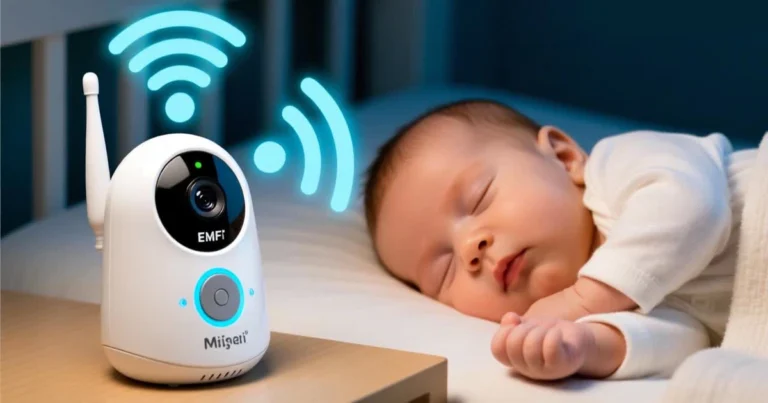
Wi‑Fi units usually operate at 2.4 GHz or 5 GHz. They can transmit continuously while streaming video. That means a steady RF field in the nursery while the camera is on.

Safe Distance Guidelines
Source: bebcare.com

DECT baby monitors

DECT stands for Digital Enhanced Cordless Telecommunications. It is a standard used by many home phones and some baby monitors. DECT operates around 1.9 GHz in most countries.

DECT tends to use bursts of signal rather than continuous streaming. It was designed for low‑power, reliable voice links. Many consider DECT safer than always‑on Wi‑Fi video in terms of average RF exposure.

FHSS baby monitors

FHSS means Frequency Hopping Spread Spectrum. It sends short bursts over many frequencies in sequence. The signal “hops” quickly across the band.

FHSS reduces the chance of sustained high exposure at one frequency. It also makes eavesdropping harder. Many modern non‑Wi‑Fi video monitors use FHSS to balance range and security.

Analog RF monitors

Older monitors use analog RF signals. They operate in several frequency bands, like 49 MHz, 900 MHz, or 2.4 GHz. Analog systems can be simpler but often lack encryption.

Analog RF may have variable power levels and can be noisy. They do not usually stream video to the cloud. Their signal can be weaker and less efficient than digital systems.

Power levels, frequency ranges, and signal strength

Transmit power is usually measured in milliwatts (mW). Baby monitors often use low mW outputs. Frequency bands vary: 900 MHz, 1.9 GHz (DECT), 2.4 GHz, and 5 GHz.

Signal strength and resulting exposure drop with distance. Doubling distance reduces exposure sharply. Walls and objects also lower signal power. Understanding these basics helps pick safer placement and models.

How Much Radiation Do Baby Monitors Emit?

Most baby monitors emit very low levels of RF energy. But levels vary by type and use. Video monitors that stream continuously will show higher exposure than audio models that transmit intermittently.

To make sense of numbers, compare baby monitors to other devices. Smartphones, Wi‑Fi routers, and Bluetooth all emit RF energy. Baby monitors usually generate less RF than a phone held to the ear. Still, placement and time on matter.

Here are rough comparisons and real‑world context. This helps parents see where monitors sit on the EMF scale.

How baby monitors compare to smartphones

Smartphones can emit power levels near 100 mW during calls and higher in some situations. They sit right next to the head when used. That proximity means higher absorption.

Baby monitors are usually further from a baby than a phone is from an adult’s head. Even so, an always‑on Wi‑Fi camera close to a crib can exceed a phone at a distance. Overall, a typical monitor emits less RF energy than an active smartphone held directly against the skin.

How baby monitors compare to Wi‑Fi routers

Wi‑Fi routers may transmit at similar power levels to Wi‑Fi monitors. Routers often sit in living rooms and run 24/7. A baby monitor near a crib acts like a local router in the room.

If a Wi‑Fi camera connects to your router, the combined EMF in the nursery can be higher. But routers are generally placed farther away from a baby than a dedicated camera mounted too close. Consider both devices when measuring exposure.

How baby monitors compare to Bluetooth devices

Bluetooth devices use very low power. They operate around 2.4 GHz like Wi‑Fi but at lower output. Bluetooth is often intermittent and short range.

A Bluetooth baby device or sensor typically emits less RF than Wi‑Fi video. If low exposure is the main goal, Bluetooth options for simple sensors can be a good choice.

Why distance matters

RF energy follows the inverse-square law. Double the distance, and the power density falls to one‑quarter. This simple rule makes placement critical.

A camera 1 foot from a crib will expose the baby to much more RF than the same device 6 feet away. Small changes in placement yield big changes in exposure. This is an easy and powerful step to reduce risk.

Why video monitors emit more than audio

Video requires constant high‑bandwidth data. This means continuous transmission and often higher power use. Audio-only monitors send intermittent, smaller packets of data.

Hence, video monitors generally emit more RF energy over time. Choosing audio over video greatly cuts average exposure.

Are Babies More Sensitive to Radiation?

Infants can absorb more RF energy relative to their body size. Their skulls are thinner and tissues more conductive. This leads to higher specific absorption rate (SAR) for some exposures.

Young brains are still developing. Scientists worry that developing tissues might be more vulnerable to environmental stressors. For this reason, many pediatric experts suggest a precautionary approach.

Why infant brains absorb more radiation

A baby’s head is smaller and contains more water and conductive tissue. These features change how RF fields penetrate and deposit energy. Models show higher absorption in infants under certain conditions.

Absorption depends on frequency and distance. Lower frequency fields behave differently than higher ones. This is why many experts recommend keeping devices well away from the crib.

Thinner skulls

Adults have thicker skull bones that offer more shielding. Infants’ skulls are thinner and more porous. This reduces protection against RF penetration.

Even at low levels, the relative energy absorbed by infant tissue can be higher. Small changes in distance have larger effects on the dose a baby receives compared to an adult.

Developing nervous systems

Neurons form critical connections in early months and years. Disruption to this process can have long‑term effects in theory. However, clear evidence linking low‑level RF exposure to developmental harm is lacking.

Because the research is still evolving, many pediatric bodies advise caution until more is known. This often means limiting unnecessary exposure rather than banning useful devices.

Why pediatric experts urge caution

Groups like the American Academy of Pediatrics (AAP) and WHO note uncertainty. They recommend common‑sense steps to reduce exposure to wireless devices for children. These steps include distance, limiting duration, and favoring lower‑power tech.

The advice is precautionary. It balances current evidence with the principle of doing no harm. Many parents find this approach reasonable and actionable.

Wi-Fi Baby Monitor Radiation Risks

Wi‑Fi cameras bring convenience. They also bring continuous RF transmission when streaming. That always‑on state can create higher average EMF levels in the nursery.

Cloud cameras send data beyond the home. This raises security and privacy concerns too. Worse, a camera that streams all night can increase cumulative exposure for a baby.

Continuous data streaming

Continuous streaming means the transmitter is active nearly nonstop. This keeps the radio on at steady power. Over hours and nights, exposure adds up.

Even when no one watches live, many cameras keep the link open. Some only upload motion clips, but many keep a constant handshake with the router. Monitoring settings matter a lot.

Cloud-connected cameras

Cloud features add convenience and updates. But they also involve remote servers and internet links. This can require higher and more frequent data bursts.

Some companies store video offsite. This is great for backups but keeps the camera active. You can reduce exposure by using local recording options when possible.

Always-on radio transmitters

An always‑on transmitter creates a steady RF field. This contrasts with audio monitors that send only on sound or with FHSS/DECT that use bursts. For parents focused on low radiation, always‑on Wi‑Fi cams are the top area to manage.

Entity examples: Nanit, Miku, Google Nest Cam

Popular Wi‑Fi camera brands include Nanit, Miku, and Nest. They offer features like breathing tracking, sleep analytics, and cloud recording. These features often require continual or frequent data transmission.

If you use such a camera, review power and privacy settings. Some models allow scheduled off times or local mode. Turning off cameras overnight or using airplane mode when not needed reduces exposure.

Audio Baby Monitor Radiation Levels

Audio monitors generally use less data and power than video. They may transmit only when sound is detected or at low duty cycles. This makes them a lower‑radiation choice for many parents.

Simpler audio units with direct parent‑unit links often avoid home Wi‑Fi and the internet. That reduces both RF exposure and privacy risk. If baby tracking is the main need, audio can be effective and safer.

Lower transmission power

Audio signals require less bandwidth. Many audio units use low transmit power. This leads to lower average RF energy in the room.

Some audio units are battery powered and send bursts only when sound occurs. That minimizes active transmit time and exposure.

No video data

Without images, data volume is much smaller. This means shorter transmissions and reduced continuous load. The drop in data needs directly reduces RF emissions.

For parents who mostly want sound and cry alerts, audio-only options make sense. They balance function with lower exposure.

Intermittent signals

Sound-activated monitors sleep until noise is detected. This intermittent pattern cuts cumulative exposure. It can also save battery life if the baby is quiet for long stretches.

The downside is a slight delay or missed soft sounds depending on sensitivity. You can test units to find reliable models.

Entity examples: VTech Safe & Sound, Philips Avent, Angelcare

Brands like VTech Safe & Sound, Philips Avent, and Angelcare offer trusted audio models. Some Angelcare units also include movement sensors that are non‑RF. These brands provide options for parents wanting lower‑radiation monitoring.

Check if units use FHSS or DECT for even lower average exposure. Read specs and user manuals to confirm transmission behavior.

DECT and FHSS Technology Explained

Understanding DECT and FHSS helps parents choose lower‑emission monitors. Both techniques cut average RF exposure in different ways.

They also provide privacy benefits. This section explains how each one works and why pediatric tech experts often prefer them.

What DECT is

DECT is a digital wireless standard used for cordless phones. It uses 1.9 GHz in many countries. DECT operates in bursts and has effective power control.

Modern DECT monitors transmit voice clearly with relatively low average power. They often use less energy than Wi‑Fi cameras and are a popular choice for audio monitoring.

What FHSS is

FHSS jumps the signal across many frequencies in quick succession. Each hop is short and spread out. The net result is lower continuous exposure at any one frequency.

FHSS also reduces interference and makes eavesdropping harder. For video, FHSS helps balance quality with lower sustained RF. Many practical parental tech choices use FHSS for secure links.

Why they reduce radiation

Both methods lower the duty cycle of a transmitter. Lower duty cycle means shorter active times or spread energy across many frequencies. This reduces average exposure.

They also can operate with power control. That means the transmitter only uses as much power as needed. When combined with distance, this creates a lower overall dose for babies.

Why pediatric tech experts prefer them

Experts often suggest DECT or FHSS because they balance clarity with lower exposure and better privacy. These technologies do not require home internet to work. They keep data local to the parent and baby units.

For parents worried about both radiation and hacking, DECT and FHSS are sensible defaults. They provide reliable monitoring without the constant RF field of a Wi‑Fi camera.

Safe Distance Guidelines

Distance is the most effective lever parents control. A small change in placement can cut exposure dramatically. Many agencies give practical distance guidance.

This section lists recommended minimum distances and explains why cameras and transmitters should not be mounted too close.

Why radiation drops with distance

RF intensity decreases rapidly with distance. This happens because the same energy spreads over a larger area. Think of a flashlight beam getting dimmer as you step back.

The inverse-square rule means that small moves are powerful. Move a camera a few feet away and exposure falls a lot. This simple step is often the most effective.

Minimum safe placement from crib

A common practical rule is to place any transmitter at least 3 feet (about 1 meter) from the baby. More distance is better. If the monitor is a Wi‑Fi camera, 6 feet or more is preferable when possible.

If you must have a camera on the crib wall, choose a low‑power model and use scheduled off times. Avoid mounting devices directly over or beside the baby’s head.

Why never to mount cameras too close

Mounting a camera inches from a crib maximizes exposure. It also increases the chance of physical hazards like cords or collapse. Close placement can raise SAR absorption in the infant’s head.

Safety rules recommend keeping electronics and cords out of reach as a separate, important step. Distance helps both radiation and physical safety.

Entity guidance: CPSC and AAP

The U.S. Consumer Product Safety Commission (CPSC) and the American Academy of Pediatrics (AAP) emphasize physical safety and safe sleeping. While they don’t set strict RF distance rules, both recommend keeping electronic devices and hazards away from cribs.

Follow their broad safety advice and add distance for EMF reduction. Together, these tips protect both body and brain.

How to Reduce Baby Monitor Radiation

Practical steps can lower exposure without losing peace of mind. Many are simple to apply. Here is a checklist parents can use today.

  1. Choose audio-only when you can. Audio monitors use less data and power.

  2. Prefer DECT or FHSS systems over Wi‑Fi for local links. They have lower duty cycles.

  3. Turn off Wi‑Fi cameras when not needed. Use scheduled off times at night if you don’t need live video.

  4. Place the monitor as far from the crib as practical. A few extra feet makes a big difference.

  5. Use night-only activation and sound‑triggered recording. This cuts continuous transmission.

  6. Use wired alternatives when possible. A wired baby monitor with a long cable removes RF concerns.

  7. Disable cloud features or choose local storage. This reduces external data transfer and often lowers active transmission.

  8. Use airplane mode or power off the unit during naps if monitoring is not needed. This reduces cumulative exposure.

  9. Check device SAR and power specs in manuals before buying. Compare models for lower transmit power.

  10. Consider using a simple movement pad or non‑RF sensor as a backup. Some movement monitors use no RF at all.

What Safety Agencies Say

Several major agencies provide useful context on RF exposure. Their statements help parents weigh risk and action. Below are key takeaways from leading bodies.

The Federal Communications Commission (FCC) sets limits on device RF emissions. These limits aim to avoid heating effects in humans. FCC rules apply to marketed devices and enforce maximum exposure values.

The World Health Organization (WHO) monitors research on EMF. WHO says there is no conclusive evidence linking low‑level RF exposure to health problems. Still, WHO encourages research and a precautionary approach for children.

The American Academy of Pediatrics (AAP) recommends prudent avoidance. AAP suggests lowering exposure by reducing duration and increasing distance from wireless devices in children. These organizations do not ban baby monitors but ask for common-sense steps.

FCC radiation limits

The FCC set SAR limits for devices sold in the U.S. These limits are designed to prevent thermal harm. Baby monitors typically operate well under these limits. Compliance means devices meet tested standards for power emissions.

Note that SAR tests often use adult models. Critics argue infant exposure differs. This is why distance and lower-power choices remain practical for parents.

WHO health statements

WHO’s International Agency for Research on Cancer (IARC) classed RF as “possibly carcinogenic” (Group 2B) in 2011. This means limited evidence of risk in humans. WHO continues to fund and review research on RF and child health.

WHO emphasizes that current evidence is not conclusive. The organization supports precautionary measures, especially for children.

Pediatric safety advice

Pediatric groups advise being cautious with infant exposure. The AAP suggests that parents limit unnecessary use of wireless devices near children. They also promote distance and alternative non‑wireless options when feasible.

These groups aim to protect developing brains while keeping beneficial technology available. Their stance is balanced and practical.

Best Low-Radiation Baby Monitors

Choosing the right monitor involves tradeoffs. You want safety, reliability, and budget sense. Here are recommended categories and sample models to consider.

  • Best audio monitors: Look for DECT or low‑power analog audio units. They have long battery life and low duty cycles. Models from VTech and Philips Avent are often cited for durable audio performance.

  • Best FHSS video monitors: Choose FHSS if you want video without constant Wi‑Fi. These models limit continuous exposure and boost privacy. Brands that offer FHSS or local livestreaming without cloud can be strong choices.

  • Best DECT monitors: DECT units provide clear audio with low average power. Many parents like DECT for voice‑only monitoring. Angelcare and other trusted brands offer DECT models.

  • Best secure Wi‑Fi models with low exposure: Some Wi‑Fi cameras allow local recording, scheduled off times, and power throttling. If you need cloud features, look for models that let you disable continuous streaming. Nanit, Miku, and Google Nest Cam have configurable settings; verify local mode options.

Money + trust section:

  • Price matters. Low RF does not always mean expensive. Many audio models are budget friendly.

  • Brand reputation counts. Pick products from companies with good safety and privacy records. Look for FCC certification and transparent manuals.

  • Read reviews and check user forums. Real parents often share useful setup tips to reduce exposure.

Common Myths About Baby Monitor Radiation

There is a lot of misinformation online. Clearing myths helps parents make calm, factual choices.

  • Myth: All radiation is dangerous. Reality: Radiation covers many types. Non‑ionizing RF used by monitors is not the same as X‑rays. Risk depends on energy and dose.

  • Myth: Wi‑Fi is deadly. Reality: Wi‑Fi emits low‑energy non‑ionizing waves. Major agencies do not find conclusive proof of harm at household exposure levels. Still, moderation and distance make sense.

  • Myth: Audio has zero radiation. Reality: Audio monitors do emit RF, but usually much less than video and phones. Intermittent transmission cuts exposure further.

  • Myth: Distance doesn’t matter. Reality: Distance is the single most effective way to lower exposure. Moving a device back a few feet greatly reduces RF energy at the baby.

Conclusion

Baby monitors emit low-level, non-ionizing radiation. The amount depends on the type, power, and how you use the device. Wi‑Fi cameras that stream continuously produce higher average RF than audio or burst‑transmission systems.

Infants can absorb more RF than adults because of size and tissue differences. For that reason, pediatric experts and agencies recommend simple, practical steps: increase distance, prefer lower‑power technologies, and limit continuous streaming. These actions reduce exposure dramatically and keep the monitor’s benefits.

Smart choices—like audio-only models, DECT or FHSS systems, and turning off cameras when not needed—make baby monitoring safer. Use trusted brands, read specs, and follow safety guidance from the FCC, WHO, and AAP. With a few common-sense moves, you can protect infant safety while enjoying the peace of mind baby monitors provide.

Frequently Asked Questions

Do baby monitors cause cancer?
Current evidence does not show that low-level RF from household baby monitors causes cancer. The WHO classifies RF as “possibly carcinogenic” based on limited data. Most health agencies say more research is needed. The best practice is a precautionary one: reduce exposure by distance and device choice.

Is Wi‑Fi baby monitor radiation dangerous?
Wi‑Fi monitors can create higher average RF exposure than audio units because they often stream continuously. “Dangerous” is not a settled verdict for typical household levels. However, prudent avoidance—keeping distance, turning off when not in use, and favoring local recording—reduces potential risk.

Are audio baby monitors safer?
Generally, yes. Audio monitors use less data and lower transmission power. Sound-activated units and DECT models reduce continuous transmission and therefore lower average exposure.

How far should a baby monitor be from a baby?
Aim for at least 3 feet (1 meter) as a practical minimum. If you use a Wi‑Fi camera, consider 6 feet or more when possible. More distance leads to much lower exposure.

Which baby monitor emits the least radiation?
Simple, battery‑powered audio monitors and units using DECT or FHSS typically emit the least RF energy. Wired monitors and non‑RF movement sensors emit none. Always check manufacturer specs and choose models with low transmit power and intermittent transmission patterns.

Common Baby Monitor Mistakes: Avoid These Parenting Errors

Most parents buy a baby monitor and assume it works automatically. It is easy to trust the box on the shelf and the app on your phone. You hope it will alert you to cries, fitful breathing, or a stray limb. Yet small setup choices can change that trust into risk.

Common Baby Monitor Mistakes
Source: imperfecthomemaking.com

Why Baby Monitor Mistakes Matter

Many common errors give parents a false sense of safety. A wrong camera angle can hide a crib corner. A weak Wi‑Fi password can invite a hacker to spy. A monitor too close to the mattress can pose a strangulation hazard. These are not just tech annoyances. They affect baby safety and parental peace of mind.

Common Baby Monitor Mistakes
Source: todaysparent.com

When monitors fail, parents get false alarms or miss real cries. When moms and dads sleep poorly because of constant alerts, the whole family suffers. When devices leak video online, privacy and dignity are lost. Knowing the usual mistakes helps you avoid them.

Common Baby Monitor Mistakes
Source: nymag.com

This guide walks through the most common baby monitor mistakes. It shows why each matter matters and gives clear fixes. You will learn safe placement, better device choice, and simple security steps. The goal: protect your child and keep your nights calm.

Common Baby Monitor Mistakes
Source: arenti.com

Buying the Wrong Type of Baby Monitor

Choosing the wrong monitor is a very common error. Many buyers pick the flashiest model. They chase HD video, night vision, and endless app features. But the fanciest monitor is not always the safest or most useful.

Common Baby Monitor Mistakes
Source: co.uk

Why not all homes need Wi‑Fi

Not every nursery needs a Wi‑Fi camera. Wi‑Fi models give remote access and cloud storage. They are great for parents who travel or want smart alerts. But they also add hacking risk and require strong, reliable routers. In apartments with shared networks, Wi‑Fi cameras increase exposure. For many families, a simple audio monitor or a local, non‑cloud camera is enough.

Common Baby Monitor Mistakes
Source: youtube.com

Why video isn’t always better

Video can help you check that baby is sleeping safely. Yet constant video can also create anxiety. A soothing sound monitor often alerts parents faster to cries. In dark rooms, low‑contrast video can hide small movements. Video is useful, but it should not replace simple audio or safe crib checks.

Common Baby Monitor Mistakes
Source: babylist.com

Why audio monitors are safer in many homes

Audio monitors use less power and less bandwidth. Many are analog or use a dedicated radio channel that is not on your home Wi‑Fi. That reduces hacking and cloud exposure. They are also simpler to operate. If your main need is to hear crying or fussing, a good digital audio monitor from trusted brands such as VTech or Motorola can be the safest choice.

Common Baby Monitor Mistakes
Source: todaysparent.com

Choosing based on features instead of safety

Many shoppers pick models by features alone. They buy models with motion alerts, sleep tracking, and thermometers. But those extras can fail or distract. Motion sensors give false alarms and drain batteries. Thermometer readings can be inaccurate when placed near vents. Always put safety and reliability above extra bells and whistles. Brands to consider for reliability include Infant Optics and Philips Avent.

Common Baby Monitor Mistakes
Source: visla.us

Placing the Monitor Too Close to the Crib

Where you place the monitor matters as much as which model you buy. A great camera in the wrong spot becomes a hazard. Parents often put devices within arm’s reach for a better view. That creates risks.

Strangulation risk from cords

The American Academy of Pediatrics warns about cords and strings near sleeping infants. Monitor cords that drape into the crib can lead to strangulation. Even a short cord loop is a danger. Keep cords out of reach and anchored high. Use cord covers or run power lines along the wall well above crib height.

Camera falling into crib

Small cameras or mounts can fail. If a camera falls into a crib it can injure a baby or startle them awake. Loose mounts, tape, or precarious shelves are frequent causes. Secure your camera with proper wall mounts or ceiling brackets. Never place a camera on an unstable ledge above the crib.

Why experts require distance

Experts recommend a safe distance between devices and the baby. This reduces the risk of baby grabbing cords or the camera. It also reduces electromagnetic exposure, though that risk is debated. A 3‑ to 4‑foot clearance from the crib edge is a good rule for most setups. The Consumer Product Safety Commission sets clear guidelines on cord length and placement.

What safe distance really means

Safe distance is not just measured horizontally. Think height above the mattress, where cords run, and how a toddler might climb. For wall‑mounted cameras, place the hardware at least 3 feet above the mattress surface. Keep cables secured behind walls or with channel covers. These steps cut hazards and make the nursery look tidier too.

Mounting Cameras Incorrectly

Mounting is about angle and safety. A poorly mounted camera gives blind spots. It can also become a falling object. Many parents use shelves or chairs as makeshift stands. That is risky and avoidable.

Low-angle blind spots

A camera mounted too low often misses the baby’s head or covering by blankets. It may show only the crib bars, not the sleeping position. Use a high, slightly angled mount to aim at the baby’s torso and head. This angle helps you spot chest movements and open airways.

Shelf placement dangers

Shelves are tempting because they are easy. But objects on shelves can be bumped and fall. A shelf can also hold other items that shift in an earthquake or when you open a window. Avoid shelf placement if the shelf is above the crib. Use dedicated wall mounts or secure brackets instead.

Unstable tripods

Tripods are useful in a pinch. Yet they can be toppled by curious hands or pets. A tripod’s center of gravity is often low and unstable near a crib. If you must use one, secure it to the wall or choose a model with a wide base and locking legs. Prefer wall mounting for long‑term use.

Why wall mounting is safer

Wall mounting keeps equipment out of reach and reduces blind spots. It also protects cables by running them along wall channels. Many camera makers sell wall mounts designed for nursery cameras. A pro tip: use anchors and screws rated for the camera weight, not just drywall clips. Wall mounting may take effort, but it is a big safety win.

Ignoring Wi‑Fi Security

Wi‑Fi gives convenience, but it also opens doors. Hackers probe poorly secured devices daily. Many parents do not change default settings when setting up their camera for the first time. That is a major oversight.

Leaving default passwords

Default passwords are widely known. Many consumer devices ship with the same login credentials across units. If you do not change them, you invite easy access. Always set a strong, unique password for every device and account. Use a password manager if memorizing is hard.

Not enabling encryption

Some monitors offer end‑to‑end encryption. If you skip enabling this, video and audio might travel unprotected. This is especially true for older or cheap models. Look for models that advertise encrypted streams and secure cloud storage. Brands like Nanit and Miku emphasize secure data practices.

Not updating firmware

Device makers release firmware updates to fix bugs and patch security holes. Ignoring updates leaves devices vulnerable. Make a habit of checking for updates monthly. Set automatic updates where possible. Firmware updates often also improve performance and battery life.

Using public Wi‑Fi

Accessing your baby monitor app on public Wi‑Fi adds risk. Public networks are easy targets for sniffing. If you must use public Wi‑Fi, turn off remote access or use a secure VPN. Better yet, avoid logging into your monitor app on any network you don’t control.

Overusing Video Monitoring

Video feels like a superpower. You can watch your child at any hour. But too much watching can harm your rest and your response patterns. Many parents develop “monitor loop” anxiety.

Why constant watching increases anxiety

Watching every twitch on a screen trains you to panic at small things. Babies move constantly. Seeing that movement out of context can raise stress levels. Over time, parents can become hypervigilant and lose trust in their own judgment.

Why parents stop responding naturally

If you always check the screen for a small noise, you may delay physical checks. Technology can create a barrier to immediate care. A gentle cry or an unusual sound still needs a human check. Let the monitor guide you, not replace your instincts.

Why sleep is disrupted

Video monitoring invites late‑night checking. Parents scroll and review clips. Every minor frame drop can wake them. This sleep fragmentation affects mood and decision‑making. Set limits. Use audio only at night, or silence live video after a set time. This helps keep sleep healthy.

How video monitoring can become unhealthy

Relying on video can make parents mistrust their baby’s normal patterns. It can also create false positives via motion prompts and alerts. Use video as a tool, not a tether. Balance live feeds with timed checks and scheduled sleep routines.

Choosing Features Over Safety

Feature lists are tempting. HD, pan, tilt, zoom, lullabies, two‑way talk, temperature sensors — each sounds useful. But not every feature helps safety. Some features hurt battery life or add security holes.

Chasing HD instead of security

4K or HD cameras look great on a phone. Yet they require more bandwidth and may store footage in the cloud. That increases exposure and costs. A clear, reliable 720p feed with strong encryption is often a safer choice for a nursery. Think about what you really need.

Chasing apps instead of reliability

A fancy app can crash or lose connection. Many parents chase apps with clever dashboards. But if the hardware is unreliable, the app cannot save it. Test the device and app together before you rely on them overnight. Prefer brands with a track record for firmware updates and stable support. Infant Optics and Motorola are known for dependable hardware.

Why simple is often safer

A simple monitor is easier to secure, patch, and maintain. It has fewer features that can fail. It also drains batteries less and produces fewer false alarms. For many families, a basic two‑way audio monitor or a non‑cloud video system gives the best blend of safety and value.

Ignoring EMF and Radiation

Electromagnetic fields (EMF) from wireless devices worry many parents. The World Health Organization and the FCC provide guidance on exposure. While research is ongoing, sensible steps reduce risk and anxiety.

Wi‑Fi vs audio radiation

Wi‑Fi cameras use higher frequencies than analog audio monitors. That means more wireless transmission and potentially more exposure. Audio monitors that use low‑power frequencies emit less radiation. If EMF is a major concern, choose a wired camera or a wired audio monitor for the crib area.

Why placement matters

Distance reduces exposure. EMF intensity falls quickly with distance. Putting a Wi‑Fi camera several feet away from the sleeping area cuts down exposure. Avoid tucking the device under bedding or right over the baby’s head. Small changes reduce both real and perceived risk.

Entity SEO: FCC and World Health Organization

Refer to FCC guidance for limits on device emissions and to the World Health Organization for general recommendations. Both suggest using distance and limiting unnecessary exposure as practical steps. These steps are easy and wise for any nursery.

Placing Monitors Near Electronics

Where you place a monitor affects signal quality. Routers, microwaves, and TVs can interfere. Interference leads to signal loss, static, and dropped feeds — not what you want at 3 a.m.

Why routers interfere

Routers and monitors can share the same Wi‑Fi band. That creates channel congestion. If your camera is right next to the router, you might think the signal is strongest, but it can cause reflections and interference. Space devices apart and use different channels when you can.

Why microwaves cause signal drops

Microwave ovens operate in the 2.4 GHz band, like many baby monitors. Running a microwave can briefly degrade your monitor feed. Place monitors away from the kitchen or switch to devices using the 5 GHz band if interference persists.

Why TVs cause noise

Old TVs and large screens can create electrical noise. This noise affects analog and weak digital signals. Keep monitors away from heavy electronics and use shielded cables where possible. A small move can stabilize your video and audio feeds.

Semantic SEO: baby monitor interference, signal loss

Troubleshoot by checking placement when you see drops. Move the monitor, change channels, or choose a different band. These fixes often restore quality fast.

Not Testing Signal Strength

Skipping a signal test before trusting a monitor is a common mistake. Dead zones are sneaky. They can hide in basements, behind thick walls, or under heavy floors. Test now so you don’t regret it later.

Dead zones

A dead zone is an area where the monitor cannot reach the parent unit. It may depend on where you carry the parent unit in your house. Walk through your home with the receiver or app. Check all common spots: bathroom, attic, garage, and backyard. Note where the signal drops.

Floor interference

Floors and ceilings often block signals. Concrete and older plaster can be especially problematic. If you have a multi‑story home, test the parent unit on each floor. Consider a monitor with a stronger transmitter or a mesh Wi‑Fi system to extend coverage.

Wall thickness

Brick and stone walls weaken even the best monitors. Metal studs and foil insulation also reflect signals. Test placement and plan mounts to minimize wall interference. Sometimes moving the router or switching bands is the simplest fix.

Why testing saves sleep

Testing means fewer surprises in the night. It helps you pick the right monitor or the best spot for it. It also prevents missed cries and false alarms. Take 15 minutes to map the signal. That small time saves many restless nights.

Using Cheap or Unbranded Cameras

Price matters, but the lowest cost is not always best. Cheap or no‑name cameras often cut corners on safety and security. The result can be weak encryption, poor firmware updates, and bad hardware.

No encryption

Many cheap models omit proper encryption, sending data in plain or weakly protected formats. That leaves streams exposed if someone gains local network access. Choose cameras that list encryption standards or buy from trusted brands. Nanit and Google Nest Cam list security features openly.

Weak firmware

Small makers sometimes lack the resources to maintain firmware. That means devices sit with known vulnerabilities for months. A brand with active updates and support is safer over time. Look up a maker’s update history before you buy.

Cloud risks

Free cloud storage can seem attractive. But unvetted cloud services may keep data indefinitely or share it in ways you cannot control. Prefer local storage options or paid cloud services with clear privacy policies and encryption.

Poor radiation control

Cheap devices might not meet the emission standards in your country. Check FCC or equivalent certification. Verified devices are tested to meet limits for emissions and interference. Certification is a small but important signal of safety.

Not Using Audio Alerts

Relying only on video or vibration alerts is risky. Audio alerts help catch crying quickly and reliably. A baby who can’t move much may still cry, and sound often travels farther than a weak video feed.

Missing crying

Some parents put monitors on vibrate or mute. When that happens, a faint cry can go unnoticed. Set the parent unit volume to a level you will hear during light sleep. Test the monitor with recorded sounds to confirm audible alerts.

Sleeping through alarms

If you use only a phone app, call flooding and notifications can be silenced at night. A dedicated parent unit often has louder alarms and a clearer ring. Consider a two‑unit system: one app for daytime remote checks and one physical receiver for night.

Relying only on video

Video can lag or freeze in low bandwidth. While the screen is frozen, your baby might be crying and you may miss it. Audio is less bandwidth‑heavy and often more reliable. Use both if possible, and configure audio alerts as the primary night signal.

Forgetting to Update Software

Software updates matter. They add stability and security. Many parents set up a monitor and forget it. That creates risk over time. Regular updates keep devices healthy.

Security patches

Updates patch security holes. A device that has its firmware updated is far less likely to be hijacked. Set automatic updates where supported and check releases from the manufacturer. Schedule a monthly check if auto updates are not available.

Bug fixes

Updates also solve bugs that cause false alarms or drain batteries. If your camera has odd behavior, a firmware update often fixes it. Check the manufacturer’s changelog before complaining or returning the unit.

Performance improvements

Manufacturers sometimes improve video compression, battery use, and app responsiveness via updates. These small gains make your device more dependable and easier to live with. Keep your app and hardware current.

Using Baby Monitors as Babysitters

Monitors are tools. They are not substitutes for care. Leaving a baby alone because a camera says all is well is a mistake. Babies need visits, checks, and human judgment.

Why technology cannot replace physical checks

A camera cannot detect subtle signs of distress like low body temperature or pale coloring. It cannot reposition a baby or check for blocked airways. A quick in‑person check is essential, especially with newborns or babies with health issues. The American Academy of Pediatrics stresses direct checks over remote reliance.

Why movement monitoring is limited

Movement sensors and breathing mats can help, but they are not perfect. They can give false alarms or fail to trigger. Relying on them alone ignores their limits. Use monitors as part of a safety plan, not the entire plan.

Why babies still need supervision

Crying, spills, choking hazards, and sudden illness all need a human response. A monitor helps you respond faster, but it does not replace your hands, senses, and judgment. Schedule checks and keep caregiving routines that include direct contact.

How to Use a Baby Monitor Correctly

A good setup is simple and safe. Follow a checklist and you will reduce errors and worry. Here is a step‑by‑step routine to set up and use a monitor correctly.

Safe placement

Mount cameras on a wall or ceiling at least 3 feet above the mattress. Keep cords out of reach and use cable covers. Point the camera so it shows the baby’s torso and head, not just crib rails. Test the view day and night.

Secure Wi‑Fi

Change default passwords. Use strong, unique passwords and enable two‑factor authentication where offered. Place your camera on its own guest network if possible. Keep your router firmware up to date. These steps reduce hacking risk.

Proper alerts

Use audio alerts for night checks. Set motion or sound sensitivity to reduce false alarms. Test alert volumes in the night and store backup batteries for the parent unit. Configure app notifications to avoid dozing off to constant pings.

Balanced monitoring

Use video selectively. Try audio‑only at night or set the video to sleep mode. Limit live viewing to times you need it. This helps your sleep and reduces anxiety. Let monitors support intuition, not replace it.

What Child Safety Experts Recommend

Pediatricians and safety groups offer clear advice. Align your monitor habits with their guidance. Their rules are practical and grounded in data.

Pediatric guidelines

The AAP recommends keeping the crib free of loose items and maintaining safe sleep positions. They also advise that monitors do not replace supervised checks. Use the monitor to alert you, then do an in‑person check when needed.

Sleep safety

Experts at the Mayo Clinic and Consumer Reports stress that monitors are an aid, not a solution. Safe sleep practices — back to sleep, a firm mattress, no loose blankets — remain the top safety measures. Monitors should complement these basics.

Technology use limits

Many child safety professionals urge limits on screen time, even for parents at night. Check the baby in person when alarms sound. Use devices to inform your care, not to substitute for it. Balance tech with touch.

Entity SEO: AAP, Mayo Clinic, Consumer Reports

Follow guidance from the AAP, Mayo Clinic, and Consumer Reports when choosing and using a monitor. These organizations give evidence‑based advice for sleep safety and product reliability.

Conclusion

Most baby monitor problems come from simple mistakes. These include bad placement, poor security, and overreliance on tech. Correct setup and mindful use make monitoring work for you. Take time to mount devices safely, secure your network, and test signals. Smart use of monitors brings peace of mind without replacing hands‑on care.

Frequently Asked Questions

What is the biggest baby monitor mistake parents make?

Many experts say the most common mistake is assuming a monitor gives complete safety. Parents often rely on the device without doing regular in‑person checks or securing the setup properly.

Can baby monitors be dangerous?

They can be if set up poorly. Risks include cord strangulation, camera falls, and privacy breaches when devices are unsecured. Proper mounting, cord management, and strong passwords reduce danger.

Should baby monitors be on all night?

It depends. Many parents use audio monitoring at night and video during naps. Use a monitor to assist, but make sure it does not disrupt sleep. Set boundaries like audio‑only mode to protect rest.

Is Wi‑Fi safe for baby monitors?

Wi‑Fi is convenient and can be safe if you use strong passwords, encryption, and updates. For those concerned about EMF or hacking, wired cameras or audio monitors with dedicated channels are good alternatives.

How do I know if my monitor is placed correctly?

Check that the camera is at least 3 feet above the mattress, that cords are out of reach, and that the angle shows the baby’s head and torso. Walk through your house with the parent unit to test signal strength and view.

Baby Monitor Safety Guidelines: Top Tips For Parents

Baby Monitor Safety Guidelines. Babies sleep a lot. We watch them even more. A baby monitor can give peace of mind. It helps parents sleep while keeping an eye or ear on their child. But a monitor is a tool. It is not risk free. Misuse can cause harm. It can also open a door to privacy breaches. This guide explains why safety matters and how to use monitors well. You will learn simple and clear rules for nursery setup, wiring, cyber safety, and choosing the right tech. We will also cover advice from experts like the American Academy of Pediatrics (AAP) and the Consumer Product Safety Commission (CPSC). By the end, you should feel safer and more confident using any monitor.

What Is a Baby Monitor and How It Works
Source: momcozy.com

What Is a Baby Monitor and How It Works

A baby monitor is a device that lets you hear or see your infant from another room. Some are audio-only. Others give live video with night vision and motion alerts. Newer models use Wi‑Fi to stream to phones.

The Three Major Baby Monitor Safety Risks
Source: ergopouch.com

Audio monitors send sound only. They use a transmitter in the nursery and a receiver with the parent. Video monitors add a camera that streams pictures. Wi‑Fi cameras send data over the home network to apps or cloud servers.

Physical Safety Guidelines for Baby Monitors
Source: alibaba.com

Monitors use different radio technologies. Analog systems send raw radio signals. Digital systems encode data and reduce noise. DECT (Digital Enhanced Cordless Telecommunications) and FHSS (Frequency Hopping Spread Spectrum) jump frequencies to avoid interference. Wi‑Fi uses your router and internet to move audio and video.

Safe Baby Monitor Placement in the Nursery
Source: getlabtest.com

Not all monitors are equally safe. Old analog models can be picked up by neighbors. Cheap Wi‑Fi cameras may lack encryption and weak passwords. Brands like Nanit, Infant Optics, VTech, Motorola, and Philips Avent each use different tech and features. Picking the right type and setting it up matters as much as the brand.

EMF and Radiation Safety Guidelines
Source: hellobaby-monitor.com

The Three Major Baby Monitor Safety Risks

Baby monitors bring three big risks. Each one needs a clear plan to reduce harm. The risks are physical safety, digital privacy, and health or radiation concerns.

Wi‑Fi Baby Monitor Cybersecurity Rules
Source: ergopouch.com

Physical safety risks

Cords, cameras, and loose devices in a crib can hurt a baby. Strangulation and falls are real dangers. Devices placed inside a sleeping area can be pulled down. These hazards are why the AAP and CPSC stress proper placement.

Audio Baby Monitor Safety Advantages
Source: iegeek.com

Cords near a crib are a strangulation risk. A hanging camera or loose monitor inside a crib can land on a baby’s face. Shelves that are not secure can tip and drop a monitor. These incidents have led to recalls and warnings.

Video Baby Monitor Safety Considerations
Source: momcozy.com

Digital and privacy risks

Hackers target baby monitors. They want to spy or scare families. Weak passwords and open cloud access make this easy. Video streams can leak and stored clips can be exposed.

Sleep and Behavioral Safety
Source: hellobaby-monitor.com

Cloud storage can be convenient. But it can also be a place where private footage is shared or stolen. Brands like Nanit and Miku provide cloud features and app access. That convenience comes with risk unless secured properly.

Health and radiation risks

Monitors emit electromagnetic fields (EMF) and radio waves. Wi‑Fi models use more power for constant streaming. Some parents worry about long-term exposure. Official bodies like the FCC and WHO say typical home devices are low risk. But distance and choice of technology can cut exposure further.

DECT and FHSS systems usually emit less continuous radiation than Wi‑Fi. Keeping devices farther from the crib is a simple way to lower exposure. Long-term proximity, however, is often the main concern for many parents.

Physical Safety Guidelines for Baby Monitors

Cords and small parts are hidden dangers. Sitters and grandparents may not notice them. Follow steps to keep the nursery safe.

Why cords are dangerous: Cords can wrap around a baby’s neck. They can also be grabbed and pull a monitor into the crib. The risk is highest for infants who can push up or roll. Keep cords out of reach at all times.

Why cameras must never be within arm’s reach: A baby can bat at low-mounted cameras. They can tug power leads or topple the whole device. Think of the camera like a lamp—you would not place a lamp inside a crib. Keep cameras well out of reach.

Why shelf placement is unsafe: A shelf close to the crib can make it easy for a baby to reach a cord. Shelves can also tilt if not anchored. Do not rely on a thin or unstable surface above the crib.

Why wall mounting is safer: Mount the camera on a wall that is out of reach. Use hardware made for the job. Wall mounts reduce the chance of falls. They also keep cords tidy and away from the baby.

How to secure power cords properly: Use cord shorteners, clips, or a cord cover. Run cords up and away from the crib and out of reach. Plug monitors into outlets that are not near the sleep space. Anchor any loose cables along the wall with fasteners.

Follow CPSC and AAP guidance. They recommend no cords within 3 feet of the crib. Use products that meet safety standards. Regularly check mounts and wires for wear.

Safe Baby Monitor Placement in the Nursery

Good placement keeps the device useful and safe. It also helps the monitor give clear audio and video.

Minimum safe distance from crib: Place cameras and speakers at least 3 feet away from the mattress. This reduces strangulation and choking risks. It also helps reduce heat and EMF exposure.

Height placement for cameras: Aim for a height of 6 to 8 feet on a wall. This gives a full view of the crib and reduces reach risk. Higher placement also reduces blind spots and keeps the device from being grabbed.

Proper camera angles: Tilt the camera to cover the whole crib. Avoid pointing lights or infrared directly at the baby’s face. Adjust the angle so you can see the baby’s chest rise and fall for breathing checks.

Avoiding blind spots: Check camera views from different angles. Move toys or furniture that might block the view. Use a wide-angle lens monitor if needed, but be mindful of distortion.

Keeping power outlets safe: Use outlet covers and avoid extension cords near the crib. If the outlet is behind a dresser, ensure cords cannot be pulled into the crib. Anchor power strips to a stable surface away from reach.

Use nursery setup best practices. Combine crib safety rules with monitor placement. Remember that crib safety and baby monitor safety go hand in hand.

EMF and Radiation Safety Guidelines

EMF stands for electromagnetic fields. All electrical devices emit some level of EMF. The key is to manage exposure and reduce unnecessary close contact.

What EMF radiation is: EMF is energy from electric and magnetic fields. TV, Wi‑Fi routers, and many home devices emit it. Most household levels are low and below regulatory limits.

How Wi‑Fi baby monitors emit radiation: Wi‑Fi cameras transmit data continuously to your router or the internet. This creates more frequent radio signals than a monitor that just sends brief alerts. The strength drops with distance.

Why FHSS and DECT produce lower EMF: FHSS hops between frequencies, spreading transmission, and often lowering peak exposure. DECT is designed for low-power voice devices and can be more efficient than continuous Wi‑Fi streaming.

How distance reduces radiation exposure: EMF strength falls quickly with distance. Every foot counts. Move the device further from the baby to cut exposure a lot.

When EMF becomes a concern: Constant close proximity, like a monitor mounted inside a crib, is the main worry. If a device is meters away and only transmits when needed, exposure is much lower. If you are worried, select low-EMF models or audio-only systems.

Refer to FCC and WHO statements. They set exposure limits and advise practical steps like distance and reduced use when possible.

Wi‑Fi Baby Monitor Cybersecurity Rules

Wi‑Fi monitors bring convenience and risk. They can stream to your phone and link to cloud storage. That convenience can leave a path for hackers. Protect your privacy with clear steps.

Why Wi‑Fi baby monitors are targeted by hackers: They stream video and often have open ports. People reuse passwords. Hackers can find devices and try default logins. A live video feed is a prize for intruders.

Common hacking methods: Weak passwords, unprotected cloud accounts, out-of-date firmware, and open Wi‑Fi networks are common paths. Man-in-the-middle attacks and weak encryption standards also let bad actors spy.

Why default passwords are dangerous: Manufacturers often ship devices with simple defaults. Owners may never change them. Attackers use lists of default credentials to break in fast. Always change default logins and make passwords strong.

How to use encryption and 2FA: Use WPA3 or at least WPA2 on your home Wi‑Fi. Enable two-factor authentication (2FA) on apps that support it. Use monitors that encrypt video end-to-end.

Why cheap cameras are risky: Low-cost devices may skip security updates and use weak encryption. They may have hard-to-update firmware. Investing in a trusted brand like Nanit, Google Nest Cam, or Miku can reduce risk thanks to better support and security practices.

Practical steps:

  • Change default usernames and passwords immediately.
  • Use a strong, unique password manager.
  • Keep firmware and apps updated.
  • Use a guest Wi‑Fi network for the camera if possible.
  • Turn off cloud storage if you only need local access.

Audio Baby Monitor Safety Advantages

Audio monitors are simple and often very safe. They give clear sound with less tech risk. They are worth a look if you want low fuss and high privacy.

No video hacking risk: Without a camera, there is less to hack. Audio-only systems don’t expose private images. They still need secure passwords if they use Wi‑Fi, but the privacy risk is lower.

No cloud storage: Audio devices can run locally, so there is no online storage to worry about. That means fewer points of failure. Data stays in the home.

Lower EMF: Many audio monitors use low-energy DECT or short-ranged radio. They typically emit less radiation than continuous Wi‑Fi video streams. This lowers exposure in the nursery.

More stable connection: Audio takes less bandwidth and is less prone to lag. This makes it reliable for hearing cries and fussing. Brands like VTech Safe & Sound and Philips Avent are known for stable audio models.

Video Baby Monitor Safety Considerations

Video adds reassurance but also extra steps. Use a mix of tech and safe setup to reap video benefits without increasing risk.

Camera light exposure: Some cameras have status LEDs or infrared lights. Bright lights can disturb a baby’s sleep. Choose cameras with dimmable indicators and indirect infrared that won’t shine in the face.

Infrared night vision safety: Night vision uses IR light that is invisible and is considered safe. Still, avoid bright LEDs or direct light close to a baby’s eyes. Most certified brands design night vision to be non-disruptive.

Video streaming security: Secure the stream with encryption. Use apps with strong authentication. Limit who can access feeds. Keep firmware updated and remove unused cloud links.

Battery overheating risks: Some wireless cameras run hot when charging or streaming heavily. Avoid placing rechargeable cameras in fabrics or soft surfaces while charging. Use certified chargers and follow manufacturer instructions.

Why Wi‑Fi cameras need extra care: They connect to the internet, so they need stronger passwords, updates, and network separation where possible. Use trusted makers like Infant Optics (for local video), Nanit, or Google Nest Cam for better support.

Sleep and Behavioral Safety

Monitors are tools. They can help or harm sleep by how we use them. Use them to support healthy habits, not to babysit anxiety.

Why constant video watching increases anxiety: Seeing every move can make parents hyper-alert. That can harm sleep for the whole family. Rely on alerts for real issues and check in physically when the baby is awake or feeding.

Why parents should not replace physical checks: A camera cannot clean a diaper or soothe a baby. Physical touch matters for bonding and care. Use the monitor as a supplement, not a substitute.

Using alerts instead of continuous viewing: Configure motion and sound alerts so you only watch when needed. This helps you sleep and reduces stress. It also saves battery and bandwidth.

Encouraging healthy sleep habits: Use the monitor to observe sleep patterns, not to interrupt them. Follow AAP infant sleep rules: place baby on their back, use a firm mattress, and keep soft objects out of the crib. Monitors should not add clutter or cords to the sleep area.

Consult sleep consultants or pediatricians if you feel anxious. Use the monitor as a tool to track sleep trends and consult experts for long-term issues.

Travel and Portable Baby Monitor Safety

Travel brings new risks. Hotels and public Wi‑Fi networks can add exposure and hacking dangers. Prepare ahead of time.

Hotel Wi‑Fi risks: Hotel networks can be insecure. Devices on the same network may see each other. If your camera uses cloud links or local Wi‑Fi it could be exposed. Use a mobile hotspot or a local-only monitor when possible.

Public network dangers: Public networks are easy to attack. Do not connect sensitive devices to open Wi‑Fi. If you must, use a VPN and a temporary password for the camera.

Portable monitor placement: In a new room, place the camera or speaker at least 3 feet from the baby. Avoid plugging directly behind a soft surface. Fix cords and check outlet safety in the new space.

How to secure devices outside home: Change passwords after travel. Disable auto-join on unfamiliar networks. Use trusted apps and check app permissions on shared devices.

Baby Monitor Safety for Apartments vs Houses

Your living space shapes the risks and the tech that works best. Apartments present unique noise and interference challenges.

Thicker walls and interference: Walls can block signals. This can reduce range for non-Wi‑Fi monitors. For long-range needs, choose a model with strong reception or a Wi‑Fi camera with reliable app performance.

Wi‑Fi congestion: Apartments often have crowded Wi‑Fi channels. This can cause lag or dropouts in video feeds. FHSS systems handle crowded bands better by hopping channels.

Why FHSS works better in apartments: FHSS spreads the signal and avoids staying on just one busy frequency. This reduces interference and gives steadier audio in dense housing. If you live in a small apartment, FHSS or DECT audio may be more reliable than narrow-band analog systems.

Semantic tips: Label your devices on the network. Use a unique SSID for guest networks. Test monitor range in each room before relying on it overnight.

What Pediatric and Safety Experts Recommend

Experts give plain rules that are easy to follow. Most advice focuses on sleep safety and reducing hazards in the crib and nursery.

AAP guidelines: The American Academy of Pediatrics recommends safe sleep practices such as back sleeping and a bare crib. They also caution against placing loose devices and cords in the sleep space. Use monitors to support safe sleep, not to add risks.

Mayo Clinic views: Mayo Clinic suggests monitors can help detect sound or motion but they do not prevent SIDS. Monitoring should not replace safe sleep practices or parental checks.

Consumer Reports and CPSC: Consumer Reports tests monitors for usability and privacy issues. The CPSC issues recalls and safety warnings when products pose a hazard. Check these resources before buying and keep an eye on recalls.

Technology exposure limits: The FCC defines EMF exposure limits for devices. WHO gives guidance on EMF and health. Follow distance rules and use low-emission options if concerned.

How professionals suggest using monitors: Use them as a supplement. Keep them out of reach. Secure network access. And combine tech with real-world checks and good sleep habits.

Best Baby Monitor Types for Safety

Not all monitors are equal. Some focus on low EMF. Some avoid Wi‑Fi. Here are safe categories to consider.

Best audio monitors for low radiation:

  • DECT or FHSS audio models reduce continuous streaming.
  • VTech Safe & Sound and Philips Avent audio sets are well‑known.

Best non-Wi‑Fi video monitors:

  • Local video systems that use a dedicated receiver are safer for privacy.
  • Infant Optics offers a popular non-Wi‑Fi modular video monitor. These keep video off the internet.

Best secure Wi‑Fi monitors:

  • If you want cloud and remote viewing, pick a reputable brand with strong security practices.
  • Nanit, Miku, and Google Nest Cam invest in updates and encryption. Use their security features and keep firmware current.

Monetization-friendly but trust-safe suggestions:

  • Balance features with safety. Recommended picks span price points.
  • For privacy-first buyers, choose local models. For remote viewing, pick reputable makers and enable security features.

Common Baby Monitor Safety Mistakes

Many problems come from small missteps. Avoid these common errors to keep your baby safe.

Mounting cameras too close: A camera on a low shelf or crib rail can be grabbed. Keep it high and secure.

Using weak passwords: Default or simple passwords can be guessed. Use unique, strong passwords and a password manager.

Buying unbranded cameras: Cheap unknown brands may skip security and user protections. Invest in trusted names when possible.

Ignoring cord management: Loose cords are one of the most common hazards. Tidy them up and keep them out of reach.

Using Wi‑Fi without security: An open network or old router can leave feeds exposed. Use WPA2/WPA3, strong router passwords, and a guest network for cameras.

Regularly review and fix these issues to keep your setup safe and reliable.

Conclusion

Baby monitors are a helpful tool that can ease worry. They support safe sleep and soothe parents. Safety depends on how you place the device, the type of technology you choose, and your daily habits. Use secure passwords, mount devices out of reach, and follow expert guidance from the AAP and CPSC. Pick the right monitor for your needs—audio, local video, or secure Wi‑Fi—and use it to supplement, not replace, physical checks and safe sleep practices. Proper use will protect both your child and your family’s privacy.

Frequently Asked Questions

Are baby monitors safe for newborns?
Most modern monitors are safe when used correctly. Follow AAP sleep rules and keep monitors out of the crib. Prefer distance and secure setups.

Do baby monitors emit radiation?
Yes, they emit low-level EMF. Wi‑Fi cameras usually emit more than DECT or FHSS audio units. Keeping distance reduces exposure.

Can baby monitors be hacked?
Wi‑Fi models can be hacked if not secured. Change default passwords, enable encryption and 2FA, and update firmware.

How far should a baby monitor be from a crib?
Aim for at least 3 feet. Placing cameras and cords well out of reach reduces physical and EMF risks.

Is audio safer than video?
Audio-only monitors reduce privacy risk, cloud exposure, and often EMF. They are a good choice for parents focused on privacy and low radiation.