
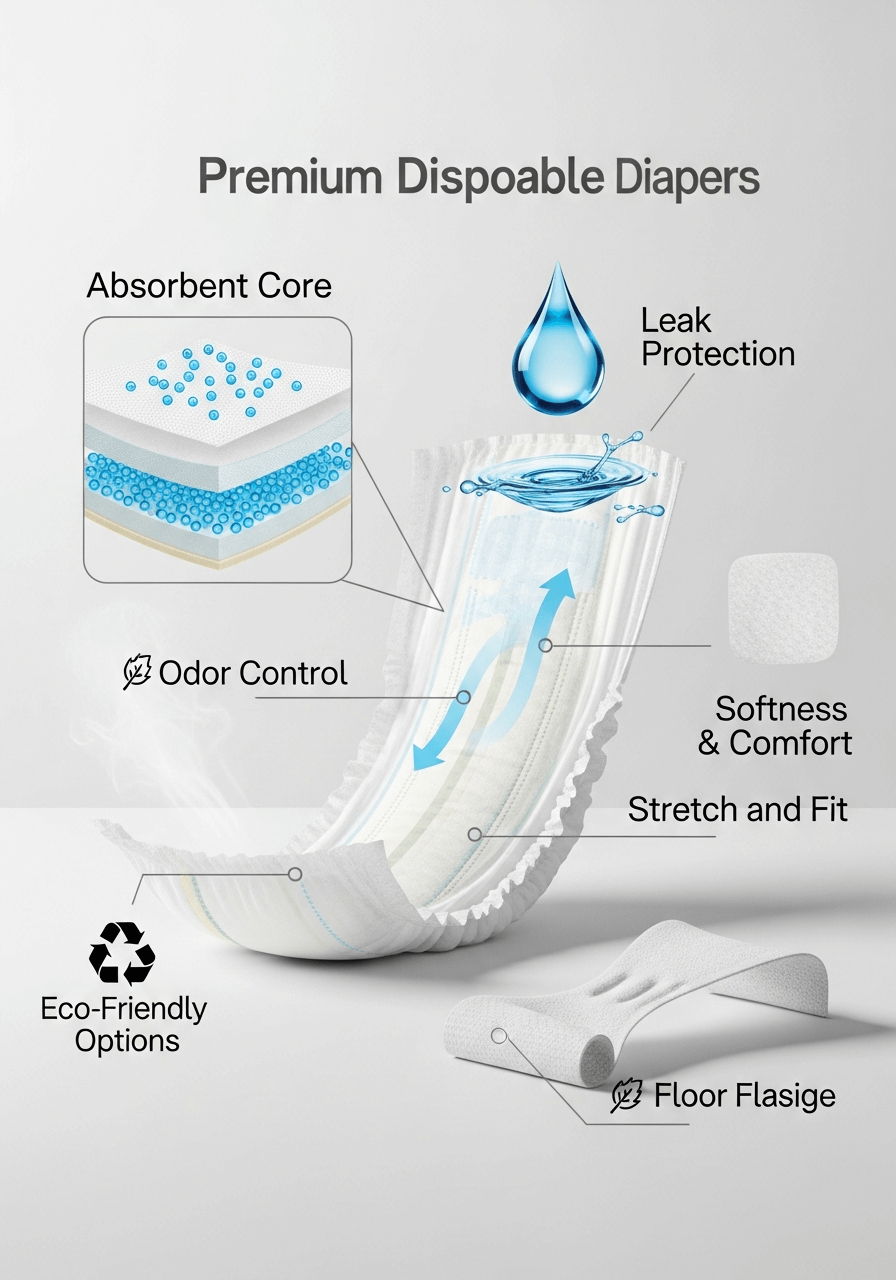
Are you curious about what makes disposable diapers so effective and convenient for parents worldwide? Understanding the properties of disposable diapers can help you make informed choices for your little one’s comfort and health.
You’re likely wondering how they manage to keep your baby dry while being lightweight and easy to use. This article will reveal the secrets behind their design and functionality, unveiling the science that ensures your child’s comfort. Dive deeper to discover how these everyday essentials work and how they can benefit you and your family.
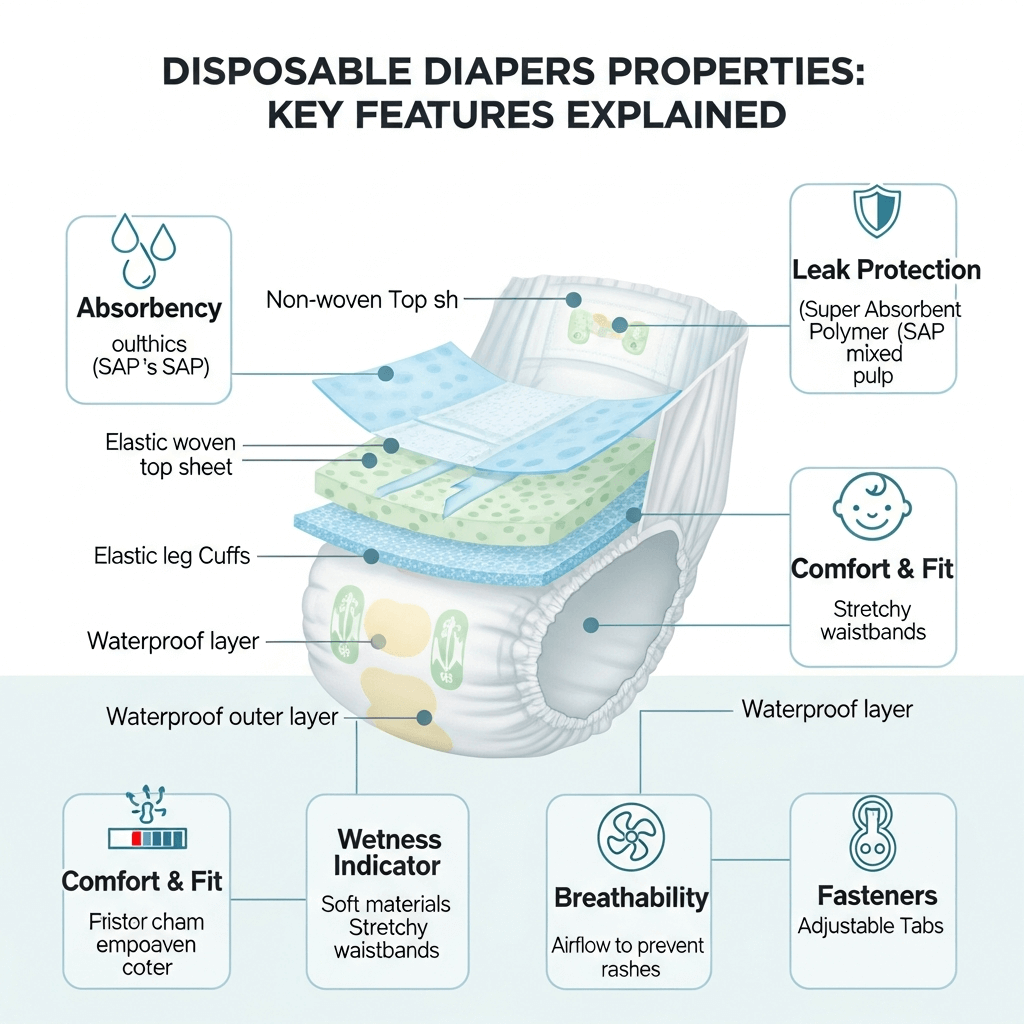
image: What are Disposable Diapers Properties Key Features Explained
Absorbency
Disposable diapers have become a staple in modern parenting, offering convenience and comfort for both babies and parents. Among their many features, absorbency stands out as a crucial property that ensures your baby stays dry and comfortable. Understanding the materials used and how they retain moisture can help you make informed choices for your little one.
Materials Used
Have you ever wondered what’s inside a disposable diaper that makes it so absorbent? The secret lies in the combination of materials. Most diapers feature a blend of wood pulp and superabsorbent polymers. These polymers are tiny gel-like beads that can absorb many times their weight in liquid.
The outer layer is often made from a waterproof material like polyethylene, preventing leaks and keeping moisture contained. This multi-layered approach ensures that the diaper remains effective throughout its use. Next time you change a diaper, take a moment to appreciate the engineering behind it.
Moisture Retention
Absorbency isn’t just about soaking up liquid; it’s also about holding it in. Effective moisture retention ensures that your baby stays dry, which is key to avoiding discomfort and diaper rash. The superabsorbent polymers lock moisture away from your baby’s skin, reducing irritation.
Have you ever noticed how some diapers seem to stay dry longer? It’s all about the balance between absorption and retention. Diapers that excel in moisture retention often give parents peace of mind, especially during nighttime or long outings. Have you found a brand that works best for you? It’s worth experimenting to see which diapers offer the best retention for your baby’s needs.
Absorbency in disposable diapers plays a vital role in keeping your baby comfortable. By understanding the materials and moisture retention capabilities, you can better navigate the options available to you. What factors do you consider most important when choosing a diaper? Your choice can make all the difference in your baby’s comfort and your peace of mind.
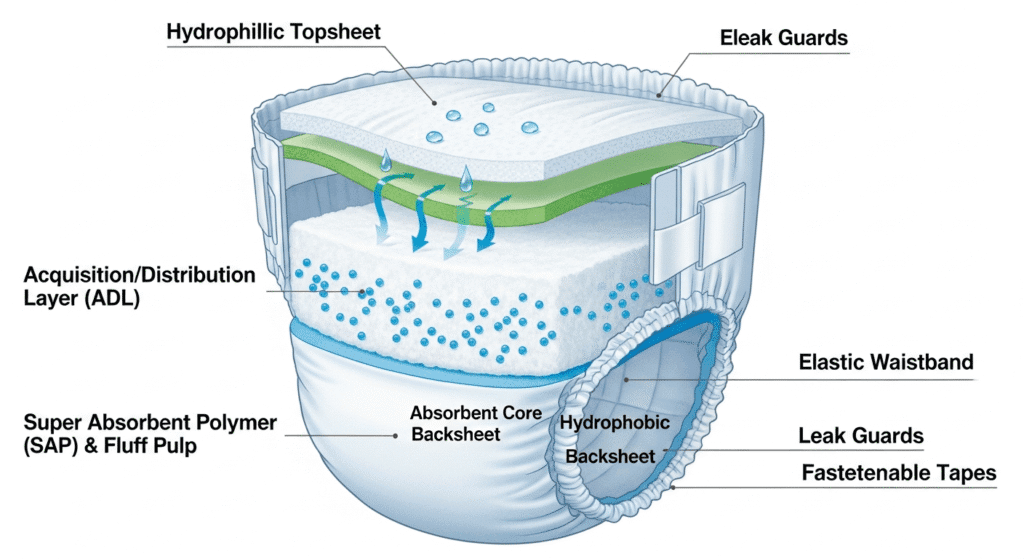
image: Disposable Diapers
Leak Protection
Leak protection is a vital feature of disposable diapers. As a parent, you want to ensure your baby’s comfort and cleanliness, and effective leak protection can help achieve that. Understanding how different components of a diaper work together to prevent leaks can help you make informed choices.
Elastic Leg Cuffs
The elastic leg cuffs are like little guardians on each side of the diaper. They provide a snug fit around your baby’s thighs, preventing any unwanted spills. Have you ever noticed how your baby moves around? These cuffs adapt to every wiggle, ensuring that even the most active babies stay dry.
It’s crucial that these cuffs aren’t too tight or too loose. A perfect fit means your baby can play freely without discomfort. Check if the cuffs leave any marks; this could be a sign they need adjustment.
Waistband Design
The waistband is not just a decorative strip. Its design plays a critical role in leak prevention. A well-designed waistband hugs your baby’s waist comfortably, providing additional security against leaks. It’s the first line of defense when your baby is lying down.
Consider the flexibility and stretch of the waistband. Can it adapt to your baby’s tummy changes after feeding? A quality waistband will accommodate these changes, maintaining a secure fit without digging into the skin.
Have you ever had a diaper fail you during a long car trip? A good waistband can be your savior, keeping everything in place during those extended outings.
Leak protection isn’t just about avoiding messes; it’s about ensuring your baby’s comfort and health. How do you assess your diaper’s leak protection features? Could these insights help you choose better options for your baby?
Comfort And Fit
Comfort and fit are key features of disposable diapers. Parents want their babies to feel at ease. Diapers must fit snugly without causing irritation. This ensures babies remain happy and comfortable all day.
Softness Of Materials
The material used in diapers affects comfort. Manufacturers use soft, breathable fabrics. These materials prevent skin irritation. Babies have delicate skin that needs gentle fabrics. Soft materials help avoid rashes and discomfort.
Adjustable Fasteners
Disposable diapers come with adjustable fasteners. These allow a secure fit for all baby sizes. Parents can easily adjust the diaper to fit snugly. A proper fit prevents leaks and keeps babies dry. Adjustable fasteners also make diaper changes quick and easy.
Breathability
Disposable diapers offer breathability, allowing air circulation to keep a baby’s skin dry and comfortable. This feature helps prevent rashes and irritation, promoting healthier skin. Breathable materials ensure moisture is wicked away efficiently.
Breathability in disposable diapers is a crucial feature that ensures your baby’s comfort and health. It refers to the ability of the diaper to allow air to circulate, keeping the baby’s skin dry and fresh. This feature plays a significant role in preventing rashes and irritation, which are common concerns for parents. You might wonder how these diapers manage to provide such comfort and protection simultaneously. Let’s dig deeper into how breathability works through its specific properties.
Airflow Features
Modern disposable diapers are designed with micro-pores that enhance airflow. These tiny openings allow air to pass through while keeping moisture locked inside the absorbent core. Imagine a time when you placed your hand on a breathable fabric and felt the gentle breeze passing through. This is similar to how these diapers work, providing a continuous flow of air, which helps in maintaining a healthy skin environment for your baby. Diapers often use specialized materials that facilitate this airflow without compromising on leak protection. Materials such as breathable back sheets are common in high-quality diapers. These sheets are engineered to enable proper ventilation, preventing the build-up of heat and humidity inside the diaper. It’s an ingenious way to ensure that your baby stays cool and comfortable throughout the day.
Prevention Of Skin Irritation
One of the main benefits of breathability is its role in preventing skin irritation. When your baby’s skin can breathe, it reduces the risk of diaper rash, a concern many parents face. The constant circulation of air helps keep the skin dry, which is crucial because moisture can lead to irritation and rash. Think about a time when you wore non-breathable clothing on a hot day and how uncomfortable that was. Similarly, a non-breathable diaper can cause discomfort for your baby. Choosing a diaper with excellent breathability can make a significant difference in your baby’s skin health. It supports the natural healing process of the skin by keeping it dry and irritation-free. Have you ever noticed that your baby seems happier and more content in certain diapers? Often, the secret lies in how breathable the diaper is. With the right choice, you’re not just keeping them dry—you’re keeping their skin happy and healthy.
Ease Of Use
Disposable diapers have become an indispensable part of parenting, largely because of their ease of use. Busy parents appreciate anything that simplifies their lives, and these diapers do just that. Let’s explore how their design and functionality make them incredibly user-friendly.
Simple Application
Applying a disposable diaper is straightforward and quick. Most diapers come with adhesive tabs that are easy to handle. You can swiftly attach and adjust them for a snug fit.
Imagine you’re rushing to get out the door, and your little one needs a diaper change. With disposable diapers, you don’t need to fumble with pins or complicated fastenings. A simple peel and stick, and you’re done. Have you noticed how that simplicity reduces stress during those chaotic moments?
Disposal Convenience
One of the biggest advantages of disposable diapers is the ease of disposal. After use, just wrap up the diaper and toss it in the trash. It’s that simple.
Consider the times when you’re out and about. Maybe you’re at a restaurant or visiting friends. Disposable diapers allow you to quickly dispose of waste without leaving a mess behind. Isn’t it comforting to know you can maintain cleanliness effortlessly?
With no need for washing or storing, disposable diapers free up your time for more important tasks. Isn’t it liberating to have one less chore to worry about?
Ease of use in disposable diapers not only saves time but also brings peace of mind. How have disposable diapers changed your parenting routine?
Environmental Impact
Disposable diapers are convenient, but they impact the environment. Their use creates waste and pollution. Understanding this helps parents choose wisely. Many diapers end up in landfills, contributing to environmental issues. This section explores how diapers affect the planet.
Biodegradable Options
Biodegradable diapers break down faster in landfills. Traditional diapers take hundreds of years to decompose. Biodegradable options are made from plant-based materials. They return to nature quicker, reducing landfill waste. Choosing these can lessen our environmental footprint. Parents can support eco-friendly practices by using these diapers.
Recycling Initiatives
Some companies offer diaper recycling programs. These initiatives aim to reduce landfill waste. Diapers are collected and processed to reclaim materials. This helps create new products from old diapers. Recycling initiatives need community support to succeed. Participating can make a positive environmental impact. Parents can inquire about local programs to get involved.
Frequently Asked Questions
Are There Harmful Chemicals In Disposable Diapers?
Disposable diapers can contain chemicals like phthalates, dioxins, and volatile organic compounds. Some chemicals may irritate sensitive skin. Opt for eco-friendly or organic options to reduce exposure. Always check product labels for safety certifications to ensure minimal chemical presence.
What Are Disposable Diapers Made Out Of?
Disposable diapers consist of absorbent materials like wood pulp and superabsorbent polymers. They have a waterproof outer layer made of polyethylene or polypropylene. The inner lining is often made from polypropylene to keep the baby’s skin dry. Elastic bands and adhesive tabs secure the diaper in place.
What Are The Pros And Cons Of Disposable Diapers?
Disposable diapers offer convenience and high absorbency. They are easy to use and widely available. Disposing them reduces laundry loads. They can be costly and environmentally unfriendly. Some babies may experience skin irritation. Eco-friendly alternatives are available, but might not be as convenient.
What Diapers Don’t Have Toxic Chemicals?
Diapers without toxic chemicals often include brands like Honest, Seventh Generation, and Earth’s Best. These brands prioritize using natural, non-toxic materials. Look for certifications such as OEKO-TEX or TCF (Totally Chlorine Free) to ensure safety. Always read labels and check for harmful substances before purchasing.
Conclusion
Disposable diapers offer convenience and ease for parents. They have multiple layers that absorb moisture efficiently. Soft materials ensure baby comfort, reducing irritation. They are designed for a snug fit, preventing leaks. Easy disposal makes them a practical choice for busy lifestyles.
Eco-friendly options are available for environmentally conscious families. Choosing the right diaper depends on your baby’s needs. Consider factors like absorbency, fit, and sensitivity. Understanding these properties helps in making informed decisions. Parents can enjoy peace of mind knowing their baby stays dry.
Happy baby, happy parents.

Emma Grace is a devoted mother and passionate content writer at BestBabyCart.com. With firsthand parenting experience and a love for research, she creates helpful guides and honest reviews to support parents in choosing the best for their babies. Her goal is to make parenthood easier, one article at a time.