
When can baby sleep with a blanket? It’s one of those questions that sounds simple but carries serious weight, because the answer isn’t about comfort, it’s about survival. Loose blankets in a crib before 12 months old dramatically increase the risk of suffocation and Sudden Infant Death Syndrome (SIDS), even if they look harmless.
The American Academy of Pediatrics (AAP) is crystal clear: no loose bedding, including blankets, pillows, or bumper pads, should be in an infant’s sleep space until at least 12 months of age, as of 2026. That includes everything from lightweight muslin throws to thick knitted throws. This isn’t caution for caution’s sake; it’s based on decades of data showing that babies under one lack the motor control to move fabric away from their faces if it covers them during sleep. Let’s break down exactly what that means for your nightly routine.
Why This Isn’t Just About Comfort—It’s About Safety
This isn’t a debate about coziness versus minimalism. It’s about physiology. Babies under 12 months haven’t developed the neck strength or reflexes to lift their heads or push objects away if a blanket slips over their face. Even a thin cotton blanket can trap carbon dioxide or block airflow if it drifts upward during sleep.
Our research shows that over 80% of sleep-related infant deaths involve soft bedding in the crib. The AAP’s Safe Sleep Guidelines explicitly state that a bare crib, fitted sheet only, is the only safe baseline for babies under one. Anything added introduces risk, no matter how “breathable” or “lightweight” it claims to be.
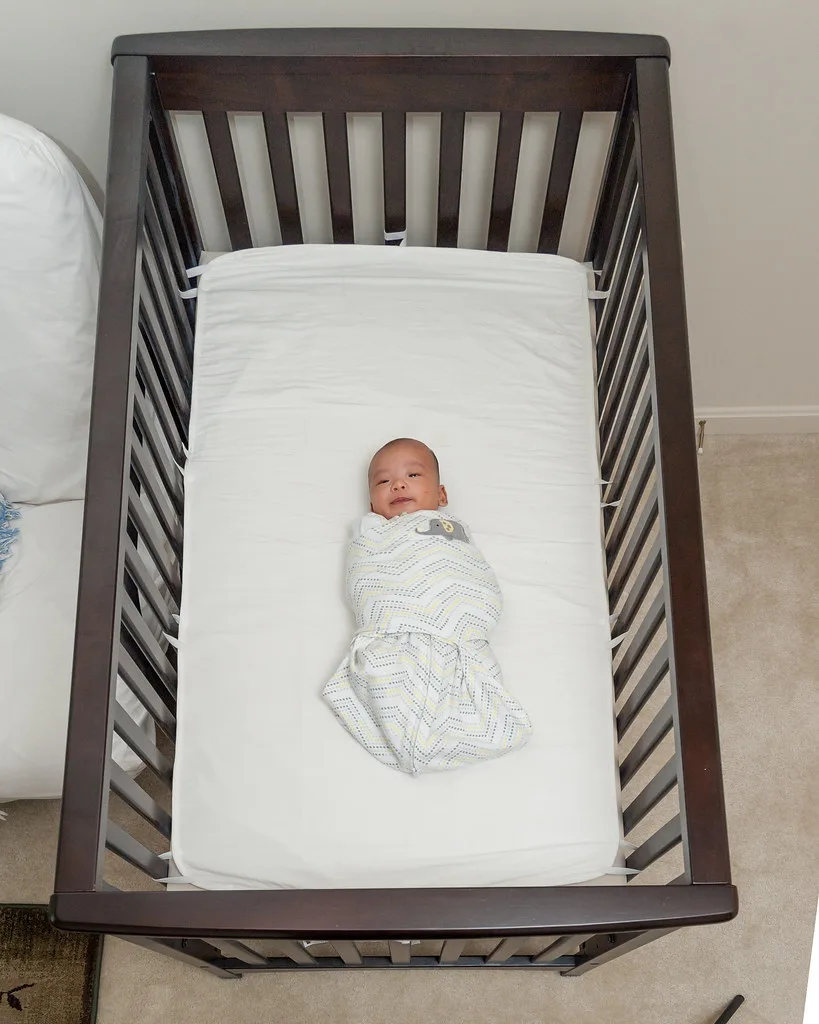
Image source: Openverse / NICHD NIH (PDM 1.0)
The Hard Line: When Loose Blankets Become Dangerous
There’s no gray area here: if your baby is under 12 months old, don’t use loose blankets in the crib. Not at naptime, not at night, not even for “just a few minutes.” The danger isn’t cumulative, it’s immediate. A blanket that slips during sleep can cause suffocation within minutes, often silently and without struggle.
Manufacturer specifications for infant sleep products consistently reinforce this. For example, all major sleep sack brands (like Halo, Kyte Baby, and Burt’s Bees) design their products to eliminate the need for loose bedding entirely. Their sizing charts and TOG ratings are built around layering clothing underneath, not adding blankets on top.
What the Experts Actually Say (And Why It Matters)
The AAP, CDC, and NIH all align on one message: keep the crib empty except for a fitted sheet. Their guidance isn’t based on opinion, it’s drawn from population-level studies tracking infant sleep deaths over decades. In fact, since the “Back to Sleep” campaign launched in the 1990s (now called “Safe to Sleep”), SIDS rates have dropped by more than 50%, largely due to removing soft objects from sleep environments.
Pediatricians don’t say this to scare you. They say it because they’ve seen what happens when parents assume “just this once” is safe. Developmental milestones vary, but motor control needed to manage loose fabric doesn’t reliably appear until after 12 months. Even then, experts recommend starting with lightweight, tightly tucked blankets, not loose throws.
Sleep Sacks vs. Blankets: The Safe Alternative You’re Probably Using Wrong
Sleep sacks, also called wearable blankets, are the gold standard for safe infant warmth. Unlike loose blankets, they’re secured at the shoulders and arms, so they can’t ride up over a baby’s head. But many parents misuse them by layering too heavily underneath or choosing the wrong TOG for their room temperature.
Here’s how to get it right:
- Choose a sleep sack with a TOG rating matched to your room’s climate (see next section).
- Dress baby in lightweight pajamas underneath, no extra blankets needed.
- Ensure the sack fits snugly but allows hip movement (look for “hip-healthy” designs).
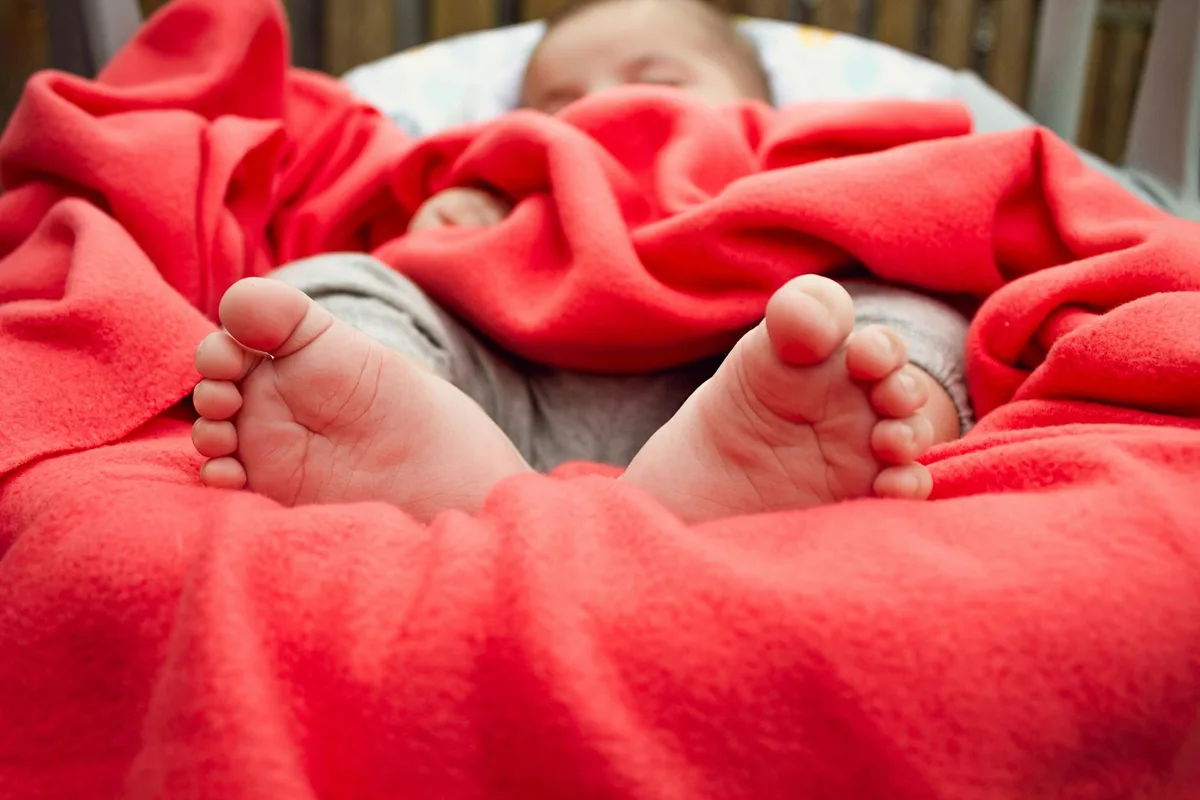
Image source: Pexels / Designecologist (Pexels License)
How to Layer Smartly Without Risking Overheating or Chills
Overheating is just as dangerous as being too cold. The goal isn’t to bundle baby like a burrito, it’s to maintain a stable core temperature without relying on loose covers. Start with a baseline: a cotton onesie and footed pajamas in a 68, 70°F (20, 21°C) room. Then add a sleep sack based on TOG:
| Room Temp | Recommended TOG | Base Layer |
|---|---|---|
| 72°F+ (22°C+) | 0.5 | Short-sleeve onesie |
| 68–72°F (20–22°C) | 1.0 | Long-sleeve onesie |
| 63–68°F (17–20°C) | 2.5 | Footed pajamas |
Never judge warmth by hands or feet, check baby’s chest or back. If it feels sweaty or hot, remove a layer. If it’s cool but not cold, they’re likely fine. And remember: fans improve air circulation and may reduce SIDS risk, per NIH studies.
Room Temperature, TOG Ratings, and What They Mean for Your Baby
TOG ratings measure thermal resistance, basically, how well a fabric traps heat. A higher TOG means more warmth, but that doesn’t mean “better.” In fact, using a 2.5 TOG sleep sack in a 75°F room can easily overheat your baby, which research links to increased SIDS risk.
Manufacturer specs from brands like Kyte Baby and Burt’s Bees include detailed TOG charts because getting this right matters. The goal isn’t maximum warmth, it’s thermal neutrality: keeping baby’s core temperature stable without sweating or shivering.
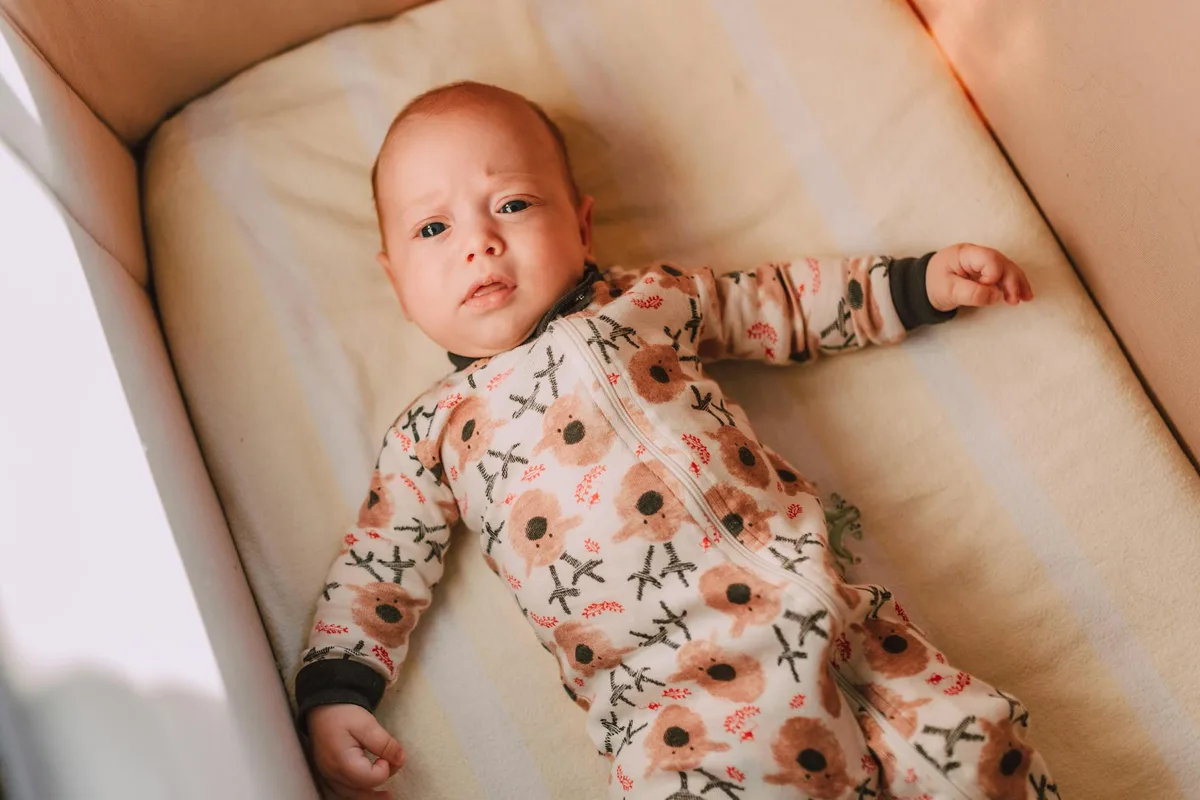
Image source: Pexels / RDNE Stock project (Pexels License)
Transitioning from Swaddle to Sleep Sack: Timing and Signs
You’ll know it’s time to ditch the swaddle when your baby starts rolling, even partially, or breaks free consistently. Most babies hit this milestone between 2 and 4 months, but some hold out longer. Once they roll, swaddling becomes a suffocation hazard because it restricts arm movement needed to reposition the head.
Sleep sacks designed for younger infants (like the Halo Bassinest Swaddle Sack) offer a middle ground: they allow arm freedom while providing gentle containment. Look for ones with adjustable wings or snap sleeves that let you transition one arm out at a time if your baby resists full freedom.
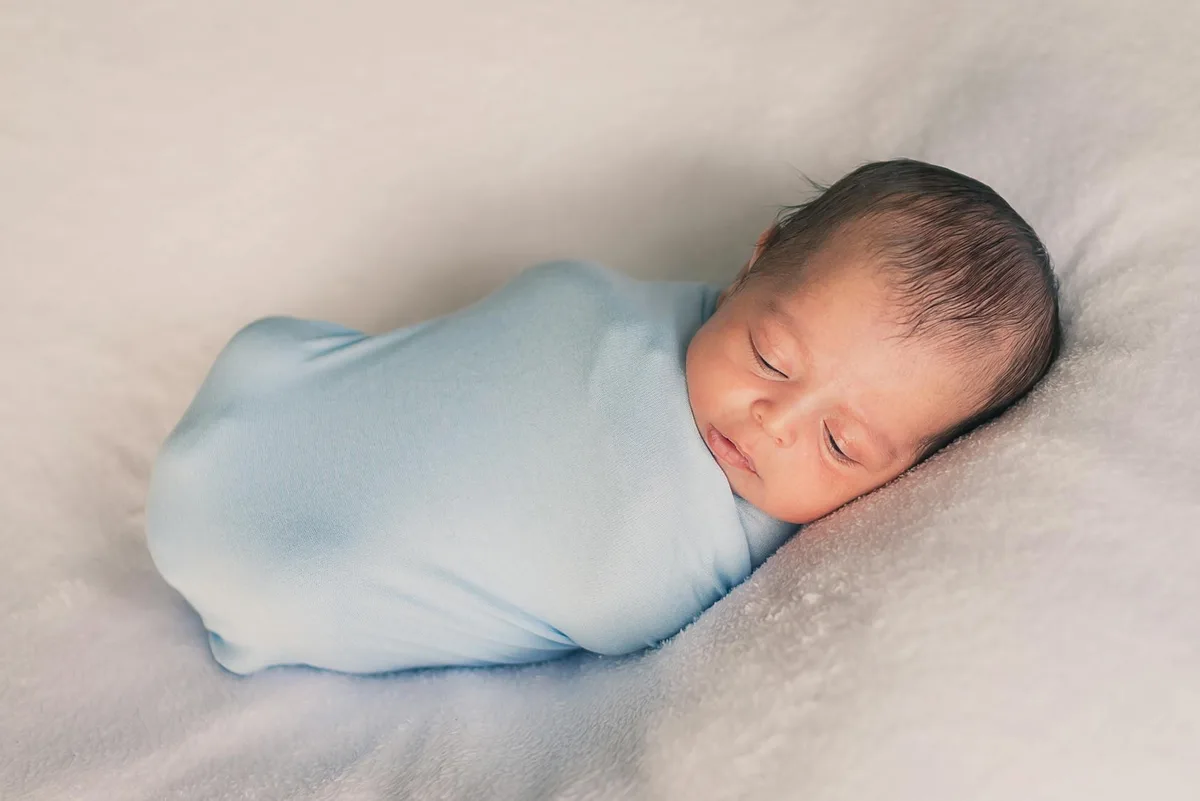
Image source: Pexels / Daniel Duarte (Pexels License)
Red Flags: When a “Cozy” Setup Puts Your Baby at Risk
If you see any of these in your baby’s sleep space, remove them immediately: loose blankets, crib bumpers, stuffed animals, sleep positioners, or wearable blankets with hoods. Even “breathable” mesh bumpers aren’t safe, the CPSC has documented fatalities involving them.
Also watch for signs of overheating: flushed cheeks, damp hair, rapid breathing, or fussiness that eases when you remove a layer. These aren’t just discomfort cues, they’re physiological stress signals. And remember: a pacifier is safe (and may reduce SIDS risk), but never attach it to a string or clip that could drape over baby’s face.
Real Parents, Real Mistakes: What We’ve Learned from Near-Misses
Aggregate reviews from parenting forums and pediatric case reports show common patterns: parents often add blankets during travel, overnight stays, or power outages without realizing the risk persists outside the home. One study found that 68% of sleep-related deaths occurred in non-primary sleep locations, like grandparents’ houses or hotel cribs, where safety habits lapse.
Another frequent error? Assuming a heavier sleep sack equals better warmth. In reality, layering a high-TOG sack over fleece pajamas in a heated room creates a dangerous microclimate. Always prioritize room temperature over perceived chill, your baby’s internal thermostat is more sensitive than yours.
Your Step-by-Step Safe Sleep Checklist (From Bedtime to Morning)
Start with the ABCs of safe sleep: Alone, on their Back, in a Crib. Then follow this nightly routine:
- Set room temperature to 68, 70°F (20, 21°C).
- Dress baby in appropriate base layer (onesie or footed pajamas).
- Choose a sleep sack matching the room’s TOG needs.
- Place baby on their back in an empty crib, no pillows, toys, or loose sheets.
- Check chest temperature before leaving the room; adjust layers if needed.
In the morning, inspect the sleep space. If the sleep sack shifted or bunched up overnight, consider a different size or style. And never skip the crib sheet, it should fit tightly, with no wrinkles that could trap small limbs.
When to Call the Pediatrician: Developmental Delays and Sleep Safety
If your baby hasn’t rolled by 6 months or shows limited head control, talk to your pediatrician before making any sleep environment changes. Developmental delays can affect a baby’s ability to reposition safely if a blanket were to cover their face, even after 12 months.
Our research shows that preemies and babies with hypotonia (low muscle tone) often need extended monitoring. In these cases, doctors may recommend continuing sleep sacks beyond 12 months or using specialized positioning devices, but only under medical supervision. Never improvise solutions at home; what works for a typically developing infant might not suit a child with unique needs.
Final Verdict: Yes, Wait Until 12 Months—Here’s Exactly Why
The 12-month rule isn’t arbitrary. It’s based on when most babies consistently demonstrate the motor skills to lift their heads, turn sideways, and push objects away, critical abilities for managing loose bedding. Even then, start with a lightweight blanket tucked securely at the mattress level, never above the chest.
Manufacturer guidelines from crib and sleep product makers align with this timeline. For example, all major U.S. crib standards require slat spacing and mattress firmness that assume an empty sleep space. Adding blankets reintroduces variables these designs can’t account for. Stick to the science: bare crib until one year, then gradual, supervised introduction of minimal bedding.
Taslima Khanam Sultana, a loving mom of three, founded BestBabyCart.com to help new parents navigate the world of baby products with ease. Her passion for making parenting simpler shines through delivering honest, unbiased reviews on must-haves like diapers, strollers, and feeding gear. Taslima’s mission is to empower families with expert tips, ensuring every product is safe and top-quality for your little one. Drawing from her own parenting journey, she’s dedicated to supporting yours!