
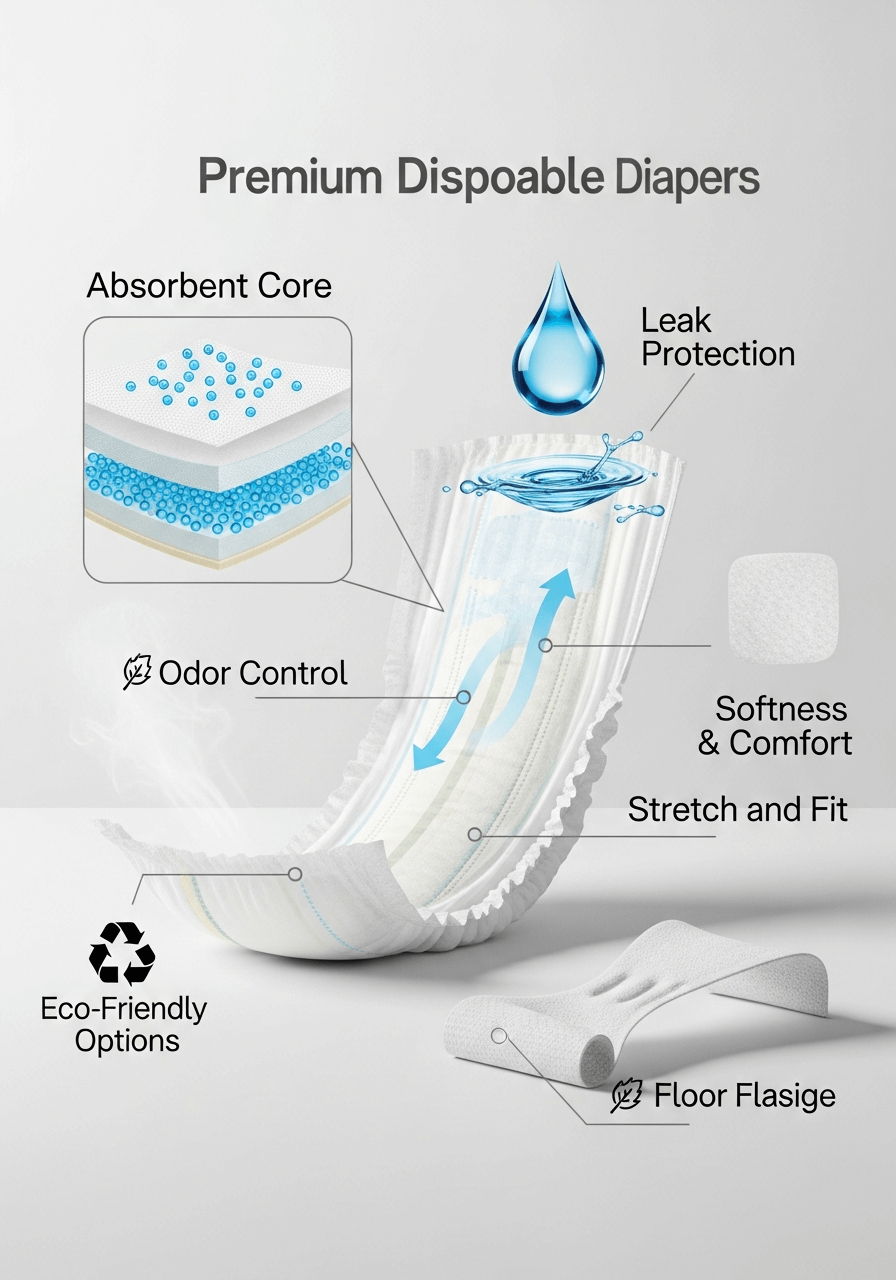
If you’re a new parent or caregiver navigating the diaper aisle, you’ve likely wondered what separates a high-performing diaper from one that leaks, irritates skin, or needs frequent changes. Disposable diapers rely on a precise combination of engineered materials and intentional design features to deliver on their core promise: keeping babies dry, comfortable, and mess-free. In this 2026 guide, we break down every key property of modern disposable diapers, explain how they work in practice, highlight common trade-offs, and share actionable tips for selecting the best option for your baby’s unique needs, cutting through generic marketing claims to give you evidence-based insight.
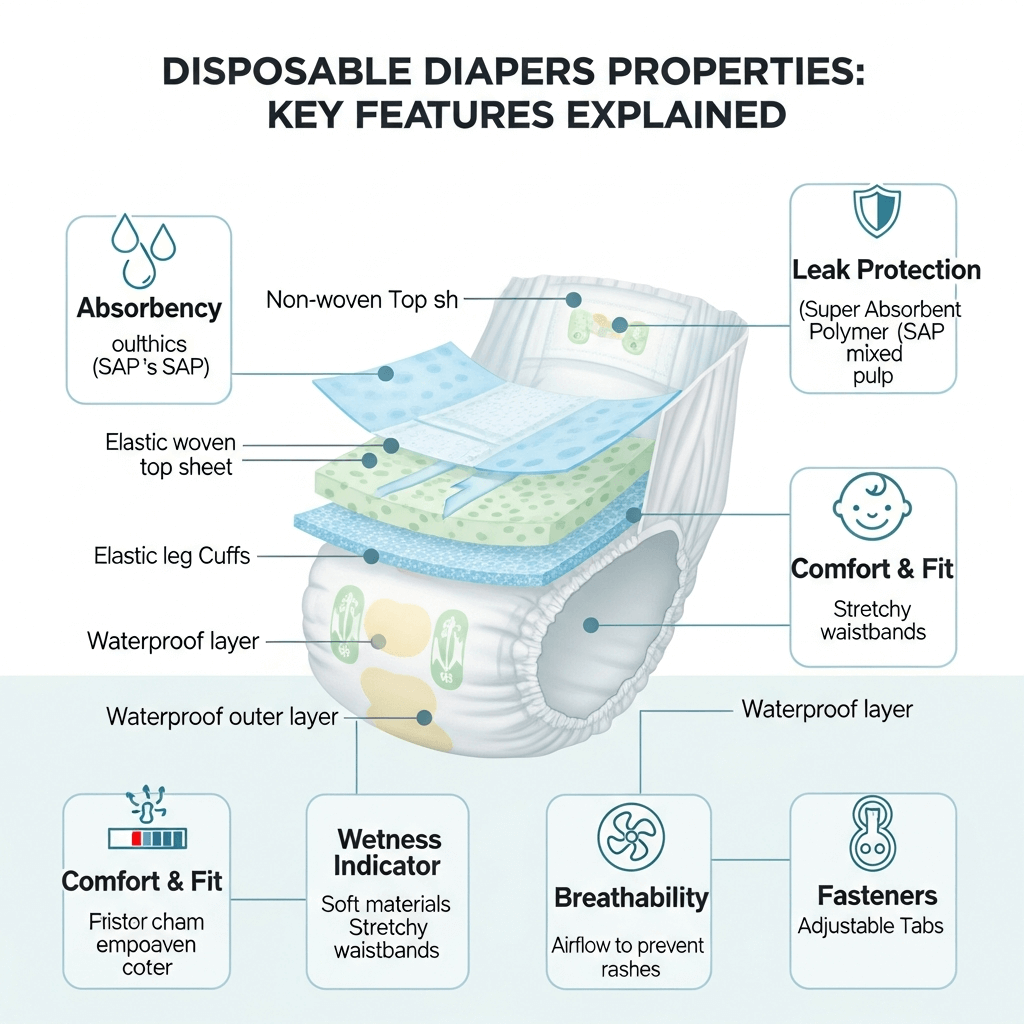 This infographic breaks down the core functional properties of disposable diapers, from absorbency to leak protection.
image: What are Disposable Diapers Properties Key Features Explained
This infographic breaks down the core functional properties of disposable diapers, from absorbency to leak protection.
image: What are Disposable Diapers Properties Key Features Explained
1. Absorbency: The Core Moisture-Management Property
Absorbency is the most critical property of any disposable diaper, as it directly determines how long a baby stays dry between changes. Modern disposable diapers use a multi-layered absorbent core to capture and lock away urine, preventing it from pooling against the skin. You can also read our guide on best diapers for chunky babies.
Superabsorbent Polymer (SAP) Technology
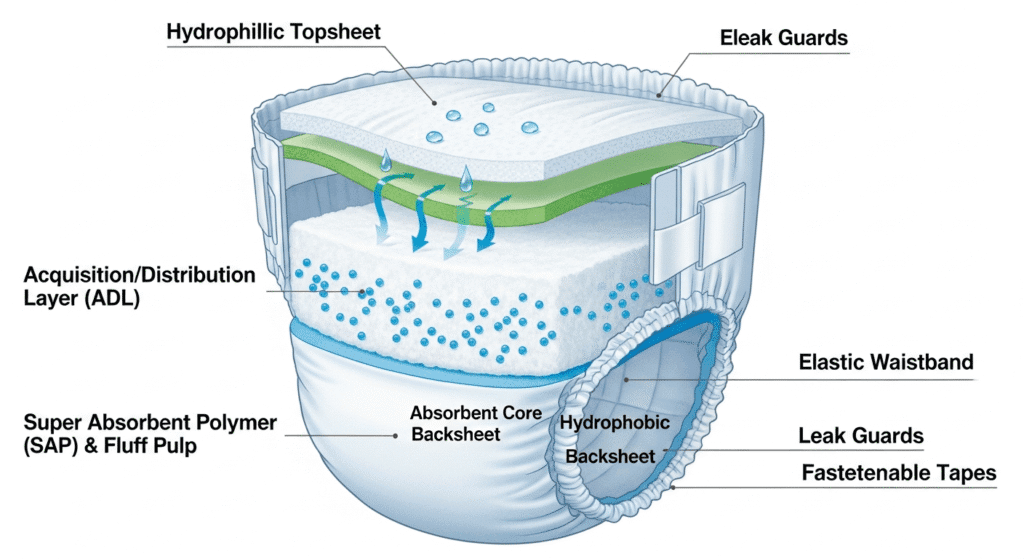
The primary absorbent material in nearly all modern disposable diapers is superabsorbent polymer (SAP), tiny sodium polyacrylate gel beads capable of holding 300–500 times their weight in distilled water. Introduced in commercial diapers in the 1980s, SAP replaced older wood-pulp-only cores to deliver far higher absorbency in a thinner, lighter design. For context on absorbency needs across diaper types, compare to typical cloth diaper usage rates.
Wood Pulp Core Structure
SAP is mixed with fluffed wood pulp to create an even absorbent layer that distributes liquid across the entire diaper core, rather than allowing gel to clump in a single spot. The wood pulp also adds softness and helps wick moisture away from the top liner, reducing the risk of irritation. You can also read our guide on best non toxic overnight diapers.
Moisture Lock & Rewet Prevention
A hydrophobic (water-repelling) layer sits between the absorbent core and the inner top liner that touches the baby’s skin. This layer lets urine pass through to the core, but blocks it from traveling back up, a property called rewet resistance. High-quality diapers have near-zero rewet rates, meaning even a fully saturated core will not leave the baby’s skin damp. A common mistake parents make is assuming higher SAP content always means better performance: for babies with very sensitive skin, overfilled SAP can sometimes migrate to the skin surface, so balancing absorbency with a secure, well-fitted core is key.
2. Leak Protection: Multi-Layer Barrier Design
Even the most absorbent diaper will fail if it cannot contain liquid and waste effectively. Leak protection relies on a combination of elastic barriers and waterproof outer layers to keep messes contained, even for active, wiggly babies. You can also read our guide on which baby powder is best for newborn baby.
Leg and Waist Elastic Barriers
Latex-free elastic cuffs are sewn into the leg openings and waistband of every disposable diaper. These cuffs stretch to create a snug, leak-proof seal against the baby’s thighs and waist, while still allowing full range of motion for crawling, standing, and playing. A common fit error is pulling the waistband too tight to prevent leaks: this causes deep red marks on the skin and does not improve containment, as the elastic is designed to lie flat against the body to create a seal. If you need extended leak protection for overnight or travel, check out trusted overnight options.
Side Leak Guards
Most diapers include raised, fabric-covered barriers along the inner edges of the leg cuffs, called side leak guards. These guards catch runoff when a baby sleeps or plays on their side, a common cause of leaks that many parents overlook. Higher-end diapers often have double leak guards for extra security during long sleep stretches. You can also read our guide on what are diapers.
Backsheet Waterproofing
The outermost layer of the diaper, called the backsheet, is made of waterproof polyethylene or polypropylene. Some diapers use a cloth-like, textured backsheet for added comfort, but all are engineered to block liquid from seeping through to clothing or bedding. If you notice frequent leaks through the outer layer, the backsheet may be damaged, or the diaper may be overfilled beyond its absorbency capacity.
3. Comfort & Fit: Tailored to Baby’s Movement
Even the most high-performance diaper will cause irritation if it does not fit correctly or use soft, non-abrasive materials. Comfort and fit are subjective, but they rely on consistent design standards to work for most babies. You can also read our guide on best car seat covers for hot weather stay cool and comfortable.
Soft, Non-Irritating Top Liners
The inner layer of the diaper that touches the baby’s skin is made of soft, perforated polypropylene or bio-based materials like bamboo viscose. These materials wick moisture away from the skin and reduce friction, preventing chafing during movement. Many sensitive-skin diapers also include infused aloe vera or vitamin E to further reduce irritation risk. For additional comfort tips beyond diapering, explore safe crib comfort practices.
Adjustable Fastener Systems
All disposable diapers include refastenable adhesive tabs that can be adjusted to fit a wide range of waist sizes, and can be undone and reattached without tearing the diaper if a fit adjustment is needed mid-change. Many modern designs also include stretchy waistbands that move with the baby’s body as they grow, eliminating the need to size up too early. You can also read our guide on how often to change diapers.
Size-Specific Fit Guidelines
Diaper sizes are based on weight, but fit varies by brand. A properly fitting diaper will sit just below the baby’s belly button, with leg cuffs that fit snugly against the thighs without leaving deep red marks. If the diaper gaps at the waist or legs, size up; if it pulls tightly across the tummy or leaves deep imprints, size down. For additional context on sizing for growing babies, check out our guide to how many coats a baby needs in a year for age-based sizing benchmarks.
 Disposable diapers are available in a wide range of sizes to accommodate babies from newborn to toddler stages.
image: Disposable Diapers
Disposable diapers are available in a wide range of sizes to accommodate babies from newborn to toddler stages.
image: Disposable Diapers
4. Breathability: Reducing Skin Irritation Risk
Breathability refers to a diaper’s ability to let water vapor pass through its outer backsheet while blocking liquid urine. This property is critical for maintaining healthy skin, as trapped heat and moisture are the leading cause of diaper rash and irritation.
Airflow Design Features
Modern breathable diapers use micro-pores in the backsheet that are small enough to trap liquid but large enough to let air circulate freely. These pores prevent the buildup of hot, humid air inside the diaper, which can otherwise create a breeding ground for bacteria and yeast. In 2026, all major diaper brands meet minimum breathability standards set by the American Academy of Pediatrics, but budget options may use non-breathable plastic backsheets that increase rash risk for sensitive babies. Pairing a breathable diaper with proper rash prevention diaper rash care guidance reduces irritation risk even further.
Skin Health Benefits
Improved airflow keeps the baby’s skin drier and cooler, reducing the likelihood of heat rash, contact dermatitis, and yeast infections. Parents often notice their baby is fussier after wearing a non-breathable diaper for long stretches, a sign of discomfort from trapped moisture. For babies with diagnosed eczema or chronic diaper rash, choosing a diaper with certified breathable construction is one of the most effective adjustments you can make.
5. Ease of Use: Design Features for Busy Caregivers
One of the primary reasons disposable diapers remain the top choice for most parents is their user-friendly design, which simplifies even the most rushed diaper changes.
Wetness Indicators and Fit Guides
Most modern diapers include a color-changing wetness indicator strip on the front of the diaper that turns blue or green when wet, eliminating the guesswork of when a change is needed. This feature is especially useful for new parents or overnight checks, when you may not want to disturb a sleeping baby to check for wetness.
Refastenable Tapes and Disposal Features
Adhesive tabs on modern diapers can be undone and reattached multiple times, so you can adjust the fit or check for soiling without replacing the entire diaper. Most diapers also include a small adhesive tab on the front that you can use to roll a used diaper into a tight, contained bundle before tossing, reducing odor and mess when you’re out in public. These features make diaper changes quick even when you're managing travel with a young infant.
6. Safety & Material Certifications
Diaper safety is a top priority for parents, and reputable brands adhere to strict regulatory standards to minimize exposure to harmful chemicals. For official guidance on diaper material safety, the U.S. Food and Drug Administration provides clear regulatory standards for disposable diaper components.
All diaper materials that contact a baby’s skin are regulated by the FDA and CPSC, with strict limits on dioxins, phthalates, and volatile organic compounds (VOCs). Third-party certifications provide extra assurance of safety:
- OEKO-TEX Standard 100: Certifies that a product has been tested for over 300 harmful substances, with no detectable levels in materials that contact skin.
- TCF (Totally Chlorine Free): Confirms that wood pulp used in the absorbent core was not bleached with chlorine, eliminating dioxin byproducts.
- FSC Certification: Verifies that wood pulp is sourced from sustainably managed forests.
Fragrance-free diapers are recommended for babies with sensitive skin, as added fragrances are a common cause of contact irritation.
7. Performance Variations by Use Case
No single diaper works for every situation, and different use cases require tailored property balances:
| Diaper Type | Key Properties | Ideal Use Case |
|---|---|---|
| Daytime Standard | Moderate absorbency, high breathability, lightweight | Daily use, changes every 2–3 hours |
| Overnight | High SAP content, extra leg cuffs, extended leak guards | 10–12 hour stretches, heavy wetters |
| Swim | No absorbent core, snug elastic fit, non-toxic materials | Pool, beach, water play |
| Eco-Friendly | Plant-based top/back layers, TCF certification, biodegradable components | Low-waste households, babies without heavy overnight needs |
A common mistake parents make is using standard daytime diapers for overnight stretches, which often leads to leaks and increased rash risk due to overfilling the absorbent core.
8. Environmental Impact & Sustainable Innovations
Traditional disposable diapers generate significant landfill waste: the U.S. Environmental Protection Agency (EPA) estimates they take 400–500 years to decompose, and make up an estimated 2–3% of all municipal solid waste in the U.S. For environmentally conscious families, sustainable disposable options have improved significantly in 2026.
Biodegradable and Plant-Based Diapers
Eco-friendly diapers use plant-based materials like bamboo, corn, or sugarcane for their top liners and backsheets, reducing reliance on fossil fuels. Look for TCF and FSC certifications to confirm sustainability claims, as some "green" marketed diapers use only small amounts of plant-based material. If you prioritize non-toxic, sustainably sourced materials for your baby’s products, you may also be interested in sustainable formula ingredient guidelines.
Recycling and Composting Programs
Many diaper brands now offer mail-in recycling programs that separate the plastic backsheet, SAP core, and wood pulp components for repurposing into new products. Some communities also offer curbside composting for certified compostable diapers, though these programs are still limited in availability.
Trade-Offs of Eco-Friendly Options
Eco-friendly diapers typically cost 20–30% more than conventional options, and many have slightly lower absorbency, making them less suitable for overnight use or heavy wetters. For many families, a hybrid approach (using eco-friendly diapers during the day, conventional overnight diapers for long stretches) balances sustainability and performance.
Frequently Asked Questions
Are disposable diapers safe for daily use?
Yes, when purchased from brands that comply with U.S. Consumer Product Safety Commission (CPSC) and FDA regulations. Look for third-party certifications like OEKO-TEX Standard 100 to confirm no harmful levels of dioxins, phthalates, or volatile organic compounds (VOCs) touch your baby’s skin. Fragrance-free options are strongly recommended for infants with eczema or sensitive skin.
Do disposable diapers directly cause diaper rash?
No, but prolonged contact with wetness, poor breathability, or friction from an ill-fitting diaper can increase rash risk. Changing diapers every 2–3 hours, choosing a breathable option, and using a barrier cream during rash-prone periods reduces this risk significantly.
What is the difference between conventional and eco-friendly disposable diapers?
Conventional diapers use petroleum-based polyethylene and polypropylene for their outer and inner layers, while eco-friendly options use plant-based materials like bamboo, corn, or sugarcane. Eco-friendly diapers often have a lower environmental footprint, but may have slightly lower absorbency for heavy overnight wetters, and typically cost 20–30% more than conventional options.
How can I identify a diaper with strong leak protection?
Prioritize diapers with double elastic leg cuffs, raised side leak guards, and a stretchy, refastenable waistband. Real-world parent reviews are the most reliable indicator of leak performance, especially for overnight use. Note that proper fit is the single biggest factor in preventing leaks: a correctly sized diaper will outperform an oversized or undersized option every time.
Conclusion
Disposable diapers are a marvel of modern material engineering, with each property designed to balance performance, comfort, and convenience for babies and caregivers alike. The best choice for your family depends on your baby’s unique needs: skin sensitivity, weight, activity level, and your priorities around sustainability and cost. By understanding these core properties, you can cut through marketing hype, avoid common fit and performance mistakes, and select a diaper that keeps your baby dry, comfortable, and happy. If you’re researching other baby care essentials to simplify your routine, explore our guides to safe crib arrangement tips and age-appropriate clothing layering for more evidence-based parenting tips.

Emma Grace is a devoted mother and passionate content writer at BestBabyCart.com. With firsthand parenting experience and a love for research, she creates helpful guides and honest reviews to support parents in choosing the best for their babies. Her goal is to make parenthood easier, one article at a time.