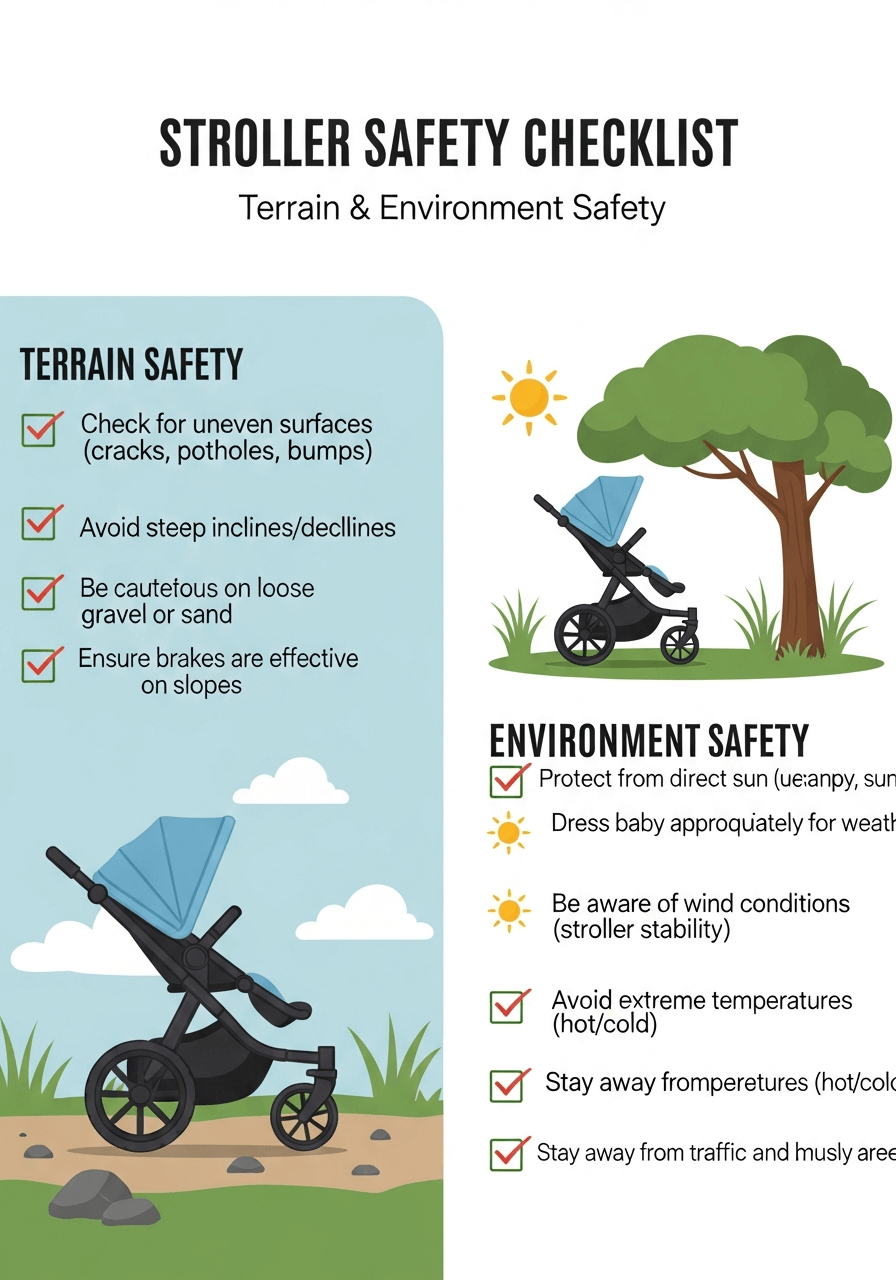
Few baby gear items get as much daily use as a stroller — it’s your mobile base for neighborhood walks, grocery runs, and naptime outings when your baby won’t settle in their crib. According to the U.S. Consumer Product Safety Commission (CPSC), thousands of preventable stroller-related injuries occur in the U.S. each year, most caused by misuse, poor maintenance, or unaddressed environmental hazards rather than manufacturing defects. This 2026-updated stroller safety checklist is designed for new and expecting parents, grandparents, babysitters, and frequent travelers, with actionable, pediatrician-aligned guidance to reduce risk and build safe, consistent habits for every ride.
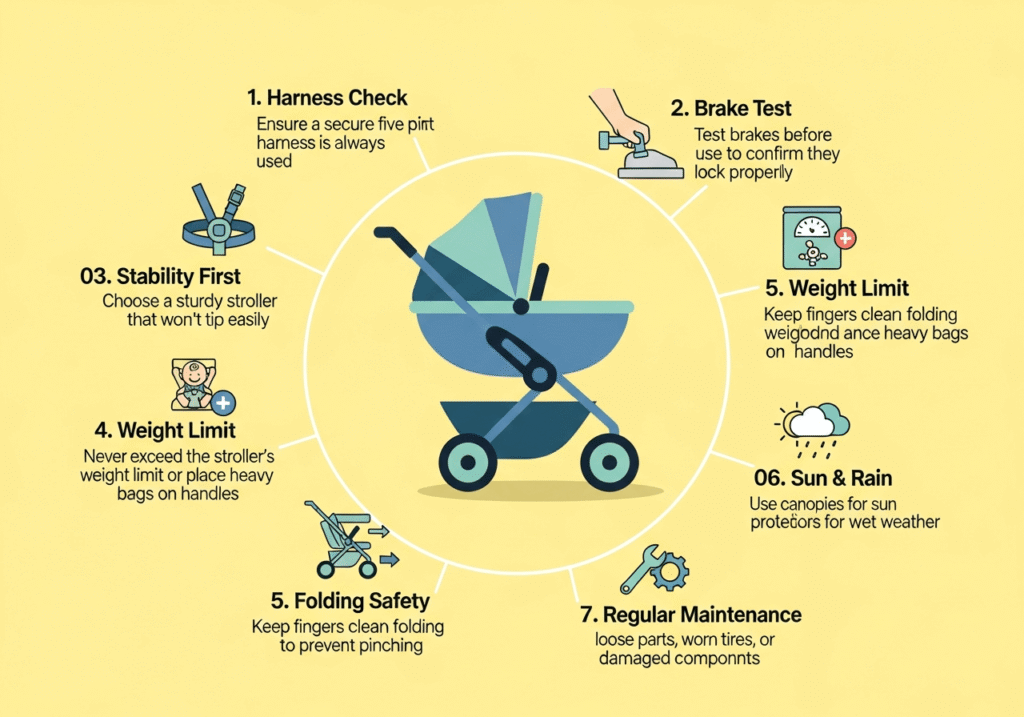 alt: Parent performing a 2-second pre-walk stroller brake check
A quick brake test before every outing prevents tip-overs when the stroller is left stationary.
alt: Parent performing a 2-second pre-walk stroller brake check
A quick brake test before every outing prevents tip-overs when the stroller is left stationary.
Pre-Purchase Safety Checks: Pick a Stroller That Prioritizes Protection First
The safest stroller is one that fits your child’s size, your lifestyle, and your budget, without cutting critical safety features. Before you buy, run through these checks to eliminate high-risk options:
- Confirm certification compliance: All strollers sold in the U.S. must meet ASTM F833 safety standards, but look for the additional JPMA (Juvenile Products Manufacturers Association) certification seal, which indicates independent third-party testing for extra quality assurance. Avoid unbranded, uncertified strollers from unregulated marketplaces, as they often lack basic safety features like reliable brakes or secure harnesses.
- Verify age, weight and height suitability: Strollers have strict weight limits — exceeding them significantly increases tip-over risk, especially for active toddlers. Newborns need a fully reclined seat or compatibility with an infant car seat for proper head and neck support; avoid umbrella strollers for infants under 6 months, as they do not recline fully and offer minimal structural support.
- Test stability in person: Load the stroller with a weight equal to your child’s current size plus 10lbs (to account for bags or accessories) and push it up a 5-degree incline — it should not tip backward. On flat surfaces, give the handle a firm push to confirm it rolls straight, rather than pulling sharply to one side due to misaligned wheels.
- Assess build quality: Check for sharp edges on the frame, secure locking mechanisms for wheels and folding joints, and durable, breathable fabric that won’t tear easily. Wobbling joints or loose screws are signs of poor manufacturing that will worsen with repeated use.
- Prioritize a 5-point harness: 5-point harnesses, which secure at the shoulders, hips, and crotch, are far safer for active babies and toddlers than 3-point waist-only systems, as they prevent climbing or leaning out of the seat during movement. When shopping, test the buckle to confirm it latches securely and is easy for adults to operate but too complex for young children to undo.
- Check brake and wheel function: The parking brake should lock both rear wheels firmly with minimal pressure, and hold the stroller in place on a slight slope. Swivel front wheels should lock easily for stability on uneven terrain.
- Research recall and safety history: Check the CPSC recall database for the specific model before purchasing, and avoid second-hand strollers with unknown usage or maintenance history. When shopping for a car seat to pair with a travel system, look for compatible travel system options that snap securely into the stroller frame to eliminate installation errors.
- Register your stroller immediately: Fill out the manufacturer’s warranty and registration card right after purchase, or register online, so you receive direct alerts if the model is recalled later. For guidance on identifying an expired or damaged used stroller, refer to our stroller expiration check guide.
Post-Purchase Setup & Assembly: Avoid Common Installation Errors
Improper assembly is a top cause of preventable stroller accidents, even for experienced parents. Follow these steps before your first ride:
- Read the full manual before touching any parts: Modern strollers often have model-specific folding or locking mechanisms that differ from older models you may have used previously.
- Confirm all parts are present before assembly: Missing bolts or screws can compromise frame stability and increase tip-over risk.
- Test every locking mechanism: Wheels, seat recline, canopy, and accessory attachments should click firmly into place with no give. Wiggle each component to confirm it is secure before first use.
- Check wheel alignment: Misaligned wheels cause the stroller to pull to one side, increasing trip and tip-over risk on uneven surfaces.
- Test harness fit before first use: Adjust the straps to your child’s size (or use a weighted dummy for newborns) to confirm the buckle latches securely and straps don’t slip during movement.
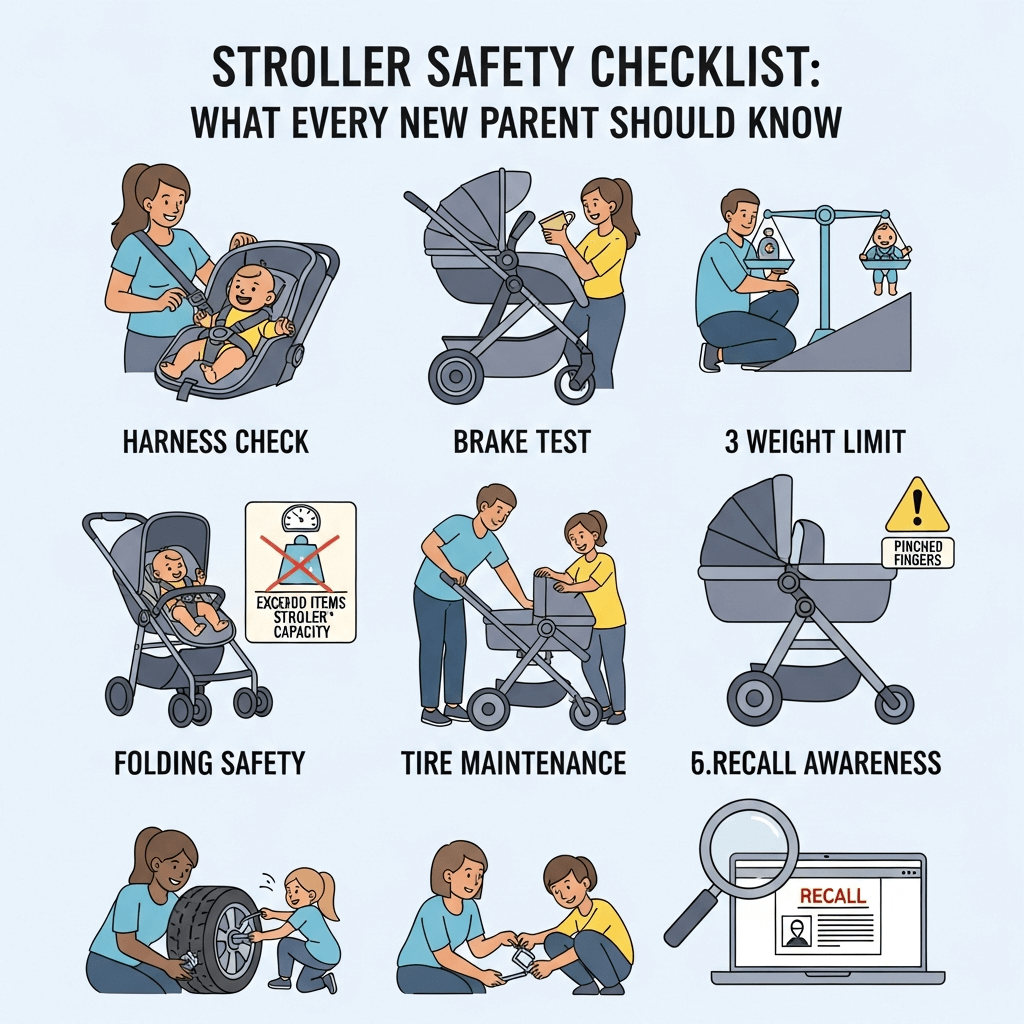 alt: Side-by-side comparison of safe and unsafe stroller setup practices
Common setup errors include loose wheel attachments and unlatched folding joints that can fail during use.
alt: Side-by-side comparison of safe and unsafe stroller setup practices
Common setup errors include loose wheel attachments and unlatched folding joints that can fail during use.
Harness & Seating Safety: Keep Your Child Securely Restrained
The 5-point harness is the single most important safety feature on any stroller — it prevents ejection during tip-overs and stops active toddlers from climbing out mid-ride. Use it correctly every time with these steps:
- Position shoulder straps at or just above your child’s shoulders, never below, as loose straps can slip off during a jolt.
- Fasten the crotch buckle first, then the chest clip, and pull the waist straps snug until you can fit no more than two fingers between the strap and your child’s chest.
- Test buckle security by giving the harness a firm upward tug — it should not release or stretch excessively.
- Adjust shoulder strap height as your child grows; straps that are too low can ride up into their face during movement.
- Inspect harness padding and stitching weekly for fraying, loose threads, or broken buckles — replace damaged harnesses immediately with manufacturer-approved parts, never with DIY repairs. Never place loose blankets, toys, or unapproved padding under the harness, as they can shift and create suffocation risks or interfere with buckle function. For newborns, use only the stroller’s approved infant insert to support their head and neck, not generic padding from other gear. Stick to approved infant padding guidelines to avoid introducing unnecessary risks to your child’s seating area. You can also read our guide on best booster car seat with harness top picks for safety and comfort.
Brake, Wheel & Stability Checks: Prevent Tip-Overs and Uncontrolled Movement
Brake failure is one of the top causes of stroller tip-overs, especially on slopes. Add these checks to your pre-ride routine:
- Test the parking brake before every outing by pressing it firmly and pushing the stroller forward — the rear wheels should not move at all.
- For strollers with swivel front wheels, lock the swivel function when the stroller is stationary, on slopes, or when loading/unloading the stroller to prevent unexpected rolling.
- Inspect tires weekly: Air-filled tires should be inflated to the PSI listed on the sidewall (underinflated tires increase rolling resistance and tip-over risk), while solid rubber tires should be checked for cracks, splits, or excessive wear.
- Stay within the storage basket weight limit: Most strollers have a maximum basket weight limit of 10lbs — exceeding this raises the center of gravity and makes tip-overs far more likely, especially when turning.
- Never hang heavy bags, purses, or diaper bags from the stroller handlebars: This is one of the most common causes of backward tip-overs, as the weight pulls the stroller off balance when you release the handle. Always use the under-seat storage basket for cargo instead.
Daily Usage Safety Rules: Build Consistent, Low-Effort Habits
Safe stroller use is a daily practice, not a one-time check. Follow these rules every time you head out:
- Buckle the harness first, before you even start moving — even for trips under 1 minute, like moving the stroller from the car to the house. Many injuries happen during these short, "just a minute" trips when caregivers skip buckling.
- Lock the parking brake every time the stroller is stationary, even on flat surfaces — a small bump or shift in weight can send the stroller rolling into traffic or down a slope.
- Never leave a child unattended in a stroller, even for a few seconds to grab a package or tie your shoe.
- Follow the one-child rule unless your stroller is explicitly designed and certified for multiple riders — overloading a single stroller with two children compromises stability and harness function.
- Do not use the stroller as a shopping cart, for carrying heavy items, or for tasks it was not designed for (like jogging, unless you own a dedicated jogging stroller).
- For naptime outings, follow naptime outings without disturbing rest best practices to keep the ride smooth and avoid waking your sleeping child, which can lead to sudden movements that compromise safety.
Terrain & Environmental Safety: Navigate Streets, Transit and Weather Responsibly
The environment around you introduces as much risk as the stroller itself. Follow these guidelines to stay safe on the go:
- Curbs and slopes: Always lift the stroller over curbs rather than pushing it down a curb, which can jostle the frame and loosen joints. When going up or down slopes, go straight on rather than at an angle to avoid tipping.
- Stairs and escalators: Never, under any circumstances, take a stroller on stairs, escalators, or moving walkways. Always carry your child separately and fold the stroller to navigate these areas.
- Public transport: When boarding buses or trains, keep the stroller folded until you are on board and have secured a spot for it. Never block aisles or doorways with an unfolded stroller.
- Extreme weather: In hot weather (above 75°F/24°C), avoid direct sun on the stroller seat, use a breathable sun shade, and never cover the stroller with a blanket, as this traps heat and can cause fatal overheating in minutes. For cold weather, follow cold weather layering tips to avoid over-bundling, which can also lead to overheating, and ensure your baby’s face is not covered by scarves or blankets that could restrict airflow. Opt for secure non-slip baby footwear to prevent little feet from getting caught in stroller mechanisms during rides.
- Low-light conditions: Use reflective stroller accessories, visibility flags, or lights to make yourself visible to drivers, cyclists, and pedestrians when walking at dusk or night.
Folding, Transport & Storage Safety: Avoid Pinch Points and Damage
Improper folding is a top cause of stroller-related finger injuries for both children and caregivers. Follow these steps every time:
- Always remove your child from the stroller before folding, even if they are asleep — never fold a stroller with a child in the seat.
- Keep fingers clear of all hinges, joints, and locking mechanisms when folding or unfolding; many strollers have powerful pinch points that can cause serious injury.
- Confirm the stroller locks securely in its folded position before carrying or storing it — an unlatched stroller can unfold unexpectedly and cause injury.
- When transporting the stroller in a car, secure it in the trunk or cargo area with a strap to prevent it from shifting during sudden stops or turns. Do not leave an unsecured stroller in the backseat, as it can become a projectile in a crash.
- For air travel, check the airline’s stroller policy before your trip: most allow you to gate-check lightweight strollers for free, but you will need to fold it according to their specifications and may need to use a travel bag to protect it from damage. For step-by-step guidance on folding popular compact models, refer to a Uppababy Vista folding guide to avoid common errors.
Routine Maintenance & Inspection: Catch Wear Before It Becomes Dangerous
Regular checks take less than 5 minutes a week and can extend your stroller’s lifespan while preventing accidents. Follow this simple schedule:
- Weekly quick checks: Test the harness buckle, brake function, and wheel rotation; inspect tires for wear or low pressure; wipe down the seat and frame to remove dirt and debris that can degrade materials.
- Monthly full inspections: Check all frame joints and fasteners for looseness or corrosion; inspect the harness padding and stitching for fraying; test all recline and canopy mechanisms to ensure they move smoothly and lock securely.
- Cleaning: Follow the manufacturer’s cleaning guidelines — avoid harsh bleach, abrasive cleaners, or high-heat washing, as these can weaken frame joints and fabric.
- Part replacement: If the harness buckle breaks, a wheel axle bends, or the frame develops cracks, replace the part with a manufacturer-approved component. Never DIY repairs with duct tape, zip ties, or unapproved parts, as these can fail unexpectedly. Stop using the stroller immediately if you notice structural damage, brake failure, or if it has been recalled.
Accessories & Add-On Safety: Avoid Hidden Risks From Third-Party Gear
Accessories can make stroller rides more comfortable, but unapproved third-party gear often introduces serious safety risks. Follow these rules to keep your child safe:
- Only use accessories explicitly approved by your stroller’s manufacturer — aftermarket rain covers, cup holders, or footmuffs may interfere with harness function, block ventilation, or compromise the stroller’s structural integrity.
- Ensure all rain covers or sun shades allow for adequate airflow — covering the entire stroller with a blanket or non-ventilated cover can cause fatal overheating in as little as 10 minutes, even in mild weather.
- Avoid overloading cup holders, snack trays, or parent organizers with heavy items, as this can unbalance the stroller or cause accessories to break off and become choking hazards.
- Never attach toys or pacifier clips to the stroller frame or harness — these can become entanglement or choking risks if they detach.
- For seating, stick to approved infant padding guidelines — loose inserts, crib bumpers, or extra blankets placed under the harness can shift and create suffocation hazards, or interfere with the harness’s ability to secure your child.
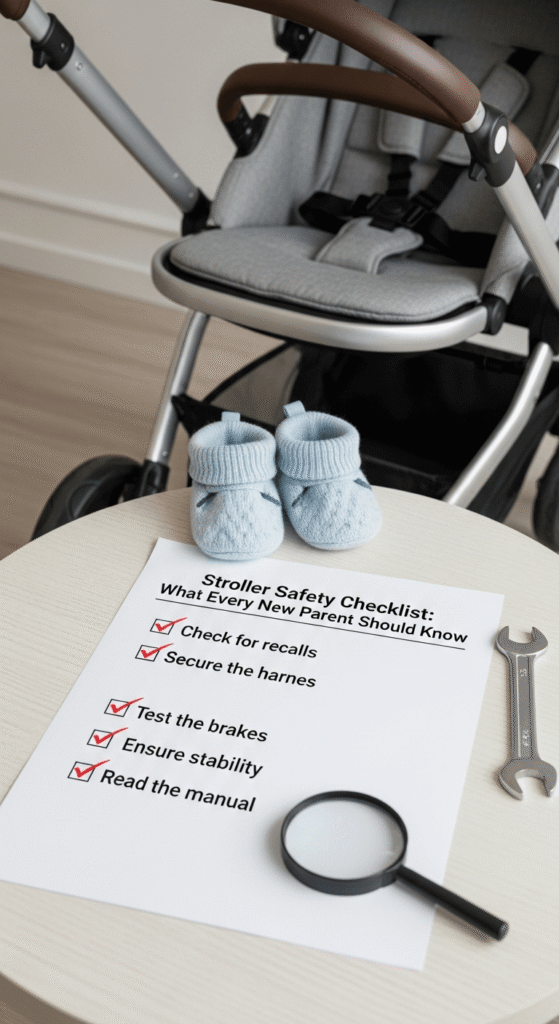 alt: Comparison of approved and unsafe stroller accessories
Only manufacturer-approved accessories should be used with your stroller to avoid interference with safety features.
alt: Comparison of approved and unsafe stroller accessories
Only manufacturer-approved accessories should be used with your stroller to avoid interference with safety features.
Common Stroller Safety Mistakes to Ditch Immediately
Even experienced parents make these errors — ditching them will drastically reduce your risk of accidents:
- Skipping harness use for short trips: 60% of stroller injuries happen during trips under 5 minutes, when caregivers assume buckling is unnecessary for a quick errand.
- Overloading the storage basket or hanging bags from the handlebars: This shifts the center of gravity and dramatically increases tip-over risk, especially when your child shifts their weight or the stroller hits a bump.
- Using an expired or recalled stroller: Strollers have a recommended lifespan of 5-7 years, even if they look in good condition — UV exposure and repeated folding degrade plastic and metal components over time, making them more likely to fail.
- Leaving the stroller unattended on a slope or near traffic, even with the brake locked.
- Using a regular stroller for jogging: Only use a dedicated jogging stroller with a fixed front wheel, shock absorption, and a wrist strap for running — regular umbrella or travel strollers can collapse or tip during high-impact movement.
- Forcing a child to use a stroller past its weight or height limit: Once your child can climb out of the stroller on their own, it’s time to transition to a toddler stroller or walking independently.
Free Shareable Stroller Safety Checklist
We’ve compiled a free, one-page printable checklist that covers all pre-use, in-use, and post-use safety steps, designed to be saved to your phone or printed out for grandparents, babysitters, and daycare providers. It includes quick checkboxes for harness function, brake tests, and cargo limits, plus emergency contact space for recall alerts. Print a copy to keep in your stroller’s storage basket for quick reference on every outing.
Pediatrician-Approved Expert Tips for Every Stage
Stroller safety needs shift as your child grows. Follow these age-specific guidelines to stay ahead of risks:
- Newborns (0-6 months): Always use a fully reclined stroller seat or a compatible infant car seat adapter to support your baby’s underdeveloped head and neck. Avoid umbrella strollers, which do not recline fully and offer minimal support for infants.
- 6-12 months: Once your baby can sit up unassisted, you can use a partially reclined stroller, but keep the harness buckled at all times, as active babies may try to climb or lean out of the seat.
- Toddlers (1-3 years): Transition to a toddler stroller with a higher weight limit when your child exceeds the infant stroller’s weight capacity, but continue using the harness until they can sit still and follow safety rules consistently.
- All ages: Review stroller safety guidelines with every caregiver who watches your child, as many accidents happen when visitors or family members are unfamiliar with your stroller’s specific features. For age-specific guidance, refer to the American Academy of Pediatrics’ stroller safety recommendations for every stage of development.
Frequently Asked Questions (FAQ): Stroller Safety Checklist
At what age can a baby safely use a stroller?
Most full-term, healthy newborns can use a stroller from birth only if it has a fully reclined seat or is compatible with an infant car seat. Premature babies or those with low muscle tone may need additional head and neck support, so consult your pediatrician before using a stroller for very young infants. Always follow the manufacturer’s minimum age and weight recommendations for your specific model. You can also read our guide on bob stroller replacement parts.
Is a 5-point harness really necessary?
Yes. A 5-point harness, which secures at the shoulders, hips, and crotch, provides significantly better restraint than a 3-point waist-only system, especially as babies grow more active and attempt to lean, climb, or stand in the stroller. The 5-point design distributes force across the core and shoulders during a jolt or tip-over, reducing the risk of ejection or injury.
Should I use the harness even for short trips?
Absolutely. The majority of stroller injuries occur during trips under 1 mile or 5 minutes, when caregivers assume buckling is unnecessary for a quick errand or trip across the parking lot. Always buckle the harness before moving the stroller, no exceptions.
Is it safe to hang bags on stroller handles?
No. Hanging heavy bags, diaper bags, or purses from the stroller handlebars shifts the center of gravity backward, dramatically increasing the risk of a backward tip-over, especially when your child shifts their weight or the stroller hits a bump. Always use the under-seat storage basket for cargo, and stay within the manufacturer’s listed weight limit for the basket.
How often should I check stroller brakes and wheels?
Test the parking brake before every single outing, and inspect wheels for wear, cracks, or low pressure weekly. Perform a full monthly safety check of all joints, fasteners, and harness components to catch small issues before they become dangerous.
Can I use a stroller on stairs or escalators?
Never. Strollers are not designed to withstand the angles and movement of stairs or escalators, and using them on these surfaces can cause the stroller to collapse, tip, or fall, leading to serious injury to your child. Always carry your child separately and fold the stroller to navigate stairs or escalators.
Are second-hand strollers safe to use?
They can be, but only if you can confirm they have not been recalled, all parts are intact and functional, the harness and brakes work perfectly, and you have access to the original manufacturer’s manual. Avoid strollers more than 5 years old, as degraded materials increase failure risk, and never use a second-hand stroller with missing parts or unknown damage history.
What should I do if my stroller is recalled?
Stop using the stroller immediately, even if the damage seems minor. Follow the manufacturer’s recall instructions, which may include free repair parts, a replacement model, or a full refund. You can check for recalls at any time on the CPSC website.
Can accessories make a stroller unsafe?
Yes. Third-party accessories such as aftermarket harnesses, non-ventilated rain covers, thick footmuffs, and handlebar hooks can interfere with harness function, block airflow, increase tip-over risk, or create choking and entanglement hazards. Only use accessories explicitly approved by your stroller’s manufacturer.
How do I know when it’s time to stop using a stroller?
Stop using a stroller immediately if your child exceeds the manufacturer’s listed height or weight limit, if the brakes no longer hold the stroller in place, if the frame has cracks or bends, or if parts are missing and cannot be replaced with approved components. Safety always outweighs convenience.
Is jogging with a regular stroller safe?
No. Regular travel or umbrella strollers are not designed for jogging or running, as their lightweight frames and swivel wheels can collapse or tip during high-impact movement. Only use a dedicated jogging stroller with a fixed front wheel, shock absorption, and a wrist strap for running.
What’s the most common stroller safety mistake parents make?
The most common mistake is skipping harness use for short trips, followed by overloading storage baskets or hanging bags from handlebars, and failing to lock the parking brake when the stroller is stationary.
Should grandparents and babysitters follow the same checklist?
Yes. Many stroller accidents happen when caregivers are unfamiliar with modern stroller safety features, so share a printed or digital copy of the checklist with anyone who watches your child, and walk them through your stroller’s specific locking and brake functions.
Is stroller safety really that big of a concern?
Yes. While strollers are generally safe when used correctly, most injuries are preventable with simple, consistent habits. The CPSC estimates that proper harness use, brake locking, and avoiding handlebar cargo could prevent the majority of stroller-related injuries each year.
Conclusion & Final Safety Reminder
Stroller safety isn’t a one-time purchase decision — it’s a daily set of small, low-effort habits that drastically reduce injury risk for your child. By choosing a certified, well-built stroller, assembling it correctly, performing routine checks, and following consistent usage rules, you can enjoy worry-free outings with your little one for years. Make safety checks a regular part of your pre-walk routine, share this checklist with all caregivers, and register your stroller with the manufacturer to receive recall alerts. A few extra seconds of attention before each ride can prevent serious, life-altering accidents. For more age-appropriate baby gear guidance, explore our full library of pediatrician-reviewed parenting resources.

Emma Grace is a devoted mother and passionate content writer at BestBabyCart.com. With firsthand parenting experience and a love for research, she creates helpful guides and honest reviews to support parents in choosing the best for their babies. Her goal is to make parenthood easier, one article at a time.