
Summer strolls are a staple of baby season, but blazing sun and rising temperatures can turn a relaxing outing into a stressful, unsafe experience for your little one. Infants can’t regulate their body temperature as effectively as adults, and stroller interiors can heat up to dangerous levels in a matter of minutes when exposed to direct sunlight. The good news is that with a few simple, tested strategies, you can keep your stroller cool, protect your baby from heat-related illness, and make every summer walk enjoyable for both of you. This guide covers safety-first tips used by pediatric health experts and seasoned parents alike, no gimmicks required.
Why Stroller Heat Is a Serious Safety Concern
It’s easy to write off a sweaty, fussy baby as just a discomfort of summer, but stroller heat poses real, immediate health risks for infants. Babies under 1 year old have underdeveloped thermoregulation systems and can’t sweat to cool themselves down efficiently, making them 3–5 times more likely to develop heat-related illness than adults in the same conditions. CDC guidance on infant heat safety notes that stroller interiors can reach temperatures 20–30°F higher than the ambient air temperature in as little as 10 minutes of direct sun exposure. On a 85°F (29°C) summer day, that means the stroller seat can hit 105–115°F (40–46°C) — hot enough to cause heat exhaustion or heat stroke in a matter of minutes, even on what feels like a mild day to adults. For more on this, see our guide on how to keep baby cool in stroller.
Prep Your Stroller Before Leaving the House
Small adjustments made before you head out the door will cut down on heat buildup far more effectively than last-minute fixes mid-walk.
Prioritize Breathable, Heat-Resistant Materials
The fabrics and materials your stroller is made of (or that you add to it) will make or break its ability to stay cool in summer.
- Frame material: Aluminum stroller frames reflect radiant heat, while steel frames absorb and retain it, making aluminum the better choice for hot climates.
- Liners and covers: Opt for loose-weave mesh, moisture-wicking bamboo/cotton blends, or lightweight nylon with a reflective silver coating. Look for items labeled UPF 50+ to block UV radiation without restricting airflow. Avoid thick polyester, PVC, dark-colored fabrics, and plastic covers that trap heat and block ventilation.
- Avoid unnecessary add-ons: Skip thick fleece footmuffs, insulated seat liners, and heavy blanket layers in summer — these trap body heat and raise the stroller’s internal temperature by 10°F or more in just a few minutes. Just as you would avoid putting heavy, heat-trapping bedding in your baby’s crib to reduce overheating risk, skip these bulky stroller accessories when temperatures rise above 75°F (24°C).
Add Purpose-Built Sun Protection
Blocking direct sunlight before it hits the stroller is the most effective way to prevent heat buildup.
- Extendable canopies: Most modern strollers come with adjustable, UPF-rated canopies that block overhead and low-angle sun. Many popular models, including the Uppababy Vista, feature a telescoping canopy that can be extended to cover your baby’s entire body without blocking airflow.
- Reflective stroller umbrellas: For extra coverage, attach a stroller umbrella with a reflective silver outer layer that bounces radiant heat away, rather than absorbing it like dark-colored umbrellas do.
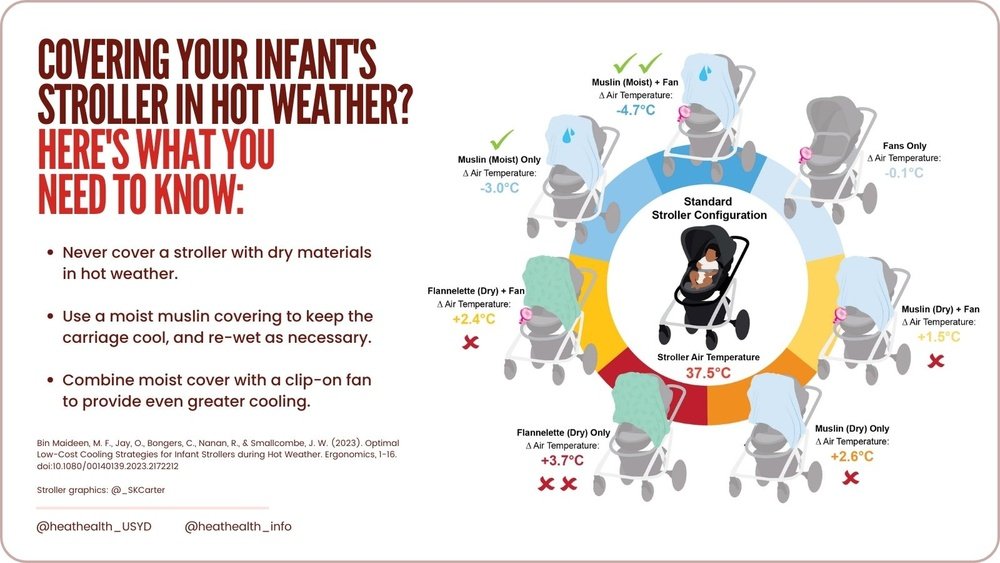
- Avoid non-ventilated covers: Never drape a blanket, towel, or non-ventilated sun cover over the stroller to block sun — these trap heat and can raise the internal temperature by 15°F or more in just 5 minutes. If you use a dedicated sun cover, make sure it has mesh ventilation panels on all sides to allow air to flow through.
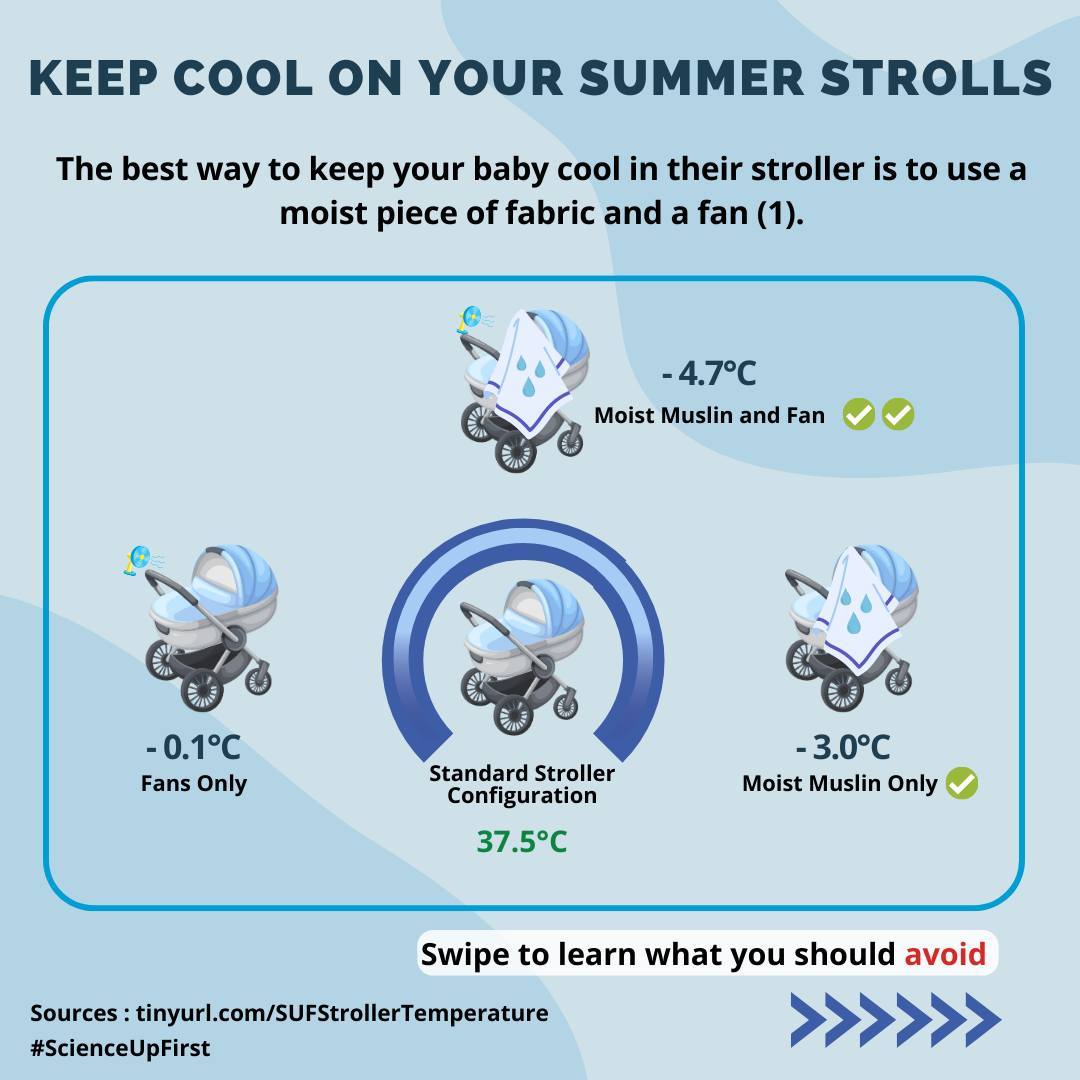 This graphic shows how quickly stroller interior temperatures spike when exposed to direct sunlight, even on mild days.
Credit: scienceupfirst.com
This graphic shows how quickly stroller interior temperatures spike when exposed to direct sunlight, even on mild days.
Credit: scienceupfirst.com
Optimize Airflow During Your Outing
Even with the best prep, you’ll need to adjust your stroller and positioning mid-walk to maintain consistent airflow.
- Open all available mesh windows, vents, and breathable panels on your stroller, even if it means letting in a small amount of indirect sun — airflow is far more important for cooling than blocking minor sun exposure.
- Position the stroller to face into the breeze whenever possible, and avoid parking next to heat-radiating surfaces like asphalt, concrete, car hoods, or metal benches that can raise the surrounding air temperature by 10°F or more.
- If you’re stopped for an extended period (e.g., at a park or café), lift the stroller’s backrest slightly to create a convection current: hot air rises and escapes out the top of the canopy, while cool air flows in through lower vents.
- Planning your route ahead to prioritize shaded walking routes can reduce how often you need to stop and adjust the stroller, which is especially helpful if you’re heading out during your baby’s regular nap time.
Safe, Effective Cooling Accessories
Cooling accessories can provide extra relief on extremely hot days, but it’s critical to choose safe, age-appropriate options to avoid injury or discomfort.
Cooling Pads and Gel Inserts
Stroller-specific cooling pads are the safest option for lowering seat temperature. Look for pads with a breathable mesh cover and non-toxic gel inserts that won’t leak if punctured. Never use loose ice packs, frozen gel packs, or chemical cooling inserts directly against your baby’s skin, as these can cause frostbite or skin irritation in as little as 10 minutes of contact. If you do use a cooling pad, wrap it in a thin cotton cloth before placing it on the stroller seat.
Clip-On Fans and Misters
- Fans: Clip-on battery-powered fans are a low-effort way to increase airflow. Always choose a model with a secure, enclosed fan guard to prevent little fingers from reaching the blades, and attach it to the stroller frame (never the seat or canopy) to avoid it falling on your baby. Opt for cordless models to eliminate strangulation hazards.
- Misters: Fine-mist stroller attachments can cool the air around your baby quickly, but they work best in low-humidity conditions, where the mist evaporates efficiently to lower air temperature. In high humidity, mist will just make your baby wet and sticky without providing meaningful cooling. If you use a mister, use it sparingly and avoid soaking your baby’s clothing, as excess moisture can cause skin irritation.
 A quick reference guide to safe, low-effort stroller cooling strategies for hot weather.
Credit: www.karingforpostpartum.com
A quick reference guide to safe, low-effort stroller cooling strategies for hot weather.
Credit: www.karingforpostpartum.com
Dress and Hydrate Your Baby for Hot Weather
What your baby wears and drinks during outings will have a huge impact on their ability to stay cool.
Lightweight, Sun-Safe Clothing
Dress your baby in loose-fitting, light-colored clothing made from breathable fabrics like cotton or bamboo to allow air to flow and wick away sweat. UPF-rated clothing is even better, as it blocks 98% of harmful UV radiation without trapping heat, per AAP sun safety guidelines for infants. Always pair their outfit with a wide-brimmed hat that covers their face, neck, and ears to prevent sunburn. Avoid synthetic fabrics like polyester that don’t breathe, and opt for breathable baby socks only if the stroller seat is cool to the touch — skip them entirely on extremely hot days to let your baby’s feet air out.
A common mistake parents make is overdressing babies for summer outings, assuming they’ll get cold — in reality, infants need only lightweight summer layers in temperatures above 75°F (24°C), plus a sun hat. Check the back of your baby’s neck or their chest to gauge their temperature: if it’s sweaty or warm, remove a layer, even if their hands or feet feel cool (cold extremities are normal for infants and not a sign they’re chilled).
Age-Appropriate Hydration
Dehydration sets in fast for babies in hot weather, so offer fluids frequently during outings:
- For babies under 6 months old, breast milk or formula is all they need — do not offer water unless directed by your pediatrician, as it can interfere with their nutrient intake and cause electrolyte imbalances.
- For babies over 6 months old, offer small sips of water every 15–20 minutes during outings, even if they don’t seem thirsty. Watch for early signs of dehydration: fewer than 4 wet diapers per day, dry or cracked lips, no tears when crying, or a sunken soft spot (fontanelle) on the top of their head. If you notice these signs, move to a cool, shaded area and offer fluids immediately.
Strategic Parking and Timing to Avoid Heat Buildup
When and where you stop during your outing will have a bigger impact on stroller temperature than almost any accessory.
- Timing: Avoid stroller walks between 10am and 4pm, when UV radiation is strongest and air temperatures peak. If you have to go out during these hours, stick to fully shaded routes and limit time in direct sun to 10 minutes or less.
- Shade selection: Natural shade from dense tree cover is far better than shade from building overhangs or awnings, which can still radiate heat from the structure and let in scattered UV rays that raise the stroller’s temperature. Avoid parking next to heat-absorbing surfaces like asphalt, black pavement, or car exteriors that have been sitting in the sun — these radiate heat and can raise the surrounding air temperature by 10–15°F even in partial shade.
- Critical safety rule: Never leave a stroller unattended in a parked car, even for 1 minute with the windows cracked. Car interiors can reach 120°F (49°C) in just 20 minutes on an 85°F day, putting your baby at extreme risk of heat stroke or death.
 A safe, battery-powered clip-on stroller fan with a protective guard to prevent little fingers from touching the blades.
Credit: www.amazon.com
A safe, battery-powered clip-on stroller fan with a protective guard to prevent little fingers from touching the blades.
Credit: www.amazon.com
Monitor Your Baby for Signs of Heat Illness
Even with all the right precautions, it’s critical to check on your baby regularly during outings to catch early signs of overheating.
- Use a small, stick-on digital thermometer attached to the stroller seat to check the internal temperature at a glance. Keep the internal temperature below 85°F (29°C) to avoid heat-related illness.
- Early signs of heat exhaustion: Flushed skin, excessive sweating, rapid breathing, lethargy, or uncharacteristic fussiness that won’t calm with usual soothing methods.
- Signs of heat stroke (medical emergency): Temperature over 104°F (40°C), dry skin with no sweating, vomiting, confusion, or loss of consciousness. If you notice these signs, call 911 immediately, move your baby to a cool, shaded area, remove excess clothing, and apply cool (not cold) damp cloths to their groin, armpits, and neck while waiting for help.
Common Stroller Cooling Mistakes to Avoid
Even well-meaning parents often make these errors that raise stroller temperature or put their baby at risk:
- Using non-ventilated covers: Blanket drape clips, thick sun covers, or homemade covers without mesh panels trap heat and restrict airflow, raising the internal temperature by 15°F or more in minutes. Always use covers with built-in ventilation.
- Applying cold items directly to skin: Ice packs, frozen gel inserts, or cold wet cloths placed directly against your baby’s skin can cause frostbite or skin irritation in as little as 10 minutes. Wrap cooling items in a thin cloth, or use stroller-specific cooling pads designed for infant use.
- Overdressing for the weather: Babies need only one layer of lightweight clothing in temperatures above 75°F (24°C). Adding extra layers “just in case” is one of the most common causes of stroller overheating.
- Leaving the stroller in direct sun for short stops: Even 5 minutes of direct sun exposure can raise the stroller’s internal temperature to dangerous levels. Always seek full shade when stopping, even for quick errands.
Frequently Asked Questions
How can I keep my stroller cool in summer without spending a lot of money?
The most effective free cooling strategies are parking in full shade, opening all stroller vents and mesh windows, positioning the stroller to face the breeze, and dressing your baby in lightweight, light-colored clothing. Avoid costly gimmicky cooling products that don’t address the root cause of heat buildup: direct sun exposure and poor airflow.
What materials help keep strollers cool?
Opt for stroller liners, covers, and clothing made from loose-weave mesh, UPF-rated cotton/bamboo blends, or lightweight reflective nylon. Avoid thick polyester, PVC, dark fabrics, and plastic covers that trap heat and block ventilation.
Are clip-on stroller fans safe for babies?
Yes, as long as you choose a model with a secure, enclosed fan guard to prevent little fingers from reaching the blades, and attach it tightly to the stroller frame so it can’t fall on your baby. Opt for cordless, battery-powered models to eliminate strangulation hazards.
How much hotter does a stroller get in direct sun?
Stroller interiors can reach 20–30°F higher than the ambient air temperature in as little as 10 minutes of direct sun exposure. On an 85°F (29°C) day, that means the stroller seat can hit 105–115°F (40–46°C), which is hot enough to cause heat exhaustion in infants in under 15 minutes.
Can I use a wet cloth to cool the stroller seat?
Yes, lightly misting or wiping the stroller seat with a cool, damp cloth can lower the surface temperature quickly, especially if you pair it with a fan to speed up evaporation. Just make sure the seat isn’t soaking wet, as excess moisture can cause skin irritation or make your baby uncomfortably damp.
Is it safe to use a stroller misting system in humid weather?
Misting systems work best in low-humidity conditions, where the fine mist evaporates quickly to cool the air. In high humidity, the mist won’t evaporate efficiently, leaving your baby wet and sticky without providing meaningful cooling benefit. If you do use a mister, use it sparingly and avoid soaking your baby’s clothing.
Conclusion
Keeping your stroller cool in summer is about far more than avoiding a fussy baby — it’s a critical safety step to protect your little one from life-threatening heat-related illness. The most effective strategies are simple, low-cost, and easy to implement: block direct sun with a well-ventilated canopy, maximize airflow, dress your baby in lightweight, sun-safe clothing, and always monitor for signs of overheating. Avoid common mistakes like using non-ventilated covers or overdressing your baby, and never leave your stroller unattended in a hot car. With these small, consistent habits, you can enjoy stress-free summer strolls and keep your baby safe and comfortable all season long.
For more evidence-based summer baby care tips to keep your little one safe, happy, and healthy, browse our full library of baby care guides.

Emma Grace is a devoted mother and passionate content writer at BestBabyCart.com. With firsthand parenting experience and a love for research, she creates helpful guides and honest reviews to support parents in choosing the best for their babies. Her goal is to make parenthood easier, one article at a time.