You've likely scrolled past dozens of teething toy picks and felt overwhelmed. A teething toys checklist cuts through the noise and gives you a repeatable framework instead of another influencer recommendation. Every item exists because parents found real problems: choking hazards, toxic leaching, mold buildup, and recalled products.
Per CPSC guidance, consumer product safety standards require toys intended for children under 3 to meet strict small-parts testing and lead-content limits. That's not a suggestion. That's what separates a vetted purchase from a gamble.
Here's what actually matters when choosing something that goes straight into your baby's mouth.
Quick Answer
A solid teething toys checklist checks five areas before you buy anything. First, verify material safety certifications like BPA-free and phthalate-free. Second, confirm the toy is one piece with no detachable parts. Third, ensure it meets ASTM F963 or equivalent standards. Fourth, check that the diameter is larger than 1.25 inches to prevent airway blockage. Fifth, make sure it's easy to clean and safe to freeze if that feature matters.
Why This Checklist Exists (And Why It's Not Just Another Toy Buying Guide)
Babies put nearly everything in their mouths during teething season. That instinctive behavior makes product safety non-negotiable. The average infant goes through 3 to 4 months of active gum eruption between 4 and 12 months of age. During that window, they'll chew repeatedly on whatever is within reach.
A checklist forces you to pause and verify before handing over a new toy. It stops impulse buys driven by cute packaging or a trending Instagram post. It also helps you compare brands when multiple claim the same safety features.
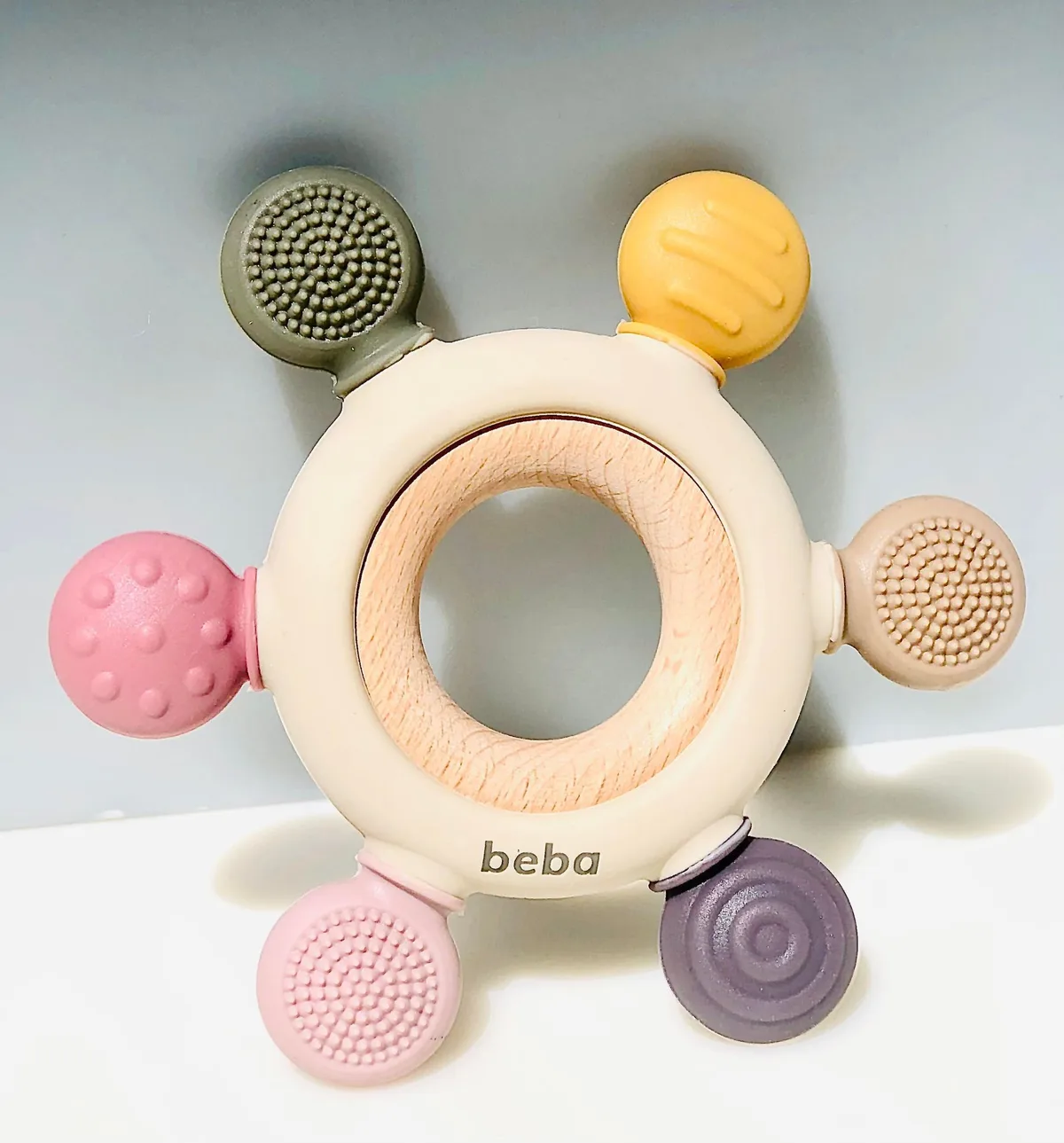
Material Safety Markers
Materials are the first line of defense. Your baby's gums are thin and absorbent. Chemicals leach faster from soft or degraded materials, especially when saliva acts as a solvent.
Look for these markers on any packaging:
- BPA-free on the label means bisphenol-A was excluded from manufacturing.
- Phthalate-free indicates no plasticizers commonly used in PVC blends.
- Latex-free is essential if your baby has known allergies. Natural rubber alternatives exist and perform well.
- Food-grade silicone is the gold standard. Platinum-cured silicone is preferable because it uses fewer byproducts than peroxide-cured versions.
Don't trust the word "natural" alone. Some wooden teethers come treated with unsafe finishes. Always verify the coating is food-safe and non-toxic.
Design & Construction Requirements
Construction flaws cause most choking incidents. A one-piece design eliminates seams that can split open. When parts separate, even slightly, you have a hazardous object in a baby's mouth.
Check for these construction basics before buying:
- No detachable pieces. Rings, shapes, and connectors should be molded or fused as one unit.
- Smooth, rounded edges. Sharp corners damage delicate gum tissue.
- Surface texture that won't trap debris. Deep grooves look appealing but harbor bacteria if hard to clean.
- A handle or grip section sized for tiny hands but large enough that the whole toy can't slide into the throat.
If a teether has a hollow center, inspect the seam every time you wash it. Hairline cracks in those seams become bacterial reservoirs.
Certification & Labeling Standards
Certifications let you verify safety without reading pages of fine print. At minimum, look for ASTM F963 compliance—the US mandatory toy safety standard. European toys carry the CE mark under EN 71 standards, covering similar ground.
Third-party lab certifications add credibility. Marks from Intertek, SGS, or TÜV mean an independent facility tested the product. Some brands publish their test reports online. Others rely on manufacturer self-certification, which is weaker.
When shopping for baby bottles and related gear, you'll notice similar certification language on drying racks and bottle warmers. Quality standards tend to overlap across infant product categories.
Size & Shape Rules
Size matters more than most parents realize. The Consumer Product Safety Commission small-parts cylinder test defines the choke-test chamber at 1.25 inches in diameter and 1.25 inches deep. Any toy smaller than those dimensions can pass through and block an airway.
This means:
- A teether ring should exceed 1.25 inches in its narrowest dimension.
- Attached handles or grips must never shrink below that threshold.
- Protruding nubs must stay wide enough to resist sliding into the mouth.
Shape also plays a role. Circular rings reduce the chance of a corner wedging against the palate. Bulky bar shapes work for older babies who grip firmly. Both designs keep the toy stable in the mouth without pinching.
Cleanability & Longevity Factors
Teethers that collect grime become health risks quickly. Saliva, food residue, and bacteria fuel rapid microbial growth in warm, moist environments.
Consider these cleanability factors:
- Dishwasher-safe tops make routine cleaning effortless. Place them on the top rack only.
- Smooth surface textures wipe clean faster than deeply sculpted patterns.
- Solid silicone pieces dry completely after washing. Hollow gel-filled types retain moisture inside.
- Non-porous materials resist staining and odor retention better than porous wood or fabric-covered options.
If you already know how to maintain a reliable bottle drying setup, you'll spot cleaning weaknesses in teether designs immediately. The same attention to airflow and thorough drying applies here. Plan to replace any toy that shows softening, cloudiness, or sticky residue even after washing.
Silicone, Wood, Rubber, or Gel-Filled: Which Material Actually Works Best
Material choice shapes everything, from how well the teether soothes sore gums to how quickly it degrades. No single material wins across every scenario. The right pick depends on your baby's age, chewing intensity, and any sensitivity issues.
We evaluated four mainstream categories based on safety performance, comfort, and durability from aggregate reviews. Here's what each offers.
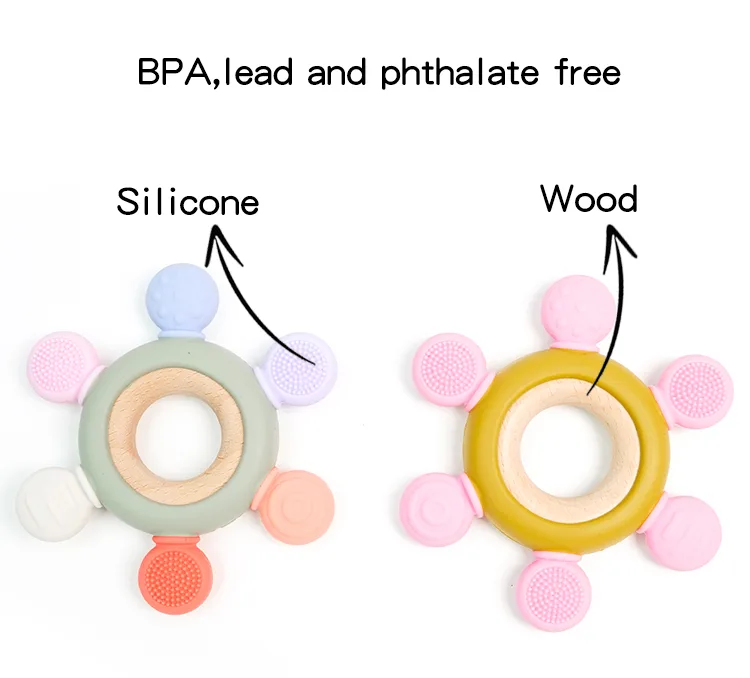
Food-Grade Platinum-Cured Silicone
Silicone dominates for good reason. It resists degradation, doesn't leach chemicals, and tolerates repeated boiling without warping. Platinum-cured silicone specifically avoids the peroxide residual problem found in cheaper batches.
Parents report silicone holds its shape after weeks of heavy chewing. It responds predictably to freezing, softening enough to cushion inflamed gums without turning brittle. The main downside is price—high-quality food-grade silicone costs more upfront than budget rubber or vinyl.
Natural Rubber (Latex) Teethers
Natural rubber teethers feel slightly softer than silicone and conform better to curved gum lines, which can feel more soothing during intense molar eruptions. However, latex carries allergy risk. Some manufacturers blend natural rubber with synthetic fillers to lower costs; those blends often lack pure latex durability. Read the ingredient list carefully and avoid anything labeled simply "rubber" without specifying natural or latex content.
Solid Wood Teething Toys
Wooden teethers have surged in popularity. Untreated hardwoods like beech and maple offer firm pressure some babies prefer, and they tend to last longer than gel-filled options. The catch is maintenance: wood absorbs saliva over time, and even sealed wood can crack with constant moisture or extreme cold. Reserve wooden teethers for daytime use only and rotate between several options to allow full drying.
Gel-Filled and Water-Filled Options
Gel-filled teethers contour to the mouth and hold temperature longer than solid silicone, providing instant numbing relief when chilled. The safety concern centers on seal integrity—over time, UV exposure and repeated freezing cycles weaken internal bonding. Water-filled versions share similar risks; a compromised seal leaves liquid inside while the outer shell softens and tears. Inspect weekly and discard any showing bulging, stickiness, or milky interior discoloration.
Vibrating or Electronic Teethers
Electric teethers add vibration as a distraction tool; many infants respond positively to the gentle buzz. From a safety standpoint, electronic components cannot be fully submerged for cleaning, creating a long-term moisture intrusion hazard. Battery compartments must meet strict child-resistant standards. Verify screws are secure and impossible for a toddler to loosen.
| Material | Soothing Feel | Durability | Cleaning Ease | Freeze Tolerance | Allergy Risk |
|---|---|---|---|---|---|
| Silicone | Firm yet yielding | Excellent | Very easy | Excellent | None |
| Natural Rubber | Soft, conforming | Good | Moderate | Poor | Moderate |
| Hardwood | Very firm | Excellent | Moderate | Poor | Low |
| Gel-Filled | Contours well | Fair | Difficult | Good | None |
| Electronic | Vibration added | Fair | Limited | N/A | Low |
Choosing the right material depends on what works alongside your existing diaper and baby care routines. Just as pull-up diapers suit different toddlers depending on developmental readiness, teether materials suit different chewing styles and sensitivities.
The Red Flags: What to Walk Away From Immediately
Some teething toys fail safety checks so badly that no marketing justification changes the risk. Learning to spot these failures saves you from returns, recalls, and worse, emergency room visits. Here are the red flags worth memorizing before browsing any store shelf or online listing.
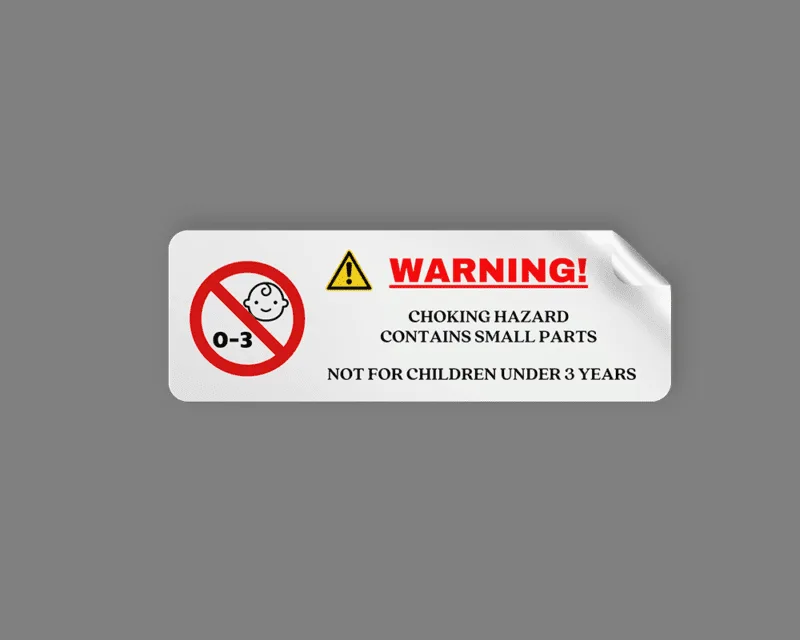
Detachable Parts and Choking Hazards
Any teether with removable pieces should never reach a baby's hands. Ring segments, snap-on charms, and textural add-ons that click into place create immediate choking scenarios. Even partial detachment—a nub cracking loose from a solid body—qualifies as a recall-worthy defect. Check every seam before purchasing and press firmly along joints. If resistance feels weak or inconsistent, walk away. Manufacturers using ultrasonic welding or single-mold construction avoid this failure mode.
Toxic Materials and Vague "Natural" Labels
"BPA-free" does not equal safe. Replacement chemicals like BPS and BPF carry similar endocrine-disrupting properties, and phthalate-free labels exclude only one class of plasticizers. Premium brands often test for over 1,000 individual compounds and publish results. Natural labels deserve scrutiny too—a wooden teether advertised as "organic" may still carry beeswax finishes with hidden preservatives, and natural rubber teethers sometimes include unlisted synthetic stabilizers. Demand full ingredient transparency.
Recall History and Brand Reliability
The CPSC recall database tracks thousands of infant product failures annually, with teething toys consistently appearing among recalled categories due to broken seams, excessive lead content, and inadequate labeling. Search any new brand's name alongside "recall" before buying. Reputable companies maintain public recall logs and remove defective batches quickly; brands that disappear from search results or lack customer service contacts represent higher risk.
Over-Frozen Teethers and Frostbite Risk
Parents frequently freeze teethers to intensify pain relief, but hard frozen silicone pressed against exposed gum tissue causes cold injury—essentially localized frostbite. Nerve endings in erupting gums are already inflamed, and extreme cold worsens trauma rather than healing it. Refrigerate instead of freezing; a chilled teether stays pliable and effective for 15 to 20 minutes. If preferring colder, wrap the teether in thin cloth before offering. Never leave a frozen toy unattended in a baby's mouth for more than a few seconds.
Adult Teething Necklaces
These are chains worn by caregivers that babies chew on while being carried. Pediatricians and safety organizations strongly advise against them; entanglement and strangulation risks outweigh any convenience. A single loop over a shoulder can tighten unexpectedly during movement. Regulatory bodies have issued formal warnings. Skip them entirely and use purpose-built teethers designed for infant safety standards instead.
Understanding baby sleep and comfort needs often explains why parents turn to these risky shortcuts. When sleep deprivation hits hard, the easiest solution seems worth the gamble, but a proper teething checklist keeps you grounded in safer alternatives.
How to Use, Maintain, and Know When to Toss a Teether
Buying the right teether is only step one. Proper upkeep determines whether it stays safe through months of daily use or becomes a hazard through neglect. Most parents skip maintenance and replace teethers only when something visibly breaks—that timeline is too late.
Establish a cleaning and inspection routine. The steps below apply across material types with minor adjustments where noted.
Cleaning and Sterilization by Material Type
Silicone and hard plastic teethers handle dishwashing well—place them on the top rack away from heating elements. Hand wash everything else with warm soapy water, rinse thoroughly, and air dry. Rubber teethers benefit from a weekly vinegar soak to remove residue. Never soak wooden teethers; wipe with a damp cloth and dry completely in a ventilated space. Avoid boiling wooden or gel-filled teethers—heat warps wood grain and weakens gel seals. Occasional boiling is acceptable for silicone, but daily sterilization accelerates material breakdown.
The Inspect-and-Replace Routine
Hold the teether up to light and rotate slowly. Look for: cloudiness in clear silicone, stickiness, soft spots yielding under pressure, cracks along seams, or faded/peeling color. Any single sign warrants immediate replacement. Degraded materials release particles into saliva and compromise structural integrity with each chew cycle.
Freezing Guidelines That Stay Safe
If your teether is rated for freezing, follow these rules: refrigerate for mild relief and reserve freezing for severe discomfort only; limit frozen exposure to 5 minutes at a time, removing and inspecting before offering again; never freeze a teether smaller than 1.25 inches; keep a separate supply for rotation while one thaws. Frozen teethers should never sleep with a baby—temperature shifts during movement can cause unexpected cold contact with sensitive tissue.
Storage Between Uses
Storage habits affect longevity as much as cleaning does. Open-air drying prevents trapped moisture from breeding bacteria inside textured surfaces—a dedicated drying rack away from countertop splashes works well. For travel and on-the-go care, sealed containers with ventilation slots keep teethers contained without creating a humid microenvironment. Avoid airtight zip bags; condensation builds quickly and accelerates microbial growth overnight.
Regular upkeep mirrors the discipline parents apply when selecting quality nursing and breastfeeding essentials—both categories reward consistency and punish shortcuts.
Which Teether Fits Your Baby's Stage (Quick Decision Guide)
Teething unfolds across distinct developmental phases, each demanding a different approach. Matching the teether to your baby's stage prevents frustration. Here's how to think about it month by month.
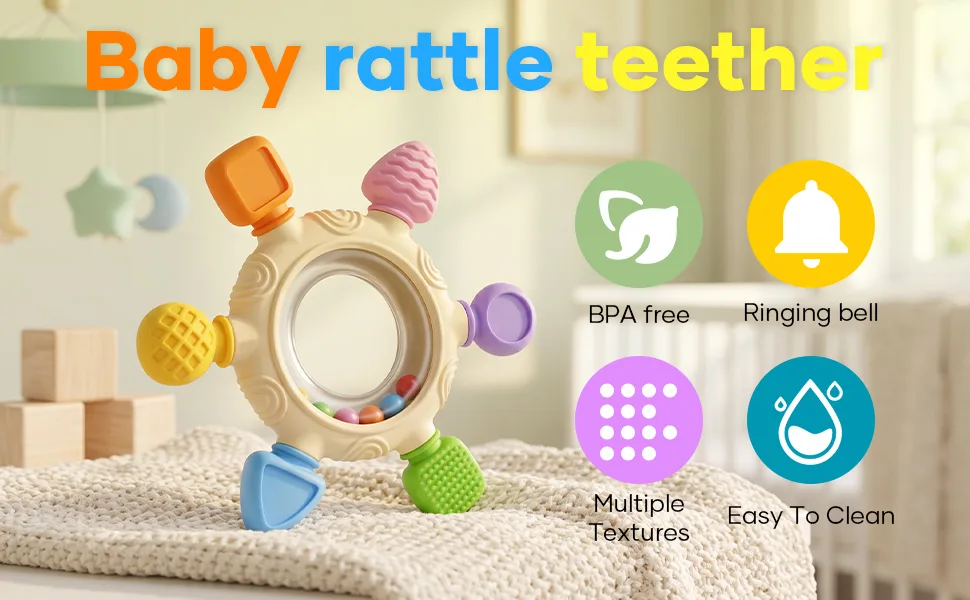
3–6 Months: Early Gums and Light Pressure Needs
Babies discover their mouths as primary exploration tools. Teethers should be gentle, lightweight, and easy to grasp with an immature pincer grip—smooth silicone rings or short textured bars work best. Babies in this window haven't developed strong chewing motions yet; they gnaw reflexively and mouth objects indiscriminately. Choose minimal surface variation so the experience stays predictable and soothing. Small handles fitting a 3-month-old palm reduce slipping. Look for options around 2 to 3 inches total; anything longer becomes awkward.
6–12 Months: Active Chewing and Molar Eruption
Molars push through around 12 to 18 months, but heaviest eruption pressure often begins between 6 and 10 months. Babies develop stronger jaw muscles and intentional chewing patterns. Firmness matters most here—softer teethers collapse under aggressive bite force and provide insufficient counterpressure. Switch to medium-firm silicone bars or solid rubber options with pronounced texture ridges. Babies also begin holding toys with purposeful grips; rectangular or elongated shapes distribute bite force evenly. Square edges press uncomfortably against the palate, while rounded rectangles strike the best balance.
12+ Months: Sensory Play and Weaning Off
By 12 months, most babies have several incisors visible and teething intensity naturally decreases. Teethers shift from pure pain relief toward oral sensory stimulation and weaning support. Harder wood or densely molded silicone suits this stage—babies explore textures safely without intense gum compression. The goal transitions from soothing inflammation to maintaining healthy oral motor development. Many pediatric dentists recommend gradually introducing alternatives: sippy cups with spill-proof valves, soft finger brushes, and chilled washcloths supplement or replace dedicated teethers.
Babies with Latex Allergies or Sensory Needs
Allergic infants require strict avoidance of natural rubber and latex products. Medical-grade silicone is the safest fallback; verify certification documents since cross-contamination during manufacturing is possible. Sensory-sensitive babies may reject highly textured surfaces entirely, responding better to smooth, uniformly firm materials providing consistent feedback without unpredictable pressure spikes. Trial and error is normal—start with one simple option and observe reactions before adding complexity.
Every baby moves through these stages at their own pace. Use this guide as a reference point and adjust based on your baby's cues. Consult your pediatrician if teething symptoms seem disproportionate to the developmental window.
Real Talk: Common Parent Mistakes (Even Experienced Ones Make These)
Buying Based on Instagram Aesthetics Alone
Cute colors and influencer photos don't equal safety compliance. We've seen parents return expensive teethers after discovering they lacked proper certifications. Aesthetic appeal should never override material verification and construction inspection.
Assuming "BPA-Free" Means Safe Across the Board
As of 2026, many manufacturers replaced BPA with alternative chemicals that lack independent safety testing. That single label tells you almost nothing about the full chemical profile. Always demand third-party lab results or look for broader certifications like CPSIA compliance.
Skipping the Recall Check Before Every Purchase
Brand loyalty shouldn't blind you to active recalls. Visit CPSC.gov before buying from any unfamiliar manufacturer. Even top-tier brands occasionally issue voluntary recalls for manufacturing defects caught after shipping.
Letting Babies Sleep With Teethers
Supervision is non-negotiable. Teething toys left in an unsupervised crib create suffocation and choking risks. Pediatric sleep guidelines explicitly advise against loose objects in cribs under 12 months regardless of how soft or flexible they appear.
Using Too Many Teethers at Once
Rotating between three different types confuses babies and increases cleaning overhead. Pick one primary teether suited to their current stage and keep a single backup ready. Simpler routines lead to better maintenance habits and clearer assessment of what actually soothes your baby.
FAQs: Quick Answers to the Questions Parents Actually Ask
What's the safest teether for a 4-month-old?
Smooth, one-piece silicone rings without detachable parts meet the strongest safety criteria for young infants. Ensure diameter exceeds 1.25 inches and material carries food-grade certification.
Are frozen teething toys actually safe?
Frozen teethers can cause cold injury to exposed gum tissue. Refrigerate instead, or wrap frozen items in cloth for no more than 5 minutes at a time.
Can I use a washcloth instead of a teether?
Chilled damp washcloths provide gentle compression relief with zero choking risk if supervised. They don't offer firm pressure some babies need during heavy molar eruption though.
How often should I replace a teething toy?
Inspect monthly and replace immediately when cloudiness, stickiness, cracks, or deformation appear. Active chewers typically go through teethers every 4 to 8 weeks depending on material quality and usage intensity.
Do teething necklaces recommended by brands actually work safely?
No major pediatric organization approves adult-worn teething necklaces due to documented strangulation and choking incidents. Stick to infant-designed products meeting ASTM F963 standards instead.
What certifications should I look for on packaging?
Prioritize ASTM F963 compliance, CPSIA testing confirmation, and third-party lab marks from Intertek, SGS, or TÜV. BPA-free and phthalate-free labels alone don't guarantee comprehensive safety.

Taslima Khanam Sultana, a loving mom of three, founded BestBabyCart.com to help new parents navigate the world of baby products with ease. Her passion for making parenting simpler shines through delivering honest, unbiased reviews on must-haves like diapers, strollers, and feeding gear. Taslima’s mission is to empower families with expert tips, ensuring every product is safe and top-quality for your little one. Drawing from her own parenting journey, she’s dedicated to supporting yours!