

If you’re setting up your baby’s nursery, you’ve likely seen cute, plush crib bumper pads advertised as a way to protect your little one from hard crib slats and create a cozy sleep space. But conflicting advice — from well-meaning family members swearing by bumpers to safety warnings from pediatric groups — can leave you confused about whether they’re actually safe. As of 2026, the guidance on crib bumper pads is clearer than ever, backed by decades of injury data and expert research. This guide breaks down verified risks, current regulatory standards, safer alternatives, and actionable steps to build a hazard-free sleep space for your baby, no filler or unproven claims included.
What Are Crib Bumper Pads, And Why Do Parents Use Them?
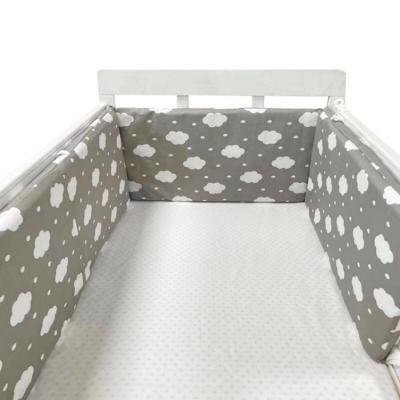
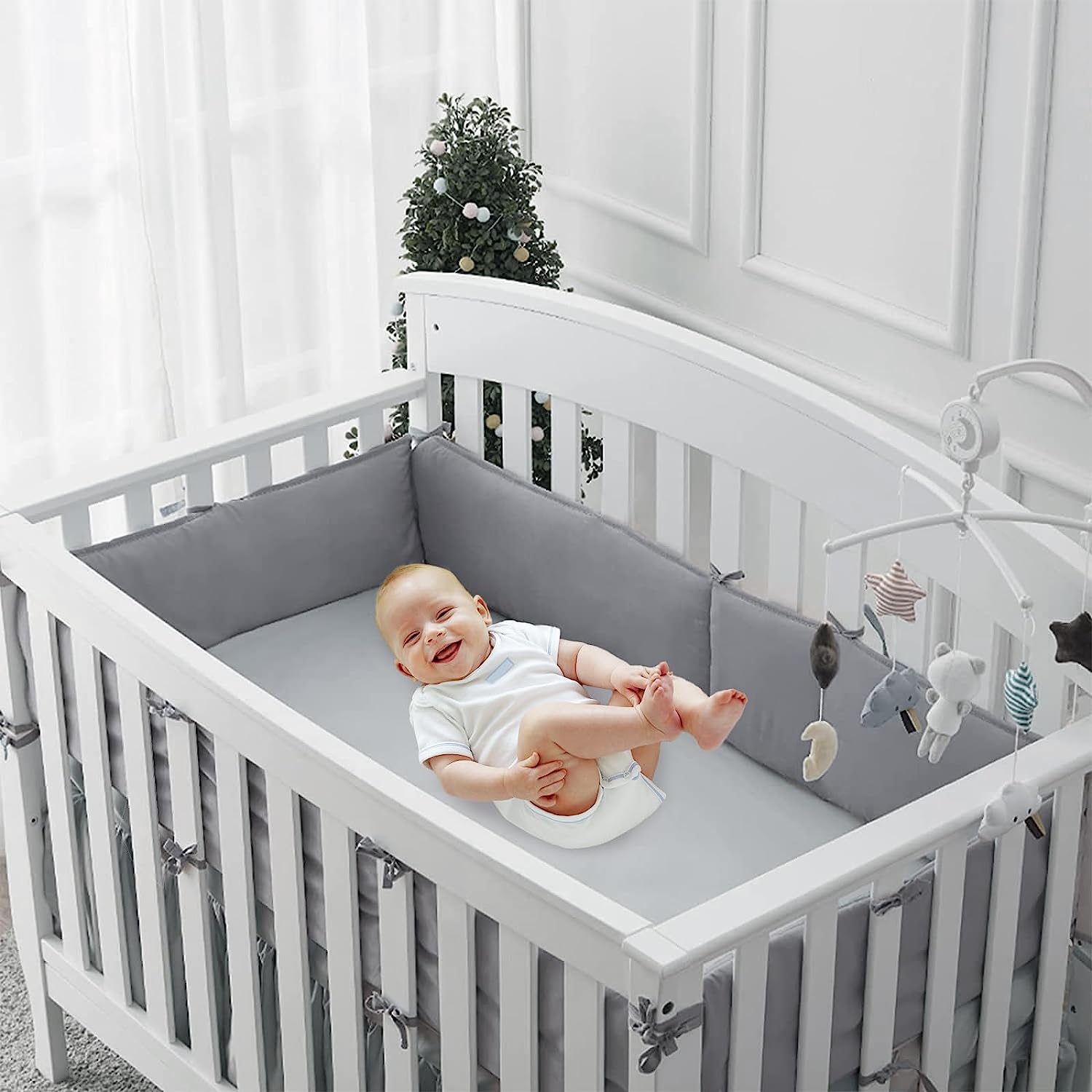
Crib bumper pads are padded fabric barriers that attach to the inner sides of a crib, originally designed to cover the gaps between crib slats. Many parents choose them for two main reasons: to prevent their baby from bumping their head or limbs against hard slats while sleeping, and to block drafts or add a decorative, cozy touch to the nursery. Bumpers come in three main styles, each with distinct risk profiles:
| Bumper Type | Intended Use | Verified Risk Level |
|---|---|---|
| Padded fabric bumpers | Block slat gaps, prevent head bumps, add cushioning | High: documented suffocation, strangulation, and entrapment risks |
| Breathable mesh liners | Prevent small limbs from slipping through slats | Low-Moderate: minimal suffocation risk, but still poses climbing and tie strangulation hazards |
| Contoured corner bumpers | Cover crib corner posts to prevent head bumps | Moderate: lower suffocation risk than padded bumpers, but still poses entrapment and climbing risks |
Many parents opt for bumpers to prevent their baby from bumping their head or getting limbs stuck in crib slats, or to add a decorative, cozy touch to their nursery. While these are understandable priorities, the documented risks of most bumper styles far outweigh any unproven benefits. For more on this, see our guide on what to use instead of bumper pads in.
Verified Risks Of Crib Bumper Pads
Crib bumper pads are linked to thousands of injuries and dozens of infant deaths over the past 40 years, with risks varying slightly by bumper style. All bumpers, however, share core hazards that make them unsafe for infant sleep spaces.
Suffocation And Asphyxiation Hazards
Padded bumpers block airflow around a baby’s face, and infants under 12 months old lack the head control or motor skills to reposition themselves if their nose or mouth is pressed against soft fabric. The U.S. Consumer Product Safety Commission (CPSC) links padded bumpers to at least 48 infant deaths between 1985 and 2017, 90% of which involved suffocation. Even “breathable” padded bumpers do not eliminate this risk, as soft material can still conform to an infant’s face and restrict oxygen flow. Suffocation incidents often occur when a baby rolls into the bumper while sleeping, or when the bumper shifts and covers their face during active movement. For more on this, see our guide on best child safety booster car seats top picks.
 This style of padded crib bumper was recalled by the CPSC due to confirmed suffocation and entrapment risks.
Credit: www.cpsc.gov
This style of padded crib bumper was recalled by the CPSC due to confirmed suffocation and entrapment risks.
Credit: www.cpsc.gov
Strangulation From Hardware And Fabric
Traditional bumper pads are secured with fabric ties that attach to crib slats, which can loosen over time or be tied too long for an infant’s reach. Infants can become entangled in loose ties, or pull them into their mouths, creating a choking hazard. CPSC data shows that 15% of non-fatal bumper-related injuries involve strangulation from ties or loose, frayed fabric edges. In practice, many parents report that ties become loose after repeated crib sheet changes or washing, creating hidden hazards that are easy to miss during quick visual checks.
Fall And Entrapment Dangers
Padded and contoured bumpers create a raised, solid edge that infants as young as 4 months can use to push off and pull themselves to a standing position, far earlier than most parents expect. This increases the risk of falls over the crib rail, even with the bumper in place. Additionally, gaps between bumper panels or between the bumper and crib slats can trap an infant’s head, neck, or limbs, leading to bruising, panic, or in severe cases, asphyxiation if they are unable to free themselves. A study in the Journal of Pediatrics found that infants who used bumper pads were 2x more likely to experience fall-related injuries from cribs than those who did not. For more on this, see our guide on is it safe to use a vintage stroller.
2026 Regulatory And Expert Guidance
Safety standards and official guidance for crib bumper pads have evolved significantly in recent years, with 2026 marking the tightest restrictions on unsafe bumper designs to date.
Current U.S. Safety Standards
As of 2026, the U.S. Consumer Product Safety Commission (CPSC) has issued strong voluntary guidelines for crib bumper manufacturers, and is in the process of finalizing a mandatory federal ban on all padded crib bumpers that fail new safety performance standards. While no federal ban is fully in effect yet, 10 U.S. states including New York, Texas, and Illinois have enacted outright bans on the sale of padded crib bumpers, and major retailers including Target, Walmart, and Buy Buy Baby have voluntarily stopped selling padded bumpers in their stores. All crib products sold in the U.S. must still meet ASTM International safety standards for crib slat spacing (no more than 2 3/8 inches apart) and non-toxic material requirements, but these standards do not apply to bumper pads specifically, as their use is not recommended for infant sleep spaces. According to official crib bumper safety guidance from the CPSC, these restrictions are a direct response to decades of documented injury and death data linked to bumper use.
Pediatric Expert Recommendations
The American Academy of Pediatrics (AAP) has maintained a clear, evidence-based stance against all types of crib bumper pads since 2005, a position that remains unchanged as of 2026. Pediatricians emphasize that a safe infant sleep space should have a firm, flat mattress, a tight-fitting fitted sheet, and no soft bedding, bumpers, pillows, or toys. The AAP notes that there is no peer-reviewed evidence that bumpers prevent injuries in infants, and the suffocation and entrapment risks far outweigh any unproven benefits. Many pediatricians also warn that bumpers can contribute to overheating, a known risk factor for sudden infant death syndrome (SIDS), by trapping body heat around the baby’s face and body. Evidence-based safe sleep standards from the Centers for Disease Control and Prevention confirm that soft bedding, including bumper pads, increases SIDS risk by restricting airflow and raising core body temperature.
Global Legislative Trends
Outside the U.S., crib bumper regulations are even stricter. The United Kingdom, Canada, Australia, and most European Union member states have banned the sale of all padded crib bumpers entirely, citing the same suffocation and entrapment risks identified by U.S. safety groups. Many of these regions also require clear labeling on all crib products stating that bumpers are not recommended for infants under 12 months old, and many retailers in these markets have stopped selling bumpers entirely in response to consumer demand for safer sleep products.
Safer Alternatives To Traditional Bumper Pads
If you’re concerned about your baby bumping their limbs on crib slats or want to add a touch of coziness to their sleep space, there are several low-risk alternatives that meet current safety guidelines.
Breathable Mesh Liners
Breathable mesh liners are thin, perforated fabric barriers that attach to crib slats, designed to prevent small limbs from slipping through gaps while allowing air to flow freely. Unlike padded bumpers, mesh liners do not pose the same level of suffocation risk, as their open weave does not conform to an infant’s face. That said, mesh liners are not a risk-free solution: they can still be used as a climbing aid by active infants, and poorly installed liners with long ties can pose a strangulation hazard. If you choose to use a mesh liner, opt for a style with no loose ties, secure it tightly to the crib, and remove it entirely once your baby can pull themselves to a standing position, usually around 4-5 months old.
 Breathable mesh liners reduce suffocation risk compared to padded bumpers, but still require careful installation and age-appropriate use.
Credit: maiamidwifery.com
Breathable mesh liners reduce suffocation risk compared to padded bumpers, but still require careful installation and age-appropriate use.
Credit: maiamidwifery.com
Crib Setup Adjustments
The safest alternative to any type of bumper is a fully bare crib setup that eliminates all soft bedding and barriers. Start with a firm, flat crib mattress that fits the crib frame with no gaps larger than two fingers wide on any side — a loose mattress creates entrapment risks even without bumpers. Use only a tight-fitting, breathable cotton fitted sheet made specifically for your crib’s mattress size, and remove all pillows, blankets, stuffed animals, and loose toys from the sleep space. Position the crib away from windows, blinds, and cords to avoid strangulation and fall risks from outside the crib. If you want to add visual warmth to the nursery without introducing crib hazards, explore baby-safe nursery design ideas like wall decals, framed art, and soft rugs placed outside the crib perimeter. If you’re looking for vetted, hazard-free options for your baby’s sleep space, safe crib comfort items meet all current CPSC and AAP safety standards.
Wearable Sleepwear For Temperature Regulation
Instead of loose blankets, use a wearable sleep sack or swaddle to keep your baby warm and comfortable during sleep. Sleep sacks are designed to fit snugly around the torso and allow full range of motion for the legs, eliminating the risk of suffocation from loose fabric. For older infants who have outgrown swaddles, opt for a sleeveless sleep sack to prevent overheating. Pair this with a room temperature between 68 and 72 degrees Fahrenheit for optimal safe sleep conditions.
 This bare crib setup meets all current AAP and CPSC safe sleep guidelines for infants under 12 months old.
Credit: www.parents.com
This bare crib setup meets all current AAP and CPSC safe sleep guidelines for infants under 12 months old.
Credit: www.parents.com
How To Inspect Your Crib For Hidden Hazards
Even if you choose not to use bumper pads, regular crib inspections are critical to catch hidden hazards that could put your baby at risk. Make it a habit to check your crib once a month, and after any moves, drops, or adjustments to the crib structure. Beyond bumper-related hazards, regular crib inspections should also check for common crib hygiene hazards like mold growth from spills or humidity, which can pose respiratory risks to infants.
Check For Loose Or Damaged Components
Inspect all crib hardware, including screws, bolts, and slats, for looseness, rust, or cracking. Tighten any loose fasteners immediately, and replace damaged parts with manufacturer-approved replacements — never attempt to repair a broken crib with DIY fixes. Check all fabric components (if any) for fraying, tears, or loose threads that could entangle your baby, and discard any damaged items.
Verify Mattress Fit And Slat Spacing
Push on the mattress from all sides to ensure it does not shift more than 1 inch in any direction. Measure the gap between crib slats with a ruler: it should be no more than 2 3/8 inches (about the width of a soda can) to prevent your baby’s head from getting stuck. If your crib has a toddler bed conversion kit, double-check that all guardrails are securely fastened before use.
Monitor For Hygiene And Chemical Risks
Wipe down the crib mattress, slats, and frame weekly with a baby-safe disinfectant, and address any spills or diaper leaks immediately to prevent mold and mildew growth. When purchasing new crib items, opt for products certified free of harmful chemicals like lead, phthalates, and flame retardants, as these can pose long-term health risks to infants. Remember that all loose items — including teething toys, Loveys, and age-appropriate baby gear like plates and feeding supplies — belong outside the crib during sleep to eliminate entrapment and suffocation risks.
Frequently Asked Questions
Are bumper pads safe for newborn cribs?
No. The AAP and CPSC both recommend that newborn cribs be completely free of all soft bedding, including bumper pads, to reduce the risk of SIDS and suffocation. Newborns lack the motor skills to move away from soft barriers if their face becomes obstructed, making bumpers an unnecessary and dangerous addition to their sleep space.
Are mesh crib bumpers safer than padded bumpers?
Mesh liners are lower risk than padded bumpers, as their open weave does not conform to an infant’s face and restrict airflow. That said, they are not endorsed by the AAP or CPSC as a safe crib accessory, as they can still be used as a climbing aid and may have loose ties that pose strangulation risks. If you choose to use a mesh liner, remove it as soon as your baby can pull to a stand, usually around 4-5 months old.
Why do experts advise against all crib bumper pads?
Experts recommend against bumper pads because there is no evidence they prevent injuries in infants, and the documented risks of suffocation, strangulation, entrapment, and falls far outweigh any unproven benefits. Safe sleep guidelines from the AAP and CPSC explicitly state that a bare crib is the only safe sleep environment for infants under 12 months old.
Can bumper pads increase SIDS risk?
Yes. Bumper pads restrict airflow around an infant’s face and can trap body heat, both of which are known risk factors for SIDS. The AAP cites soft bedding, including bumpers, as a contributing factor in an estimated 10-15% of SIDS cases annually.
Can I use a bumper in a portable crib or pack n play?
No. The same suffocation and entrapment risks apply to all cribs, including portable play yards and travel cribs. Most pack n play manufacturers explicitly warn against using bumper pads or soft bedding in their products, and following safe sleep on the go guidelines means using a bare, firm sleep surface with no added barriers. If you’re traveling with your baby and need to use a temporary sleep space, follow safe sleep on the go best practices to avoid unvetted bumpers or soft bedding in unfamiliar spaces.
What should I do with bumper pads I already own?
If you already have bumper pads in your home, the safest choice is to dispose of them or donate them (if your local donation center accepts them) to avoid the temptation to use them. If you choose to keep them for future use with older children, store them out of reach of infants and never use them in a crib where a baby sleeps.
Will a bumper prevent my baby from getting limbs stuck in crib slats?
While bumpers can block slat gaps, there is no evidence they reduce injury risk from limb entrapment. Most infants who get a limb stuck in a slat are able to free themselves without injury, and the risks of using a bumper to prevent this rare, minor issue far outweigh any potential benefit. A mesh liner is a lower-risk option if you are concerned about limb entrapment, but even these are not recommended for long-term use.
Final Verdict: Are Bumper Pads Worth The Risk?
While crib bumper pads may look cozy and promise to protect your baby from minor bumps, the verified risks of suffocation, strangulation, entrapment, and falls far outweigh any unproven benefits. As of 2026, leading pediatric and safety organizations including the AAP and CPSC universally recommend a bare crib with only a firm mattress and tight-fitting fitted sheet as the only safe sleep environment for infants under 12 months old.
If you’re balancing safety with nursery aesthetics, there are plenty of low-risk ways to make your baby’s crib feel cozy without bumpers: opt for soft, breathable crib sheets in fun patterns, hang baby-safe nursery decor above the crib, or use a wearable sleep sack in a cute print to keep your baby warm. If you’re still setting up your nursery, our guide to safe crib comfort items can help you choose vetted, hazard-free products that meet all current safety guidelines. For more tips on creating a safe, comfortable space for your growing baby, browse our full library of baby safety and nursery resources.

Emma Grace is a devoted mother and passionate content writer at BestBabyCart.com. With firsthand parenting experience and a love for research, she creates helpful guides and honest reviews to support parents in choosing the best for their babies. Her goal is to make parenthood easier, one article at a time.