
Most cribs convert by removing a front rail, adding a toddler rail, and securing hardware.
I’ve converted cribs for multiple families and nurseries, and this guide explains exactly how to convert crib to toddler bed with safety, step-by-step clarity, and real-world tips. You’ll get clear instructions, the tools and parts you need, safety checks, common problems and fixes, plus practical lessons I learned on the job. Read on to convert confidently and keep your child safe.

When and why to convert your crib to toddler bed
Most parents convert around 18–36 months. Signs it’s time include climbing, trying to leave the crib, or when your child requests more independence. Converting earlier may be fine if the child shows readiness, but safety checks are critical.
Converting saves money and keeps a familiar sleep space. It also reduces injury risk from climbing out of a high crib. Know that some cribs convert with a kit; others require aftermarket rails or a separate toddler bed.
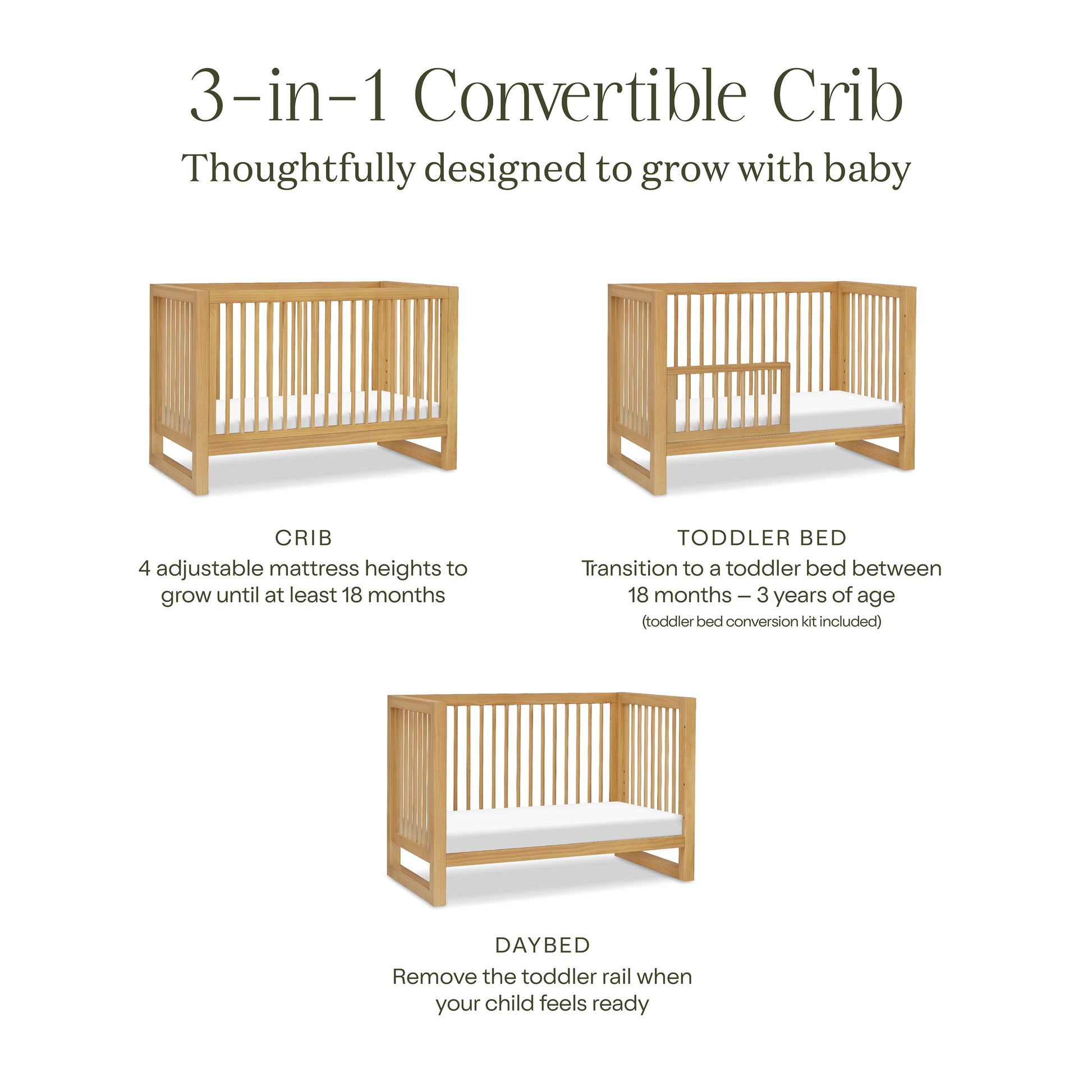
Step-by-step guide: how to convert crib to toddler bed
Follow these simple steps to convert crib to toddler bed safely. Read your crib manual first. If you don’t have it, look for the model number on the crib and check manufacturer guidance before starting.
- Inspect the crib
- Check for broken slats, missing screws, or cracked rails.
- Confirm model supports conversion and locate the conversion kit or hardware.
- Lower the mattress to the lowest setting
- Move the mattress down before you remove rails.
- A low mattress reduces fall distance once the front is removed.
- Remove the front rail
- Unscrew bolts holding the front rail. Keep all hardware in a labeled bag.
- Save the rail in case you need to revert or resell the crib.
- Attach the toddler conversion rail or guard
- Use the manufacturer kit if available. Follow the kit instructions closely.
- If no kit, add a fitted guardrail to the mattress edge to prevent rolling off.
- Re-check mattress fit and gaps
- Ensure mattress fits snugly with no gaps larger than a finger’s width.
- Fill any gaps with approved mattress inserts only if manufacturer allows.
- Tighten and test
- Tighten all fasteners and test stability by applying pressure at multiple points.
- Sit and bounce gently to confirm no wobble or loosened hardware.
- Add bedroom safety
- Place the bed away from windows, cords, and blinds.
- Use a night light and a soft rug next to the bed for safe exits.
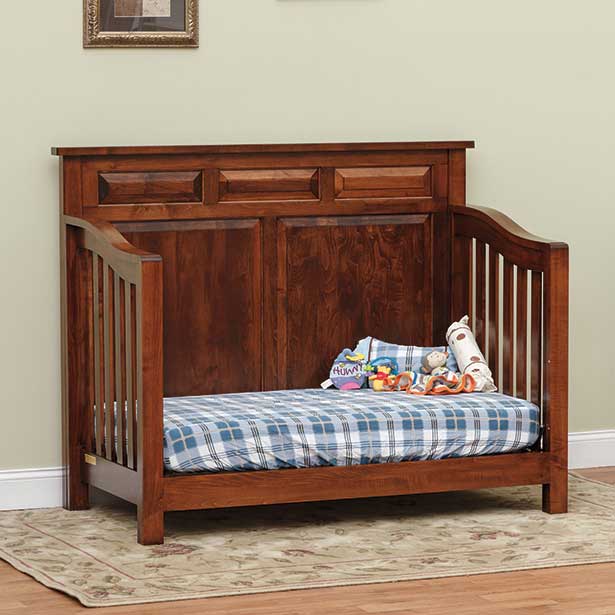
Tools, parts, and materials needed
Gather these items before you start converting. Having everything ready cuts stress and ensures the job is done right.
- Allen wrench or hex key set for crib bolts
- Phillips and flathead screwdrivers
- Adjustable wrench or pliers
- Replacement bolts or conversion kit hardware (if original is missing)
- Toddler guard rail or low-profile bumper approved for cribs
- Soft rug or bumper mat to cushion free fall
- Labeled bag to store removed parts
If you need replacement hardware, order parts by crib model. Using the wrong bolt length can damage wood and reduce safety.
src="https://i.ytimg.com/vi/TRcTZgfjcl0/maxresdefault.jpg"
alt="Safety checklist and common mistakes”
style=”max-width: 100%; height: auto; border: 2px solid black; border-radius: 10px; display: block; margin: 0 auto;”
loading=”lazy”
/>
Safety checklist and common mistakes
Safety is the top priority when you convert crib to toddler bed. Follow this checklist before your child uses the bed.
- Confirm conversion is supported by the crib model.
- Mattress is at lowest safe height and fits snugly.
- No gaps larger than 3/8 to 1/2 inch where a limb could get trapped.
- Guardrail installed per instructions or a floor-level mattress used.
- All fasteners tightened to manufacturer torque recommendations.
- Bed positioned away from windows, cords, heaters, and furniture the child can climb.
- Remove pillows, heavy blankets, and stuffed animals for toddlers under 2 unless supervised.
Common mistakes to avoid:
- Using mismatched or too-long bolts that strip holes.
- Skipping the manual and assuming all cribs convert the same.
- Leaving the mattress high after removing a front rail.
- Placing the bed near climbable furniture.

Troubleshooting and practical tips
This section answers likely problems when you convert crib to toddler bed and gives quick fixes.
PAA: What if my crib doesn’t have a conversion kit?
- Use a low-profile mattress on the floor, or buy a universal guardrail designed for cribs. Ensure any aftermarket part is ASTM or CPSC compliant.
PAA: How do I handle missing or stripped screws?
- Replace them with identical-size hardware from the manufacturer or a hardware store. Avoid longer screws that could damage the frame.
Quick tips from my experience
- Label screws as you remove them. I once mixed long corner bolts with short mattress supports and had to redo the work.
- Test the bed with an adult of similar weight to your child before allowing unsupervised use.
- Keep the removed front rail and hardware in case you need to revert or sell the crib.
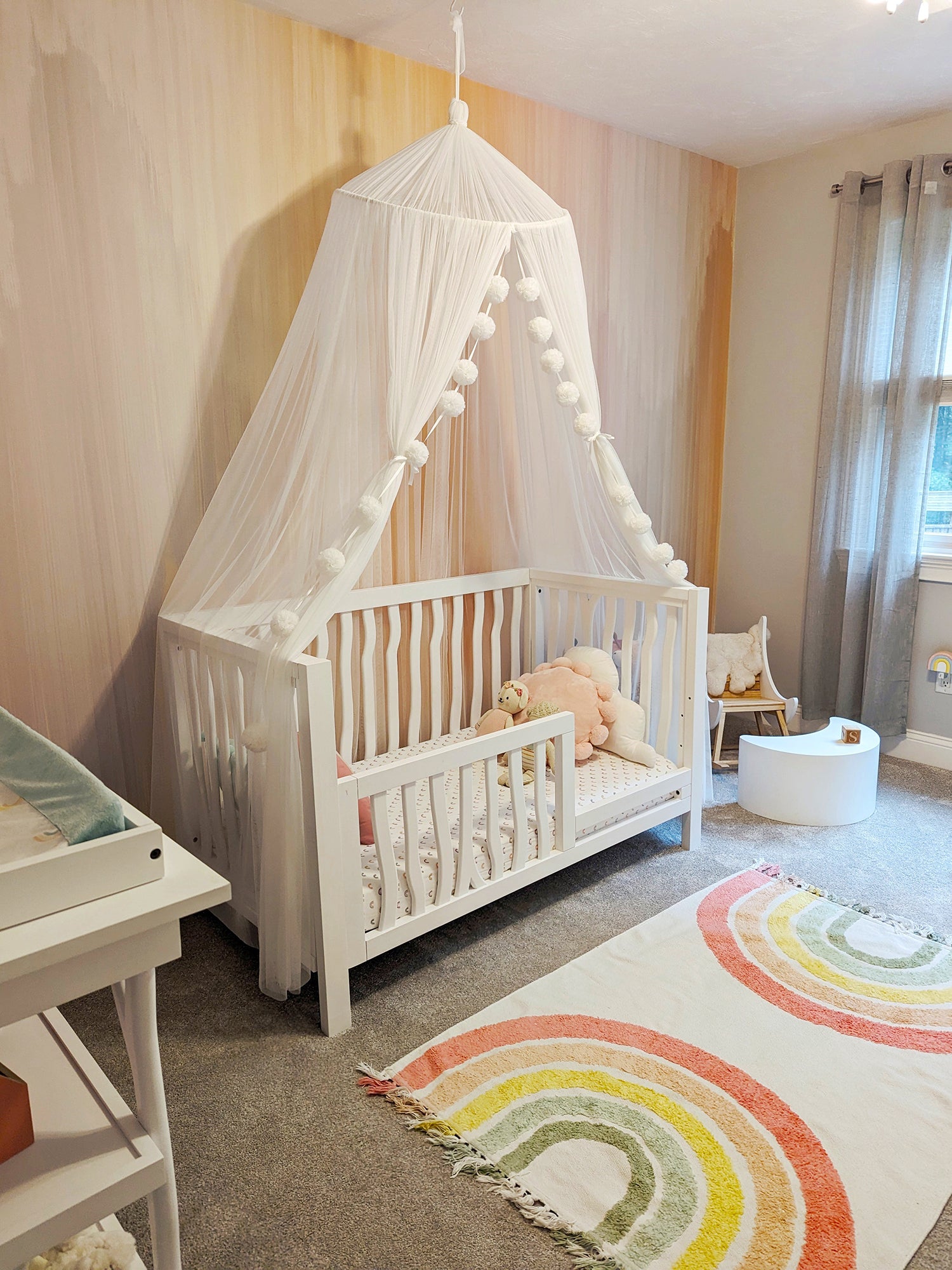
Benefits and limitations of converting crib to toddler bed
Converting offers several benefits and some limits you should weigh.
Benefits
- Cost savings over buying a new bed.
- Familiar environment for the child, easing transition.
- Some crib-to-bed conversions are quick and reversible.
Limitations
- Not all cribs convert safely. You need a compatible model or approved kit.
- Converted beds may be lower than standard toddler beds, limiting mattress options.
- Aftermarket parts vary in quality; always choose certified products.
If longevity is key, compare the cost and safety of a proper toddler bed versus modifying an older crib.

Frequently Asked Questions of how to convert crib to toddler bed
When is the best age to convert a crib to toddler bed?
Most children convert between 18 and 36 months. Look for readiness signs like climbing out or wanting more freedom.
Can any crib be turned into a toddler bed?
No. Only cribs designed with conversion capability or those with approved conversion kits should be converted. Check the model manual.
Is it safe to put the mattress on the floor instead?
Yes, a floor mattress is safe and simple if your crib lacks a conversion kit. Keep the area free from hazards and use a low, firm mattress.
Do I need a special mattress for a toddler bed conversion?
Usually, the same crib mattress works if it fits snugly. Confirm thickness and fit per manufacturer guidelines.
What should I do if my child climbs out after conversion?
Install a low bed rail, move the mattress to the floor, and remove climbable items near the bed. Supervise until habits change.
Conclusion
Converting a crib to toddler bed is practical and cost-effective when done safely. Follow the steps: confirm compatibility, lower the mattress, remove the front rail, install a guard or conversion rail, and complete thorough safety checks. From my hands-on experience, labeling hardware, testing stability, and choosing certified parts prevent most issues.
Take action: review your crib manual, gather tools, and convert when your child shows readiness. If you’re unsure, consult manufacturer support or a certified child-safety technician. Share your experience or questions below and subscribe for more practical parenting guides.

Emma Grace is a devoted mother and passionate content writer at BestBabyCart.com. With firsthand parenting experience and a love for research, she creates helpful guides and honest reviews to support parents in choosing the best for their babies. Her goal is to make parenthood easier, one article at a time.