

Newborns have underdeveloped neck muscles and disproportionately large heads, making it nearly impossible for them to hold their head upright without support on their own. When placed in a car seat, even minor shifts in the vehicle can cause a baby’s head to flop forward or to the side, creating a serious safety risk beyond simple discomfort. According to the National Highway Traffic Safety Administration's official child passenger safety guidelines, improper head positioning in infant car seats contributes to preventable airway obstruction in infants during even low-speed crashes, making correct support a critical safety measure, not just a comfort issue. Research from the Centers for Disease Control and Prevention confirms that correctly positioned car seats reduce the risk of fatal injury for infants by 71% in passenger cars, so mastering how to keep your newborn’s head up in their car seat is one of the most important steps you can take to protect them during travel. This guide outlines evidence-based, manufacturer-approved strategies to keep your baby safe, comfortable, and properly supported on every ride.
Why Newborn Head Support in Car Seats Is Non-Negotiable
Newborns lack the head and neck control to keep their airway open if their head tilts too far forward or to the side. A chin-to-chest position can narrow the airway by up to 80%, increasing the risk of positional asphyxia, especially for preemies, low birth weight infants, or babies with low muscle tone (hypotonia). Side slump can also strain delicate neck muscles and cause discomfort that leads to fussy, stressful trips. Unlike older babies who can lift their head to adjust their position, newborns are completely dependent on their car seat setup and caregiver checks to maintain safe head alignment. This makes proactive support and monitoring non-negotiable for every car ride, no matter how short. You can also read our guide on best memory foam car seat cushion.
Choose a Car Seat Built for Newborn Head Support
The foundation of preventing head slump starts with selecting a seat designed for newborns’ unique body shape and support needs. Infant-only "bucket" seats are the best choice for babies under 6 months old, as they have deeper, more contoured shells and targeted head support that most convertible seats lack for small infants.
Key Features to Prioritize for Head Stability
When shopping for a car seat, prioritize these features to minimize excess head space and support safe alignment:
- A 45-degree adjustable recline base, with a built-in level indicator to confirm proper angle
- Removable, firm head and body inserts that fill extra space for newborns without soft, squishy padding that allows the head to sink
- A five-point harness with adjustable shoulder straps that sit at or just below the baby’s shoulders (never above, as this encourages slump)
- Independent side impact protection with EPS foam lining in the headrest area to cradle the head during normal driving and crashes
- Certification to current safety standards, including FMVSS 213 (U.S. standard) or i-Size (R129, the latest European standard with stricter side impact testing) If you plan to skip the infant bucket seat, opt for long-lasting convertible seat options with built-in newborn inserts to minimize excess head space. You can also read our guide on lower car seat adapters icandy peach.
 Proper recline angle is the first line of defense against newborn head slump in car seats.
Credit: realendpoints.com
Proper recline angle is the first line of defense against newborn head slump in car seats.
Credit: realendpoints.com
Correct Installation and Angle Adjustment to Prevent Slump
Even the highest-rated car seat will fail to support your newborn’s head if it is installed incorrectly. Proper installation ensures the seat stays at the correct angle and does not shift during driving, which is the most common cause of unexpected head slump.
Step-by-Step Base Installation
Follow these steps to install your infant car seat base safely:
- Place the base in the back seat, rear-facing only (never install a newborn car seat front-facing, as this puts excessive force on their underdeveloped neck in a crash)
- Choose either the vehicle’s seat belt or LATCH system to secure the base—never use both, as this can create improper tension
- Press your full weight into the base while tightening the belt or LATCH straps to eliminate slack
- Test for movement: the base should not shift more than 1 inch side-to-side or front-to-back when you push firmly at the bottom If your vehicle has heated rear seats, confirm heated seat compatibility tips for car seat bases with your manufacturer to avoid warping the seat base or reducing its grip. If your back seat is slippery, use a vehicle seat protector to avoid base slippage that is rated for use with LATCH systems to keep the base firmly in place. You can also read our guide on best dog car booster seat.
Verifying the Correct Recline Angle
Newborn car seats require a 45-degree recline angle to keep the baby’s head from tilting forward and blocking their airway. Most infant seats have a built-in recline indicator, usually a blue bubble or level line on the base—adjust the base’s recline foot until the indicator is in the correct zone. If your vehicle’s back seat is sloped, cut a clean pool noodle to the width of the seat base and place it under the base’s foot to achieve the proper angle; this is an approved trick for most manufacturers, as long as it does not interfere with the seat belt path. Recheck the angle every time you install the base, as even small shifts can change the angle enough to cause head slump.
Safe Positioning Techniques to Keep Your Newborn's Head Upright
Once the seat is installed correctly, proper positioning of your newborn inside the seat will lock their head in a safe, aligned position. You can also read our guide on best infant car seat covers for winter.
Perfecting the Harness Fit for Stability
A loose harness is the #1 cause of preventable head slump, as it allows the baby to slide down in the seat, tilting their head forward. Follow these steps for a snug, safe fit:
- Place your newborn in the seat with their back flat against the seat shell, with no gaps between their body and the seat
- Fasten the crotch strap first, then the shoulder straps
- Adjust the shoulder straps so they sit at or just below the baby’s shoulders—if they are above the shoulders, the baby can slump down easily
- Pull the harness webbing tight enough that you cannot pinch any excess material at the shoulder
- Fasten the chest clip at armpit level, never lower on the chest, to prevent the baby from sliding forward Avoid adding extra padding, such as blanket rolls, under the baby’s back or behind their head, as this can change the harness fit and increase crash risk.
Approved, Safe Accessories for Extra Head Support
If your newborn still has excess head space after adjusting the harness, only use accessories that are specifically certified for use with your car seat model or explicitly approved by the manufacturer. Safe options include:
- Manufacturer-provided head and body inserts, designed to fill extra space without interfering with crash performance
- ASTM-certified head positioning pillows with firm, structured sides that gently hold the head in place, with no soft, loose padding that poses a suffocation risk
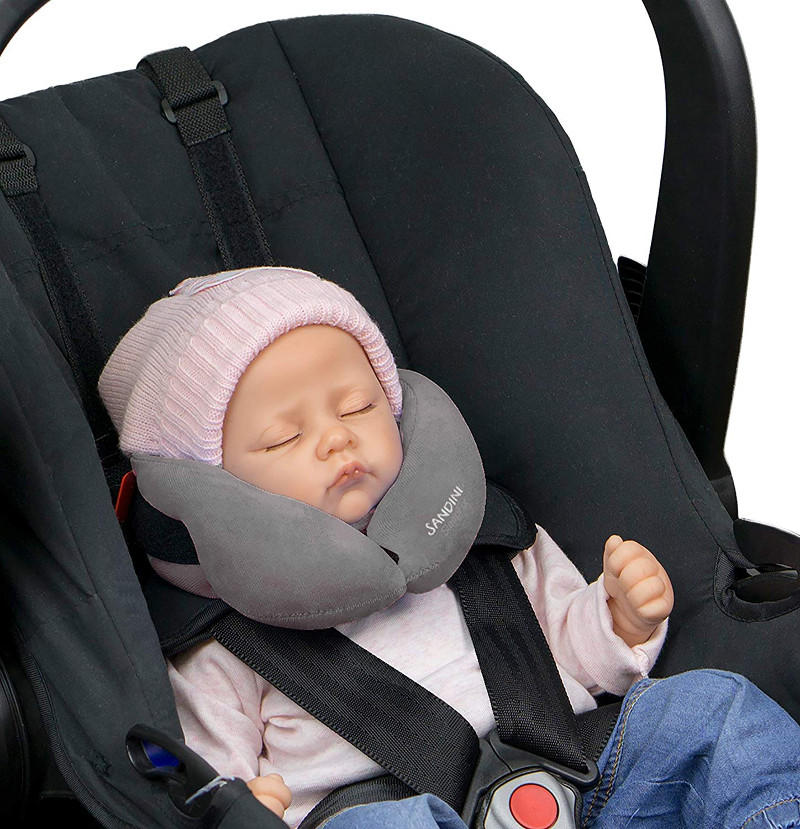
- For long trips, travel-friendly car seat cushion options can add gentle support without compromising safety, as long as they are certified for car seat use Never use rolled towels, U-shaped neck pillows, DIY inserts, or aftermarket head supports not approved for your specific seat. These products are not crash-tested with your car seat, can shift during accidents, and may push the baby’s head forward to block their airway. Stick to tested infant head support inserts designed specifically for your car seat model to avoid interference with crash performance. You can also read our guide on best convertible child safety car seats for ultimate comfort and protection.
 Forward head slump narrows the infant's airway and causes positional asphyxia, even during short, low-speed trips.
Credit: carseatblog.com
Forward head slump narrows the infant's airway and causes positional asphyxia, even during short, low-speed trips.
Credit: carseatblog.com
Monitor Your Newborn's Position During Every Trip
Even with a perfect setup, newborns can shift position during trips, especially when asleep. Regular monitoring ensures you can correct head slump before it becomes a safety risk.
Frequency and Technique for Safe Checks
For trips longer than 30 minutes, check your baby’s head position every 15 to 20 minutes. Use an unbreakable backseat mirror secured to the headrest to glance at your baby without taking your eyes off the road. Look for signs of unsafe positioning: chin tucked tightly to the chest, head tilted sharply to one side, or the head falling forward so far that the face is pressed against the chest. If you notice slump, safely pull over to adjust the baby’s position and tighten the harness if needed.
Break Routines for Long Drives
For trips longer than 1.5 hours, plan a stop every 1.5 to 2 hours to check your baby’s position, adjust the harness if it has stretched with movement, and let them stretch. Never leave a newborn unattended in a car seat, even for a minute, as they can shift into an unsafe position without supervision. If your baby falls asleep in the car, increase the frequency of your checks, as relaxed muscle tone makes head slump more likely.
Common Mistakes That Increase Head Slump Risk
Many parents unintentionally make errors that increase the risk of head slump. Avoid these common pitfalls:
- Using unapproved aftermarket accessories: As noted earlier, these products are not tested with your car seat and can cause injury
- Installing the seat at the wrong angle: A seat installed too upright will cause the baby’s head to flop forward, even with perfect harness fit
- Skipping regular base checks: A base that shifts over time can change the recline angle, leading to sudden slump
- Using a convertible car seat for newborns under 6 months: Most convertible seats do not have enough recline or head support for small newborns, leading to excessive head space and consistent slump
- Adjusting the shoulder straps too high: Shoulder straps above the baby’s shoulders allow them to slide down in the seat, causing head tilt
- Adding extra padding under the baby: Blanket rolls or soft inserts under the baby’s body can create gaps that let the baby slump, and interfere with the harness’s crash performance
When to Consult a Pediatrician
If your newborn’s head consistently slumps despite correct car seat setup, proper harness fit, and approved accessories, schedule a visit with your pediatrician. They can rule out underlying medical issues that may be contributing to the problem, such as torticollis (a tight neck muscle that makes head alignment difficult) or hypotonia (low muscle tone that reduces head control). Your pediatrician may also recommend a specialized, medically approved positioning device for car travel, or suggest adjustments to your baby’s positioning if they have reflux that makes lying flat uncomfortable.
Frequently Asked Questions
Is it safe to use a rolled towel for newborn head support in a car seat?
No. Rolled towels are not crash-tested with car seats, can shift during normal driving or accidents, and may push your baby’s head forward to block their airway. Only use inserts and supports that are explicitly approved for your car seat model.
How can I tell if my newborn's head position is blocking their airway?
Look for signs of chin-to-chest positioning, where the baby’s chin is touching or nearly touching their chest. If you see this, adjust the seat’s recline angle or reposition the baby’s head immediately. If your baby is making grunting noises, has blue lips, or is struggling to breathe, pull over and check their position right away.
Can I adjust the car seat angle while driving to fix head slump?
No. Never adjust the car seat or your baby’s position while the vehicle is moving. Pull over to a safe, parked location to make any adjustments to the seat angle, harness, or your baby’s position.
Do preemie car seat inserts help with head support?
Yes, if they are designed for your specific car seat model. Preemie inserts are firmer and smaller than standard newborn inserts, filling excess space for small babies to prevent head slump. Always confirm with your car seat manufacturer that the insert is approved for use with your model.
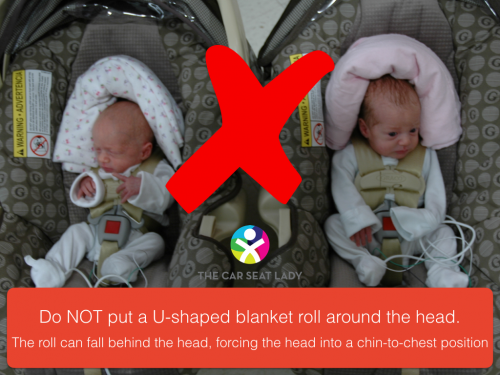 U-shaped aftermarket supports are not crash-tested with car seats and can shift during accidents, causing injury.
Credit: thecarseatlady.com
U-shaped aftermarket supports are not crash-tested with car seats and can shift during accidents, causing injury.
Credit: thecarseatlady.com
Conclusion
Keeping your newborn’s head up in their car seat is a critical safety measure that prevents airway obstruction, neck strain, and injury during travel. The most effective steps are choosing a seat designed for newborns, installing it at the correct 45-degree recline angle, using a snug, properly adjusted harness, and only using manufacturer-approved support accessories. Avoid unapproved aftermarket products like rolled towels and U-shaped neck pillows, which pose serious safety risks. Regular checks during trips and breaks on long drives will help you catch any head slump early, before it becomes a hazard. For step-by-step guides on choosing and installing the right car seat for your baby’s age and size, browse our full library of infant safety resources to travel with confidence.

Emma Grace is a devoted mother and passionate content writer at BestBabyCart.com. With firsthand parenting experience and a love for research, she creates helpful guides and honest reviews to support parents in choosing the best for their babies. Her goal is to make parenthood easier, one article at a time.