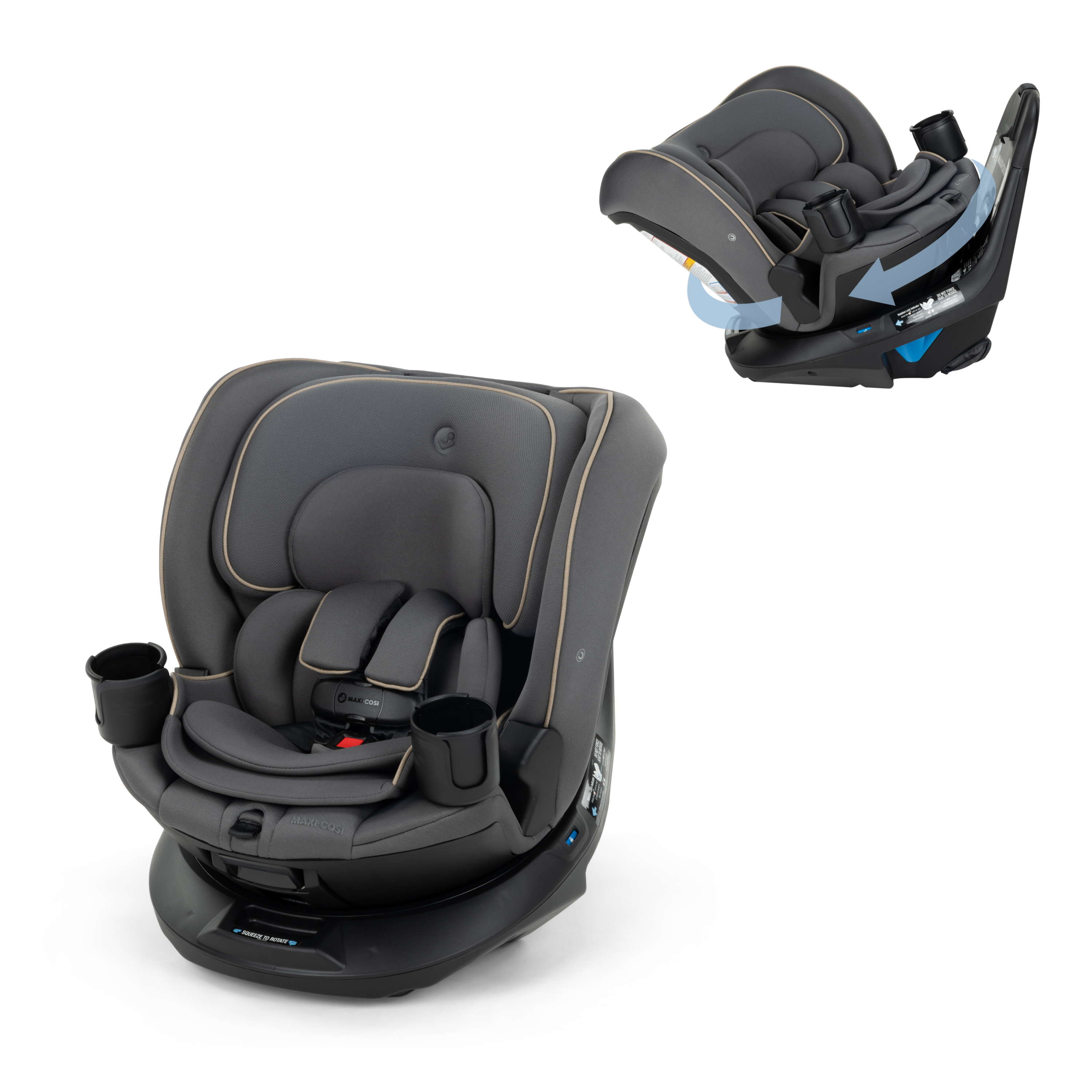
Most car seats expire between six and ten years from the manufacture date.
I have worked with parents, safety technicians, and child passenger safety programs for years, so I understand the practical questions families have when a car seat gets older. In this guide, you’ll learn how long car seats typically last, how to find the manufacturer’s expiration date, what can make a seat unsafe sooner, what to do after a crash, and what to look for when replacing an expired seat.
Quick answer: Most car seats have a manufacturer-specified service life that commonly falls within about 6 to 10 years from the date of manufacture, but there is no universal expiration period for every seat. The exact limit depends on the manufacturer and model. Always check the label and owner’s manual for the expiration information provided by the manufacturer.

How long is a car seat good for?
A car seat is good for the length of time specified by its manufacturer. Many child restraints have expiration periods of roughly 6–10 years from the date of manufacture, but the exact service life varies by model.
The expiration period is generally based on the manufacture date, not simply the date you purchased the seat.
For example, if a manufacturer specifies a 10-year service life and your seat was manufactured in June 2021, its service life would generally end in June 2031.
However, don’t rely on a general 6- or 10-year rule if your seat has a specific expiration date printed on the label or stated in its manual. Use the manufacturer’s instructions first.
The American Academy of Pediatrics also advises parents to check the date the seat was made and confirm with the manufacturer how long the seat is recommended for use.
The simple rule
Manufacturer’s stated expiration date > general lifespan estimate
If the seat has reached its manufacturer’s expiration date, replace it even if it still looks clean and undamaged.

Why Do Car Seats Have Expiration Dates?
Car seats are designed to provide protection within the manufacturer’s specified service life. Over time, components can age, seats can experience repeated use, and safety technology and product requirements can change.
Common reasons manufacturers specify a service life include:
- Plastic and other materials can age over time.
- Harnesses, buckles, and other components experience repeated use.
- A seat may be exposed to heat, sunlight, and temperature changes inside a vehicle.
- Safety standards, testing methods, and product designs can evolve.
- Older seats may no longer have readily available replacement parts or manufacturer support.
An expiration date does not mean that a seat suddenly becomes visibly damaged on that exact day. It means the manufacturer no longer intends the restraint to be used beyond its specified service life.
That distinction is important when deciding whether an older car seat should be replaced.
How Long Do Different Types of Car Seats Last?
There is no universal lifespan based solely on whether a seat is an infant, convertible, all-in-one, or booster seat.
Instead, expiration depends on the specific manufacturer and model.
| Car seat type | Typical service-life range | What to check |
|---|
| Infant car seat | Often several years | Label + owner’s manual |
| Convertible car seat | Often several years | Manufacturer’s expiration |
| All-in-one car seat | Often several years | Manufacturer’s expiration |
| Booster seat | Varies by model | Label + manufacturer instructions |
Many models fall somewhere within the 6–10-year range, but you should never assume that every seat has the same expiration period.
For example, Graco states that its 4Ever DLX 4-in-1 Car Seat should be discontinued and disposed of 10 years after its manufacture date.
The important entity here is the specific car-seat model, not simply the category.
How to find the expiration or manufacture date
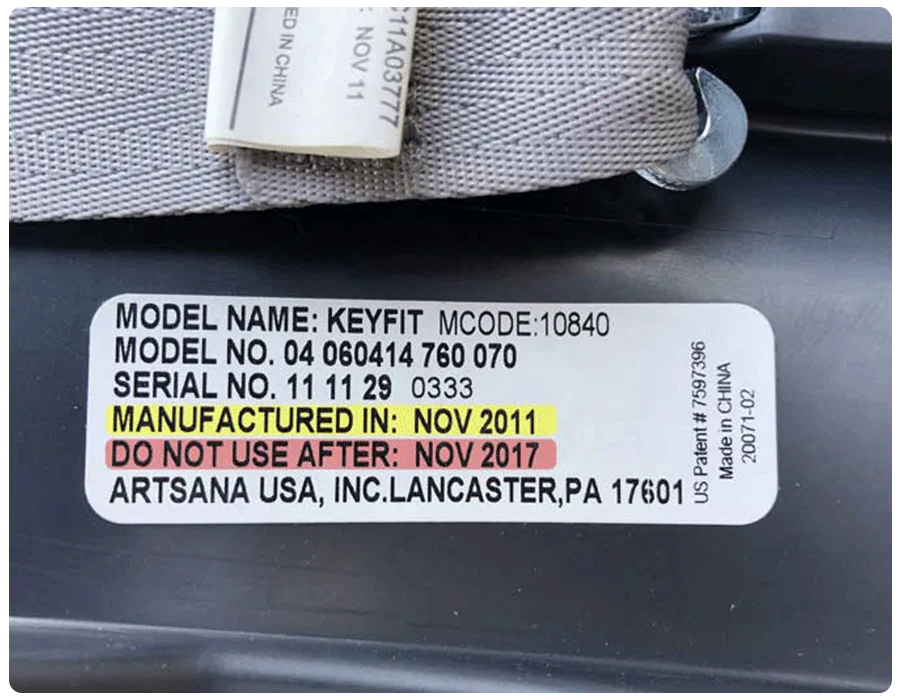
Before deciding whether your car seat is still usable, find its identification label.
Look for:
- Manufacturer name
- Model name or model number
- Manufacture date
- Expiration date, if provided
- Serial number or other identifying information
The label may be located on the side, back, bottom, base, or shell of the seat depending on the model.
You should also keep the owner’s manual because it contains important information about the seat’s service life, installation, cleaning, and approved replacement parts.
If you cannot find the date
Do not guess.
If the label is missing, damaged, or unreadable, contact the manufacturer with the model and serial information if available.
The AAP recommends avoiding a seat without identifying labels because the date and model information are needed to determine age and check for recalls.
How to Calculate Your Car Seat’s Expiration Date
If the manufacturer provides a service-life period rather than a specific expiration date, you can generally calculate it from the manufacture date.
Simple formula
Manufacture date + manufacturer’s stated service life = expiration date
Example
Suppose:
- Manufacture date: June 2021
- Manufacturer’s service life: 10 years
The manufacturer’s service life would end in June 2031.
But there is an important exception:
If the manufacturer provides a specific expiration date, use that date instead of calculating it yourself.
Do not assume that every car seat expires exactly six or ten years after manufacture.
Signs a Car Seat May Need Replacement Before Its Expiration Date
Expiration is not the only reason to stop using a car seat.
Inspect the seat regularly for obvious problems such as:
- Cracks or visible damage to the shell
- Damaged or missing components
- Buckles that do not work correctly
- Frayed or damaged harness webbing
- Missing labels or important instructions
- A seat that has been involved in a moderate or severe crash
- A manufacturer recall that requires the seat to be removed from service
A seat can look clean and relatively new while still having a problem, so inspect the actual restraint components rather than judging its condition by appearance alone.
The AAP advises against using seats with visible cracks, missing parts, missing identification labels, or unresolved recall concerns.
What Should You Do When Your Car Seat Expires?
Once your car seat reaches the manufacturer’s expiration date, stop using it and replace it with an appropriate current seat.
Do not continue using an expired seat simply because:
- It looks new.
- It has only been used occasionally.
- It has never been in a crash.
- The child still fits within its height and weight limits.
- You paid a lot for it.
The expiration date is part of the manufacturer’s instructions for the product’s service life.
What should you look for in a replacement?
Choose a seat that:
- Fits your child’s current size and developmental stage.
- Fits your vehicle.
- Can be installed correctly.
- Has the features you can use correctly every trip.
- Comes with current manufacturer instructions.
- Has clearly identifiable model and manufacture information.
3 Car Seats to Consider When Replacing an Expired Seat
If your current seat has reached the end of its manufacturer’s service life, these are three replacement options worth considering based on different family needs.
1. Graco 4Ever DLX 4-in-1 — Best Long-Term Replacement

- 4-in-1 car seat gives you 10 years of use: seamlessly transforms from rear-facing harness (4-40 lb), to forward-facing h…
- Graco ProtectPlus Engineered to the newest testing standards for side and frontal impact, and beyond—because the safety …
- No-Rethread Simply Safe Adjust Harness System allows the headrest and harness to adjust together in one motion
The Graco 4Ever DLX 4-in-1 is particularly relevant for parents replacing an older convertible or all-in-one seat because it is designed to transition through multiple stages.
Graco states that the 4Ever DLX offers up to 10 years of use and should be discontinued 10 years after its manufacture date.
Why consider it:
- 4-in-1 design
- Designed for multiple stages of childhood
- Manufacturer-stated 10-year service life
- Useful for families looking for a long-term replacement
Best for: Families who want a multi-stage seat rather than buying separate restraints as their child grows.
2. Graco Extend2Fit — Best for Extended Rear-Facing Use

- Convertible car seat grows with your child from rear-facing harness (4-50 lb) to forward-facing harness (26.5-65 lb)
- Extend2Fit 4-position adjustable extension panel provides up to 5″ additional legroom, allowing your child to safely rid…
- Up to 50 lb rear-facing, allowing your child to safely ride rear-facing longer
The Graco Extend2Fit Convertible Car Seat is another option for parents replacing an expired convertible seat.
Graco lists a rear-facing harness range of 4–50 lb and states that the seat should be discontinued 10 years after its manufacture date. It also includes an adjustable extension panel designed to provide additional legroom for rear-facing use.
Why consider it:
- Convertible design
- Rear-facing harness use up to 50 lb according to Graco
- Adjustable extension panel
- 10-year manufacturer-stated service life
- Designed to accommodate growth
Best for: Families prioritizing extended rear-facing use within the seat’s stated limits.
3. Chicco KeyFit 35 — Best Infant Replacement
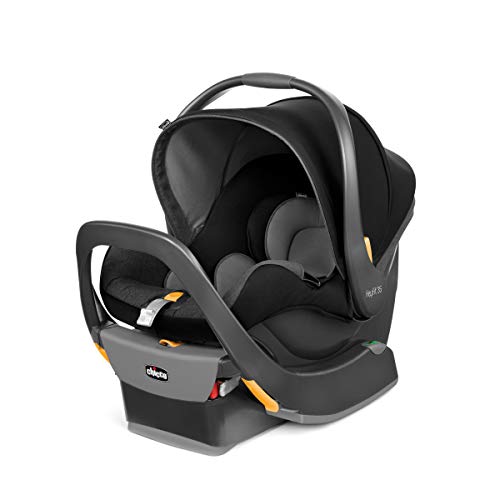
- EASIEST INFANT CAR SEAT TO INSTALL – Simple, accurate and secure installation – every time – with two bubble level-indic…
- EASY-EXTEND HEADREST SYSTEM – To maximize rear-facing use, headrest raises with the harness and the integrated anti-rebo…
- INNOVATIVE FEATURES – SuperCinch Force-Multiplying LATCH Tightener helps achieve a secure fit in the vehicle. Carrier sh…
The Chicco KeyFit 35 is an infant-seat option to consider when an older infant carrier has reached the end of its service life.
This type of replacement makes more sense for families who specifically need a new infant car seat, rather than an all-in-one or convertible restraint.
Why consider an infant seat:
- Designed specifically for the infant stage
- Useful when replacing an expired infant carrier
- Lets parents choose a new restraint based on the baby’s current stage
Best for: Newborns and infants who are still in the infant-car-seat stage.
Important: Product recommendations are not a substitute for checking your child’s current height, weight, age, developmental stage, vehicle compatibility, and the manufacturer’s instructions. The safest choice is the seat you can install and use correctly.
After a Crash: Should You Replace the Car Seat?
A crash can change the replacement decision even if the seat does not look damaged.
The National Highway Traffic Safety Administration (NHTSA) recommends replacing a car seat after a moderate or severe crash.
However, a car seat does not automatically need to be replaced after every minor crash.
According to NHTSA, a crash is considered minor only when all of these conditions apply:
- The vehicle could be driven away from the crash.
- The door closest to the car seat was not damaged.
- Nobody in the vehicle was injured.
- The airbags did not deploy.
- There is no visible damage to the car seat.
Can You Safely Buy a Used Car Seat?
A used car seat can carry risks if you do not know its complete history.
NHTSA provides a specific checklist for families considering a second-hand seat. The seat should have:
- No history of a moderate or severe crash
- A readable manufacture date
- A readable model number
- No unresolved recall
- All required parts
- The instruction manual
Used car seat checklist
- Know the seat’s complete history
- Confirm it has not been in a moderate or severe crash
- Find the manufacture date
- Find the model number
- Check for recalls
- Confirm all parts are present
- Obtain the instruction manual
- Confirm the seat has not expired
If you cannot verify these details, buying a new seat is the safer and simpler choice.
How to Check for Car Seat Recalls
A car seat can be within its normal service life and still be subject to a safety recall.
To check a seat:
- Find the manufacturer name.
- Locate the model number.
- Find the manufacture date.
- Search the manufacturer’s recall information.
- Check the NHTSA recall database for applicable equipment recalls.
- Follow the manufacturer’s instructions if a recall affects your seat.
NHTSA advises consumers to check its recall resources for vehicles and equipment and to contact the manufacturer when additional information is needed.
Registering your car seat with the manufacturer is also useful because registration can help you receive recall notifications.

How to Care for a Car Seat Before It Expires
Proper care can help prevent unnecessary damage during the manufacturer’s approved service life, but cleaning and storage do not extend the expiration date.
To care for your seat:
- Follow the manufacturer’s cleaning instructions.
- Keep the owner’s manual.
- Register the seat with the manufacturer.
- Avoid storing it in extreme conditions when it is not in use.
- Inspect the harness, buckle, shell, and other components regularly.
- Use only manufacturer-approved replacement parts.
- Keep the manufacture and expiration information somewhere you can find it.
Never modify the restraint or replace safety-critical components with unapproved parts.
Personal Experience and Practical Lessons
One lesson I have learned from inspecting and discussing child restraints with families is that a seat’s appearance can be misleading.
Parents often judge a car seat by whether the fabric looks clean and whether the plastic looks intact. But safe use also depends on information that is less obvious, including the seat’s manufacture date, service life, crash history, recall status, model-specific instructions, and condition of important components.
That’s why I recommend making a simple habit of checking the label, keeping the manual, registering the seat, and reviewing the seat’s condition periodically.
If the manufacturer says the seat has expired, replace it rather than trying to extend its service life.

Frequently Asked Questions of how long is a car seat good for
How do I read the expiration date on my car seat?
Look for a sticker or molded date on the shell or base. If the label lists a manufacture date and a lifespan, add the lifespan to the manufacture year to find the expiry.
Can a car seat be used after a minor car accident?
Most makers recommend replacement after a moderate or severe crash. For minor crashes, check the manual and manufacturer advice; when in doubt, replace it.
Is it safe to buy a used car seat?
You can buy used seats if the seat has no crash history, has readable labels, and comes with the manual. Avoid seats with missing parts or unknown history.
Do booster seats expire?
Yes. Booster seats also have manufacture dates and expiry periods. Check the label and manual to know how long is a car seat good for for your booster.
Can I replace parts like the harness or shell to extend a seat’s life?
Some manufacturers sell replacement parts, but you should only use approved parts. Replacing major components can be risky and may void safety. Check the manual or contact the maker first.
Conclusion: Check Your Car Seat Today
So, how long is a car seat good for?
There is no single expiration period for every car seat. Many models have service lives of about 6–10 years from manufacture, but the manufacturer’s instructions for your specific model are what matter.
Check your seat today:
- Find the manufacture and expiration information.
- Check the owner’s manual.
- Inspect the shell, harness, buckle, and other components.
- Check for recalls.
- Review the seat’s crash history.
- Replace it when it reaches the manufacturer’s expiration date.
If your seat has expired, don’t try to stretch its lifespan. Choose a current restraint that fits your child, fits your vehicle, and can be installed and used correctly every time.
Safety first: the right car seat is the one that fits your child, fits your vehicle, and is used correctly on every trip.
Looking for a Free or Discounted Stroller?
If the price is your biggest concern, you don’t always have to pay full retail price for a stroller. Local community groups, nonprofit programs, stroller exchanges, and secondhand marketplaces may offer free or low-cost options. Before accepting a used stroller, however, check its condition, model information, recalls, and safety features. See our guide on how to get a free stroller for practical ways to find free or low-cost stroller options.

Sophia Linda is a freelance writer and Certified Health Coach based in the Newbury Park, CA. Passionate about healthy living, she focuses on helping families stay active and connected to the outdoors. Together with her husband and their three young children, Sophia spends much of her time traveling, hiking, and camping. Her work has been featured on the bestbabycart blog, and she brings a practical, real-world perspective to reviewing baby products for parents.