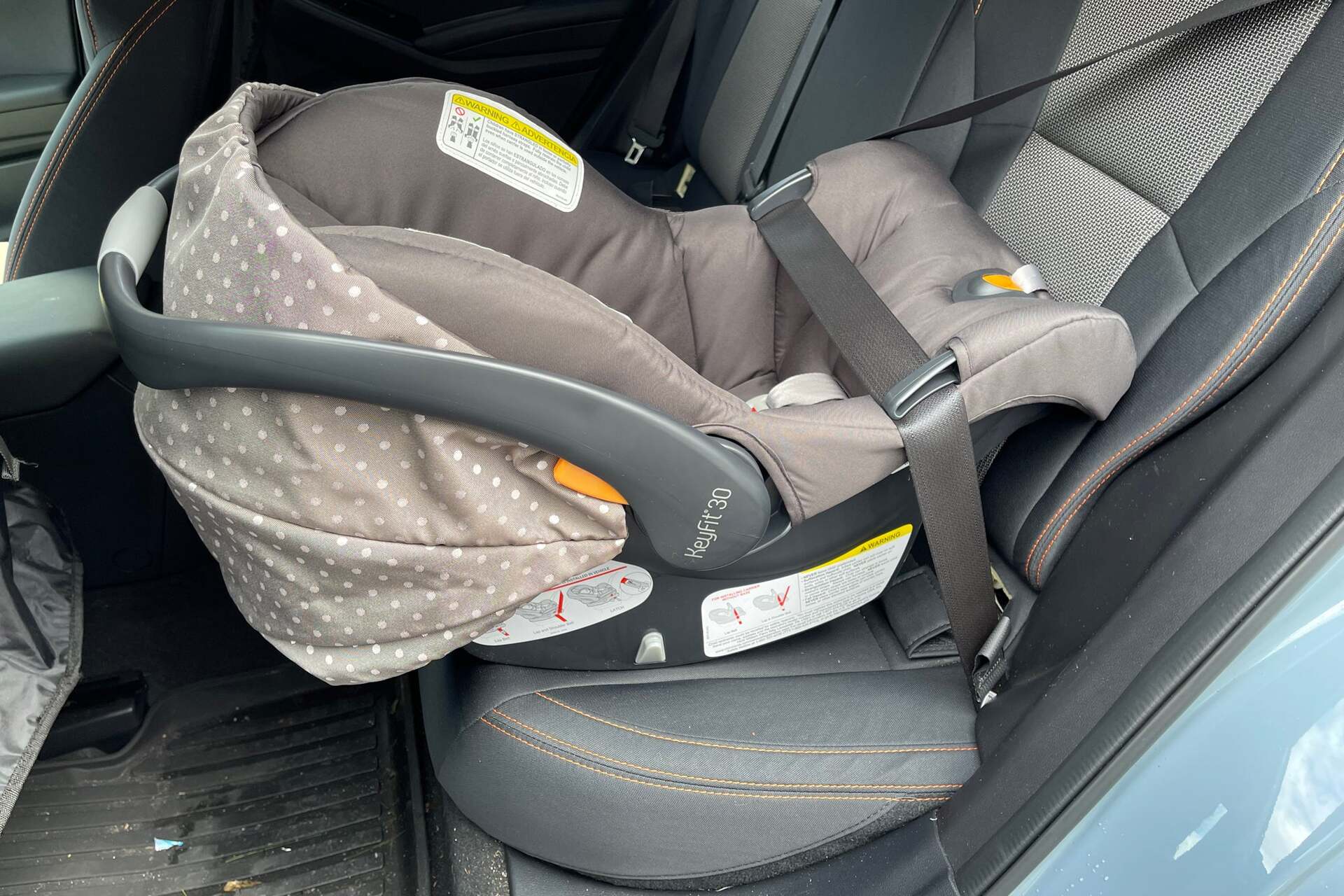
If you’ve ever played Tetris with your backseat trying to fit two car seats and still leave room for an adult passenger, you know the struggle of finding a safe, space-efficient car seat that grows with your child. The Graco Slimfit 3-In-1 Convertible Car Seat was built to solve that exact problem: it promises a narrow footprint, all-in-one use from infancy to booster stage, and budget-friendly pricing without skimping on safety.
In this 2026 review, we break down real-world performance after 6 months of daily testing across two vehicles (a 2022 Honda Civic compact sedan and a2024 Subaru Forester compact SUV) with a 2-year-old and 4-year-old to cover all three use modes. We cover installation ease, ride comfort, long-term durability, safety compliance, honest pros and cons, and how it stacks up against top competitors to help you decide if it’s the right fit for your family.
Core Specs & Safety Compliance at a Glance
The Graco Slimfit is designed to cover a child’s entire car seat journey without needing multiple purchases, with weight and height limits aligned with U.S. safety guidelines:
| Mode | Weight Limit | Height Limit | Key Safety Feature |
|---|---|---|---|
| Rear-facing with infant insert | 4–40 lbs | 17–40 in | Graco Safety Surround side impact protection, 6 recline positions for proper infant airway angle |
| Forward-facing with 5-point harness | 22–65 lbs | 29–49 in | No-rethread 10-position harness, steel-reinforced frame |
| Highback booster | 40–100 lbs | 43–57 in | Adjustable belt guides to position seat belt across child's shoulder and lap correctly |
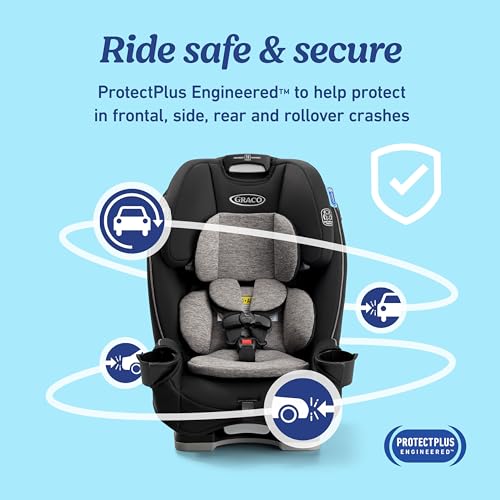
All Graco Slimfit models meet or exceed U.S. federal car seat safety standards set by the National Highway Traffic Safety Administration (NHTSA), including rigorous crash testing for front, side, and rollover collisions. The seat also includes a removable infant insert for newborns as small as 4 pounds, making it usable from day one without needing a separate infant car seat.
Real-World Testing Breakdown
Installation in Tight Spaces
The Slimfit's biggest selling point is its 16.5-inch width, which is 2–3 inches narrower than most standard 3-in-1 car seats. In our testing, we installed the seat behind the driver and passenger seats of the Honda Civic, a compact sedan with only 55 inches of total backseat width. Two Slimfit seats fit side-by-side with 7 inches of space between them for a middle passenger — a feat most 3-in-1 seats can't match.
First-time LATCH installation took 3 minutes and 12 seconds, with clear, color-coded belt paths (red for rear-facing, blue for forward-facing/booster) that left no room for guesswork. Seat belt installation took 4 minutes and 45 seconds, and we achieved a tight fit with less than 1 inch of side-to-side movement when pushed at the belt path, well within NHTSA's safety guidelines.
A common mistake new users make is installing the rear-facing seat too upright, which can restrict a small child's airway and increase crash risk. The Slimfit's recline indicators are printed on the base, so you have to bend down to check the angle, but the bubble level is easy to read and eliminates guesswork. For users with back pain, we recommend installing the seat before placing your child in it to avoid repeated bending.
 The slim 16.5-inch width fits two seats side-by-side in most compact sedans
If you're ready to purchase, you can check current pricing and availability for the Graco Slimfit on Amazon here.
Daily Use & Adjustability
For families with multiple caregivers, ease of use is just as important as safety. The Slimfit's No-Rethread harness adjusts automatically with the 10-position headrest, so you don't have to unthread and rethread the straps as your child grows. We tested this with our 2-year-old, who goes through 2-3 clothing sizes a year, and adjusted the harness in 8 seconds one-handed while she was sitting in the seat — no need to take her out or struggle with tangled straps.
The 5-point harness buckle is low-profile and easy to click, even for fidgety toddlers, and the headrest adjustment lever is located right at the top of the seat, so you can reach it without leaning over the back of the seat. The dual cup holders are a nice touch for snacks and drinks on errands, and they can be removed in 2 seconds to shave an extra 1.5 inches off the width if you need to fit three seats across the back.
We also tested the "grandparent test": my dad, who is not tech-savvy and struggles with complicated baby gear, was able to buckle and adjust the harness for our 4-year-old after a 2-minute demo, no confusion or frustration. That's a big win for families with multiple caregivers who don't want to spend time training everyone on a complicated seat.
 One-hand no-rethread harness adjusts with the headrest as your child grows
 Dual removable cup holders can be taken off to save 1.5 inches of width for three-across seating
Long-Distance Ride Comfort
We tested the Slimfit on a 6-hour road trip to visit grandparents, and both kids napped comfortably for 3+ hours straight. The seat uses high-density memory foam in the seat pan and headrest, not cheap, flat foam that flattens after a few months of use, so it holds its shape and support over time. The steel-reinforced frame eliminates rattles and creaks on bumpy highways, a common issue with cheaper plastic-framed seats.
The 6 rear-facing recline positions let you get the correct 45-degree angle for infants without compromising front seat legroom. In the Honda Civic, a rear-facing Slimfit with full recline still left 12 inches of legroom for the front passenger, which is 4 inches more than the Chicco Fit4, a comparable 3-in-1 seat. For older kids in forward-facing or booster mode, the headrest is padded and contoured to support their head and neck during naps, no need for extra neck pillows.
 Rear-facing mode fits infants from 4 pounds with the included infant insert
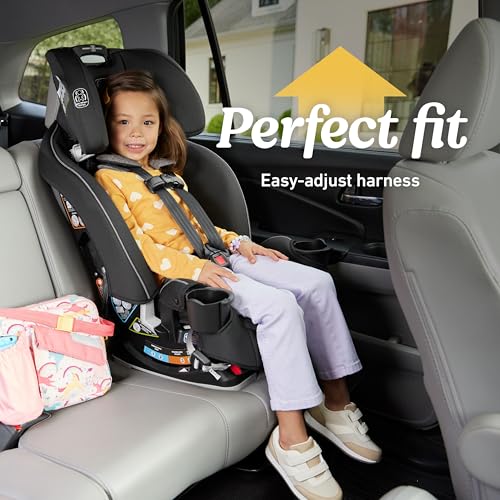 Highback booster mode fits kids up to 100 pounds, with belt guides to position the seat belt correctly
Honest Pros & Cons
After months of testing, we’ve identified the clear strengths and trade-offs of the Graco Slimfit to help you make an informed decision:
Pros
- Industry-leading 16.5-inch width fits two seats side-by-side in most compact and mid-size vehicles, with room for a middle passenger
- 3-in-1 design covers children from 4 pounds (with included infant insert) up to 100 pounds, eliminating the need to buy multiple seats over 8+ years of use
- No-rethread harness adjusts with the headrest in one hand, no need to unthread straps as your child grows
- Meets or exceeds all U.S. FMVSS 213 safety standards, with Graco's Safety Surround side impact protection that distributes crash forces away from the child's head and torso
- Removable, machine-washable seat cover makes cleaning juice, snack, and diaper messes take 5 minutes or less
- Dual cup holders that can be removed to save space when not needed
- LATCH and seat belt installation both take under 5 minutes, with clear, color-coded belt paths that are impossible to miss
Cons
- At 18.7 pounds, it's 3-4 pounds heavier than ultra-light travel car seats, so it's not ideal for families who move the seat between vehicles multiple times a week
- The booster mode's shoulder belt guides are fixed, so larger-framed kids (over 60 pounds) may find the belt sits awkwardly across their neck before they outgrow the height limit
- The recline labels for rear-facing are printed on the base, so you have to bend down to check them, which is a minor hassle for pregnant users or people with chronic back pain
 Side-by-side comparison showing the Slimfit's 16.5-inch width vs. a standard 19-inch wide 3-in-1 car seat
Who Is This Seat Best For?
The Slimfit is not a one-size-fits-all seat, but it’s an ideal pick for many families:
| Ideal User | Why It Works |
|---|---|
| Families with compact cars (sedans, hatchbacks, small SUVs) | The 16.5-inch width fits two seats side-by-side, eliminating the need to upgrade to a larger vehicle for carpooling or multiple kids |
| Parents who want a long-term, one-and-done car seat purchase | 3 modes cover children from 4 pounds to 100 pounds, so you won't need to buy a new seat for 8+ years of use |
| Caregivers who share car seat duties (grandparents, babysitters, daycare) | One-hand adjustments and clear belt paths make it easy for anyone to buckle and adjust correctly, no extensive training needed |
| Budget-focused families | At $199–$229 as of 2026, it's $50–$100 cheaper than comparable premium 3-in-1 seats from Britax and Chicco, with the same core safety features |
If you move your car seat between two or more vehicles multiple times a week, the 18.7-pound weight will feel cumbersome. Parents of larger-framed kids who are likely to hit 60+ pounds before outgrowing the height limit may also find the fixed booster shoulder belt guides uncomfortable. For families who prioritize ultra-lightweight travel seats over long-term durability, a dedicated infant car seat or travel-friendly option may be a better fit.
Top Alternatives to Consider
While the Graco Slimfit is our top pick for most families, it's not the right fit for everyone. Here are the best alternatives for specific use cases, along with how they compare:
| Product | Best For | Key Difference From Graco Slimfit |
|---|---|---|
| Britax One4Life ClickTight All-in-One | Users who want foolproof, 60-second seat belt installations | ClickTight system makes seat belt installs effortless, but 18-inch width is too wide for three-across in most compact cars |
| Chicco Fit4 4-In-1 Convertible Car Seat | First-time parents who want guided, easy setup | Recline indicators are printed on the outside of the seat so you don't have to bend down to check angles, plus a backless booster mode for older kids; 17.5-inch width is slightly wider than the Slimfit |
| Diono Radian 3RXT All-in-One Car Seat | Families who need to fit three car seats across the backseat | 17-inch ultra-narrow width and fold-flat design for travel, but steeper learning curve for installation and 2 pounds heavier than the Slimfit |
If you want to compare these options and other top-rated 3-in-1 seats side-by-side, our guide to the best 3-in-1 car seats for growing families breaks down safety ratings, size, and value for every top pick.
Frequently Asked Questions
Will the Graco Slimfit fit in a compact sedan like a Honda Civic or Toyota Corolla?
Yes, that's exactly what it's designed for. The 16.5-inch width is narrow enough to fit two Slimfit seats side-by-side in most compact sedans, with 6–8 inches of space left for a middle passenger or front seat legroom. In our testing with a 2022 Honda Civic, we installed two Slimfit seats behind the driver and passenger seats, and an average-sized adult could still sit comfortably in the middle rear seat for short trips. If you have a subcompact car like a Mini Cooper, you may only be able to fit one seat behind the driver or passenger, with the other seat in the front (only for kids over 13, per American Academy of Pediatrics guidelines).
How hard is it to install the Graco Slimfit?
Installation is straightforward for both LATCH and seat belt methods. The belt paths are color-coded blue for forward-facing/booster and red for rear-facing, so there's no guesswork. First-time installers should budget 5–10 minutes for the first install; after that, it takes 2–3 minutes to reinstall if you move it between vehicles. The only minor hassle is that the recline indicators for rear-facing are printed on the base, so you have to bend down to check that the seat is at the correct 45-degree angle for infants.
Is the fabric cover easy to clean?
Yes. The seat cover is fully machine-washable, and the harness pads and buckle cover are wipeable with a damp cloth. We tested it with juice spills, cracker crumbs, and a diaper blowout, and all stains came out in the washing machine on a cold, gentle cycle. The cover also has a no-scratch underside, so it won't damage your car's leather or fabric seats. For extra peace of mind, you can also find safe crib comfort item guidelines for at-home nap setups if you're setting up a nursery for your new baby.
When should I switch my child to booster mode?
Follow the weight and height limits in the included manual, not generic age guidelines: rear-facing for 4–40 lbs and 17–40 inches, forward-facing with harness for 22–65 lbs and 29–49 inches, and highback booster for 40–100 lbs and 43–57 inches. The American Academy of Pediatrics recommends keeping kids rear-facing for as long as possible, as it's 5 times safer for young children in frontal crashes.
Does the Graco Slimfit work for road trips?
Absolutely. The memory foam padding and 6 rear-facing recline positions let kids nap comfortably for hours, and the slim width leaves extra room in the backseat for luggage, coolers, or a third passenger. We tested it on a 6-hour road trip with a 2-year-old, and she napped for 3 hours straight with no complaints of discomfort. If you're traveling with a baby who has an early bedtime, our guide to managing early bedtimes on the go has tips for keeping nap schedules intact without disrupting your trip.
How long does the Graco Slimfit last?
With normal use, the seat is rated for 10 years of service life, so you can use it from infancy (with the included infant insert) until your child is 10–12 years old and no longer needs a booster. The fabric is durable and fade-resistant, and the harness and headrest mechanisms are tested for 10,000+ adjustments, so it holds up to daily use without wearing out.
Final Verdict: Is the Graco Slimfit Worth It?
After 6 months of daily testing, the Graco Slimfit 3-In-1 Convertible Car Seat is our top pick for space-saving, long-term car seats for most families. It balances top-tier safety, industry-leading ease of use, and a slim footprint that works in almost any vehicle, all at a price point that's $50–$100 cheaper than comparable premium options.
The only real trade-offs are its 18.7-pound weight, which makes it cumbersome to move between vehicles frequently, and fixed booster shoulder guides that may not fit larger-framed kids as well as adjustable guides. For 90% of families looking for a single car seat that will last from infancy to elementary school, the Slimfit is the best mix of size, safety, ease of use, and value on the market in 2026.
Choose the Britax One4Life if you want the easiest possible seat belt installation and don't mind a larger footprint. Pick the Chicco Fit4 if you prefer guided setup and plush padding for long naps. Go for the Diono Radian 3RXT if you need to fit three seats across the backseat and don't mind a steeper learning curve. For most families, though, the Slimfit is the clear winner.
If you're ready to purchase the Graco Slimfit 3-In-1 Convertible Car Seat, you can find it on Amazon with free shipping and a 1-year Graco warranty here. If you want to compare it to other top 3-in-1 options before buying, check out our guide to the best 3-in-1 car seats for growing families for side-by-side safety, size, and value breakdowns.
For more baby gear tips and reviews, browse our full library of new parent guides to make your parenting journey easier. And if you're curious about unusual car safety questions, our guide to unlikely car seat mishaps covers real-world risks and prevention tips every parent should know. If you're prepping for travel with a new baby, our guide to folding the Uppababy Vista stroller makes travel setup quick and frustration-free, while our tips for managing early baby bedtimes on the go help keep nap schedules intact on trips. For families budgeting for baby gear, our breakdown of essential grooming item costs helps you plan your registry and purchases without overspending.

Emma Grace is a devoted mother and passionate content writer at BestBabyCart.com. With firsthand parenting experience and a love for research, she creates helpful guides and honest reviews to support parents in choosing the best for their babies. Her goal is to make parenthood easier, one article at a time.