
Figuring out when your child can stop using a car seat is one of the most common questions for parents, and for good reason: the answer is far more nuanced than a single age cutoff. While many families hope to “graduate” their kid to an adult seat belt as soon as possible to simplify travel, rushing this transition significantly increases the risk of serious injury in a crash. Updated 2026 guidance from national safety organizations emphasizes that age is just one factor — height, weight, behavioral maturity, and local laws all play a critical role in determining when a child is truly ready to ride without a booster or harness seat. This guide breaks down current requirements, safety best practices, and real-world signs your child is ready to make the switch, so you can make informed, safety-first decisions for your family.
Legal Requirements for Car Seat Use (2026 US Focus)
Car seat laws in the U.S. are a patchwork of federal safety standards and state-specific regulations, with the latter setting the minimum legal requirements for when a child can stop using a car seat or booster. It’s critical to remember that these minimums are a legal floor, not a safety ceiling: following best practice guidelines will always keep your child safer than meeting only the lowest state requirement.
Federal Minimums vs. State-Specific Rules
The National Highway Traffic Safety Administration (NHTSA) sets federal performance standards for all car seats sold in the U.S., but individual states set their own age, weight, and height requirements for restraint use. As of 2026, all 50 states require children to use a booster seat until they meet at least one of the following criteria: 8 years old, 80 pounds, or 4 feet 9 inches tall. Some states, including California, New York, and Illinois, have stricter rules requiring booster use until 10–12 years old, depending on the child’s size. If you travel across state lines, always follow the stricter of the two states’ regulations to avoid fines and ensure consistent protection. For international readers, check your local transport authority’s guidelines: for example, the EU requires child restraints until children are 135 cm tall, while the UK requires them until 12 years old or 135 cm. If you’re planning low-stress outings with young infants that involve cross-state car travel, confirming your car seat is properly installed ahead of time eliminates a major source of pre-trip anxiety.
Penalties for Non-Compliance
Failing to follow your state’s car seat laws can result in fines ranging from $25 to $500, plus points on your driver’s license in some jurisdictions. More importantly, if your child is injured in a crash while not properly restrained, you may face increased liability and reduced coverage from your auto insurance. These penalties exist to reinforce that child passenger safety is a legal and moral responsibility for all drivers.
 Credit: realendpoints.com
A properly installed rear-facing seat is the safest option for infants and toddlers up to the seat's height/weight limit.
Credit: realendpoints.com
A properly installed rear-facing seat is the safest option for infants and toddlers up to the seat's height/weight limit.
Current Safety Standards & Best Practices
All car seats sold in the U.S. must meet Federal Motor Vehicle Safety Standard (FMVSS) 213, which mandates rigorous crash testing to ensure they protect children in frontal, side, and rollover collisions. Even the most expensive, crash-tested seat will fail to protect your child if it is installed incorrectly: the NHTSA estimates that 3 out of 4 car seats are used improperly, increasing injury risk significantly.
The Seat Belt Fit Test: The Gold Standard for Transition
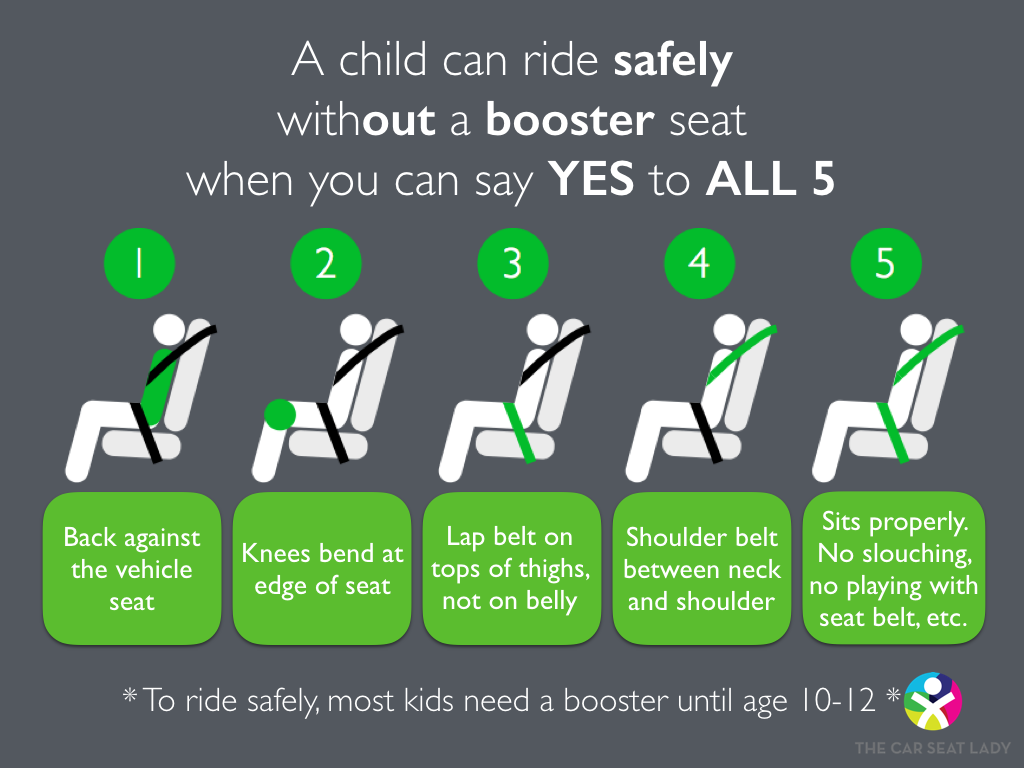
Age and weight guidelines are helpful starting points, but the only reliable way to confirm your child is ready to stop using a car seat or booster is the 5-step seat belt fit test, recommended by both NHTSA and the CDC’s child passenger safety recommendations:
- Your child’s back is flat against the vehicle seat, with their knees bent at the edge of the seat
- The lap belt sits low across the upper thighs, not the soft stomach
- The shoulder belt crosses the middle of the chest and shoulder, not the neck or face
- The child can stay seated in this position for the entire trip, without slouching or leaning forward to reach the dashboard
- The belt stays in the correct position even when the child shifts slightly
If your child fails any step of this test, they need to remain in a booster seat or harnessed car seat, no matter their age.
Common Misconceptions About “Outgrowing” Seats
Many parents fall for common myths that put their kids at risk: for example, the belief that a child can switch to a booster seat as soon as they turn 4, even if they haven’t reached the 40-pound minimum weight for their forward-facing harness seat. Another dangerous myth is that short trips don’t require proper restraints: 88% of child car crashes occur within 10 miles of home, per CDC data, so “just running to the store” is never an excuse to skip safety rules. If you’re planning a cross-state road trip, follow the stricter of the two states’ regulations to avoid fines, and review our guide to unusual car seat mishaps to avoid for extra peace of mind.
Signs Your Child Is Ready to Transition Out of a Car Seat
Every child grows at a different rate, so there is no one-size-fits-all age for stopping car seat use. Look for both physical and behavioral markers to confirm readiness:
Physical Readiness Markers
- Meets the minimum height requirement of 4 feet 9 inches (57 inches)
- Exceeds the weight limit of their current forward-facing harness seat (usually 40–65 pounds) or booster seat (usually 80–100 pounds)
- Can sit all the way back against the vehicle seat with their knees bent comfortably at the edge, without slouching
Behavioral Readiness Markers
- Can sit still for the entire duration of a car ride, without leaning forward, slouching, or trying to slide the shoulder belt behind their back or under their arm
- Understands the importance of seat belts and follows instructions to adjust the belt if it shifts out of position
- Does not intentionally try to disable or loosen their seat belt during the ride
A common mistake parents make during this transition is testing seat belt fit while their child is wearing a bulky winter coat, puffy snowsuit, or thick blanket under the belt. These layers compress in a crash, creating up to 4 inches of slack in the straps that can let the child fly forward. Always test fit with only thin, close-fitting layers, and put outerwear on backwards over the buckled harness to keep your child warm without compromising safety. For cold weather travel, opt for thin layers and a winter coat appropriate for your baby’s age that can be worn this way to avoid this common error.
Car Seat Types & Their Typical Use Ranges
Understanding the different types of car seats and their intended use cases will help you choose the right restraint for your child’s size and age, and avoid premature transitions:
Infant Car Seats (Rear-Facing Only)
Designed for newborns and small babies, these seats feature a snap-in base that stays in your car, allowing you to click the seat in and out for easy stroller compatibility. They are exclusively rear-facing, which is the safest position for young children, as it supports their heavy head and fragile neck in a crash. Most infant seats accommodate babies up to 30–40 pounds and 30–35 inches tall, with most kids outgrowing them by 12–18 months. If you’re transitioning away from an infant seat, make sure your stroller is compatible with your new car seat, or learn how to fold your Uppababy Vista stroller efficiently to make loading and unloading hassle-free.
Convertible Car Seats (Rear-Forward Facing)
These versatile seats can be used rear-facing for infants and toddlers, then switched to forward-facing with a 5-point harness for older kids. Most convertible seats support rear-facing use up to 40–50 pounds, and forward-facing harness use up to 65 pounds, making them a cost-effective option for families who want to keep their child rear-facing for as long as possible. Most kids use convertible seats from 6 months to 4–7 years old.
All-in-One (3-in-1) Car Seats
A newer, popular option, all-in-one seats transition from rear-facing, to forward-facing with a harness, to booster seat as your child grows. Most models accommodate children from birth up to 100–120 pounds, so you can use a single seat from infancy until your child is ready for an adult seat belt, usually 10–12 years old. These seats are more expensive upfront, but eliminate the need to purchase multiple seats as your child grows.
Booster Seats (High-Back & Backless)
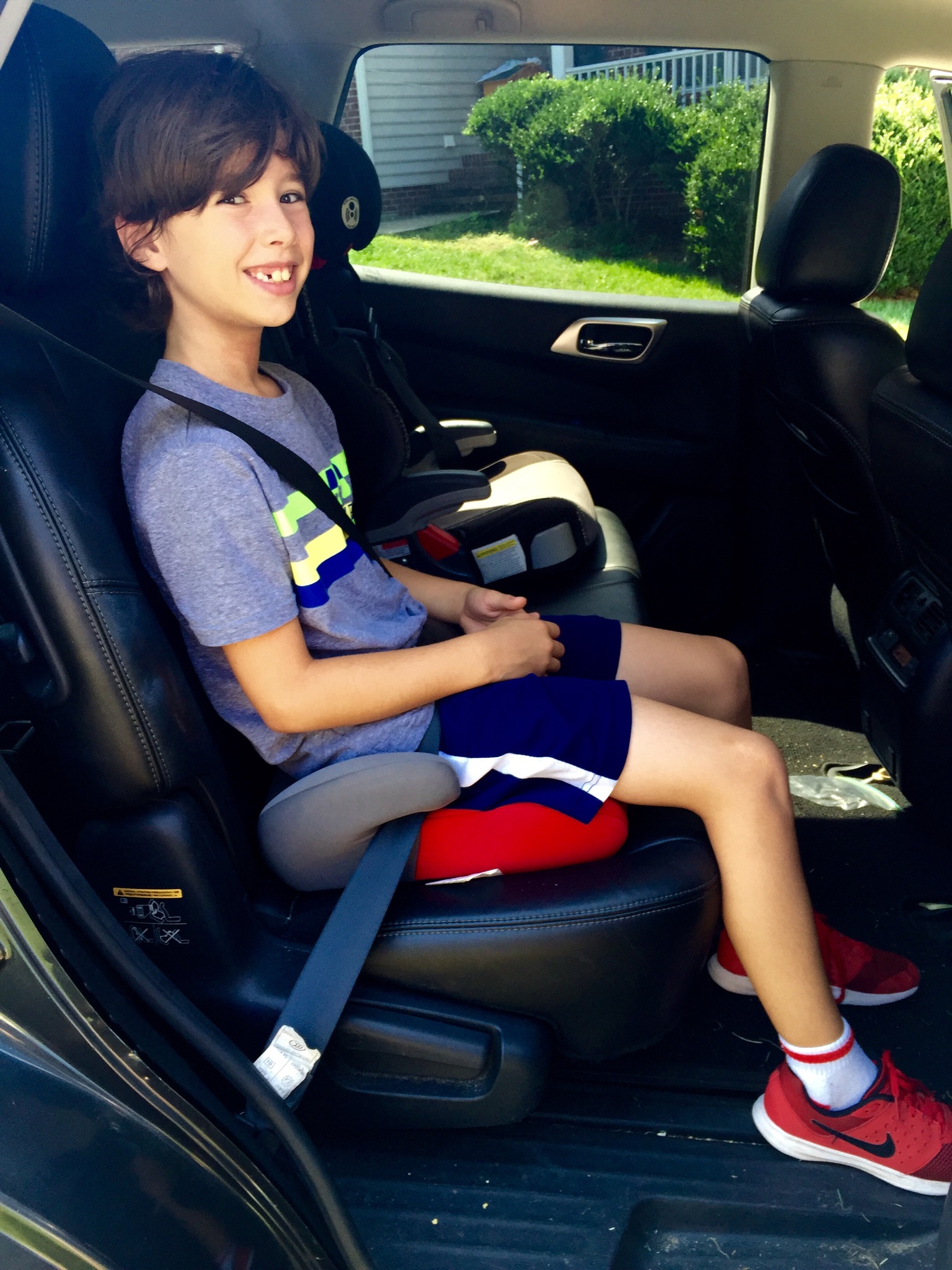
Booster seats are designed for children who have outgrown their forward-facing harness seats, typically 40–100 pounds and 4–10 years old. They elevate the child so the vehicle’s seat belt fits correctly across their chest and thighs, rather than their neck or stomach. High-back boosters offer additional side impact protection and are ideal for cars without built-in headrests, though they take up more backseat space, which can be a challenge for families with multiple children. Backless boosters are more portable and a good option for carpools or travel. Just like you would select safe, comfortable items for their crib to promote restful sleep, prioritize a properly fitted booster with adequate padding to prevent restlessness on drives longer than 30 minutes.
 Credit: e-mit.org
Booster seats bridge the gap between forward-facing car seats and adult seat belts for kids 4–10 years old.
Credit: e-mit.org
Booster seats bridge the gap between forward-facing car seats and adult seat belts for kids 4–10 years old.
Common Car Seat Safety Mistakes to Avoid
Even parents who research car seat guidelines thoroughly make avoidable errors that put their kids at risk. Avoid these top mistakes to keep your child safe on every drive:
Incorrect Installation
The NHTSA estimates that 3 out of 4 car seats are installed incorrectly, with the most common errors including a loose installation (the seat moves more than 1 inch side-to-side when pushed at the base), an incorrect angle for rear-facing seats (which should be tilted 30–45 degrees to support a baby’s heavy head), and using the wrong seat belt path for the seat’s current configuration. Always refer to your car seat’s manual and your vehicle’s owner’s manual for installation instructions, and double-check the fit every time you reinstall the seat.
Premature Transitions
A common mistake observed in child passenger safety inspections is parents moving their child to the next seat type as soon as they hit the minimum age or weight, rather than keeping them in the current seat for as long as possible. Rear-facing seats are 5 times safer than forward-facing seats for toddlers, and harnessed seats are safer than boosters for kids up to 65 pounds, so delaying transitions as long as the seat’s limits allow is the safest choice.
Using Expired or Crash-Damaged Seats
Car seats are made of plastic that degrades over time due to exposure to heat, sun, and temperature fluctuations, so all seats have an expiration date 6–10 years after the manufacture date (printed on a label on the seat). Never use a car seat that has been in a moderate or severe crash, even if there is no visible damage: the impact can weaken the seat’s internal structure, reducing its effectiveness in a future crash.
Adding Unapproved Aftermarket Accessories
Extra headrests, seat covers, toys, or harness pads that are not crash-tested and approved by your car seat’s manufacturer can interfere with the seat’s performance in a collision. Stick to accessories included with the seat or explicitly approved by the manufacturer, and avoid attaching loose items to the seat that could become projectiles in a crash.
Bulky Outerwear
As mentioned earlier, puffy coats, snowsuits, and thick blankets under the harness compress in a crash, creating up to 4 inches of slack in the straps. For cold weather travel, dress your child in thin, close-fitting layers, and put their coat on backwards over the buckled harness to keep them warm without compromising safety.
Expert Tips for a Safe Transition
If you’re still unsure about your child’s readiness to stop using a car seat, or want to confirm your current seat is installed correctly, these expert-backed tips will help:
Get a Free Professional Inspection
Certified child passenger safety technicians (CPSTs) offer free, no-obligation inspections at most fire stations, hospitals, and community centers across the U.S. These experts can check your car seat’s installation, assess your child’s fit, and answer specific questions about your vehicle and your child’s size. You can also find a technician near your destination via the NHTSA’s online directory if you’re planning a trip. If you’re unsure about your car seat’s installation or your child’s readiness for a transition, schedule a free inspection with a local certified child passenger safety technician — most communities offer these services at no cost.
Stay Updated on Changing Guidelines
Car seat safety guidelines are updated every 2–3 years as new crash data and testing become available. Bookmark the NHTSA’s official car seat page and the CDC’s child passenger safety hub for the latest recommendations, and replace your car seat if it is recalled (you can check for recalls on the NHTSA website using your seat’s model number and manufacture date).
Lead by Example
Kids model adult behavior, so always wear your own seat belt correctly, with the shoulder belt across your chest and the lap belt low across your thighs. Never text, drive impaired, or speed when your child is in the car: your driving habits are the biggest predictor of your child’s safety on the road. For long trips, pack one extra diaper per hour of travel, in line with average infant cloth diaper usage rates to avoid unplanned stops that can throw off your schedule and increase crash risk from fatigued driving.
 Credit: 1800lionlaw.com
The CDC's 2026 updated car seat guidelines outline minimum safety standards for all child passengers.
Credit: 1800lionlaw.com
The CDC's 2026 updated car seat guidelines outline minimum safety standards for all child passengers.
Frequently Asked Questions
What is the minimum age to stop using a car seat in the U.S.?
There is no federal minimum age, but all states require children to use a booster seat until at least 8 years old, 80 pounds, or 4 feet 9 inches tall. Best practice guidance from NHTSA and the CDC recommends keeping children in a restraint system (booster seat or adult seat belt) until they are 10–12 years old and pass the 5-step seat belt fit test, regardless of state minimums.
Can my child use only a seat belt if they’re under 4’9”?
No. A seat belt that does not fit properly can cause severe internal injuries, including damage to the liver, spleen, and spinal cord, in a crash. Children under 4’9” need a booster seat to position the lap and shoulder belts correctly across their body, with no exceptions for short trips or “responsible” kids.
Are car seat laws different for taxis or ride-shares?
In most U.S. states, taxis and ride-share vehicles are exempt from car seat laws, but this exemption is not a safety recommendation. Always use a properly fitted car seat or booster for your child in any vehicle, regardless of the driver or service type. If you frequently use ride-shares, consider a portable, travel-friendly booster seat for convenience.
What should I do with a car seat after my child outgrows it?
If your car seat is not expired and has never been in a moderate or severe crash, you can donate it to a local child passenger safety organization, or recycle it through a community car seat recycling program. Never throw a car seat in the trash unless it is expired or damaged, as the plastic components can take hundreds of years to decompose in a landfill.
Conclusion
There is no universal age when every child can stop using a car seat: the right time depends on your child’s unique height, weight, behavioral maturity, and your state’s specific laws. While it can be tempting to rush the transition to simplify travel or avoid arguments with your kid, the data is clear: keeping children in age- and size-appropriate restraints for as long as possible reduces fatal injury risk by 71% for infants and 54% for toddlers, per NHTSA. If you’re ever unsure, err on the side of caution: keeping your child in a booster or harnessed seat for an extra 6–12 months is always safer than transitioning too early. For more practical parenting tips to keep your whole family safe on the go, browse our full library of evidence-based guides.

Emma Grace is a devoted mother and passionate content writer at BestBabyCart.com. With firsthand parenting experience and a love for research, she creates helpful guides and honest reviews to support parents in choosing the best for their babies. Her goal is to make parenthood easier, one article at a time.