
Welcoming a 6-month-old brings exciting milestones: rolling, sitting up with support, and maybe even the start of sleep regressions that leave you searching for ways to keep them comfortable. But with so many cute nursery products on the market, it’s easy to wonder: what can a 6 month old have in their crib that’s both safe and supportive of restful sleep? The answer is far simpler than many parenting guides suggest: a 6-month-old’s crib should be almost entirely bare, with only a small set of AAP and CPSC-approved items to reduce suffocation, choking, and SIDS risk. In this 2026-updated guide, we’ll break down exactly what belongs in your baby’s sleep space, what to avoid at all costs, and how to navigate common parenting myths that put little ones at risk.
 A minimal, clutter-free crib is the only safe sleep environment for infants under 12 months, per 2026 AAP guidance.
Credit: www.sleepfoundation.org
A minimal, clutter-free crib is the only safe sleep environment for infants under 12 months, per 2026 AAP guidance.
Credit: www.sleepfoundation.org
Core 2026 Safe Sleep Guidelines for 6-Month-Olds
Safe sleep practices are non-negotiable for 6-month-olds, who are still developing the motor skills to free themselves from suffocation hazards. Following current federal and pediatric guidance reduces sleep-related fatality risk by more than 60% compared to cluttered sleep spaces.
Crib Construction & Mattress Fit
First, confirm your crib meets current CPSC safety standards: slats must be no wider than 2 3/8 inches (about the width of a standard soda can) to prevent head entrapment, and drop-side cribs (banned for sale in the U.S. since 2011) should never be used, even if handed down from family. The mattress must fit the crib frame perfectly with no gaps—if you can fit more than two fingers between the mattress and crib sides, it’s too small, and your baby could get stuck. Always opt for a firm, flat infant mattress; soft or pillow-top options increase suffocation and overheating risk. For full official crib safety rules, refer to the official CPSC crib safety rules.
Sleep Position & Sleep Habits
The AAP still recommends placing all babies on their backs to sleep for every nap and nighttime sleep, even if they can roll over independently. Back sleeping keeps airways clear and reduces SIDS risk by 50% compared to stomach or side sleeping, per current AAP safe sleep recommendations. If your baby rolls to their stomach on their own, you don’t need to reposition them, but always start them on their back. Room sharing (baby sleeping in your room in their own crib) is recommended for at least the first 6 months, and ideally the first year, while bed sharing is never advised due to suffocation and overheating risks.
What to Never Put in a 6-Month-Old’s Crib
In practice, the most common mistake parents make at the 6-month mark is adding cute, soft items to the crib during sleep regressions, assuming their baby is “old enough” for extra comfort. This is a leading cause of preventable sleep-related infant fatalities: 6-month-olds still lack the motor skills to move suffocation hazards off their face, even if they can roll or sit up. Below is a full list of prohibited items, with explanations for each risk:
| Prohibited Item | Risk |
|---|---|
| Loose blankets, quilts, or comforters | Suffocation, overheating, and entrapment if baby rolls under them |
| Crib bumpers (padded, breathable, or mesh) | Suffocation risk if baby’s face presses against the material; CPSC has issued repeated warnings against their use |
| Stuffed animals, loveys, or plush toys over 12 inches tall | Can block airways if baby rolls into them; small parts can break off and cause choking |
| Pillows or pillow-like items (including nursing pillows left in the crib) | Suffocation and head/neck alignment issues |
| Weighted blankets or weighted sleep sacks | Pose breathing restriction and overheating risk for infants under 2 years old |
| Crib gyms, attached toys, or mobiles with loose parts | Can detach and become choking hazards; mobiles should be removed once baby can push up on hands and knees |
| Teething toys with cords, clips, or straps | Strangulation and choking risk if cords wrap around the neck or small parts break off |
| Loose clothing, socks, or headbands | Can slip over the baby’s face and cause suffocation |
Even if your baby can roll both ways independently, none of these items are safe for the crib until at least 12 months of age, per AAP guidance. A common myth is that “breathable” bumper pads are safe, but independent testing has shown they still restrict airflow and increase suffocation risk, so they are not recommended for any infant sleep space.
 Crib bumpers, even those marketed as breathable, are linked to dozens of infant suffocation deaths annually and are banned in multiple U.S. states.
Credit: www.biloban.com
Crib bumpers, even those marketed as breathable, are linked to dozens of infant suffocation deaths annually and are banned in multiple U.S. states.
Credit: www.biloban.com
Approved, Safe Crib Essentials for 6-Month-Olds
The only items that belong in a 6-month-old’s crib are those designed specifically for safe infant sleep, with no loose parts or soft, bulky materials. You only need three core items to keep your baby comfortable and safe:
Fitted Crib Sheets
Only use a fitted sheet made specifically for your crib’s mattress size, with deep pockets that stay snug around the corners and no loose fabric that can bunch up or cover your baby’s face. Opt for soft, breathable cotton or bamboo fabrics, and avoid sheets with excessive elastic, decorative ruffles, or flame-retardant chemical treatments that could irritate sensitive skin. Always pull the sheet tight over the mattress before putting your baby down to sleep. For guidance on selecting soft, safe nursery items that won’t pose crib hazards, refer to our breakdown of safe crib soft goods.
Wearable Sleep Sacks
Sleep sacks (also called wearable blankets) are the only safe way to keep your baby warm during sleep, as they eliminate the risk of loose blankets covering the face. For 6-month-olds, choose a sleeveless or short-sleeved sack with a TOG rating appropriate for your room temperature: 1.0 TOG for rooms 72°F+ (22°C+), 1.5-2.0 TOG for 68-72°F (20-22°C), and 2.5 TOG for colder rooms. Avoid sleep sacks with hoods, loose ties, or padding, as these can slip over your baby’s face or cause overheating.
Thin, Breathable Mattress Protectors
A waterproof mattress protector is a useful addition to keep the crib mattress clean from leaks and spit-up, but it must be thin, fully fitted, and made of breathable material to avoid adding extra cushioning to the sleep surface. Thick, padded protectors make the mattress too soft and increase suffocation risk, so they should never be used.
Pacifiers
The AAP recommends offering a pacifier at nap and bedtime, as it has been shown to reduce SIDS risk by up to 50%. If your baby refuses it, don’t force it. Always use a pacifier with a single, solid shield (no decorative holes or loose parts) and never attach it to a cord, clip, or stuffed animal that could pose a strangulation or choking hazard. Replace pacifiers every 1-2 months, or immediately if they show signs of cracking or damage.
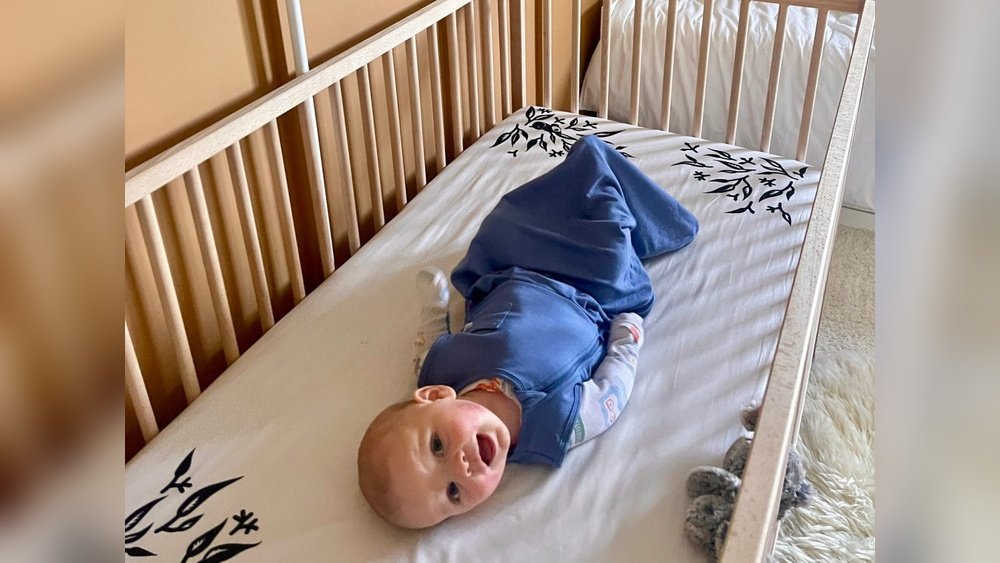
 This crib setup includes only AAP-approved items: a firm mattress, fitted sheet, and appropriately sized sleep sack.
Credit: thismamaloveslife.com
This crib setup includes only AAP-approved items: a firm mattress, fitted sheet, and appropriately sized sleep sack.
Credit: thismamaloveslife.com
Comfort & Sleep Support Tools That Are Crib-Safe
You don’t need extra items to make your 6-month-old’s crib comfortable—overstuffing the space is the #1 safety mistake parents make. That said, a few non-intrusive tools can support better sleep without adding risk:
White Noise Machines
White noise mimics the sound environment of the womb, which can help 6-month-olds fall asleep faster and stay asleep longer through household noises. For safe use, place the machine at least 7 feet from the crib, set the volume to no louder than 50 decibels (about the volume of a quiet conversation), and use a timer to turn it off after 30-60 minutes so your baby learns to self-soothe without constant noise. Never place a noise machine inside the crib or on the crib rails, as prolonged exposure to loud noise can damage infant hearing.
Room Temperature Control
Babies sleep best in a room temperature between 68°F and 72°F (20°C to 22°C). To check if your baby is comfortable, feel their neck or chest—cool to the touch is ideal, while sweaty or red skin means they’re too hot. Avoid over-bundling: dress your baby in a fitted sleep onesie and sleep sack, and skip hats, loose socks, or heavy outerwear in the crib, as these increase overheating risk. For guidance on dressing your baby appropriately for different seasons, see our breakdown of seasonal infant layering. Avoid loose socks that could come off and become a suffocation risk; for tips on choosing appropriate infant sleepwear, see our guide to infant sock layering tips.
Monitoring Devices That Add Safety Without Risk
Baby monitors can give you peace of mind without cluttering the crib, but it’s important to choose devices that support safe sleep rather than undermine it:
Audio & Video Monitors
Basic audio monitors are sufficient for most families, as they let you hear your baby’s cries or fussiness without entering the room and disrupting their sleep. Video monitors with night vision are useful for checking on your baby without opening the door, but make sure the camera cord is secured out of your baby’s reach to avoid strangulation or tripping hazards. Avoid monitors that attach to the crib rails, as they can come loose and become choking hazards.
Movement & Breathing Sensors
Wearable movement sensors (worn on the baby’s foot or diaper) and under-mattress movement trackers can alert you if your baby stops moving for an extended period, but they are not FDA-approved for SIDS detection, and often produce false alarms that cause unnecessary stress. They can be a useful peace-of-mind tool for parents of preemies or babies with health conditions, but they should never replace standard safe sleep practices.
When Is It Safe to Add New Items to the Crib?
Many parents ask when they can start adding stuffed animals, blankets, or other items to the crib, but the answer depends on your baby’s individual development, not just their age. Wait until your baby meets all of the following milestones before considering any non-essential crib items:
- Rolls consistently in both directions (front to back and back to front)
- Sits up unassisted for 30 seconds or longer
- Can push up on hands and knees and move around the crib independently
- Can easily move objects away from their face if they roll into them
Even if your baby meets all these milestones, the AAP still recommends waiting until at least 12 months of age to introduce loose blankets, stuffed animals, or pillows to the crib. If you’re considering adding a small comfort object for separation anxiety, discuss it with your pediatrician first to ensure it’s safe for your baby’s specific developmental needs. A common mistake is adding items because other parents in your parenting group do it, but every baby develops at their own pace—when in doubt, leave the crib bare. If you’re navigating sleep disruptions during this developmental stage, our guide to consistent sleep routine tips can help you maintain nap and bedtime consistency without resorting to unsafe crib additions.
Frequently Asked Questions
What safe items can a 6 month old have in their crib?
The only safe items for a 6-month-old’s crib are a firm, properly sized mattress, a fitted crib sheet, and a wearable sleep sack appropriate for your room temperature. A clean pacifier can be offered at sleep times, but it should never be attached to a cord or clip. No other items—including toys, blankets, bumper pads, or pillows—belong in the crib.
Can a 6 month old sleep with a pacifier in the crib?
Yes, pacifiers are safe for 6-month-olds during sleep, and the AAP recommends offering them at nap and bedtime to reduce SIDS risk. Ensure the pacifier is clean, has no loose parts, and is not attached to any cord or clip that could pose a strangulation hazard. If the pacifier falls out during sleep, you don’t need to reinsert it.
Are breathable bumper pads safe for 6 month olds?
No. Even bumper pads marketed as “breathable” or “mesh” pose a suffocation risk, as they can still restrict airflow around the baby’s face if they roll into the pad. The CPSC and AAP both recommend against using any type of crib bumper for infants of any age.
Is it safe to put stuffed animals in a 6-month-old’s crib?
No. Stuffed animals, even small ones, can block airways if your baby rolls into them, and small parts (like plastic eyes or seams, or tiny components from small-part toys like small-part toy risks) can break off and cause choking. Wait until your baby is at least 12 months old, and can easily move objects away from their face, before introducing any plush toys to the crib.
When can a baby have a blanket in their crib?
The AAP recommends waiting until your baby is at least 12 months old before introducing loose blankets to the crib. Before that, use a wearable sleep sack to keep them warm, as loose blankets pose a serious suffocation and overheating risk. Even after 12 months, opt for thin, breathable blankets rather than heavy quilts or comforters.
Can I put a teething toy in my 6-month-old’s crib?
Only if the teething toy is specifically designed for unsupervised sleep, has no small loose parts, and is not attached to a cord or clip. Most standard teething toys are not safe for crib use, as they can break or become choking hazards if your baby chews on them while sleeping. If your baby is teething and fussy, offer the toy during awake time only, or consult your pediatrician for safe sleep-friendly teething solutions.
Conclusion
The question “what can a 6 month old have in their crib?” has a simple, evidence-based answer: almost nothing. A safe 6-month-old crib should only include a firm, properly sized mattress, a fitted crib sheet, a wearable sleep sack, and (optionally) a clean pacifier. All soft bedding, stuffed animals, bumper pads, and loose items pose preventable suffocation, choking, and overheating risks, even if your baby can roll or sit up independently. Safe sleep habits established at this stage lay the foundation for a lifetime of healthy rest, and cut down on sleep disruptions that lead to exhausted, stressed parents. When in doubt about adding a new item to your baby’s crib, leave it out, and consult your pediatrician for personalized guidance based on your baby’s unique developmental needs. For more evidence-based baby safety and parenting guidance, browse our full library of infant care resources to make informed, confident choices for your little one.

Emma Grace is a devoted mother and passionate content writer at BestBabyCart.com. With firsthand parenting experience and a love for research, she creates helpful guides and honest reviews to support parents in choosing the best for their babies. Her goal is to make parenthood easier, one article at a time.