
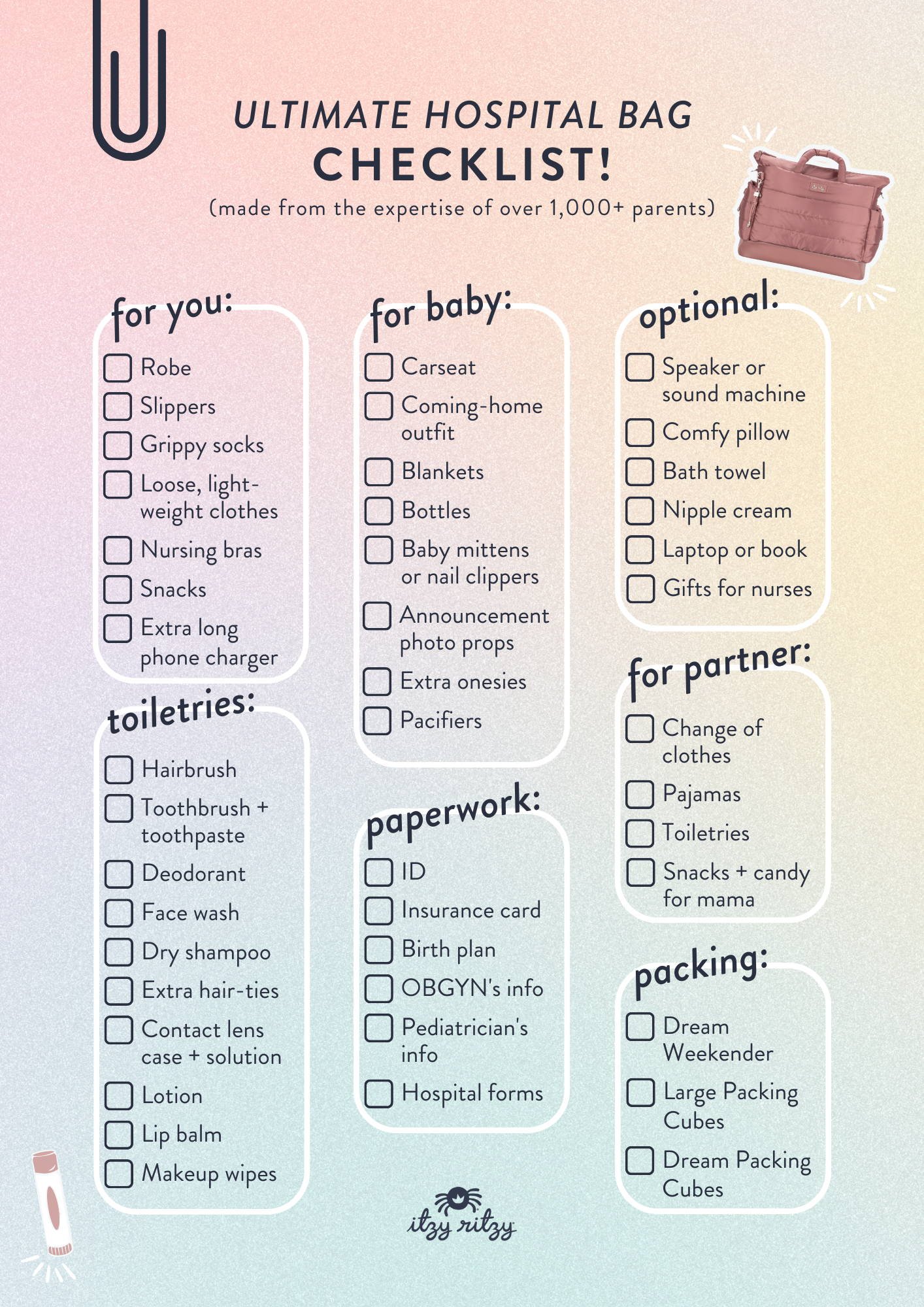
Packing a hospital diaper bag is one of the most nerve-wracking pre-birth tasks for new parents, and it’s easy to overpack or forget critical, easy-to-overlook items. A well-organized bag cuts last-minute stress during labor and early postpartum recovery, so you can focus on meeting your newborn instead of scrambling for supplies. This updated 2026 guide cuts through generic, vague checklists to share only the essentials, organized by priority, plus common mistakes to avoid and space-saving tips to keep your bag lightweight and functional.
Pre-Packing Ground Rules: What the Hospital Already Provides
Before you start packing, confirm what your hospital supplies for free to avoid wasting space on redundant items. Most standard maternity wards provide disposable newborn diapers, basic wipes, receiving blankets, nasal bulb aspirators, infant wash and lotion, postpartum pads for birthing parents, hospital gowns, basic pacifiers, and hospital-grade breast pumps for use during your stay. Some facilities also provide small toiletries for parents, but these are often low-quality, so bringing your own familiar products is recommended. Call your hospital’s maternity desk a week before your due date to confirm their specific inclusions, as policies vary by location and insurance coverage.
Mom's Hospital Bag Essentials
Birthing parents often focus exclusively on baby supplies and forget their own comfort needs, which can make a multi-day hospital stay far more stressful. Prioritize these items to stay comfortable and focused during labor and recovery.
Medical and Administrative Documents
Keep these items in a dedicated, easy-to-reach pocket of your bag:
- Photo ID and health insurance card
- 3 printed copies of your birth plan (for your OB, nursing team, and pediatrician)
- Copy of your prenatal medical records, if your provider requested you bring them
- Emergency contact list for family and your support person
- A portable power bank for your phone (hospital outlets are often scarce, and you’ll need your device for contraction timing, photos, and updates to loved ones)
Per ACOG guidance, packing these documents by 36 weeks ensures you’re prepared for unexpected early labor. Avoid bringing your full wallet to reduce the risk of losing valuables during the chaos of delivery.
Comfortable Clothing
Hospital rooms are notoriously cold, and you’ll be moving between labs, delivery rooms, and recovery spaces, so prioritize comfort over style for most items:
- 2–3 loose-fitting, front-opening pajamas or nursing tops (avoid tight waistbands and scratchy fabrics)
- Non-slip socks or closed-toe slippers (hospitals provide basic socks, but bring your own if you prefer thicker, warmer options)
- A lightweight robe or cardigan for extra warmth
- 1 going-home outfit that fits your postpartum body (you will not be back to pre-pregnancy size immediately; stretchy yoga pants or a loose dress are ideal)
- 1 optional nice top for first photos with your baby, if desired
Toiletries and Postpartum Care
Familiar products reduce stress and help you feel like yourself during your stay. Pack travel-sized versions of your daily essentials:
- Shampoo, conditioner, body wash, and face moisturizer (post-birth skin is often extra dry)
- Toothbrush, toothpaste, deodorant, and lip balm (lip balm is one of the most commonly forgotten items, as hospital air is extremely drying)
- Maternity pads and a peri bottle for postpartum perineal care (hospitals provide basic supplies, but many parents prefer their own preferred brands)
- Nipple cream and any other breastfeeding essentials recommended by your lactation consultant
- Over-the-counter pain relievers approved by your OB, such as ibuprofen, for postpartum cramping
Food and Drink
Hospital food is often bland, unappetizing, and limited for parents with dietary restrictions. Pack non-perishable, easy-to-eat snacks that don’t require refrigeration:
- Granola bars, nuts, dried fruit, and protein bars for quick energy during labor
- Electrolyte packets to stay hydrated during long labors
- A reusable water bottle with a straw for easy sipping while resting
- Any specialty snacks for dietary restrictions (gluten-free, vegan, etc.)
Avoid messy, strong-smelling foods that may bother other patients on your floor.
Entertainment and Communication
Long labors and recovery periods can feel tedious, so pack small items to pass the time:
- Phone charger and portable power bank
- Noise-canceling headphones for calls, watching shows, or blocking hallway noise during rest
- A book or e-reader if you enjoy reading during early labor
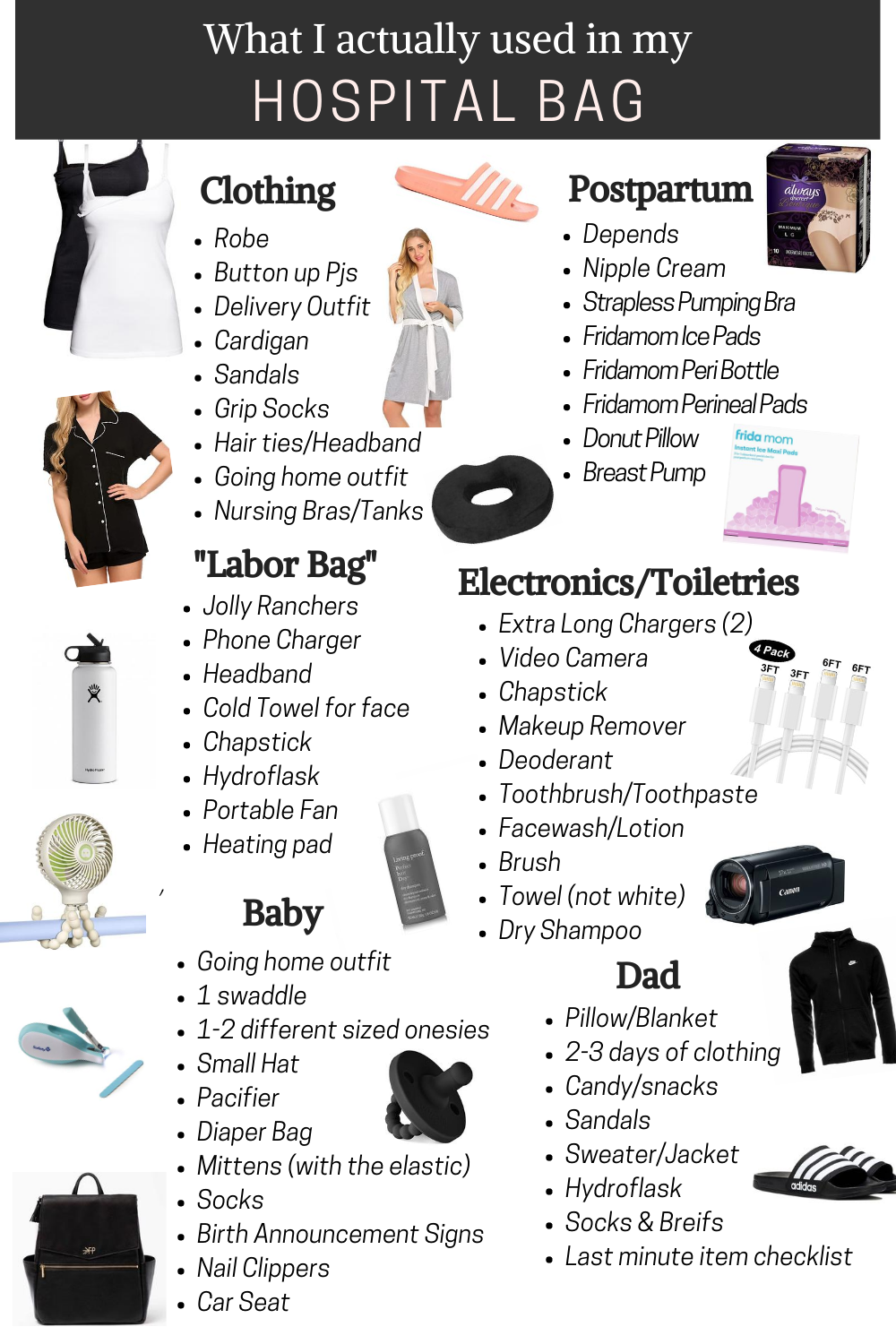 Image source: www.cbgurgaon.com
A pre-packed, organized diaper bag cuts last-minute stress during labor
Image source: www.cbgurgaon.com
A pre-packed, organized diaper bag cuts last-minute stress during labor
Baby's Hospital Diaper Bag Essentials
Newborns need frequent supplies for diaper changes, feeding, and comfort, so organize their items in a separate compartment of your bag for quick access. Prioritize soft, breathable fabrics and gentle, fragrance-free products for their delicate skin.
Diapering Supplies
Hospitals provide a small supply of diapers and wipes, but bring your own preferred brands to avoid irritation:
- 1 pack of newborn-size disposable diapers (or 12–18 pre-folded cloth diapers and a wet bag if you use cloth, per guidance from cloth diapering experts)
- Travel-sized, hypoallergenic diaper cream
- 1 pack of fragrance-free baby wipes (hospitals provide basic unscented wipes, but bring your own if your baby has sensitive skin)
- A portable changing pad for hygienic diaper changes in your hospital room
Baby Clothing
Stick to simple, easy-to-wear items that minimize fuss during diaper changes and first photos:
- 3–4 short-sleeve cotton onesies (long-sleeve if your hospital is very cold)
- 2 pairs of soft mittens and socks (newborns lose heat quickly through their extremities; reference how many pairs of socks newborns need daily for climate-specific guidance)
- 1 soft, brimless hat for the first few days (newborns cannot regulate their body temperature well)
- 1 special going-home outfit in newborn size (avoid 0–3 month sizes, which will be too large; keep it simple, as it may get covered in birth fluids or hospital lotion)
- 2–3 soft receiving blankets for swaddling, burping, or use as a nursing cover
Feeding Supplies
Pack items for both breastfeeding and formula feeding, as you may not know your baby’s preference until after birth:
- For breastfeeding: 2–3 front-opening, underwire-free nursing bras, disposable or reusable nursing pads, lanolin nipple cream, and a portable breast pump if you prefer your own over the hospital’s model
- For formula feeding: 2–3 slow-flow newborn bottles, pre-measured travel-sized formula packets (to avoid spills and ensure you have your baby’s usual brand; if your baby has dietary sensitivities, review palm oil content in common baby formulas to pick an appropriate brand before you pack), and a small bottle brush
- A few burp cloths for messy feeding sessions
Grooming and Health Supplies
These low-priority items can make your baby more comfortable during their first few days:
- A soft-bristled newborn hairbrush (reference average newborn hairbrush costs if you’re shopping for one pre-birth)
- Baby nail clippers or a soft emery board (newborn nails grow quickly and can scratch their face)
- Fragrance-free baby lotion for dry, flaky newborn skin
- A battery-operated nasal aspirator (easier to use than the basic bulb syringes hospitals provide)
- Infant acetaminophen, only if approved by your pediatrician for fever or pain relief after birth
Comfort and Soothing Items
Small familiar items help your baby feel secure in the unfamiliar hospital environment:
- 2–3 pacifiers (hospitals provide basic ones, but bringing your preferred brand is worth it; per CDC guidance, pacifier use during sleep reduces the risk of sudden infant death syndrome (SIDS), so it’s a smart safety addition)
- 1–2 velcro or muslin swaddle blankets (easier to use than regular blankets, help newborns feel secure and sleep longer)
- A small, lightweight white noise machine to block hallway noise during naps
- 1 optional small lovey for supervised cuddling (keep it out of the crib to follow safe sleep guidelines)
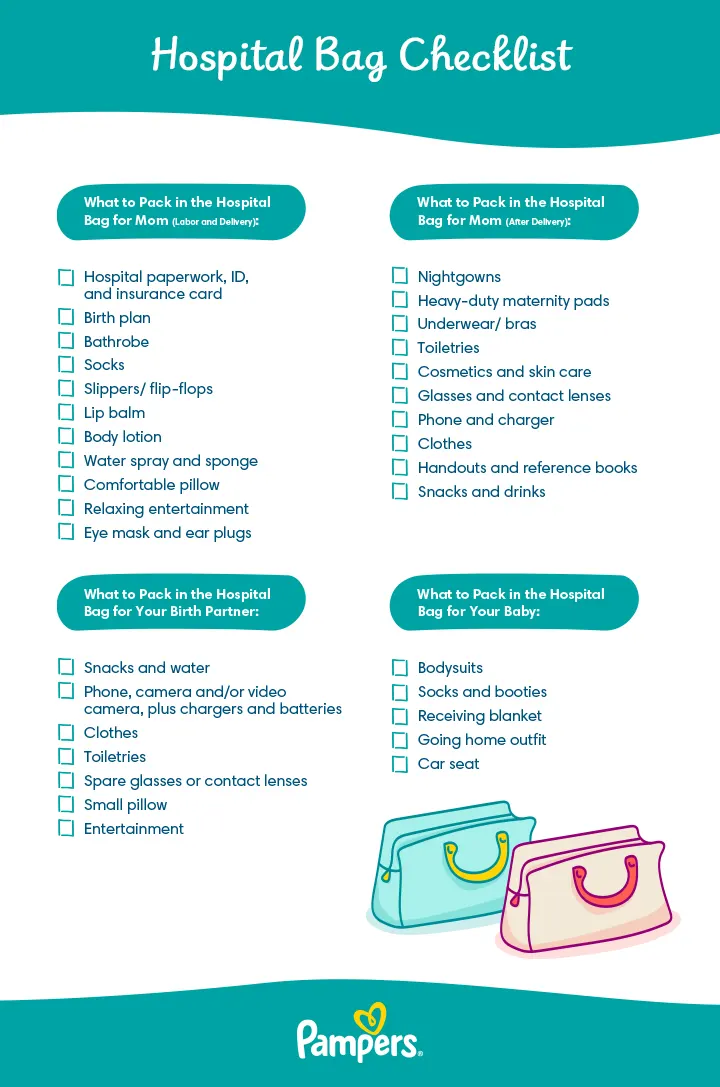 Image source: www.pampers.ca
Pre-made checklists help avoid forgetting critical, easy-to-overlook supplies
Image source: www.pampers.ca
Pre-made checklists help avoid forgetting critical, easy-to-overlook supplies
Pro Tips to Avoid Common Packing Mistakes
Even with a checklist, it’s easy to make avoidable errors that add stress to your hospital stay:
- Don’t overpack diapers: A standard 2-day hospital stay includes 1–2 packs of newborn diapers, so 1 extra pack from home is more than enough unless you’re planning a longer stay.
- Leave extra space in your bag: You’ll likely leave with free formula samples, hospital paperwork, baby footprints, and gifts from visitors, so don’t pack your bag to the brim.
- Split your bag into two sections: One for mom, one for baby, so you don’t have to dig through onesies to find lip balm during active labor.
- Pack weather-appropriate outerwear for the ride home: For cold climates, bring a coat, hat, and mittens for your baby; for warm weather, pack light cotton layers. Reference how many coats a baby needs annually for different climates to pick the right outerwear for your baby’s first weeks. If you’re bringing a stroller, make sure it’s folded and ready to go, or practice folding your Uppababy stroller for transport if you’re using a larger model.
- Don’t bring expensive or sentimental items: Hospital rooms are small and busy, so leave heirlooms or expensive electronics at home to avoid loss or damage.
 Image source: freshmommyblog.com
Non-baby items for parents are just as important for a comfortable hospital stay
Image source: freshmommyblog.com
Non-baby items for parents are just as important for a comfortable hospital stay
Frequently Asked Questions
What outfits should I bring to the hospital for my baby?
Pack 3–4 short-sleeve cotton onesies, 2 pairs of soft mittens and socks, 1 soft hat for the first few days, 1 going-home outfit in newborn size, and 2–3 swaddle blankets. Stick to breathable fabrics and avoid clothing with scratchy tags or complicated fasteners to keep your baby comfortable.
When should I start packing my hospital diaper bag?
ACOG recommends packing your hospital bag between 34 and 36 weeks of pregnancy to avoid being caught off guard by early labor. Keep the bag in a spot near your front door for easy access when it’s time to head to the hospital, and double-check its contents a week before your due date to ensure nothing is missing.
Can I use a regular diaper bag as my hospital bag?
Yes, a well-organized diaper bag works perfectly as a hospital bag as long as it has separate compartments for mom and baby items, and is comfortable to carry. Look for a bag with padded straps if you’ll be walking long distances from the parking garage to maternity wards.
What should always be in my diaper bag, even after the hospital stay?
Beyond hospital-specific items, always keep a stock of newborn diapers, wipes, diaper cream, a portable changing pad, 1–2 changes of baby clothes, a pacifier, a small blanket, hand sanitizer, and necessary feeding supplies. This ensures you’re prepared for outings with your newborn long after you leave the hospital.
Do I need to bring a car seat to the hospital?
Yes, you will need a properly installed rear-facing infant car seat to take your baby home. Most hospitals will verify the car seat is installed correctly before you leave, so practice installing it in your car before your due date. You do not need to bring the car seat base into your hospital room, just the seat itself.
Conclusion
A well-packed hospital diaper bag eliminates unnecessary stress during one of the most intense, joyful periods of your life. By focusing on essentials, avoiding overpacking, and tailoring your bag to your hospital’s specific policies and your personal preferences, you’ll be prepared for every moment of your stay, from early labor to those first precious hours with your newborn.
Once you’ve packed your hospital bag, get your nursery ready with our guide to safe, comfortable crib essentials to make your home welcoming before you bring baby back.

Emma Grace is a devoted mother and passionate content writer at BestBabyCart.com. With firsthand parenting experience and a love for research, she creates helpful guides and honest reviews to support parents in choosing the best for their babies. Her goal is to make parenthood easier, one article at a time.