
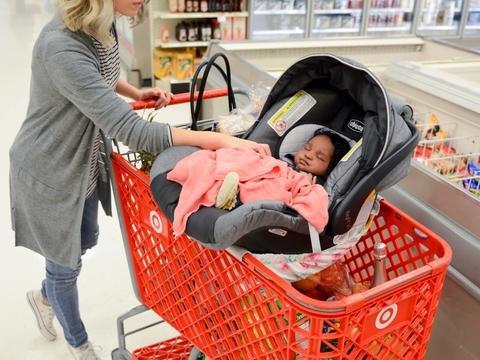
Running errands with a baby often feels like a strategic game of balancing safety, convenience, and your shrinking to-do list. If you’ve ever stared at your infant’s car seat, then at a grocery store shopping cart, and thought “can you put a car seat in a shopping cart?” you’re not alone: this is one of the most common questions we get from caregivers navigating outings with young kids.
As a child safety resource trusted by parents and pediatric providers, we’re here to give you a clear, evidence-based answer: no, it is never safe or recommended to place a car seat in a shopping cart, even for quick trips. The risk of serious injury from tip-overs, falls, and instability far outweighs any temporary convenience. Below, we’ll break down official guidance from regulators and manufacturers, the specific hazards of this practice, and safe, practical alternatives to make your shopping trips stress-free.
What Official Safety Sources Say
Guidance against placing car seats in shopping carts is unambiguous across all leading child safety organizations and car seat manufacturers, with no exceptions for short trips or "careful" use.
Car Seat Manufacturer Rules
Every car seat manual includes explicit warnings against placing the seat on any surface not designed for it, including shopping carts, shopping cart handles, and public tables. These warnings are not optional: they are based on rigorous crash testing that confirms car seats are only stable and secure when installed in a vehicle, or attached to a compatible stroller frame. Using a car seat on a shopping cart will also void most manufacturers’ warranties, as it constitutes misuse of the product.
Regulator and Pediatric Organization Guidance
The U.S. Consumer Product Safety Commission CPSC has documented hundreds of shopping cart-related injuries to children annually, many linked to improper use including placing car seats on cart seats or handles. The American Academy of Pediatrics AAP also recommends against this practice, noting that shopping carts are not engineered to support the weight and balance of a car seat and child, creating an unacceptable risk of serious harm.
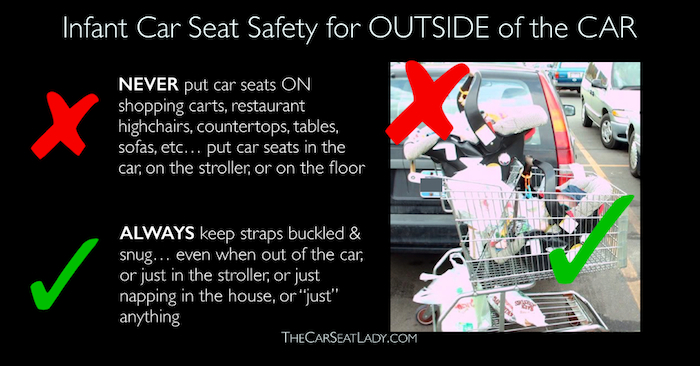 This improper placement creates a top-heavy load that drastically increases tip-over risk.
Credit: thecarseatlady.com
This improper placement creates a top-heavy load that drastically increases tip-over risk.
Credit: thecarseatlady.com
Why Car Seats in Shopping Carts Are Dangerous
The risks of placing a car seat in a shopping cart go far beyond a minor inconvenience—they can lead to life-altering injuries in seconds. The three most common hazards include:
Tip-Over and Fall Risks
A standard infant car seat weighs 5–10 pounds on its own, plus a 7–20 pound infant, creating a top-heavy load that shifts the cart’s center of gravity far above its design limit. Even a small bump, sudden turn, or child shifting their weight can cause the cart to tip forward or sideways, sending the car seat and child crashing to the floor. CPSC records consistently show tip-overs are the leading cause of serious injury in shopping cart incidents, including head trauma, broken bones, and concussions. These tip-over risks mirror the unpredictable nature of unexpected baby gear accidents that can occur when equipment is used outside its intended design.
Instability and Slide-Off Hazards
Even if the car seat appears to fit snugly on the cart seat, the narrow, smooth surface offers no way to secure the seat in place. The cart’s built-in child harness is designed only to hold a child sitting directly in the seat, not a heavy, rigid car seat. Even minor vibrations from moving through the store can cause the car seat to slide off the cart, or shift enough to throw the cart off balance. Placing a car seat on a cart handle is even more dangerous, as it raises the center of gravity even further and makes the cart prone to tipping if pushed at an angle.
Placing a car seat on a cart handle raises the center of gravity even further, making tip-overs almost inevitable.
Credit: www.autoweb.com
Harness and Restraint Interference
Placing a car seat in a shopping cart can also interfere with the car seat’s own harness system, making it harder to properly buckle your child in, or causing straps to twist and loosen during movement. If the car seat shifts even slightly while you’re shopping, your child could be at risk of falling out even if the harness is buckled.
Safe, Practical Alternatives for Shopping With a Baby
Forget the risky car seat-on-cart hack: these safe, equally convenient alternatives will keep your child secure and your hands free to shop:
- Use a stroller with a storage basket: A full-size stroller or travel system is the most versatile option for shopping trips. If you use a travel system, you can attach your infant’s car seat directly to the stroller frame, eliminating the need to transfer a sleeping baby. Most strollers have under-seat storage baskets that can hold 20–30 pounds of groceries, and large, lockable wheels that make navigating crowded aisles easy. Full-size models like the Uppababy Vista offer full-size stroller functionality with spacious baskets and one-hand fold mechanisms for easy loading into your car after your trip.
- Wear your baby in a soft structured carrier: For parents of newborns and young infants who haven’t outgrown their car seat yet, a soft structured baby carrier is a game-changer. It keeps your child secure against your chest, leaves both hands free to push the cart and grab items, and distributes weight evenly to avoid back strain. Look for carriers with approved infant insets for newborns to support their developing neck and hips, and adjustable straps to fit your body. Many parents find this option also soothes fussy babies during long trips, as the close contact mimics the feeling of being held.
- Use store-provided baby carts or child seats: Most major grocery store chains now offer specialized small carts with built-in infant car seat holders, or secure child seats attached to the main cart that are designed to hold a car seat safely without risk of tipping. These are rigorously tested by the stores and CPSC to meet safety standards, and are a great option if you don’t want to bring a stroller. Ask store staff at the entrance to point you to these carts, and confirm they are rated for your child’s size and weight before use.
- Split long trips with a partner: If you’re doing a large grocery run or a long shopping trip, bring a second adult. One person can manage the cart while the other pushes the stroller or wears the baby, cutting down on stress and making it easy to split up if you need to grab items from opposite ends of the store.
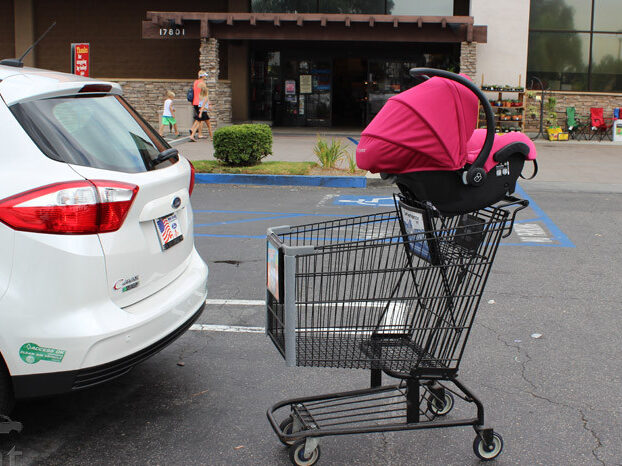 The smooth surface of a shopping cart seat offers no way to secure a car seat, even if it appears to fit snugly.
Credit: carseatblog.com
The smooth surface of a shopping cart seat offers no way to secure a car seat, even if it appears to fit snugly.
Credit: carseatblog.com
Best Practices for Stress-Free Shopping With Infants
Even with safe alternatives in place, these small tips will make your shopping trips smoother and less stressful for you and your baby:
Plan Around Your Baby's Schedule
Shop right after a nap or feeding when your baby is well-rested and content, rather than when they’re hungry or due for sleep. For parents of young babies with early bedtimes, planning outings around infant schedules helps avoid overtired meltdowns mid-trip. If possible, shop during weekday mornings when stores are less crowded, reducing overstimulation for your baby and cutting down on time spent navigating aisles.
Pack Essentials to Avoid Overloading the Cart
Bring a small, well-stocked diaper bag with diapers, wipes, snacks, and a favorite small toy to keep your baby content without adding extra gear to your cart. Avoid overloading the cart with heavy items that could make it more prone to tipping, even without a car seat. A small simple baby entertainment for errands like a soft teether or board book can keep your baby occupied while you grab last-minute items.
Dress for Temperature Changes
Grocery stores are often kept very cool, even in summer, so layer your baby appropriately to prevent them from getting cold or overheated while you’re in and out of the store. Reference seasonal layering for babies to pack the right number of layers for your trip, avoiding the need to juggle bulky coats while managing your cart or stroller.
Ask Store Staff for Help If Needed
Most store employees are happy to help you grab items from high or low shelves if you’re managing a stroller or carrier, and can also point you to the nearest baby cart or seating area if your baby needs a break. Don’t hesitate to ask for assistance—most retailers prioritize customer safety and are glad to help.
Frequently Asked Questions
Can I place an infant car seat in the larger part of a shopping cart if I wedge it in tight?
No. Even if the car seat appears to fit snugly, the cart is not designed to secure it, and even minor shifts in weight or movement can cause the seat to slide or the cart to tip. There are no aftermarket adapters approved for this use by car seat manufacturers or safety regulators, and using any third-party attachment will void your car seat’s warranty.
What if my baby is asleep in their car seat and I don’t want to wake them to transfer to a stroller?
While it’s tempting to avoid waking a sleeping baby, the risk of tip-over or fall far outweighs the temporary inconvenience. If you use a travel system stroller, you can wheel the entire stroller (with the car seat attached) through the store with no need to transfer your baby. For light sleepers, a soft structured carrier can let you move them from the car seat to your chest without fully waking them.
Are shopping cart car seat attachments safe to use?
Very few aftermarket shopping cart car seat holders are certified by safety regulators like the CPSC, and most car seat manufacturers explicitly prohibit their use. These attachments often fail to secure the car seat properly, and can add extra weight that increases tip-over risk. Stick to strollers, carriers, or store-provided baby carts for safe transport.
Can I put a toddler in a booster seat in a shopping cart?
No. Booster seats are designed exclusively for use in vehicles with lap and shoulder seat belts, not shopping carts. They provide no stability or fall protection in a cart, and their elevated position raises the child’s center of gravity, increasing tip-over risk. Toddlers should ride in the cart’s built-in child seat, secured with the cart’s harness, or walk alongside you if they’re steady on their feet.
Final Takeaway
The convenience of propping a car seat on a shopping cart is never worth the risk of serious, life-altering injury to your child. Official guidance from regulators, car seat manufacturers, and pediatric experts is unambiguous: this practice is unsafe and should be avoided at all times.
By using a stroller, baby carrier, or store-provided baby cart, you can keep your child secure while still completing your errands efficiently. With a little advance planning—scheduling trips around your baby’s sleep schedule, packing essentials, and asking for help when needed—you can make shopping with a baby a low-stress, safe experience for the whole family.
For more practical, safety-first tips for running errands and caring for your infant, explore our full library of evidence-based parenting guides on Best Baby Cart.

Emma Grace is a devoted mother and passionate content writer at BestBabyCart.com. With firsthand parenting experience and a love for research, she creates helpful guides and honest reviews to support parents in choosing the best for their babies. Her goal is to make parenthood easier, one article at a time.