

Cribs are the primary sleep space for most infants for their first 2 to 3 years of life, making their safety non-negotiable for parents. While many caregivers prioritize purchasing new, modern cribs, others opt for vintage or family hand-me-down models, unaware that any crib manufactured before 1988 carries severe, well-documented safety risks that no amount of DIY modification can eliminate. Per guidance from the U.S. Consumer Product Safety Commission and the CDC lead exposure guidance for infants, these outdated models fail to meet even the most basic modern safety requirements for infant sleep spaces. This guide breaks down exactly why pre-1988 cribs are unsafe, the specific hazards they pose, and what parents should look for when choosing a crib for their baby.
The 1988 Crib Safety Milestone: What Changed For Infant Sleep Spaces
Before 1988, there were no mandatory federal safety standards for cribs sold in the United States. Manufacturers used unregulated design and materials with no required testing for stability or hazard risk. You can also read our guide on how to keep baby cool in stroller.
 Side-by-side of outdated drop-side crib (left) and compliant fixed-side crib (right)
Credit: www.simplynursery.com
Side-by-side of outdated drop-side crib (left) and compliant fixed-side crib (right)
Credit: www.simplynursery.com
Lead-based finishes were common in crib production even after the 1978 ban on residential lead paint, as industrial lead use remained legal for commercial furniture until the late 1980s. Slat spacing had no legal limit, drop-side rails were unregulated, and mattress supports were often flimsy, unsecured wood slats that could sag or collapse under a baby's weight. There was also no requirement for non-toxic, child-safe finishes, leaving babies exposed to chemicals that could cause irritation or poisoning if chewed or ingested.
Regulatory Updates That Took Effect in 1988
In 1988, the CPSC issued the first mandatory federal crib safety standard, establishing baseline requirements for slat spacing, lead-free finishes, and structural stability. While this rule set critical initial safeguards, it did not yet ban drop-side rails, a design flaw that would later be linked to dozens of infant fatalities. Drop-sides were not fully prohibited until a 2011 CPSC rule banned them entirely, after data showed they contributed to at least 30 infant deaths and 66 serious injuries between 2000 and 2010. Updated standards issued after 2011 also added stricter stability testing requirements, ensuring cribs can withstand force from a climbing toddler without collapsing. You can also read our guide on best modern baby boy crib bedding.
| Feature | Pre-1988 Cribs | 2026 Compliant Cribs |
|---|---|---|
| Maximum slat spacing | No limit, often 2.5–3 inches | 2 3/8 inches (6 cm) maximum |
| Drop-side rails | Standard, unregulated | Fully banned |
| Paint/finish | May contain lead, no toxicity requirements | Lead-free, non-toxic finishes required |
| Stability testing | No mandatory federal testing | Required to withstand 75 lbs of force without collapse |
| Mattress support | Flimsy, prone to sagging | Sturdy, no-sag design required |
Specific, Documented Safety Hazards of Pre-1988 Cribs
Drop-Side Rail Failure Risks
Drop-side rails were the most common design feature in pre-1988 cribs, designed to let parents lift the side to place a baby inside without bending over. However, the hardware holding the drop-side in place often loosened over time, or the side could detach completely from the crib frame, creating a gap large enough for a baby to slip through and become trapped between the mattress and the dropped side, leading to suffocation. Between 2007 and 2012, the CPSC recalled more than 10 million drop-side cribs from major manufacturers, but pre-1988 models were never part of these recall efforts, leaving their inherent design flaws unaddressed. Even if a drop-side is secured, the mechanism can fail under pressure from a climbing toddler, causing the side to fall suddenly and trap the child against the mattress.
Excessive Slat Spacing & Entrapment Dangers
Pre-1988 cribs often had slats spaced 2.5 to 3 inches apart, wide enough for a newborn's head to slip through. Current CPSC standards require slats to be no more than 2 3/8 inches (6 cm) apart, small enough to prevent even a preemie's head from getting stuck. A quick at-home test: if a standard 12-ounce soda can fits between two slats, they are too wide and pose an immediate suffocation risk. Wide slats can also trap a baby's limbs, leading to broken bones or dislocation if they struggle to free themselves, and can create gaps where a baby's clothing or neckwear can get caught, increasing strangulation risk. For context on how dangerous these gaps are, see our guide to current slat gap requirements. You can also read our guide on top baby clothes black friday deals.
Lead Paint & Toxic Finish Exposure
While lead-based residential paint was banned in the U.S. in 1978, crib manufacturers were allowed to use lead in varnishes and finishes for commercial products until the 1988 standard took effect. Even if the paint on a pre-1988 crib is not visibly chipping, regular chewing on crib rails by teething babies can release lead dust, which is easily ingested. Per CDC lead exposure guidance for infants, lead exposure in infants, even at low levels, causes permanent cognitive deficits, behavioral problems, and developmental delays. There is no safe level of lead exposure for children, making this a non-negotiable risk for any pre-1988 crib.
Long-Term Wear & Tear That Makes Vintage Cribs Even More Dangerous
Even if a pre-1988 crib was in perfect condition when it left the factory, 30+ years of use introduces hidden risks that are impossible to spot with a casual inspection. Wood joints loosen over time, even if they appear tight to the naked eye, and metal hardware corrodes, making it prone to sudden failure under pressure. Wood slats can develop micro-cracks that break under a baby's weight, and sharp splinters often form on aged wood that can cut a baby's delicate skin or catch on clothing, creating strangulation risks. A common mistake parents make is assuming a heavy wooden vintage crib is "sturdy," but internal structural deterioration is impossible to assess without fully disassembling the unit, a step most owners never take. Additionally, older cribs often have loose or missing original hardware, and replacement parts are rarely available, making repairs impossible. You can also read our guide on why cant a crib be under a window.
Safer Alternatives To Pre-1988 Cribs
Certified Modern Cribs That Meet 2026 Safety Standards
All new cribs sold in the U.S. must meet the CPSC's 2011 updated safety standard, which bans drop-side rails entirely, requires slat spacing of 2 3/8 inches or less, mandates non-toxic, lead-free finishes, and requires rigorous stability testing to prevent collapse. For an extra layer of safety, look for a Juvenile Products Manufacturers Association (JPMA) certification seal, which indicates the crib has passed third-party testing for even stricter safety criteria than the federal minimum.
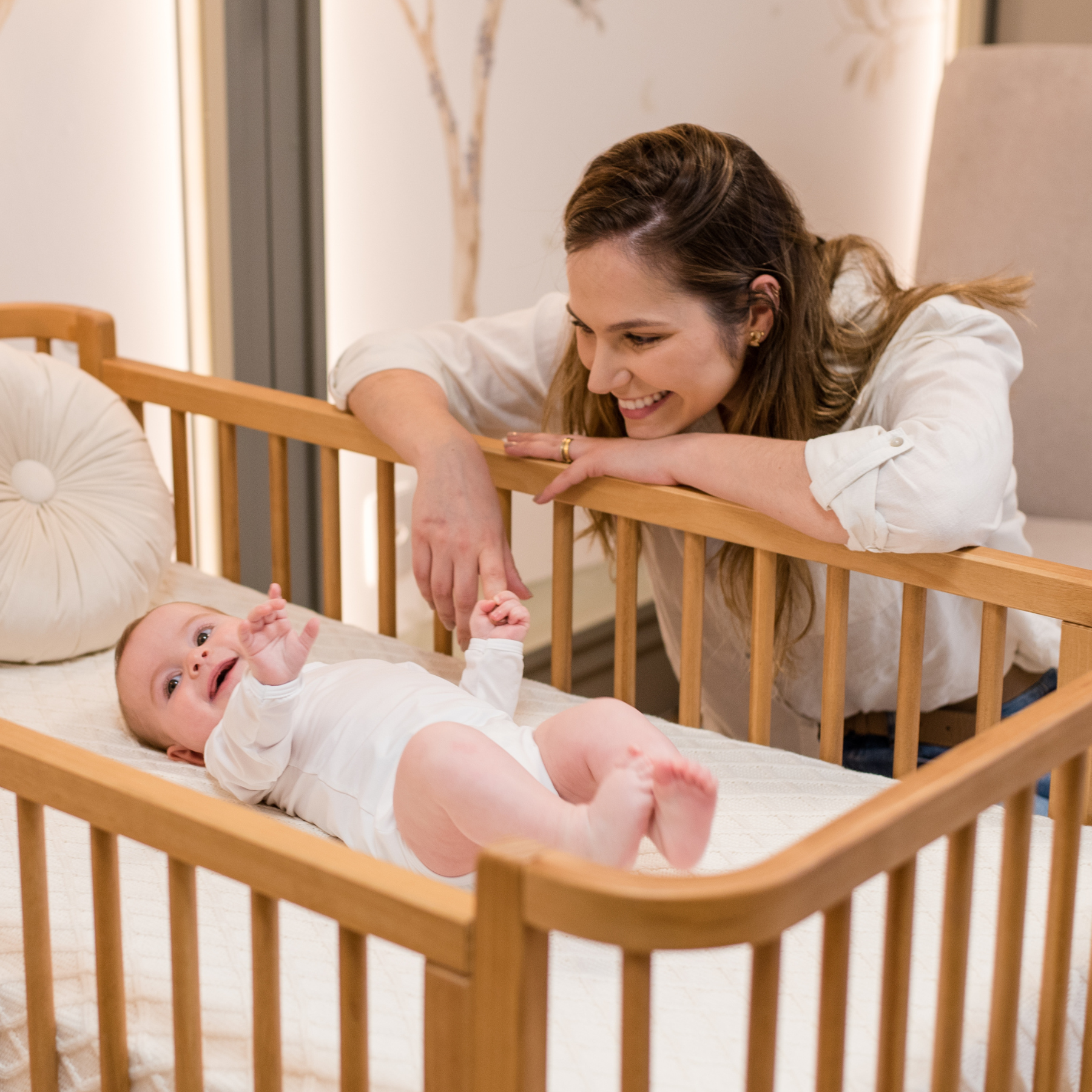
 JPMA-certified crib meeting all current 2026 U.S. safety standards
Credit: www.amazon.com
JPMA-certified crib meeting all current 2026 U.S. safety standards
Credit: www.amazon.com
 Convertible crib that transitions from infant crib to toddler bed, reducing long-term waste
Credit: www.albeebaby.com
Convertible crib that transitions from infant crib to toddler bed, reducing long-term waste
Credit: www.albeebaby.com
Convertible cribs that transition to toddler beds are a cost-effective long-term option, as they can be used for 5 or more years, reducing waste. Regardless of the crib model you choose, always set it up in a safe, clutter-free sleep environment free of loose blankets, pillows, and stuffed animals to reduce suffocation risk. You can also read our guide on filterless cool mist nursery humidifier.
How to Safely Buy a Secondhand Crib (If You Must)
If a secondhand crib is your only feasible option, only consider models manufactured after 2011 (when the drop-side ban took effect) and after 1988 (to avoid lead paint risks). Always look up the model number on the CPSC's public recall database before purchasing to ensure the crib has no outstanding safety alerts. Inspect all joints and hardware for looseness or corrosion, test slat spacing with the soda can test, and replace the original mattress with a firm, tight-fitting model that meets SIDS-preventive safety standards. Never buy a secondhand crib with modified parts, like added drop-sides or non-original hardware, as these void all safety certifications and create unpredictable hazards.
Actionable Steps To Verify Any Crib's Safety
Check For Recalls Before Purchase
Whether buying a new or secondhand crib, always search the CPSC recall database for the crib's model number to ensure it has no outstanding safety alerts. Recalls are issued for hazards that may not be obvious during a casual inspection, including loose hardware, toxic finishes, and structural instability, so this step is non-negotiable for any crib purchase.
Inspect Structural Integrity In Person
Shake the crib gently to check for looseness or wobbling, run your hand along all edges, slats, and support beams to check for splinters or sharp points, and ensure all hardware is present and tightly secured. If any parts are missing, damaged, or show signs of corrosion, do not use the crib, even if it is new.
Confirm Slat Spacing & Mattress Fit
Use the soda can test to check slat gaps: if a 12oz can fits between two slats, they are too wide and fail CPSC requirements. For the mattress, there should be no more than a finger's width of gap between the mattress edge and crib sides to prevent a baby from getting trapped. Ensure the mattress is firm, as soft mattresses increase SIDS risk, and pair it with a fitted sheet only. To eliminate other nursery hazards, pair your safe crib with a full nursery hazard mitigation setup including outlet covers and cabinet locks.
Follow Safe Use Guidelines Long-Term
Even the safest crib can become hazardous if misused. Avoid adding loose blankets, pillows, bumper pads, or stuffed animals to the crib, as these increase suffocation risk. As your baby grows, follow safe, age-appropriate crib item guidelines to ensure the sleep space remains low-risk. Never place the crib near windows, blinds, or wall-mounted furniture that could tip over, and always lower the mattress height as your baby learns to stand to prevent falls.
Frequently Asked Questions
Can a vintage crib be made safe with modifications?
No. Even if you replace the mattress, add slat covers, or remove drop-side hardware, pre-1988 cribs have inherent structural flaws, including lead-based finishes and unstable joint construction, that cannot be fully mitigated with DIY changes. The CPSC explicitly recommends against modifying any older crib to meet modern standards.
Are cribs manufactured between 1988 and 2011 safe?
Cribs made between 1988 and 2011 meet the baseline 1988 safety standard, but many still include drop-side rails, which were not banned until 2011. Always check the model number for CPSC recalls, inspect for loose hardware, and confirm slat spacing before using a crib from this era.
What certifications should I look for in a new crib?
Prioritize cribs with a Juvenile Products Manufacturers Association (JPMA) certification seal, which indicates the product has passed third-party testing for stricter safety criteria than the federal minimum. All new cribs sold in the U.S. must also meet CPSC safety requirements, so look for a compliance label on the crib's frame before purchase.
How can I dispose of an old unsafe crib safely?
Do not donate or resell pre-1988 cribs, as they pose a direct risk to other families. Many local waste management services offer bulk item disposal for large wooden furniture, or you can disassemble the crib and recycle the wood and metal components separately. Remove all hardware before disposal to prevent accidental reuse.
Conclusion
Pre-1988 cribs carry well-documented, life-threatening safety risks that no amount of caution or modification can eliminate. From unregulated lead paint and excessive slat spacing to unproven drop-side rail designs and decades of hidden structural wear, these vintage models fail to meet even the most basic modern safety requirements for infant sleep spaces.
Your baby's safety during sleep is non-negotiable, and a compliant crib is one of the most important investments you can make in their first years of life. When shopping for a crib, always prioritize models with current CPSC and JPMA certifications, run the soda can slat test in person, and verify the model has no outstanding recalls. If you are considering a secondhand option, only purchase cribs manufactured after 2011, and never accept a pre-1988 model for free or at a discount, no matter how well it appears to be maintained.
For more guidance on creating a safe nursery environment for your little one, explore our full library of baby safety resources.

Sophia Linda is a freelance writer and Certified Health Coach based in the Newbury Park, CA. Passionate about healthy living, she focuses on helping families stay active and connected to the outdoors. Together with her husband and their three young children, Sophia spends much of her time traveling, hiking, and camping. Her work has been featured on the bestbabycart blog, and she brings a practical, real-world perspective to reviewing baby products for parents.