
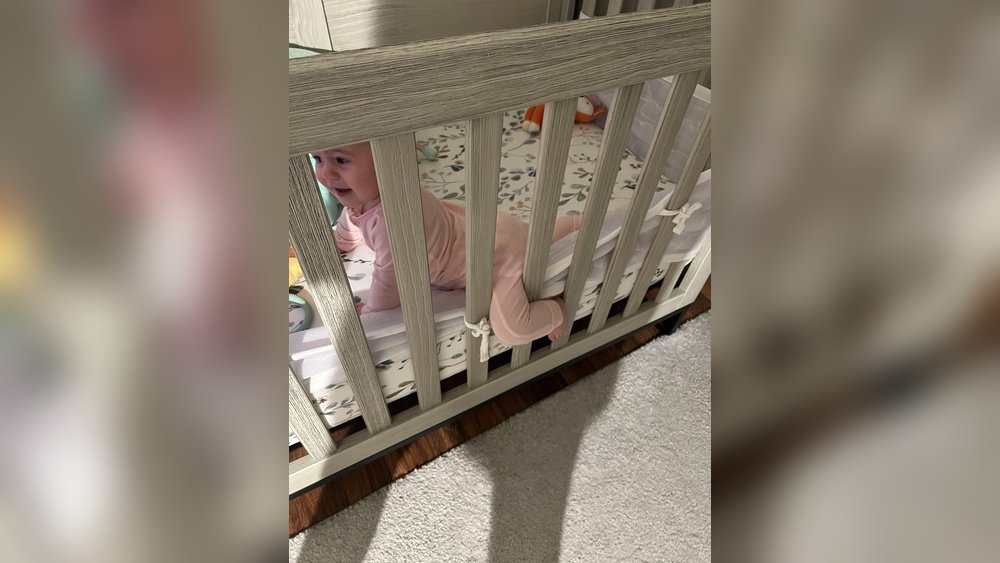
The short answer is yes: a baby’s legs can get stuck in crib slats if the gaps between them are too wide, a risk that ranks among the top safety concerns for new parents. According to the U.S. Consumer Product Safety Commission (CPSC), limb entrapment is one of the most commonly reported crib-related injuries for infants each year. While the risk is entirely manageable with proper crib selection and setup, many parents lack clear, up-to-date guidance on how to eliminate it entirely. This guide breaks down the real risks of slat entrapment, current 2026 safety standards, and actionable, expert-backed steps to keep your baby safe during sleep and play, no guesswork required.
Can a Baby’s Leg Actually Get Stuck in Crib Slats?
Babies have small, flexible limbs that can easily fit through gaps as narrow as 2.5 inches, which is why the CPSC mandates a maximum slat spacing of 2 3/8 inches (6 cm) for all cribs sold in the U.S. This measurement is roughly the width of a standard soda can, and small enough to prevent even the smallest infant’s leg from slipping through. Even if a leg fits through a gap, irregular slat spacing from warped crib frames, broken slats, or damaged secondhand cribs can cause the limb to get stuck when a baby kicks or rolls. The American Academy of Pediatrics (AAP) reinforces this standard as part of its safe sleep guidelines, noting that proper slat spacing eliminates nearly all risk of limb entrapment in compliant cribs.

What Injuries Can Happen From Slat Entrapment?
Most minor entrapment incidents result in temporary bruising, skin abrasions, or mild swelling from pressure on the limb, which resolves on its own within a few hours. More serious risks include fractures if a baby pulls or yanks forcefully to free their leg, nerve compression if the limb is trapped for an extended period, or panic-induced injuries if they fall while trying to climb out of the crib. It’s critical to avoid pulling a trapped leg abruptly, as this can cause sprains, dislocations, or skin tears. Even minor entrapment can disrupt sleep for days after an incident, leading to increased fussiness and feeding issues for both baby and caregivers.
 Even small gaps can trap a baby's leg if they kick or roll forcefully.
Credit: www.adensmom.com
Even small gaps can trap a baby's leg if they kick or roll forcefully.
Credit: www.adensmom.com
How to Choose a Crib That Eliminates This Risk
Verify Mandatory Slat Spacing Standards
All new cribs sold in the U.S. must meet CPSC requirements, including the 2 3/8 inch maximum slat spacing, sturdy construction that does not collapse under pressure, and non-toxic finishes. Look for a CPSC certification label on the crib’s packaging or frame before purchasing. Avoid vintage, hand-me-down, or imported cribs that may not meet current standards, and never use a drop-side crib, which was banned in the U.S. in 2011 due to widespread entrapment and suffocation risks.
Alternative Crib Designs for Extra Peace of Mind
If you want to eliminate slat risk entirely, opt for a solid-side crib, which has no gaps at all, or a mesh-sided crib, which uses breathable, tight mesh instead of wooden slats to allow visibility and airflow without entrapment risk. Portable play yards that meet current CPSC standards are also a safe option for travel, as they have uniformly spaced, narrow slats that meet safety requirements. Solid-side cribs are ideal for parents who want zero entrapment risk, while mesh options work well for those who prefer to see their baby clearly without getting up.
 Measuring slat gaps with a standard ruler confirms they meet CPSC safety requirements.
Credit: www.babycenter.ca
Measuring slat gaps with a standard ruler confirms they meet CPSC safety requirements.
Credit: www.babycenter.ca
Simple Prevention Steps to Keep Your Baby Safe
Ensure a Snug Mattress Fit
A mattress that does not fit the crib’s interior exactly can shift during sleep, creating gaps where limbs can get trapped, and also poses a serious suffocation risk. The gap between the mattress and crib sides should be no more than the width of two fingers (about 1 inch). Measure the crib’s interior dimensions before purchasing a mattress, and replace the mattress if the crib frame warps over time. Always use a firm, flat mattress with a fitted sheet, as soft or sagging mattresses make it easier for limbs to slip into unsafe spaces.
Skip Risky Crib Add-Ons
Loose fabric slat covers, crib bumpers, and extra padding do not prevent entrapment effectively, and create new suffocation and entrapment hazards for infants under 12 months. Instead, stick to safe, breathable crib bedding that fits tightly around the mattress, with no loose fabric hanging over the sides. The AAP recommends keeping all soft items, including toys, pillows, and blankets, out of the crib for babies under 12 months to reduce both suffocation and entrapment risk.
Dress Your Baby for Safe Sleep
Overheating causes babies to kick and move more during sleep, increasing the risk of leg entrapment. Dress your baby in one more layer than you would wear to bed, using appropriate sleep layering guidelines to avoid overdressing. Avoid tight socks or footed pajamas with loose cuffs that can catch on slats; opt for safe sleep sock choices that fit snugly without constriction to reduce the risk of fabric catching on slats.
Perform Monthly Crib Inspections
Every month, check for loose, broken, or warped slats, tighten all hardware, and measure slat spacing to confirm it still meets the 2 3/8 inch standard. If you notice any gaps larger than the standard, discontinue use of the crib immediately. Also inspect the crib after any impact, such as if it’s bumped during a move or if your baby pulls on the slats forcefully, as this can warp slats and create new gaps.
What to Do If Your Baby’s Leg Gets Stuck
Immediate, Gentle Response Steps
First, stay calm — babies pick up on parental anxiety, which can make them panic more and increase their risk of injury. Speak softly to soothe them, then gently try to free the leg by slightly rotating or angling it, rather than pulling straight back. If the slat is flexible, you can gently bend it outward just enough to release the leg, then release it back into place. If the leg is stuck tightly, apply a small amount of baby oil or lotion to the skin around the slat to reduce friction. Never yank or pull forcefully, as this can cause sprains, fractures, or skin tears. If you cannot free the leg within 5 minutes, call emergency services for assistance.
When to Seek Medical Attention
Visit a doctor or emergency room if your baby has swelling, bruising, or redness that lasts more than an hour after freeing the leg, if they can’t bear weight on the limb, or if the skin is broken or bleeding. A healthcare provider can check for fractures, nerve damage, or soft tissue injuries that may not be visible to the naked eye.
Crib Safety Beyond Slat Gaps
Safe Sleep Best Practices
Always place your baby on their back to sleep on a firm, flat mattress with a fitted sheet, per American Academy of Pediatrics (AAP) safe sleep guidelines. Keep the crib free of all toys, pillows, and loose bedding to reduce suffocation risk. If you use a portable crib when traveling with a sleeping infant, verify that it meets current CPSC standards before use, as older or borrowed models may have wider slat spacing that does not comply with safety rules.
Secure All Baby Gear to Prevent Damage
A loose or tipping crib can warp slats over time, creating unexpected gaps that increase entrapment risk. Anchor the crib to the wall using the included hardware kit to prevent tipping, and avoid placing heavy items on top of the crib. For all baby gear, follow securing baby gear safely guidelines to prevent damage that could create unsafe conditions.
Avoid Dangerous Crib Accessories
Crib bumpers, even mesh ones, pose a suffocation risk for infants under 12 months, and do not prevent limb entrapment effectively. Avoid using them entirely, and never add extra padding or cushions to crib sides to "fill gaps" — these can cause suffocation or create new entrapment hazards.
Frequently Asked Questions
Can a baby’s leg get stuck in crib slats?
Yes, if the gaps between slats exceed the CPSC-mandated maximum of 2 3/8 inches (6 cm). Babies’ small, flexible legs can easily fit through gaps this size, and may become trapped if they kick or roll forcefully against the slats.
Are crib slat covers safe?
Loose, fabric slat covers pose a suffocation and entrapment risk for infants, and are not recommended by the CPSC or AAP. If you want to cover slats for aesthetic reasons, opt for a rigid, breathable plastic or mesh cover that is securely fastened to the crib frame with no loose edges.
Can I use a mattress topper or padding to fill gaps between slats?
No. Soft padding can shift during sleep, creating suffocation hazards, and does not prevent limb entrapment. Only use a firm, properly fitted mattress that matches the crib’s interior dimensions exactly.
What safety standards apply to crib slats?
All cribs sold in the U.S. must meet CPSC requirements, including a maximum slat spacing of 2 3/8 inches, sturdy construction that does not collapse under pressure, and non-toxic finishes. Look for a CPSC certification label on the crib before purchasing.
How often should I check my baby’s crib for safety issues?
Perform a full crib inspection monthly, checking for loose hardware, warped or broken slats, and proper slat spacing. Also inspect the crib immediately after any impact, such as if it’s bumped during a move or if your baby pulls on the slats forcefully, as this can warp slats and create new gaps.
Conclusion
Baby leg entrapment in crib slats is a completely preventable risk when you follow current, expert-backed safety guidelines. The most impactful steps are choosing a CPSC-certified crib with proper slat spacing, ensuring a snug mattress fit, avoiding loose crib accessories, and performing regular monthly inspections. While occasional minor entrapment may happen even with the safest cribs, following these guidelines will eliminate serious injury risk and give you peace of mind during your baby’s sleep time. For more expert-backed guidance on creating a safe, comfortable nursery for your little one, explore our full library of baby safety resources.

Emma Grace is a devoted mother and passionate content writer at BestBabyCart.com. With firsthand parenting experience and a love for research, she creates helpful guides and honest reviews to support parents in choosing the best for their babies. Her goal is to make parenthood easier, one article at a time.