
If you’re expecting a baby or navigating the first chaotic months of parenthood, the question “how much does a baby cost per month?” is probably top of mind. Generic online estimates often feel disconnected from real life, and surprise expenses can throw even the most careful budget off track. This 2026 guide breaks down actual, itemized monthly baby costs based on the latest USDA family expenditure data, highlights the hidden expenses no one warns you about, and shares actionable, safety-first tips to cut costs without sacrificing your baby’s well-being. Whether you’re a first-time parent or adding to your family, you’ll leave with a clear, realistic picture of what to expect financially.
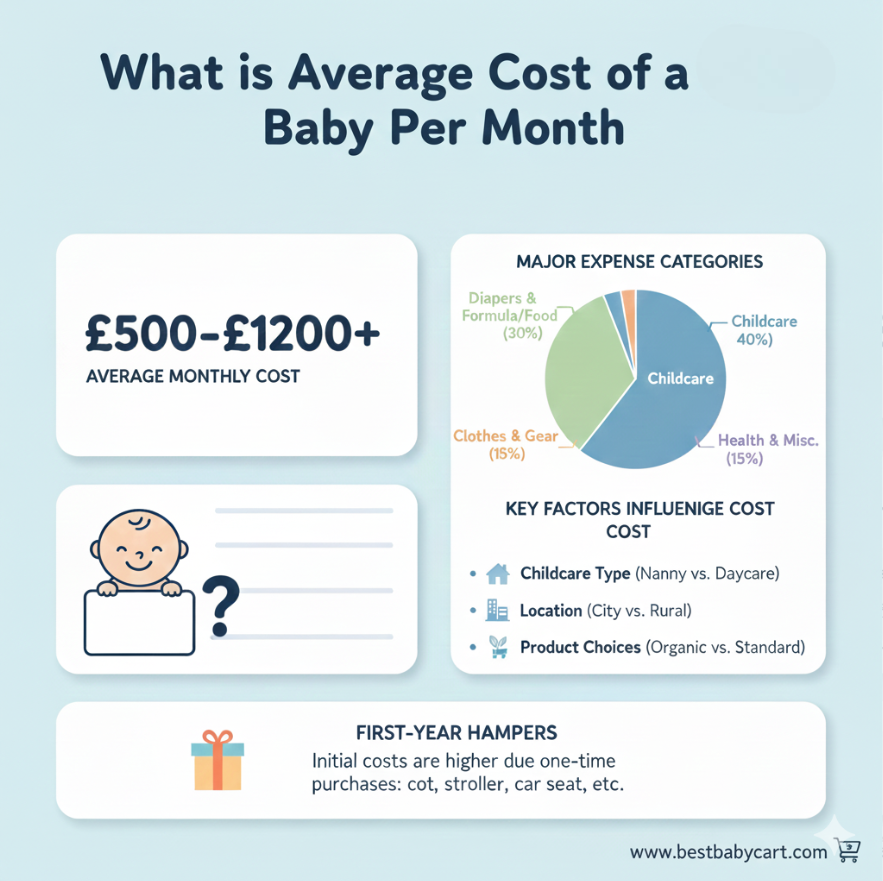 Average monthly costs vary based on location, feeding choices, and childcare needs
2026 Baseline Average Monthly Baby Costs (First Year)
According to latest USDA family expenditure data, middle-income U.S. families spend an average of $13,000 on a baby in their first year, translating to roughly $1,083 per month. That said, this number swings dramatically based on your location, feeding choices, and childcare setup: frugal families in low-cost areas may spend as little as $800 a month, while families in high-cost urban centers using formula and full-time licensed daycare can pay $1,800 or more. You can also read our guide on rare editions baby clothes deals.
This figure covers recurring monthly expenses only, and excludes one-time upfront costs like a car seat, stroller, crib, or nursery furniture, which typically add $500 to $2,000 to your initial pre-baby budget.
Itemized Recurring Monthly Cost Breakdown
Breaking down costs by category makes it easier to identify where you can cut spending without sacrificing safety or comfort:
Diapers & Wipes
Most families spend $70 to $120 a month on disposable diapers and wipes. Newborns go through 10 to 12 diapers a day (300 to 360 per month), with name-brand diapers costing $0.25 to $0.40 each and wipes running $0.02 to $0.05 per wipe. If you opt for cloth diapers, you’ll face an upfront cost of $150 to $500 for the set, but only $10 to $20 a month in water and detergent costs — a major saver for families willing to handle the extra laundry. To calculate if cloth is right for you, review our guide to annual cloth diaper usage to estimate your long-term savings.
Feeding
Feeding costs range from $100 to $300 a month, depending on whether you breastfeed, use formula, or introduce solid food. Formula-feeding families typically spend $80 to $210 a month on 4 to 6 cans of formula, while breastfeeding only requires a one-time $50 to $150 investment in a pump, bottles, and storage bags (most are covered by insurance under the Affordable Care Act). Once your baby starts solids at 6 months, plan for $20 to $90 a month for purees, cereals, and snacks. You don’t need to buy expensive specialized tableware to start: our guide to age-appropriate dish counts will help you avoid overbuying unnecessary items. You can also read our guide on top baby clothes black friday deals.
Clothing & Footwear
Babies outgrow sizes every 2 to 3 months, so most families spend $30 to $100 a month on new onesies, sleepers, socks, and outerwear. A common mistake new parents make is overbuying newborn clothing, as 60% of babies outgrow size NB within their first month. To cut costs, prioritize secondhand purchases, hand-me-downs, and sales for larger sizes you’ll use later. For seasonal weather planning, check our guide to yearly outerwear needs to avoid last-minute full-price purchases.
Healthcare & Toiletries
Budget $50 to $150 a month for healthcare and grooming essentials. This includes co-pays for well-baby visits (typically $10 to $30 per visit, 4 to 6 times in the first year), over-the-counter fever reducers, diaper rash cream, baby shampoo, and grooming tools. You don’t need to splurge on expensive designer grooming products: a basic baby hairbrush costs just $5 to $15, and our guide to affordable grooming tools breaks down which items are worth the splurge and which are not. You can also read our guide on how to protect baby from sun in stroller.
Childcare
For the 60% of U.S. families with two working parents, childcare is the single largest monthly baby expense, ranging from $400 to $1,200 a month. Full-time licensed daycare in high-cost cities like New York or San Francisco averages $1,500 to $2,500 a month, while rural family care or in-home daycare typically runs $200 to $500 a month. Many employers offer Dependent Care FSAs that let you set aside up to $5,000 a year pre-tax for childcare costs, cutting your effective expense by 20 to 30% depending on your tax bracket.
Hidden & Unexpected Monthly Baby Costs (The Ones No One Warns You About)
Even with careful budgeting, most parents face unplanned expenses that add $100 to $300 a month to their budget in the first year. These are the most common:
- Emergency Medical Costs: 1 in 3 infants visit the ER in their first year, per CDC data. Even with insurance, urgent care co-pays run $50 to $200 per visit, and ER trips for allergic reactions or minor injuries can have $200 to $1,000 in out-of-pocket costs. Experts recommend setting aside $100 to $200 a month in a dedicated baby emergency fund to cover these unplanned costs without derailing your budget.
- Specialized Gear & Home Adjustments: Beyond one-time gear purchases, you may face monthly costs for baby monitor subscription services ($10 to $30 a month), air purifier filter replacements for allergy-prone babies ($15 to $40 a month), or replacement safety gates as your baby grows ($20 to $50 each). You may also see a $20 to $50 monthly increase in utility costs from extra laundry, nursery heating, or bottle sterilization.
- Last-Minute Childcare & Errand Help: If you don’t have regular full-time daycare, last-minute babysitting for date nights, work events, or sick child care can cost $15 to $25 an hour. A single 4-hour evening out can add $60 to $100 to your monthly budget. Planning outings around your baby’s nap schedule is one of the easiest ways to cut these costs, and our low-lift outing tips make it simple to plan fun activities without disrupting your baby’s sleep routine.
- Optional Developmental Costs: Once your baby is 6 months or older, optional expenses like mommy-and-me classes, playgym memberships, and monthly toy subscriptions can add $30 to $100 a month. These are great for development, but easy to skip if you’re on a tight budget.
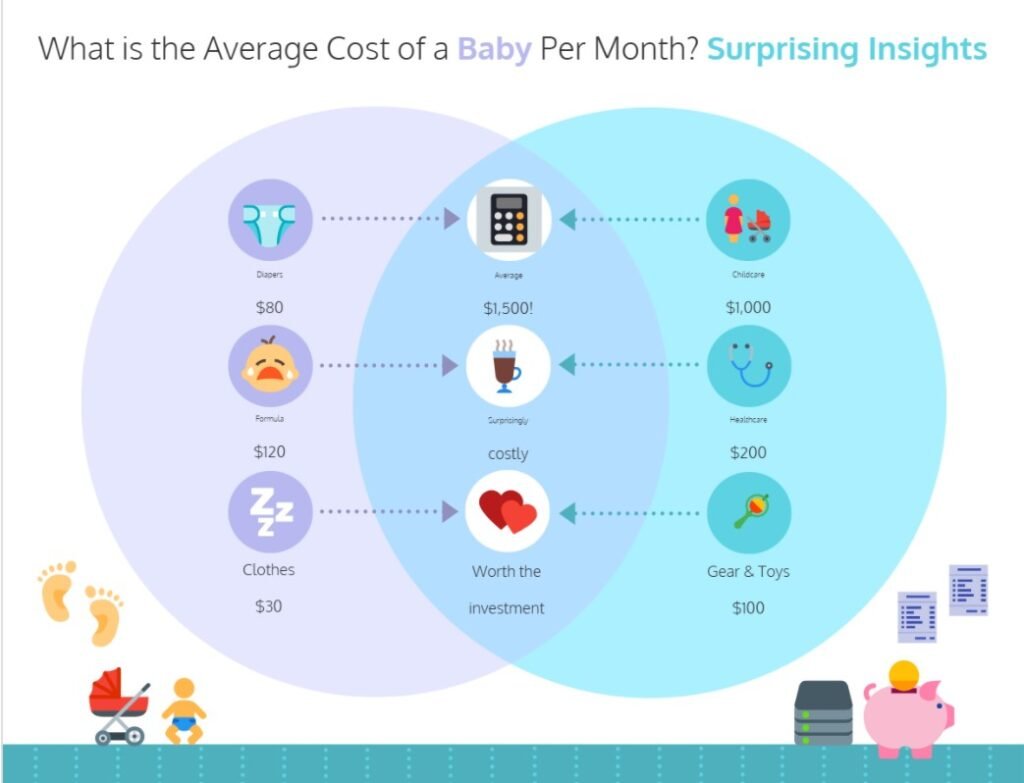 Hidden costs like last-minute childcare and emergency medical visits can add $100–$300 to your monthly budget
How Your Location Radically Changes Your Monthly Baby Costs
Where you live is one of the biggest drivers of your monthly baby expenses, with costs varying by 20 to 50% across the U.S.:
- Urban vs. Rural Spending: Urban families face 20 to 40% higher costs for childcare, housing (if you need to upgrade to a larger apartment), and groceries. For example, full-time daycare in New York City averages $1,800 a month, while the same care in rural Kansas costs just $450 a month. Rural families may face higher hidden travel costs, though: trips to specialized pediatric care can add $50 to $100 a month in gas and lost wages from time off work.
- Local Taxes & Fees: 28 U.S. states tax essential baby products like diapers, wipes, and formula, adding 4 to 10% to your monthly costs for these items. Some cities also require licensing fees for in-home daycare providers, which are passed on to parents as higher weekly rates. Check your state’s tax code for exempt baby essentials to save 5 to 10% on these recurring purchases.
 Image source: shemight.com
Proven, Safety-First Ways to Cut Your Monthly Baby Costs
You don’t have to sacrifice your baby’s safety or comfort to save money. These actionable tips are used by thousands of parents to cut monthly costs by 20 to 40%:
- Stock up on diapers during major sales: Name-brand diapers go on sale for 30 to 50% off at warehouse stores or Amazon every 6 to 8 weeks. Buying a 3-month supply during these sales cuts your per-diaper cost from $0.35 to $0.20, saving $45 to $60 a month. Just make sure you have enough storage space and your baby’s size won’t change drastically before you use the stockpile.
- Buy secondhand clothing and non-safety gear: Babies outgrow items before they wear them out, so secondhand clothing, toys, and non-safety gear (like bouncers or playmats) from consignment stores or local parent groups cost 10 to 20% of retail price. Never buy secondhand car seats, cribs, or helmets, though: these items may have hidden damage or be past their safety expiration date, putting your baby at risk.
- Choose store-brand essentials: Most store-brand diapers, wipes, and baby food meet the same FDA safety standards as premium name brands, at 20 to 30% lower cost. A 2026 Consumer Reports test found no meaningful difference in performance between premium and store-brand diapers for most babies, making store brands a no-brainer for budget-conscious families.
- Extend the life of your gear: Proper care of big-ticket items like strollers and car seats can help you avoid costly replacements. For example, learning how to properly fold and store your stroller prevents frame damage and wear, stretching its usable life by 1 to 2 years. Our guide to stroller care basics walks through the proper steps for popular models.
- Skip non-essential subscriptions: Baby monitor subscription services, monthly toy boxes, and baby clothing rentals are convenient but add $30 to $100 a month to your budget with minimal added value for most families. Stick to free or low-cost alternatives like library toy loans and free parent group playdates instead.
Long-Term Financial Planning Beyond Monthly Costs
Monthly budgeting is just the first step: planning for your baby’s long-term financial future reduces stress and builds a safety net for big milestones:
- Start a 529 college savings account: Even $25 a month invested in a 529 plan grows tax-free, and 34 states offer tax deductions or credits for contributions. Starting when your baby is born means you’ll have $10,000 to $15,000 saved by the time they’re 18, with minimal monthly effort.
- Build a dedicated baby emergency fund: Set aside $1,000 to $2,000 in a high-yield savings account in the first 6 months to cover unexpected costs like ER visits or last-minute childcare, so you don’t have to dip into your regular emergency fund or go into high-interest debt.
- Review your budget quarterly: Baby costs change drastically as they grow: formula costs drop when you switch to solid food, diaper costs disappear after potty training, but clothing, activity, and education costs go up. Adjusting your budget every 3 months ensures you’re not overspending in areas that are no longer relevant for your child’s age.
Frequently Asked Questions
What Is The Average Monthly Cost To Raise A Baby?
The average monthly cost for a baby in their first year ranges from $800 for frugal, low-cost area families using cloth diapers and family childcare, to $1,800 or more for families in high-cost urban areas using formula and full-time licensed daycare. This figure covers recurring monthly essentials only, and excludes one-time upfront costs like a car seat, stroller, or nursery furniture, which add $500 to $2,000 to your initial pre-baby budget. You can also read our guide on can a newborn wear size diapers.
How Much Do Diapers Cost Per Month For A Baby?
Disposable diapers cost $70 to $120 a month for most families, depending on brand and baby size. Newborns use 10 to 12 diapers a day, dropping to 8 to 10 as they get older. Cloth diapers have an upfront cost of $150 to $500, but only cost $10 to $20 a month in water and detergent, making them a cheaper option for families willing to handle the extra laundry. To calculate if cloth is right for your family, review our guide to annual cloth diaper usage to estimate your long-term savings.
What Are The Main Monthly Expenses For A Baby?
The top 4 recurring monthly expenses are childcare (40 to 50% of total costs for working parents), feeding (formula or solid food, 15 to 20%), diapering (8 to 10%), and healthcare and toiletries (5 to 10%). Clothing, gear, and optional activities make up the remaining 10 to 15%. You can also read our guide on what did people do before diapers.
Can Breastfeeding Reduce Monthly Baby Costs?
Yes, breastfeeding can cut your monthly feeding costs by 80 to 100% compared to formula feeding, saving $80 to $210 a month. The only upfront costs are nursing supplies like a breast pump (most are covered by insurance under the Affordable Care Act) and bottles, which run $50 to $150 total. Breastfeeding also reduces long-term healthcare costs, as breastfed babies have 30% fewer ear infections and 50% fewer gastrointestinal issues in their first year, per CDC data.
Final Takeaways
The cost of raising a baby is highly variable, with no one-size-fits-all number. The key to avoiding financial stress is to prioritize safety (never cut corners on car seats, cribs, or recommended pediatric care) and build a 10 to 15% buffer in your monthly budget for unexpected expenses. Tracking your actual spending for the first 3 months will give you a personalized baseline that’s far more accurate than any national average. If you’re preparing for your new arrival, check out our guides to folding popular stroller models and setting up a safe, budget-friendly nursery to cut down on upfront pre-baby costs. You can also read our guide on are baby diapers fsa eligible.

Emma Grace is a devoted mother and passionate content writer at BestBabyCart.com. With firsthand parenting experience and a love for research, she creates helpful guides and honest reviews to support parents in choosing the best for their babies. Her goal is to make parenthood easier, one article at a time.