
When you’re setting up your baby’s nursery, the gaps between crib slats can feel like a hidden hazard: you worry about your little one bumping their soft head, or getting their tiny arms and legs stuck between the rails. If you’ve researched crib safety, you’ve likely seen conflicting advice about crib bumpers and liners, with some sources warning of suffocation risks and others touting them as protective essentials. Halo crib liners are a popular middle ground, but are they actually safe for your baby?
This guide breaks down the real safety data, design features, regulatory compliance, and expert guidance for Halo crib liners, so you can make an informed choice for your nursery without relying on marketing hype.
What Are Halo Crib Liners, and What Are They Designed to Do?
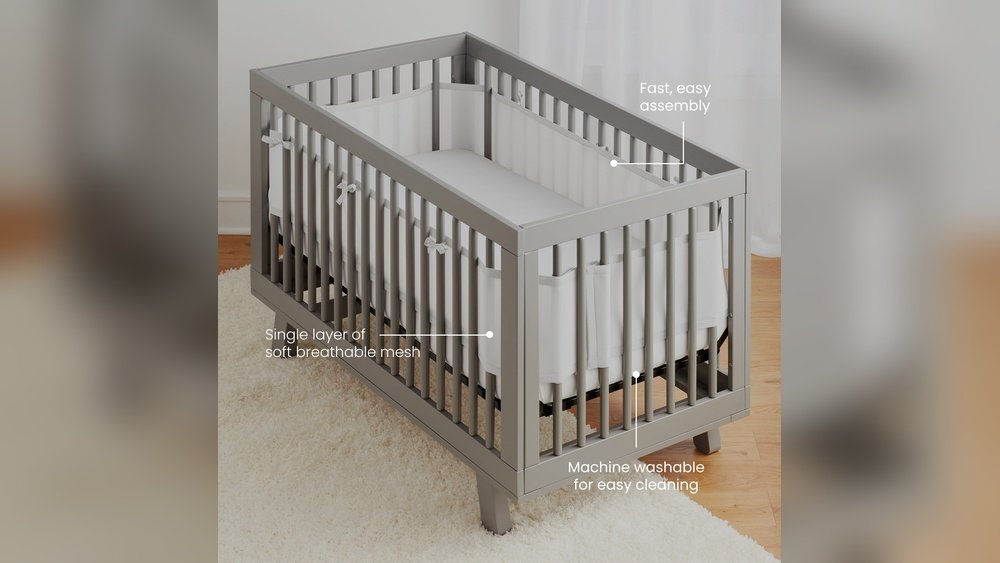
Halo crib liners are soft, breathable mesh barriers that attach to the interior rails of a standard crib, designed to cover the gaps between slats without blocking airflow. Unlike traditional thick padded crib bumpers, which are made of solid foam and have been banned for infant use by the U.S. Consumer Product Safety Commission (CPSC) as of 2024, Halo liners are engineered to prevent two common minor crib injuries: bumped heads from movement during sleep, and limb entrapment when a baby rolls or shifts position.
Halo, a brand founded by a parent who lost an infant to SIDS, specializes in safe sleep products, and its crib liners are constructed from lightweight, washable materials with secure attachment systems to keep the liner in place. They are intended for use only with infants who are not yet mobile (unable to roll over, push up on hands and knees, or pull to a standing position), typically between 0 and 3 months of age for most babies.
How They Differ From Traditional Crib Bumpers
Traditional padded bumpers use thick, solid foam that completely blocks airflow, creating a severe suffocation risk if a baby presses their face against the barrier. Halo liners use a porous mesh construction that allows air to flow freely, eliminating this core hazard. They also lack the thick, plush padding of traditional bumpers, so they do not pose a climbing risk for infants who are not yet mobile.
Typical Materials and Construction
Most Halo crib liners are made from 100% polyester mesh, with ties or Velcro straps to secure the liner to crib rails. Many models are OEKO-TEX Standard 100 certified, meaning they are tested for harmful chemicals like lead, phthalates, and formaldehyde that could irritate a baby’s sensitive skin. Start with a properly fitted firm mattress with no gaps between the mattress and crib rails, a key part of safe crib setup to reduce baseline entrapment risk before adding any liner.
Core Safety Features That Set Halo Liners Apart
Not all breathable crib liners are built to the same safety standards. Halo’s design includes three key features that reduce risk compared to generic mesh bumpers:
Breathable Mesh Construction
The mesh used in Halo liners is engineered with uniform, tiny pores that allow air to pass through even when compressed against a baby’s face. This eliminates the suffocation risk associated with solid padded barriers, and reduces heat buildup that can contribute to overheating, a known SIDS risk factor. When selecting any nursery fabric, including crib liners, refer to baby-safe material guidelines to avoid harmful dyes or finishes that could irritate your baby's skin.
Secure, Adjustable Attachment System
Halo liners use adjustable ties or Velcro straps designed to fasten tightly to crib rails, preventing the liner from slipping down, bunching, or creating gaps where a baby’s head could get trapped. Most models fit standard US crib sizes (28×52 inches interior) without excess fabric hanging loose, a common hazard with ill-fitting generic liners.
Non-Toxic, Hypoallergenic Materials
All Halo crib liners are OEKO-TEX Standard 100 certified, meaning they have been tested for over 300 harmful substances to ensure they are safe for direct contact with a baby’s skin. The mesh is also resistant to dust mites and mold, reducing allergen exposure for sensitive infants. To reduce allergen buildup on soft nursery items, follow effective cleaning tips for baby gear to remove dust and dander without harsh chemicals that could harm your baby's skin or respiratory system.
Official Safety Standards and Third-Party Certifications
Certifications from independent regulatory bodies are the most reliable way to verify a crib liner’s safety, as they confirm the product has passed rigorous testing for suffocation, choking, and chemical hazards.
Key Certifications to Look For
The most important certifications for crib liners include:
- CPSC Compliance: Confirms the product meets federal U.S. safety standards for infant products.
- ASTM F2959: The specific industry standard for crib bumpers and liners, which tests for suffocation risk, choking hazards, flammability, and secure attachment.
- OEKO-TEX Standard 100: Certifies the fabric is free from harmful levels of toxic chemicals.
How Halo Liners Meet Current U.S. Safety Requirements
As of 2026, Halo subjects all its crib products to independent third-party testing for ASTM F2959 and CPSC compliance, including airflow testing to confirm the mesh does not restrict respiration even when compressed. Unlike many unregulated generic crib liners sold online, Halo’s products are regularly audited for ongoing compliance with safety standards. For full official guidance on crib product safety, see the CPSC's crib safety education center.
Realistic Potential Risks and Limitations
While Halo liners are far lower risk than traditional padded bumpers, they are not completely hazard-free. Understanding these limitations is key to using them safely:
Entrapment Risk for Mobile Infants
Once a baby can roll over, push up on their hands and knees, or pull to a standing position, the liner can become a climbing aid, or a baby’s limb can get caught in the attachment straps if they are not secured tightly. An ill-fitting liner can also create gaps between the liner and crib rail where a baby’s head can get trapped.
Hazards From Incorrect Installation
A common mistake parents make is not tightening the attachment straps enough, leading to bunching or slipping of the liner. Loose, bunching fabric can pose a suffocation risk if a baby presses their face against it, and excess fabric hanging over the crib rail can be a climbing hazard for mobile infants.
Allergen Buildup Without Regular Cleaning
Even though the mesh is hypoallergenic, dust, pet dander, milk spills, and dead skin cells can accumulate in the mesh pores over time, triggering allergies, rashes, or respiratory issues in sensitive babies. Infrequent washing is one of the most common safety oversights parents make with crib liners.
No Proven SIDS Risk Reduction
There is no peer-reviewed evidence that any crib liner, including Halo’s, reduces the risk of Sudden Infant Death Syndrome (SIDS). The American Academy of Pediatrics (AAP) safe sleep guidelines recommend a bare crib as the only proven way to reduce SIDS risk; Halo liners are designed only to prevent minor injuries, not to reduce SIDS.
Expert and Organizational Guidance on Crib Liner Use
Guidance from pediatricians and child safety organizations helps clarify when Halo liners are appropriate, and when they should be avoided:
Pediatrician Recommendations
Most pediatricians agree that breathable mesh liners like Halo’s are a far lower-risk option than traditional padded bumpers, but they still recommend avoiding them for newborns under 3 months, especially premature infants or those with low muscle tone who cannot move their heads away from obstructions. Pediatricians also advise removing the liner as soon as a baby shows signs of mobility, regardless of age.
Child Safety Organization Stances
The AAP still recommends a completely bare crib for infants under 12 months as the gold standard for safe sleep, with no bumpers, liners, or loose bedding. However, the organization acknowledges that breathable mesh liners meeting ASTM F2959 standards are a lower-risk alternative for parents who are specifically concerned about limb entrapment or minor head injuries, provided they are installed correctly and removed when the baby becomes mobile. You can review the full AAP safe sleep recommendations for more details.
Real-World Parent Feedback
Independent consumer reviews consistently highlight that parents appreciate the reduced risk of minor injuries without the suffocation concerns associated with traditional bumpers. Many parents report that Halo liners reduced the frequency of their baby’s nighttime crying caused by bumping against crib rails or getting limbs stuck between slats.
How Halo Crib Liners Compare to Other Crib Liner Options
Not all crib liners are created equal. The table below compares Halo mesh liners to common alternatives to help you weigh the trade-offs:
| Feature | Halo Breathable Mesh Crib Liner | Traditional Padded Crib Bumper | Generic Breathable Mesh Bumper | No Crib Liner (Bare Crib) |
|---|---|---|---|---|
| Suffocation risk (when installed correctly) | Low (mesh allows unrestricted airflow) | High (solid padding blocks airflow, banned for infant use 2024+) | Moderate (may have uneven mesh pores) | Zero (no added soft barriers) |
| Airflow | High | Very low | Moderate to high | Maximum |
| Prevents minor injuries (bumped heads, limb entrapment) | Yes | Yes | Yes | No |
| Meets CPSC/ASTM F2959 standards | Yes (all Halo models) | No | Only select certified models | N/A |
| Recommended age range | 0–3 months, until baby is mobile | Not recommended for any infant | 0–3 months, until baby is mobile | All ages (AAP gold standard) |
| Entrapment risk for mobile infants | Low if installed correctly, removed once mobile | High | Moderate if installed correctly | Zero |
Key Takeaways From the Comparison
Halo liners strike a balance between injury prevention and safety that generic mesh bumpers often do not, thanks to their rigorous third-party testing and secure attachment design. However, no crib liner is as low-risk as a bare crib, which eliminates all added entrapment and suffocation hazards.
Safe Usage Guidelines for Halo Crib Liners
If you choose to use a Halo crib liner, following these evidence-based guidelines will minimize risk:
When to Use a Crib Liner
Only use a Halo liner for infants who are not yet mobile, typically between 0 and 3 months of age. Consult your pediatrician before use if your baby was premature, has low muscle tone, or has a history of respiratory issues. Just as you would select age-appropriate baby socks that fit properly to avoid tripping hazards as your baby learns to walk, you should remove crib liners as soon as your baby becomes mobile.
Step-by-Step Correct Installation
- Ensure your crib mattress fits snugly with no gaps larger than two fingers between the mattress and crib rails.
- Unfold the liner and lay it inside the crib, aligning the top edge with the top of the crib rails.
- Secure each tie or Velcro strap tightly to the crib rails, making sure there is no excess fabric hanging loose.
- Smooth out any wrinkles or bunching in the mesh to ensure even airflow.
Routine Safety and Cleaning Checks
- Check the liner daily to ensure straps are still tight and the liner has not slipped down.
- Inspect the liner weekly for tears, fraying, or loose stitching; remove it immediately if you notice any damage.
- Wash the liner at least once per month with mild, fragrance-free detergent, or immediately after any spills. Air dry completely before reattaching to avoid mold growth.
When to Remove the Liner Immediately
Remove the liner as soon as your baby shows any signs of mobility: rolling over, pushing up on their hands and knees, or pulling to a standing position. For most babies, this occurs between 3 and 5 months of age, but follow your pediatrician’s advice if your baby hits milestones earlier or later.
Alternatives to Halo Crib Liners for Crib Safety
If you are not comfortable using a crib liner at all, there are several lower-risk alternatives to prevent minor crib injuries:
Wearable Sleep Sacks (AAP Top Pick)
The AAP’s top recommended alternative to crib liners is a wearable sleep sack, which keeps babies warm without loose blankets and eliminates the need for any fabric attached to the crib rails. Many sleep sacks have padded shoulders to prevent bumped heads, with zero entrapment risk.
Certified Breathable Mesh Crib Bumpers
If you are concerned about limb entrapment, you can use a breathable mesh crib bumper that meets ASTM F2959 standards. Ensure it is secured tightly and removed as soon as your baby becomes mobile, just like a Halo liner.
Crib Rail Covers
Padded crib rail covers attach only to the top of the crib rails, not the full interior of the crib, so they prevent head bumps without creating a barrier that a baby can get trapped against.
The Bare Crib Option (Lowest Risk)
The safest crib setup per AAP guidelines is a bare crib with a firm, fitted mattress and a tight-fitting sheet only, with no added barriers, bumpers, liners, loose blankets, or stuffed animals. This eliminates all added suffocation and entrapment risks. Just as you would avoid mold-prone nursery items that put your baby's respiratory health at risk, you should avoid poorly made, untested crib liners that could entrap your baby.
Frequently Asked Questions
Are Halo crib liners safe for newborns under 3 months?
Yes, Halo crib liners are designed for infants who are not yet mobile, including newborns, as long as they are installed correctly and meet ASTM F2959 safety standards. However, the AAP still recommends a bare crib for newborns, so consult your pediatrician before use if your baby was premature or has low muscle tone.
How do Halo crib liners differ from traditional padded crib bumpers?
Traditional padded bumpers are made of solid, thick foam that blocks airflow and poses a severe suffocation risk, leading to their 2024 ban by the CPSC for infant use. Halo liners are made of thin, breathable mesh that allows air to pass through freely, eliminating the primary suffocation risk of traditional bumpers while still providing a soft barrier against slat gaps.
Can Halo crib liners reduce the risk of SIDS?
No, there is no peer-reviewed evidence that any crib liner, including Halo’s, reduces the risk of Sudden Infant Death Syndrome (SIDS). The AAP’s safe sleep guidelines recommend a bare crib as the only proven way to reduce SIDS risk; Halo liners are designed only to prevent minor injuries like bumped heads or limb entrapment, not to reduce SIDS.
How often should I clean my Halo crib liner?
Halo recommends washing your crib liner at least once per month with mild, fragrance-free detergent, or immediately after any spills (milk, baby food, etc.) to prevent allergen and mold buildup. Always air dry the liner completely before reattaching it to the crib to avoid moisture retention.
At what age should I remove my Halo crib liner?
Remove the liner as soon as your baby shows any signs of mobility: rolling over, pushing up on their hands and knees, or pulling to a standing position. For most babies, this occurs between 3 and 5 months of age, but follow your pediatrician’s advice if your baby hits milestones earlier or later.
Do Halo crib liners work with all crib sizes?
Halo liners are designed to fit standard US crib sizes (28×52 inches interior). If you have a mini crib, oval crib, or custom-sized crib, check Halo’s product specifications to ensure you purchase the correct size, as an ill-fitting liner can create entrapment hazards.
Final Verdict: Are Halo Crib Liners Safe?
Halo crib liners are a lower-risk alternative to traditional banned padded crib bumpers, with breathable mesh construction, secure attachments, and third-party certifications that reduce the most serious suffocation hazards associated with older crib liner designs. However, they are not risk-free: entrapment hazards for mobile infants, installation errors, and allergen buildup are all potential concerns if the product is used incorrectly.
The American Academy of Pediatrics still recommends a completely bare crib as the safest sleep environment for infants, with no added barriers, bumpers, or loose bedding. If you do choose to use a Halo crib liner to prevent minor injuries, follow the safe usage guidelines strictly: install it correctly, inspect it daily, and remove it the second your baby becomes mobile.
For more evidence-based guidance on setting up a safe nursery and choosing baby products that prioritize your little one's well-being, browse our full library of baby safety resources.
Image Credits
 Halo's classic breathable mesh crib liner, designed to fit standard US crib sizes with secure tie attachments.
Credit: www.halosleep.com
Halo's classic breathable mesh crib liner, designed to fit standard US crib sizes with secure tie attachments.
Credit: www.halosleep.com The tiny pores in breathable mesh fabric allow air to pass through, reducing suffocation risk compared to solid padded bumpers.
Credit: www.standardwool.uk
The tiny pores in breathable mesh fabric allow air to pass through, reducing suffocation risk compared to solid padded bumpers.
Credit: www.standardwool.uk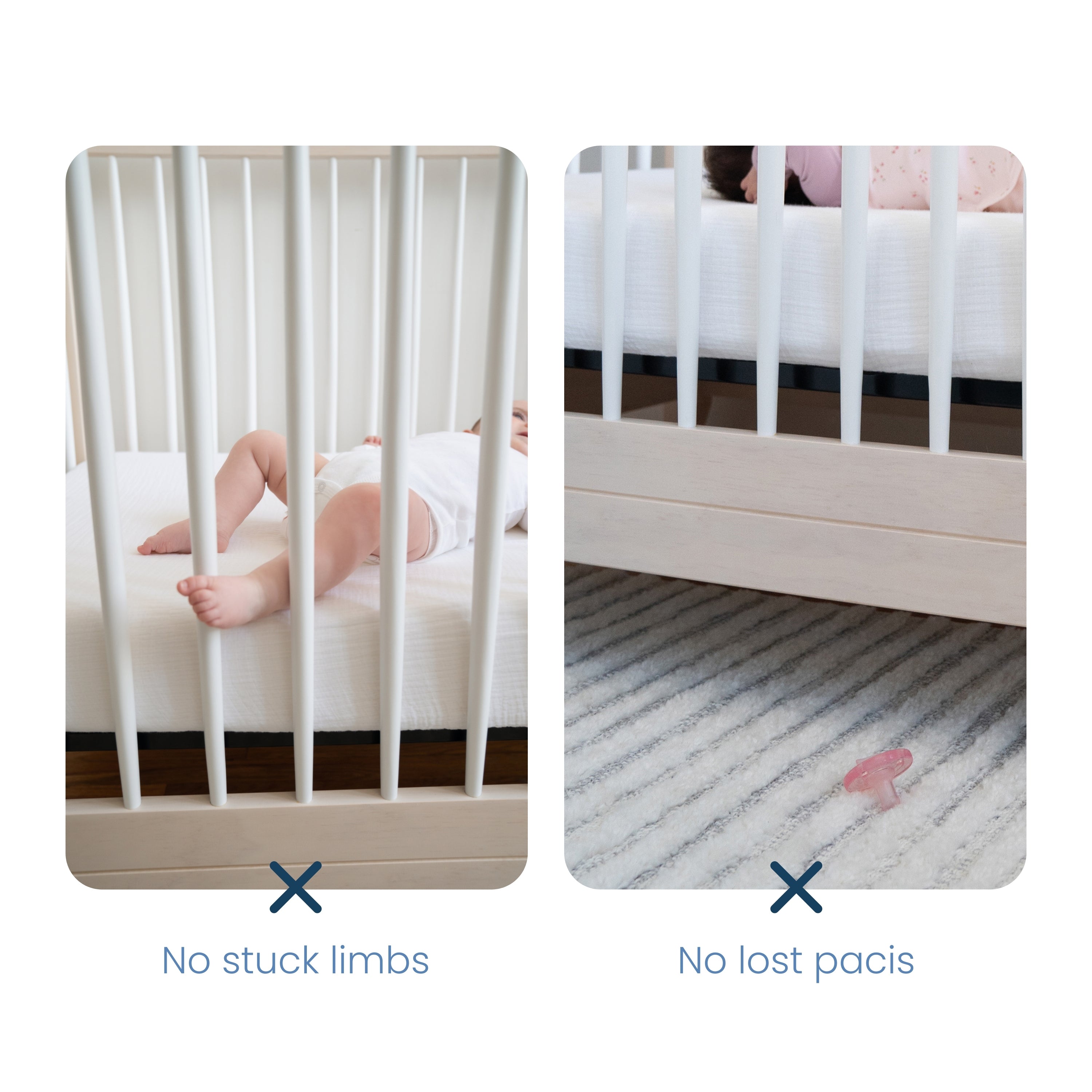 Halo's updated crib liner model features secure carabiner-style attachments to prevent slipping or bunching.
Credit: www.halosleep.com
Halo's updated crib liner model features secure carabiner-style attachments to prevent slipping or bunching.
Credit: www.halosleep.com
Frequently Asked Questions
Are Halo crib liners safe for newborns under 3 months?
Yes, Halo crib liners are designed for non-mobile infants, including newborns, as long as they are installed correctly and meet ASTM F2959 safety standards. However, the American Academy of Pediatrics still recommends a completely bare crib for newborns as the safest sleep environment, so consult your pediatrician before use if your baby was premature, has low muscle tone, or has a history of respiratory issues.
How do Halo crib liners prevent suffocation risk?
Halo liners use a uniform porous mesh construction that allows air to flow freely even when compressed against a baby’s face, eliminating the suffocation hazard posed by traditional solid padded crib bumpers, which block airflow entirely and were banned for infant use by the CPSC in 2024.
Can Halo crib liners reduce common crib injuries?
Yes, the padded mesh design cushions the crib rails to prevent bumped heads, and the snug fit closes gaps between slats to reduce the risk of limb entrapment for non-mobile infants who cannot yet pull to a stand or roll over.
Do Halo crib liners meet U.S. safety regulations?
All Halo crib liners are tested to meet CPSC federal safety standards and the ASTM F2959 industry standard for crib bumpers and liners, which includes testing for suffocation risk, choking hazards, flammability, and secure attachment. Many models also carry OEKO-TEX Standard 100 certification, confirming they are free from harmful levels of toxic chemicals.
How often should I clean my Halo crib liner?
Halo recommends washing your crib liner at least once per month with mild, fragrance-free detergent, or immediately after any spills (milk, baby food, etc.) to prevent allergen, mold, and bacteria buildup. Always air dry the liner completely before reattaching it to the crib to avoid moisture retention.
At what age should I remove my Halo crib liner?
Remove the liner as soon as your baby shows any signs of mobility: rolling over, pushing up on their hands and knees, or pulling to a standing position. For most babies, this occurs between 3 and 5 months of age, but follow your pediatrician’s advice if your baby hits milestones earlier or later.
Do Halo crib liners fit all crib sizes?
Halo liners are designed to fit standard U.S. crib sizes with interior dimensions of 28×52 inches. If you use a mini crib, oval crib, or custom-sized crib, check Halo’s product specifications to ensure you purchase the correct size, as an ill-fitting liner can create gaps where a baby’s head could get trapped.
Final Verdict: Are Halo Crib Liners Safe?
Halo breathable mesh crib liners are a significantly lower-risk alternative to the traditional padded crib bumpers banned for infant use by the U.S. Consumer Product Safety Commission in 2024, thanks to their ASTM F2959-compliant construction, secure attachment systems, and third-party certifications for non-toxic, hypoallergenic materials. When installed correctly and used exclusively for non-mobile infants under the guidance of your pediatrician, they can effectively reduce common minor crib injuries like bumped heads and limb entrapment without introducing the severe suffocation hazards of older, solid bumper designs.
That said, no crib liner matches the safety profile of a bare crib, which remains the American Academy of Pediatrics’ gold standard for infant safe sleep. Realistic risks including entrapment for babies who begin rolling or pulling to stand, suffocation from incorrectly installed bunching fabric, and allergen buildup from infrequent cleaning are all avoidable only with strict adherence to safe usage guidelines. If you choose to use a Halo crib liner, commit to installing it tightly against the crib rails with no excess fabric, inspecting it daily for damage or slippage, and removing it the second your baby shows any signs of mobility — for most infants, this occurs between 3 and 5 months of age.
For more practical, evidence-based guidance on setting up a safe nursery and choosing baby products that prioritize your little one’s well-being, browse our full library of baby safety resources for trusted, parent-approved tips.

Emma Grace is a devoted mother and passionate content writer at BestBabyCart.com. With firsthand parenting experience and a love for research, she creates helpful guides and honest reviews to support parents in choosing the best for their babies. Her goal is to make parenthood easier, one article at a time.