
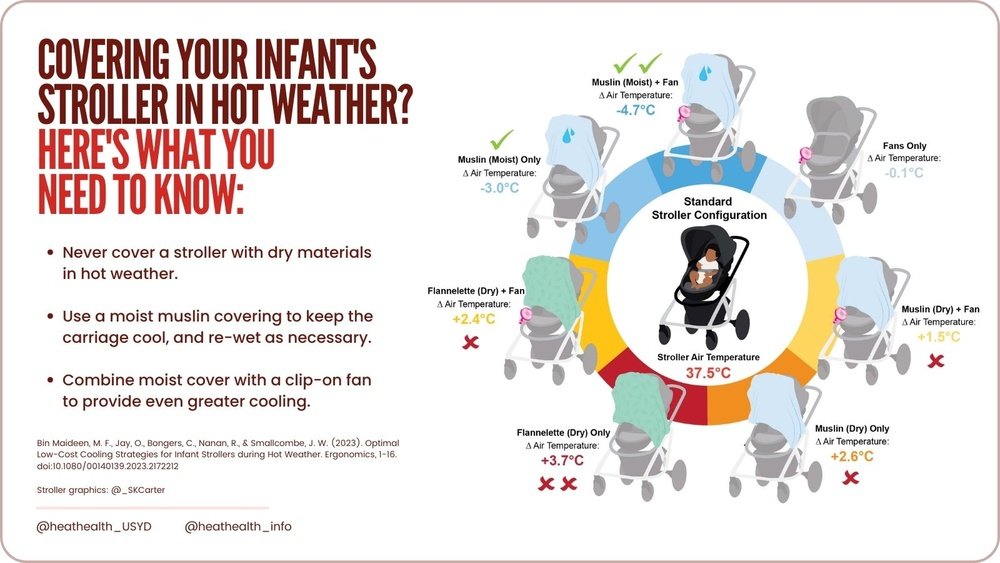
Stroller seats and canopies trap heat like a greenhouse, with interior temperatures rising rapidly even on mildly warm days, putting infants at risk of heat stress, dehydration, and life-threatening heat stroke. Infants under 12 months are particularly vulnerable, as their bodies cannot regulate temperature as efficiently as older children and adults, per guidance from the U.S. Centers for Disease Control and Prevention. Staying cool in a stroller doesn’t require expensive gear — small, intentional adjustments to your routine, gear, and monitoring habits can keep your baby comfortable and safe all summer long. Below is evidence-backed guidance to turn your stroller into a cool, comfortable space for outings.
Critical Safety Warning: Never Cover Strollers with Non-Breathable Materials
One of the most common and dangerous mistakes parents make when trying to keep their infant cool is draping a blanket, coat, or non-breathable cover over the stroller to block sun. This blocks all airflow, trapping hot air inside the stroller and raising interior temperatures by 15°F (8°C) or more in as little as 10 minutes, even on 75°F (24°C) days. The American Academy of Pediatrics explicitly warns against this practice, as it is a leading cause of preventable infant heat stroke during summer outings. You can also read our guide on early black friday baby sale.
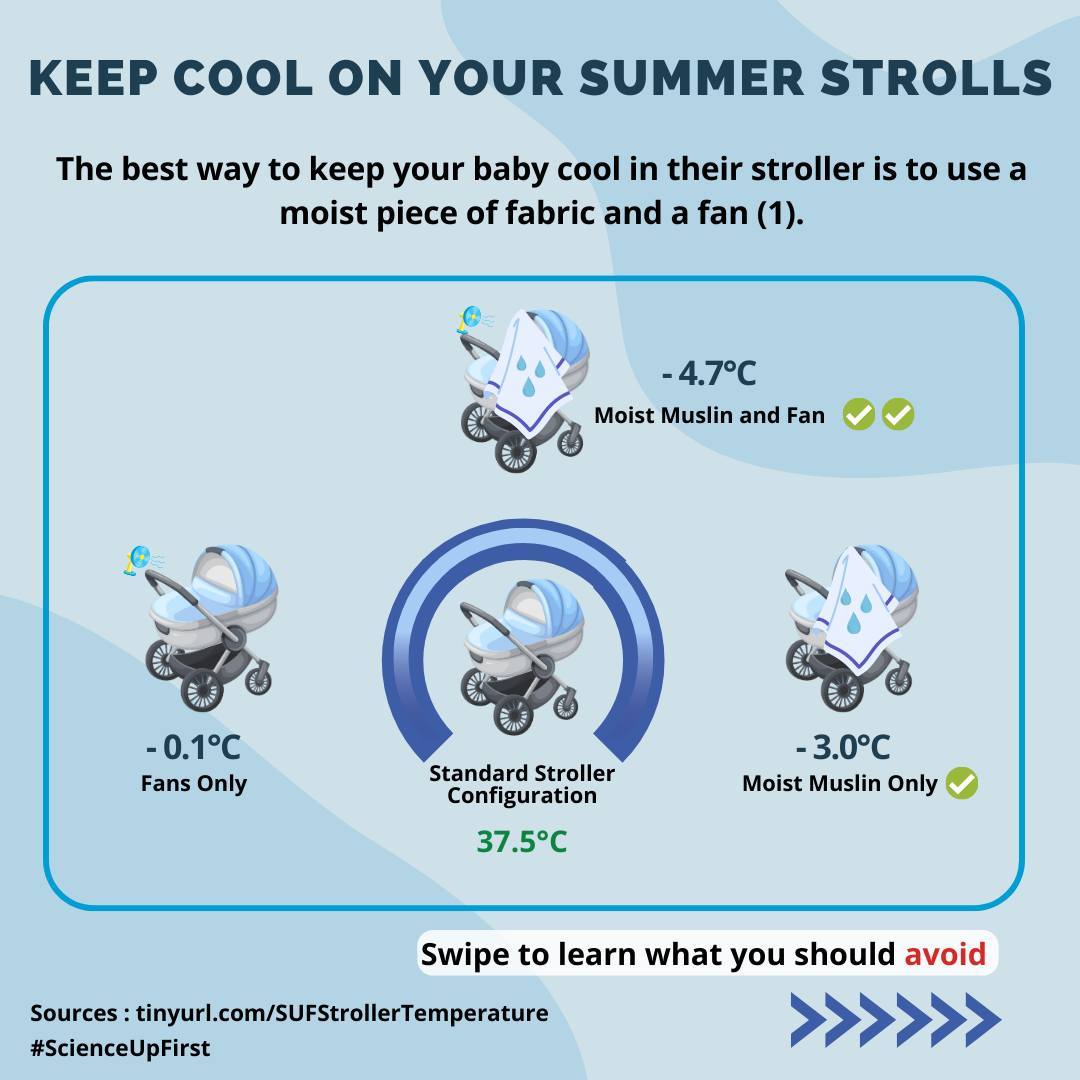 Stroller interiors can reach dangerously high temperatures in as little as 10 minutes of direct sun exposure, even on mild days.
Credit: scienceupfirst.com
Stroller interiors can reach dangerously high temperatures in as little as 10 minutes of direct sun exposure, even on mild days.
Credit: scienceupfirst.com
Instead, use only breathable, mesh sunshades or extended canopies to block UV rays without blocking airflow. If your stroller has limited built-in shade, add a portable clip-on sunshade with mesh sides to maintain air circulation while protecting your baby from direct sun.
Choose Breathable Fabrics for Baby and Stroller
Fabric choice impacts both your baby's skin comfort and the stroller's internal temperature. Non-breathable materials trap heat and moisture against sensitive infant skin, increasing the risk of heat rash and overheating, while lightweight, loose-weave fabrics promote airflow and wick sweat away from the body. You can also read our guide on best organic baby diapers gentle leakproof.
Infant Clothing Best Practices
For infants of all ages, opt for garments made from natural, loose-weave fibers like cotton gauze, muslin, or linen, with a thread count of 200 or lower for maximum airflow. Avoid synthetic fabrics like polyester, nylon, and fleece, even if they are labeled "summer weight" — these materials trap heat and moisture against the skin, leading to discomfort and irritation. Loose-fitting short-sleeve onesies, cotton rompers, and soft shorts are ideal for warm weather, as they allow air to circulate freely around the body. For newborns, a single lightweight onesie plus a sun hat is sufficient for temperatures under 85°F (29°C); for temperatures above that threshold, a diaper plus a sun hat is safe for short, shaded outings. If your baby does develop mild heat rash, a gentle, talc-free baby powder formulated for sensitive skin can help keep irritated skin dry and comfortable.
Stroller Liners and Covers
Avoid memory foam or heavily padded stroller liners, which retain heat and make the seat uncomfortably warm for your baby. Instead, choose a lightweight, moisture-wicking mesh liner designed for hot weather, and make sure it is removable for regular washing to prevent bacteria buildup. For added sun protection, opt for a UPF-rated sun shade instead of a non-breathable plastic cover to block UV rays without trapping heat. If you use a stroller with a detachable infant car seat, opt for a heat-blocking car seat cover designed for warm weather to prevent the seat from absorbing and radiating heat during outings. You can also read our guide on best stroller for carry on.
Maximize Shade and Airflow
Shade is the single most effective way to lower stroller interior temperatures and prevent sunburn, as 80% of UV rays penetrate clouds on overcast days. Pair shade with strategic positioning to maximize airflow and keep your baby cool.
Optimize Stroller Canopy and Sunshades
Most modern strollers come with adjustable canopies, but many do not extend far enough to cover your baby's legs and feet, a common spot for infant sunburn. Check that your stroller's canopy extends at least 6 inches past the seat edge before each outing, and adjust it to block the sun's angle as it moves across the sky. Canopies with built-in UPF 50+ fabric offer the best protection, blocking 98% of harmful UV rays. If your stroller's canopy is too small, add a portable clip-on sunshade with mesh sides to maintain airflow while filling coverage gaps. You can also read our guide on baby stroller sitting tips expert guidelines.
 A properly fitted breathable sunshade blocks UV rays while maintaining airflow to prevent heat buildup in the stroller.
Credit: www.savvymamalifestyle.com
A properly fitted breathable sunshade blocks UV rays while maintaining airflow to prevent heat buildup in the stroller.
Credit: www.savvymamalifestyle.com
Position for Natural Breeze
Strategic stroller placement can make a 5-10°F difference in your baby's comfort level. When stopping, face the stroller into the breeze to push hot air away from your baby, rather than away from the wind, which will blow hot air directly onto their skin. Avoid parking the stroller near asphalt, concrete, or brick walls, which radiate heat, and opt for grass or shaded pavement instead. If you're in an indoor space like a mall, position the stroller near an air vent or fan, but avoid direct cold air blowing on your baby to prevent chills. Follow proper stroller positioning guidelines to ensure your baby's airway stays unobstructed, even when using airflow-boosting accessories.
Prioritize Hydration and Temperature Monitoring
Infants dehydrate 3-5 times faster than adults in hot weather, as their small bodies have a higher surface area-to-volume ratio and cannot sweat efficiently to cool down. Proactive hydration and regular temperature checks are non-negotiable for safe summer outings. You can also read our guide on how to keep baby cool in stroller.
Age-Appropriate Fluids for Outings
Infants under 6 months get all the hydration they need from breast milk or formula, so no extra water is required (and excess water can be dangerous for their developing kidneys). For babies 6 months and older, offer 1-2 oz of cool (not ice-cold) water or diluted breast milk/formula every 20-30 minutes during outings, even if they don't seem thirsty. Avoid sugary drinks, juice, and ice-cold fluids, which can cause stomach cramps and vomiting. If you're heading out for a long walk, run a cool mist nursery humidifier in your home 30 minutes before leaving to lower ambient humidity and help your baby start the outing comfortably.
Recognizing Dehydration and Overheating Signs
Early signs of dehydration include dry mouth, fewer than 4 wet diapers in 24 hours, and crying without tears. More serious signs include a sunken soft spot (fontanelle) on the top of the head, skin that stays tented when gently pinched, and unusual lethargy. Early signs of overheating include flushed cheeks, damp hair at the nape of the neck, and increased fussiness. Serious overheating signs include rapid breathing (more than 60 breaths per minute for infants under 1 year), vomiting, and unresponsiveness. If you notice any of these signs, move your baby to a cool, shaded area immediately, remove excess clothing, and offer fluids. If symptoms do not improve within 10 minutes, seek medical attention right away. You can also read our guide on what age can babies face forward in car seat.
Time Outings to Avoid Peak Heat
Timing is one of the easiest, most effective ways to keep your baby cool in a stroller, as it avoids exposure to the hottest, most UV-intense parts of the day.
Avoid High-UV, High-Temperature Windows
Peak heat hours typically fall between 10 a.m. and 4 p.m., when UV index levels often reach 8+ (very high) and ambient temperatures rise quickly. During this window, even shaded strollers can become uncomfortably warm, and the risk of sunburn and heat stress is highest. If you must go out during these hours, stick to fully shaded paths, air-conditioned indoor spaces, or destinations with ample tree cover. Avoid leaving the stroller parked in direct sun for any length of time, even for quick errands.
Best Times for Stroller Walks
Early morning walks (before 9 a.m.) offer the lowest UV index, coolest temperatures, and lightest foot traffic, making them ideal for stroller outings. Evening walks after 5 p.m. are also safe, but avoid staying out after sunset if you are in an area with high mosquito activity, as mosquitoes can carry diseases like West Nile virus. For parents of infants with early bedtimes, planning outings around nap schedules ensures you don't disrupt sleep routines while still taking advantage of cooler parts of the day.
Use Safe, Effective Cooling Accessories
Cooling accessories can provide extra comfort during hot outings, but not all products are safe or effective for infants. Prioritize tools that promote airflow over those that lower core temperature directly.
Evaporative Cooling Tools
Cooling towels and seat pads work via evaporative cooling, which lowers the temperature of the air around your baby without risking overcooling. Drape a damp cooling towel over the stroller seat (not directly on your baby's skin for more than 10 minutes at a time to avoid frostbite) or place it on your baby's wrists and neck, where major blood vessels are close to the surface. Re-wet the towel every 20-30 minutes to maintain its cooling effect. Avoid gel-based cooling pads, which can leak and pose a choking hazard if they break.
Clip-On Stroller Fans
Battery-operated clip-on fans are a popular way to circulate air around your baby, but they do not lower overall ambient temperature and should be used as a supplement to shade, not a replacement. Choose a fan with soft, enclosed blades to prevent finger injuries, and position it so it circulates air around the stroller rather than blowing directly on your baby's face, which can cause ear infections or chills. Avoid fans that attach to the stroller handle, as they can fall and hit your baby if the stroller jolts on uneven ground.
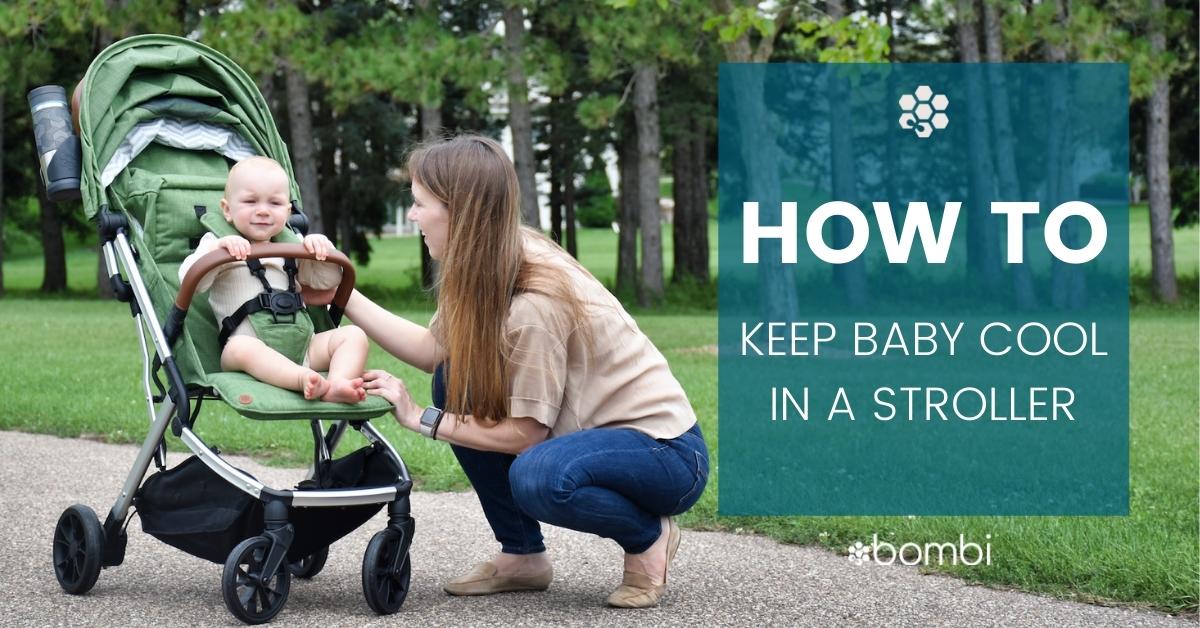 Cooling seat pads and clip-on fans with enclosed blades are safe, effective ways to lower a baby's immediate comfort level in hot weather.
Credit: bombigear.com
Cooling seat pads and clip-on fans with enclosed blades are safe, effective ways to lower a baby's immediate comfort level in hot weather.
Credit: bombigear.com
Cooling Products to Avoid
Avoid evaporative cooling vests, ice packs, and chilled teething toys placed directly against your baby's skin, as these can lower core temperature too quickly and cause hypothermia or frostbite, even on hot days. Avoid stroller misting systems, as excess moisture can cause skin irritation and promote bacterial growth in the stroller fabric.
Dress Your Infant for Hot Weather Without Overheating
The old "one more layer than an adult" rule is outdated for hot weather: infants should wear the same number of layers as an adult in the same environment, plus a sun hat for UV protection. Overdressing is one of the most common causes of preventable infant overheating.
Clothing Layering Guidelines
Stick to lightweight, loose-fitting garments made from natural fibers with a UPF rating of 30+ for built-in sun protection. For temperatures under 85°F (29°C), a short-sleeve cotton onesie plus a wide-brimmed sun hat is sufficient. For temperatures above 85°F, a diaper plus a sun hat is safe for short, shaded outings. Avoid synthetic fabrics, tight waistbands, and footed pajamas, which trap heat around the legs and core. Dress your baby in layers you can easily remove if they get too warm, and avoid covering their feet with socks or shoes unless you are walking on very hot, rough surfaces, as bare feet help regulate temperature.
Sun Protection for Sensitive Skin
A wide-brimmed sun hat (at least 3 inches wide all around) protects your baby's face, ears, and neck from sunburn, which can occur in as little as 10 minutes of direct sun exposure. Infant sunglasses with a UV 400 rating protect their developing eyes from cataracts and glare. Never leave a hat on a sleeping baby, as it can trap heat and cause overheating. For extra sun protection, apply a broad-spectrum, mineral-based sunscreen with SPF 30+ to any exposed skin 15 minutes before your outing, per guidance from the American Academy of Dermatology.
Frequently Asked Questions
How can I keep my infant cool in a stroller during a heatwave?
During a heatwave, avoid stroller walks entirely when the heat index is above 90°F (32°C), as infants can overheat 3 times faster than adults in these conditions. If you must go out, stick to air-conditioned indoor spaces, use a cooling towel draped over the stroller seat, and offer fluids every 15 minutes.
What stroller accessories help keep babies cool?
The most effective accessories are breathable mesh sunshades, moisture-wicking stroller liners, clip-on fans with enclosed blades, and evaporative cooling towels. Avoid non-breathable covers, gel cooling pads, and misting systems, which pose safety risks.
Is it safe to use a fan in a stroller?
Yes, battery-operated clip-on fans with enclosed blades are safe when positioned correctly. Ensure the fan circulates air around the stroller rather than blowing directly on your baby's face, and always monitor your baby for signs of discomfort or chills.
How often should I check my baby for overheating?
Check your baby's core temperature (by feeling their chest or back of the neck) every 15-20 minutes during hot weather outings. Look for signs like flushed skin, damp hair at the nape of the neck, or increased fussiness, and adjust clothing or move to a cooler area immediately if you notice these signs.
What temperature is too hot for a stroller walk?
Avoid stroller walks when the ambient temperature is above 85°F (29°C) for infants under 6 months, and above 90°F (32°C) for older infants. Always check the heat index, which accounts for humidity, as high humidity makes it harder for the body to cool itself via sweat.
Keeping your infant cool in a stroller this summer requires small, consistent habits: prioritizing shade, choosing breathable fabrics, staying on top of hydration, and monitoring for early signs of overheating. Remember that stroller interiors heat up far faster than ambient air, so never leave your baby unattended in a parked stroller in direct sun, even for a minute. By following these evidence-backed tips, you can enjoy safe, comfortable outings with your little one all season long. For more guidance on safe summer baby care, browse our full library of expert tips and product recommendations tailored to infant needs.

Emma Grace is a devoted mother and passionate content writer at BestBabyCart.com. With firsthand parenting experience and a love for research, she creates helpful guides and honest reviews to support parents in choosing the best for their babies. Her goal is to make parenthood easier, one article at a time.